

Monthly Subscription Starting at AED 99 + VAT

- Level Foundation
- المدة 7 ساعات hours
- الطبع بواسطة Exploratorium
-
Offered by

عن
The Tinkering Fundamentals course will offer educators and enthusiasts an opportunity to develop a practice of tinkering and making. We see tinkering as a serious endeavor—one that is generalizable across content and especially good at interweaving disciplines in a way that leads to complex projects and individualized learning opportunities. Tinkering has recently been introduced into the educational field as a potential driver of creativity, excitement, and innovation in science learning. It is seen by many as an effective means to engage in exploring STEM concepts, practices and phenomena. Tinkering typically blends the high and low tech tools of science along with a strong aesthetic dimension that supports children’s (and adults) self expression. For over a decade, the Exploratorium has been developing science-rich tinkering activities for both children and adults. We see tinkering as a fun yet serious endeavor—spanning many disciplines and content areas and fostering connections between art, science, and technology. Learners follow their own path to understanding by investigating tools and materials and exploring questions that interest them. This opens up a wide range of possible answers rather than any “right” one, particularly for teaching STEM (Science, Technology, Engineering, Math) subjects in the classroom. This course centers on circuit-related activities, which offer a wealth of opportunities for thinking through making. In this course, we won’t just show you how we develop tinkering activities; we’ll also delve into why. We’ll focus on three important aspects: activity design around specific materials, facilitation strategies, and environmental organization. We’ll also share some guiding principles and learning indicators we’ve developed that can help you integrate tinkering into your elementary and middle-school science program. Whether you’re new to making or a seasoned tinkerer, we hope this course will help you take the next step! OUR APPROACH TO TEACHING This is a hands-on workshop, not a lecture-based class. Participation is essential! We want everyone to be making and tinkering together: trying things out, asking questions, sharing ideas, and reflecting together as a community. This is a wonderful chance to tinker and learn alongside people from all over the world and from all walks of life, so don’t be shy! PLEASE NOTE: Although this course will not have active instructor participation, we have put a great deal of effort towards creating a supportive space that encourages exploration. We’ll give you a few ways to get started; prompt you to share your own observations and experience as learners, designers and facilitators; and hopefully spark interesting conversations and discoveries along the way. While it’s not a requirement, we encourage you to take this class with a friend or colleague or meet with other people in your area: having support or doing activities with others will enhance your experience and help you stay engaged. REQUIRED COURSE MATERIALS You will need several tools and materials to do weekly course activities. Pre-bundled materials are available from the Exploratorium store at www.artoftinkering.com. Please obtain all materials as soon as possible, well in advance of when you will need them in the course. Be sure to allow extra time for shipping and, if you are outside the U.S., for customs. In some cases, certain items may require assembly. Please refer to the Resources section to review this course’s activity guides.الوحدات
Introduction to Tinkering
-
 3
Videos
3
Videos
-
 2
Readings
2
Readings
3
Videos
- Welcome Video
- Course Overview
- Preview of Activities
2
Readings
- Week Overview
- Your turn
Overview, Logistics, and Requirements
-
3
Readings
3
Readings
- Course Overview
- Course format
- Credit Requirements
Initial Explorations
-
6
Videos
-
2
Readings
6
Videos
- Seeing It In Action: Circuit Boards
- Designing for Tinkerability: Circuit Boards
- Inspiration: Shih Chieh (CJ) Huang
- Making Circuit Boards
- Classroom Connection: Circuit Boards
- Pedagogical Perspective: Rob Semper
2
Readings
- Week Overview: Initial Explorations with Tinkering
- Your Turn
Learning Dimensions
-
6
Videos
-
2
Readings
6
Videos
- Seeing It in Action: Scribbling Machines
- Designing for Tinkerability: Scribbling Machines
- Inspiration: Evil Mad Scientist
- Making Scribbling Machines
- Classroom Connection: Scribbling Machines
- Pedagogical Perspective: Edith Ackermann
2
Readings
- Week Overview: Identifying Dimensions of Learning
- Your Turn
Tinkering Tenets and Personal Expression
-
6
Videos
-
2
Readings
6
Videos
- Welcome to the Mid-Point of the Course
- Sewn Circuits
- Paper Circuits
- Inspiration: Jie Qi
- Pedagogical Perspective: Mike Eisenberg
- Classroom Connection
2
Readings
- Week Overview: Personal Expression Through Tinkering
- Your Turn
Coding, Computation, and Facilitation Strategies
-
5
Videos
-
2
Readings
5
Videos
- Inspiration: Eric Rosenbaum
- MaKey MaKey
- Toy Take-Apart
- Pedagogical Perspective: Gever Tulley
- Pedagogical Perspective: Mitch Resnick
2
Readings
- Week Overview: Computation, Deconstruction, and Facilitation
- Your Turn
Putting It All Together
-
4
Videos
-
2
Readings
-
 1
PeerReview
1
PeerReview
1
Peer Review
- Tinkering Journal
4
Videos
- Pedagogical Meta Perspectives
- Classroom Connection
- Wrap Up of the Course
- Pedagogical Perspectives
2
Readings
- Week Overview: Putting It All Together
- Your Turn
Auto Summary
Join "Tinkering Fundamentals: Circuits" to explore hands-on tinkering and making, emphasizing the integration of art, science, and technology in STEM education. Designed for educators and enthusiasts, this course by Coursera, offered by the Exploratorium, focuses on circuit-related activities and the principles of activity design, facilitation strategies, and environmental organization. Engage in a global community, fostering creativity and innovation in science learning. Suitable for both beginners and seasoned tinkerers, this foundational course spans 420 minutes and is available with a Starter subscription.
Buy Now Free

- Level Foundation
- المدة 3 ساعات hours
-
Offered by
عن
This course will walk you through how to create an online employee onboarding course. By the end of this project, you will create an Eduflow course to assist in your employee onboarding process. Eduflow is a free, easy-to-use online course builder that allows you to build an interactive learning experience for your team. In this project, you will open an Eduflow account and begin creating an interactive employee onboarding course. You will then learn how to mix and match different learning activities including content, submissions, and videos. Furthermore, you will learn how to invite employees to the course, keep track of their progress, and gain valuable insight and feedback from your learners. The onboarding process is extremely important in developing your company brand and culture. Using Eduflow allows you to create an innovative, customized, and engaging onboarding experience for your employees. Note: This course works best for learners who are based in the North America region. We’re currently working on providing the same experience in other regions.Auto Summary
Learn to create an engaging online employee onboarding course with Eduflow in this beginner-level, 180-minute course. Offered by Coursera, it’s perfect for personal development and available for free.

Student Self-Assessment with Microsoft Word
By the end of this project, you will have created a self-report card and a behaviour reflection form for student self-reflection. You will also be equipped with suggestions for how to use these documents with students. Encouraging our students to reflect on their learning is one of many goals we have as teachers. One valuable way to do this is by allowing our students to share their perspective on the school year. What areas are going well for them? What areas do they see where they could grow?
Buy Now Free

- Level Foundation
- المدة 3 ساعات hours
- الطبع بواسطة Coursera
-
Offered by
عن
By the end of this project, you will have created a self-report card and a behaviour reflection form for student self-reflection. You will also be equipped with suggestions for how to use these documents with students. Encouraging our students to reflect on their learning is one of many goals we have as teachers. One valuable way to do this is by allowing our students to share their perspective on the school year. What areas are going well for them? What areas do they see where they could grow? When students identify their own areas for growth, they will be more motivated to set goals to improve in these areas and work to achieve those goals. Throughout each task, we will work together to create documents that you can use with students for self-reflection and can also be used with parents to show their child’s perspective on their school year.الوحدات
Your Learning Journey
-
1
Readings
-
 1
Plugin
1
Plugin
-
 1
Lab
1
Lab
-
 1
Assignment
1
Assignment
1
Assignment
- Assess Your Knowledge
 1
Labs
1
Labs
- Student Self-Assessment with Microsoft Word
1
Readings
- Project Overview
Auto Summary
Unlock the power of student self-reflection with the "Student Self-Assessment with Microsoft Word" course. Designed for personal development and taught by Coursera, this beginner-level course spans 180 minutes and is available for free. You will create a self-report card and a behavior reflection form, gaining insights into utilizing these tools effectively with students. Ideal for educators seeking to motivate students to set and achieve personal growth goals.
Buy Now Free

- Level Foundation
- المدة 2 ساعات hours
-
Offered by
عن
In this project-based course, you will learn to import contacts to Mailchimp. You will learn to add subscribers one by one manually to MailChimp's audience list. You will also learn to import contacts through a CSV file and by copying it through the spreadsheet and not only these you will learn to increase subscribers through signup forms as well.Auto Summary
Learn to effortlessly import contacts to Mailchimp in this beginner-friendly, project-based course by Coursera. Perfect for personal development, it offers a comprehensive 120-minute guide, all for free. Ideal for those new to email marketing and Mailchimp.

Social Science Approaches to the Study of Chinese Society Part 2
This course is intended as a first step for learners who seek to become producers of social science research. It is organized as an introduction to the design and execution of a research study. It introduces the key elements of a proposal for a research study, and explains the role of each. It reviews the major types of qualitative and quantitative data used in social science research, and then introduces some of the most important sources of existing data available freely or by application, worldwide and for China.
Monthly Subscription Starting at AED 99 + VAT

- Level Foundation
- المدة 16 ساعات hours
- الطبع بواسطة The Hong Kong University of Science and Technology
-
Offered by
عن
This course is intended as a first step for learners who seek to become producers of social science research. It is organized as an introduction to the design and execution of a research study. It introduces the key elements of a proposal for a research study, and explains the role of each. It reviews the major types of qualitative and quantitative data used in social science research, and then introduces some of the most important sources of existing data available freely or by application, worldwide and for China. The course offers an overview of basic principles in the design of surveys, including a brief introduction to sampling. Basic techniques for quantitative analysis are also introduced, along with a review of common challenges that arise in the interpretation of results. Professional and ethical issues that often arise in the conduct of research are also discussed. The course concludes with an introduction to the options for further study available to the interested student, and an overview of the key steps involved in selecting postgraduate programs and applying for admission. Learners who complete the course will be able to make an informed decision about whether to pursue advanced studies, and should be adequately prepared to write an application for postgraduate study that exhibits basic understanding of key aspects of social science research paradigms and methodologies. Explore the big questions in social science and learn how you can be a producer of social science research. Course Overview video: https://youtu.be/QuMOAlwhpvU Part 1 should be completed before taking this course: https://www.coursera.org/learn/social-science-study-chinese-societyالوحدات
Welcome
-
1
Videos
-
2
Readings
-
1
Discussion
1
Discussions
- Meet and greet!
1
Videos
- Course overview
2
Readings
- Assignments and grading
- Suggested Reading List (Optional)
Week 1 Video Lectures: Designing a Study
-
8
Videos
8
Videos
- 1.1 Designing a Study
- 1.2 The Research Proposal
- 1.3 Aims
- 1.4 Impact and Significance
- 1.5 Background-Literature Review
- 1.6 Methodology
- 1.7 Data
- 1.8 Summary
Week 1 Discussion
-
1
Discussion
1
Discussions
- Interest in social science
Week 1 Quiz
-
1
Assignment
1
Assignment
- Week 1 Designing a study
Week 1 Suggested Reading (optional)
-
2
Readings
2
Readings
- Week 1 General Reading List
- Week 1 Designing a study
Week 2 Video Lectures: Evidence
-
10
Videos
10
Videos
- 2.1 Evidence
- 2.2 Survey data
- 2.3 Public data
- 2.4. Administrative and archival microdata
- 2.5. Multi-generational microdata
- 2.6 Aggregated data
- 2.7 Sources of aggregated data
- 2.8 Qualitative sources
- 2.9 New sources
- 2.10 Summary
Week 2 Discussion
-
1
Discussion
1
Discussions
- Evidence
Week 2 Quiz
-
1
Assignment
1
Assignment
- Week 2 Evidence
Week 2 Suggested Reading (optional)
-
1
Readings
1
Readings
- Week 2 Evidence
Week 3 Video Lectures: Sampling
-
10
Videos
10
Videos
- 3.1. Overview: Sampling
- 3.2. Surveys and sampling
- 3.3. Probability sampling
- 3.4. Clustered sampling
- 3.5. Stratification, oversampling
- 3.6. Respondent-driven sampling
- 3.7(a) Conducting a survey - Preparation
- 3.7(b) Conducting a survey - Designing a Questionnaire
- 3.8. Response rates and follow-up
- 3.9. Summary
Week 3 Discussion
-
1
Discussion
1
Discussions
- Sampling
Week 3 Quiz
-
1
Assignment
1
Assignment
- Week 3 Sampling
Week 3 Suggested Reading (optional)
-
1
Readings
1
Readings
- Week 3 Sampling
Week 4 Video Lectures: Public data for China
-
8
Videos
8
Videos
- 4.1. Overview: Public data for China
- 4.2. China General Social Survey
- 4.3. China Health and Retirement Longitudinal Survey
- 4.4. China Family Panel Studies
- 4.5. China Health and Nutrition Survey
- 4.6. The China Multigenerational Panel Datasets (CMGPD)
- 4.7. Other major datasets
- 4.8. Summary
Week 4 Discussion
-
1
Discussion
1
Discussions
- Public Data for China
Week 4 Suggested Reading (optional)
-
1
Readings
1
Readings
- Week 4 Public Data for China
Week 4 Quiz 4
-
1
Assignment
1
Assignment
- Week 4 Public Data for China
Week 5 Video Lectures: Quantitative Analysis
-
9
Videos
9
Videos
- 5.1 Overview: Quantitative Analysis
- 5.2 Tabulations
- 5.3a Correlation and regression I
- 5.3b Correlation and regression II
- 5.4 Regression to the mean
- 5.5 Statistical significance
- 5.6 Type I errors
- 5.7 Type II errors
- 5.8 Summary Quantitative Analysis
Week 5 Discussion
-
1
Discussion
1
Discussions
- Quantitative Analysis
Week 5 Quiz
-
1
Assignment
1
Assignment
- Week 5 Study Designs Quiz
Week 5 Suggested Reading (optional)
-
1
Readings
1
Readings
- Week 5 Quantitative Analysis
Week 6 Video Lectures: Research and professional ethics
-
9
Videos
9
Videos
- 6.1 Overview of research and professional ethics
- 6.2 The protection of subjects
- 6.3 Consent
- 6.4 Confidentiality
- 6.5 International research
- 6.6 Research funding and publication
- 6.7 Data sharing
- 6.8 Mentor/student relationship
- 6.9 Summary: Research and professional ethics
Week 6 Discussion
-
1
Discussion
1
Discussions
- Research and professional ethics
Week 6 Quiz
-
1
Assignment
1
Assignment
- Week 6 Research and professional ethics
Week 6 Suggested Reading (optional)
-
1
Readings
1
Readings
- Week 6 Research and professional ethics
Week 7 Video Lectures: Where to go from here ...
-
7
Videos
7
Videos
- 7.1 Overview - where to go from here
- 7.2 Options for advanced study in social science
- 7.3 Choosing a PG program
- 7.4 Writing the personal statement
- 7.5 Research proposals and writing samples
- 7.6 Recommendation letters
- 7.7 Summary - where to go from here
Week 7 Discussion
-
1
Discussion
1
Discussions
- Where to go from here
Week 7 Quiz
-
1
Assignment
1
Assignment
- Week 7 Where to go from here
Week 7 Suggested Reading (optional)
-
1
Readings
1
Readings
- Week 7 Where to go from here
Farewell
-
1
Videos
1
Videos
- Part 2: Concluding remarks
Final Exam
-
2
Assignment
2
Assignment
- Final Exam
- Post-course survey
Auto Summary
Unlock the fundamentals of social science research with "Social Science Approaches to the Study of Chinese Society Part 2." This course, offered by Coursera and led by expert instructors, is perfect for those eager to delve into research design, data analysis, and ethical considerations in social science. Spanning 960 minutes, it covers qualitative and quantitative data, survey design, sampling, and postgraduate application guidance. Ideal for beginners in personal development, this foundational course will equip you with the skills to become a proficient social science researcher.
Buy Now Free
- Level Foundation
- المدة 3 ساعات hours
-
Offered by
عن
In this 1-hour long project-based course, you will learn how to pull down Stock Data using the R quantmod package. You will also learn how to perform analytics and pass financial risk functions to the data. Note: This course works best for learners who are based in the North America region. We’re currently working on providing the same experience in other regions.Auto Summary
Enhance your personal development by learning to analyze stock data using the R quantmod package in this beginner-friendly, 1-hour project-based course on Coursera. Perfect for those new to stock data analysis, the course offers free access and expert guidance.
Create your UX portfolio with Adobe Portfolio
**Enroll in this Guided Project before April 2026, for a free 1-month trial to the Adobe Creative Cloud Suite!** You are in a digital age, in which we can do everything manually and on paper, but we can also expand our opportunities to the other side of the world. That's why Adobe Portfolio is available to everyone. This application expands our options to the digital age, which today can provide work anywhere in the world. A digital portfolio is a perfect brief for any content creator. You will learn how to create our digital portfolio in the Adobe Portfolio app during this training.
Buy Now Free

- Level Foundation
- المدة 2 ساعات hours
- الطبع بواسطة Coursera
-
Offered by
عن
You are in a digital age, in which we can do everything manually and on paper, but we can also expand our opportunities to the other side of the world. That's why Adobe Portfolio is available to everyone. This application expands our options to the digital age, which today can provide work anywhere in the world. A digital portfolio is a perfect brief for any content creator. You will learn how to create our digital portfolio in the Adobe Portfolio app during this training. This portfolio will allow you to demonstrate your skills and knowledge. You will be able to focus on a single design or vary the design forms to illustrate the level of expertise. Adobe Portfolio contains all the tools you need to design a high-quality portfolio. From adding photos, texts, videos, and images of projects you have done or must do in the future. This tool will allow you to add design, color, and art. You will be able to choose different fonts, and you will develop a fantastic portfolio. In this project, you will learn about the tools and the primary use of each one so that you can create unique digital portfolios in the future. You will be designing a portfolio during this project, and we will be visualizing the different options available on the platform.الوحدات
Your Learning Journey
-
5
Videos
-
2
Readings
-
1
Plugin
-
1
Assignment
1
Assignment
- Assess Your Knowledge
5
Videos
- Introduction to Adobe Portfolio & choose a theme for the UX Portfolio
- Organize your content in Adobe Portfolio
- Add images, text, and other media to Adobe Portfolio
- Complete the UX Portfolio with Adobe Portfolio
- Save and publish your UX Portfolio
2
Readings
- 1-Month Adobe Trial Offer
- Project Overview
Auto Summary
Enhance your personal development with "Create your UX portfolio with Adobe Portfolio." Led by Coursera, this foundational 120-minute course empowers you to craft a compelling digital portfolio. Learn to utilize Adobe Portfolio's robust tools to showcase your skills through photos, texts, videos, and more. Perfect for content creators aiming to leverage digital opportunities worldwide. Available with a Starter subscription.

Public Speaking and Presentations
Learn the strategies to share your message with audiences of any size, and plan your message type based on your communication goals!
Monthly Subscription Starting at AED 99 + VAT
- Level Foundation
- المدة 8 ساعات hours
- الطبع بواسطة Arizona State University
-
Offered by
عن
Learn the strategies to share your message with audiences of any size, and plan your message type based on your communication goals!الوحدات
Welcome
-
1
Readings
-
2
Plugin
1
Readings
- Welcome to Public speaking and presentations!
Responding with an elevator pitch
-
3
Readings
-
1
Discussion
-
1
PeerReview
-
3
Plugin
1
Peer Review
- Apply the solution: Practice your elevator pitch
1
Discussions
- Reflect on the solution: Responding with an elevator pitch
3
Readings
- Practice the solution: Responding with an elevator pitch
- Infographic: Elements of a confident response
- Getting to the point: Key takeaways
Preparing an informative lecture
-
3
Readings
-
1
Discussion
-
1
PeerReview
-
3
Plugin
1
Peer Review
- Apply the solution: Instructional presentation
1
Discussions
- Reflect on the solution: Preparing an informative lecture
3
Readings
- Practice the solution: Preparing an informal presentation
- Infographic: Finding credible information
- Informing with a message: Key takeaways
Engaging others with storytelling
-
3
Readings
-
1
Discussion
-
1
PeerReview
-
3
Plugin
1
Peer Review
- Apply the solution: Your story
1
Discussions
- Reflect on the solution: Engaging others with storytelling
3
Readings
- Practice the solution: Engaging others with storytelling
- Infographic: ABDCE worksheet
- Storytelling is everywhere: Key takeaways
Delivering a persuasive speech
-
3
Readings
-
1
Discussion
-
1
PeerReview
-
3
Plugin
1
Peer Review
- Apply the solution: Delivering a persuasive speech
1
Discussions
- Reflect on the Solution: Delivering a persuasive speech
3
Readings
- Practice the solution: Delivering a persuasive speech
- Infographic: Presenting a persuasive argument
- Making a strong argument: Key Takeaways
Course Conclusion
-
1
Readings
-
1
Plugin
1
Readings
- Final Thoughts
Auto Summary
Boost your public speaking and presentation skills with this foundational course on Coursera. Designed for personal development, it offers strategies to effectively share your message with any audience. Ideal for beginners, the course spans 480 minutes and is available with a Starter subscription.
Book Vacation with Power Automate Multilevel Approval Flow
Whether you work in a small or large company, automation of booking vacation days by creating an approval process is a good idea to save time. This project can help you reduce correspondence by e-mail with your supervisors to just a few clicks.
Buy Now Free

- Level Foundation
- المدة 2 ساعات hours
- الطبع بواسطة Coursera
-
Offered by
عن
Whether you work in a small or large company, automation of booking vacation days by creating an approval process is a good idea to save time. This project can help you reduce correspondence by e-mail with your supervisors to just a few clicks. When employees want to book a vacation, they will create a request on SharePoint and their supervisors can approve it with one click. In this beginner-level guided project "Book Vacation with Power Automate Multilevel Approval Flow", we will create a SharePoint site and a SharePoint list that will contain data about vacation requests, and we will create an automated flow using the approval actions. So, when an employee wants to book a vacation, they create a request on the SharePoint list and the flow that starts up the approval process gets triggered. When the supervisor approves or rejects the request, the employee receives an email with that information. The requirement for this project is having a Microsoft developer program account, but don’t worry, you will be given instructions on how to get it right here. If you are ready to make your and your colleagues’ lives easier by starting to automate manual, time-consuming processes, then this project is for you! Let's get started!الوحدات
Your Learning Journey
-
1
Videos
-
2
Readings
-
1
Plugin
-
1
Lab
-
1
Assignment
1
Assignment
- Assess Your Knowledge
1
Labs
- Book Vacation with Power Automate Multilevel Approval Flow
1
Videos
- Setting Up the Microsoft 365 Developer Program Account
2
Readings
- Project Overview
- Guided Project Prerequisite Video Introduction
Auto Summary
Unlock the power of automation with the "Book Vacation with Power Automate Multilevel Approval Flow" course. Guided by expert instructors, you'll learn to streamline vacation requests through SharePoint and Power Automate. This beginner-friendly project, perfect for corporate environments, guides you step-by-step to create an efficient approval system. With just 120 minutes of commitment, you can transform tedious email exchanges into seamless, one-click approvals. Accessible with a Microsoft developer program account, this course is ideal for those eager to enhance productivity and simplify workflows. Start your journey to smarter processes today!
Buy Now Free
- Level Professional
- المدة 3 ساعات hours
-
Offered by
عن
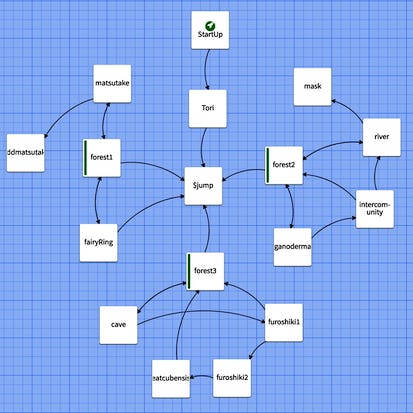
When telling stories, we tend to create one-way narratives that conduct readers through a fixed sequence of events. Even though such an approach allows us to tell very elaborate stories, it's clear that it can only go so far when it comes to complex plots. That is, stories that can unfold in many different ways, depending on the readers' choices and preferences. In this guided project you will challenge this traditional approach towards story-telling by working with Twine, a tool designed for the creation of interactive, nonlinear stories. Not only will this teach you how to craft engaging stories, it will also equip you with the abilities required for the creation of simple games, such as Mushy Foray (our study object for this project).Auto Summary
Explore the art of storytelling with "Interactive, Nonlinear Stories with Twine." This professional-level course by Coursera delves into creating complex, interactive narratives using the Twine tool. Over 180 minutes, you'll learn to craft engaging stories and simple games, perfect for those in personal development. Available with a Starter subscription, it’s ideal for anyone looking to enhance their creative writing and game design skills.