

Monthly Subscription Starting at AED 99 + VAT

- Level Foundation
- المدة 26 ساعات hours
- الطبع بواسطة The University of Sydney
-
Offered by

عن
In this course, you will learn how to develop your Critical Thinking Skills to help you achieve success in your university studies. After completing this course, you will be able to: 1. Use critical thinking and argumentation in university contexts to improve academic results 2. Understand the importance and function of critical thinking in academic culture 3. Use a variety of thinking tools to improve critical thinking 4. Identify types of argument, and bias within arguments, in order to better evaluate the strength of arguments 5. Use evidence to support claims in arguments 6. Apply critical thinking and argumentation to real world problems and issuesالوحدات
Welcome to the Academic Skills for University Success Specialization!
-
 1
Videos
1
Videos
1
Videos
- Welcome to the Academic Skills for University Success Specialization!
Overview of Weekly Topics & Learning Outcomes
-
 1
Readings
1
Readings
1
Readings
- Critical Thinking Weekly Topics
Assessment Overview
-
1
Readings
1
Readings
- Critical Thinking Assessment Overview
Summative Peer Assessment
-
1
Readings
1
Readings
- Summative Peer Assessment
1.1 Introduction to Course
-
1
Videos
-
1
Readings
-
 1
Discussion
1
Discussion
-
 1
Assignment
1
Assignment
 1
Assignment
1
Assignment
- 1.1 Practice quiz
1
Discussions
- 1.1 Introduction Forum
1
Videos
- 1.1a Introduction to the Course
1
Readings
- Learning Outcomes
1.2 Introduction to Academic Culture & Critical Thinking
-
2
Videos
-
1
Readings
-
1
Assignment
1
Assignment
- 1.2 Practice Quiz
2
Videos
- 1.2a Introduction to Academic Culture
- 1.2b Introduction to Critical Thinking
1
Readings
- Learning Outcomes
1.3 Survival Skills for University
-
2
Videos
-
1
Readings
-
1
Assignment
1
Assignment
- 1.3 Practice Quiz
2
Videos
- 1.3a Survival Skills at University part 1
- 1.3b Survival Skills for University part 2
1
Readings
- Learning Outcomes
1.4 Academic Integrity
-
1
Videos
-
1
Readings
-
1
Discussion
-
1
Assignment
1
Assignment
- 1.4 Practice Quiz
1
Discussions
- 1.4 Academic Integrity
1
Videos
- 1.4a Academic Integrity
1
Readings
- Learning Outcomes
1.5 Assessment
-
2
Assignment
2
Assignment
- Summative Quiz - Module 1
- Discussion Board Self Assessment - Module 1
2.1 Dispositions & Habits of Mind for Critical Thinking
-
2
Videos
-
1
Readings
-
1
Discussion
-
1
Assignment
1
Assignment
- 2.1 Practice Quiz
1
Discussions
- 2.1 Dispositions for Critical Thinking
2
Videos
- 2.1a Dispositions & Habits of Mind for Critical Thinking
- 2.1b Dispositions & Habits of Mind for Critical Thinking Expert Video
1
Readings
- Learning Outcomes
2.2 Argument Spheres
-
1
Videos
-
1
Readings
-
1
Assignment
1
Assignment
- 2.2 Practice Quiz
1
Videos
- 2.2a Argument Spheres
1
Readings
- Learning Outcomes
2.3 Argument Fields
-
1
Videos
-
1
Readings
-
1
Assignment
1
Assignment
- 2.3 Practice Quiz
1
Videos
- 2.3a Argument Fields
1
Readings
- Learning Outcomes
2.4 Questioning in Critical Thinking
-
3
Videos
-
1
Readings
-
1
Discussion
-
1
Assignment
1
Assignment
- 2.4 Practice Quiz
1
Discussions
- 2.4 Questioning in Critical Thinking
3
Videos
- 2.4a Questioning in Critical Thinking
- 2.4b Questioning a Text
- 2.4c Questioning in Critical Thinking Expert Video
1
Readings
- Learning Outcomes
2.5 Assessment
-
2
Assignment
2
Assignment
- 2.5 Summative Quiz - Module 2
- Discussion Board Self Assessment - Module 2
3.1 Premises & Conclusions
-
2
Videos
-
1
Readings
-
1
Assignment
1
Assignment
- 3.1 Practice Quiz
2
Videos
- 3.1a Premises and Conclusions
- 3.1b Formal Logic Structures
1
Readings
- Learning Outcomes
3.2 Common Fallacies
-
1
Videos
-
1
Readings
-
1
Discussion
-
1
Assignment
1
Assignment
- 3.2 Practice Quiz
1
Discussions
- 3.2 Common Fallacies
1
Videos
- 3.2a Common Fallacies
1
Readings
- Learning Outcomes
3.3 Forms of Reasoning
-
1
Videos
-
1
Readings
-
1
Assignment
1
Assignment
- 3.3 Practice Quiz
1
Videos
- 3.3a Forms of Reasoning
1
Readings
- Learning Outcomes
3.4 Applying Systems Thinking
-
2
Videos
-
1
Readings
-
1
Discussion
-
1
Assignment
1
Assignment
- 3.4 Practice Quiz
1
Discussions
- 3.4 Systems Thinking
2
Videos
- 3.4a Applying Systems Thinking
- 3.4b Applying Systems Thinking Expert Video
1
Readings
- Learning Outcomes
3.5 Assessment
-
2
Assignment
2
Assignment
- Summative Quiz - Module 3
- Discussion Board Self Assessment - Module 3
4.1 Claims & Evidence
-
2
Videos
-
1
Readings
-
1
Discussion
-
1
Assignment
1
Assignment
- 4.1 Practice Quiz
1
Discussions
- 4.1 Claims and Evidence
2
Videos
- 4.1a Claims and Evidence
- 4.1b Claims and Evidence Expert Video
1
Readings
- Learning Outcomes
4.2 Identifying Biases & Assumptions
-
3
Videos
-
1
Readings
-
1
Discussion
-
1
Assignment
1
Assignment
- 4.2 Practice Quiz
1
Discussions
- 4.2 Biases and Assumptions
3
Videos
- 4.2a Identifying Biases and Assumptions 1
- 4.2b Identifying Biases and Assumptions 2
- 4.2c Identifying Biases and Assumptions 3
1
Readings
- Learning Outcomes
4.3 Using Critical Thinking to Evaluate Arguments
-
2
Videos
-
1
Readings
-
1
Assignment
1
Assignment
- 4.3 Practice Quiz
2
Videos
- 4.3a Using Critical Thinking to Evaluate Arguments 1
- 4.3b Using Criteria to Evaluate Arguments 2
1
Readings
- Learning Outcomes
4.4 Types of Arguments
-
3
Videos
-
1
Readings
-
1
Discussion
-
1
Assignment
1
Assignment
- 4.4 Practice Quiz
1
Discussions
- 4.4 Types of Argument
3
Videos
- 4.4a Types of Argument 1
- 4.4b Types of Argument 2
- 4.4c Types of Arguments Expert Video
1
Readings
- Learning Outcomes
4.5 Assessment
-
2
Assignment
2
Assignment
- Summative Quiz - Module 4
- Discussion Board Self Assessment - Module 4
5.1 Argument structures
-
3
Videos
-
1
Readings
-
1
Assignment
1
Assignment
- 5.1 Practice Quiz
3
Videos
- 5.1a Argument Structures
- 5.1b Argument Chains
- 5.1c Argument Chains - Slippery Slope
1
Readings
- Learning Outcomes
5.2 Models for Academic Argumentation
-
1
Videos
-
1
Readings
-
1
Discussion
-
1
Assignment
1
Assignment
- 5.2 Practice Quiz
1
Discussions
- 5.2 Models of Academic Argumentation
1
Videos
- 5.2a Models for Academic Argumentation
1
Readings
- Learning Outcomes
5.3 Critical Thinking & Critique
-
1
Videos
-
1
Readings
-
1
Assignment
1
Assignment
- 5.3 Practice Quiz
1
Videos
- 5.3a Critical Thinking and Critique
1
Readings
- Learning Resources
5.4 Critical Thinking & Reflective Writing
-
1
Videos
-
1
Readings
-
1
Discussion
-
1
Assignment
1
Assignment
- 5.4 Practice Quiz
1
Discussions
- 5.4a Critical Thinking and Reflective Writing
1
Videos
- 5.4a Critical Thinking and Reflective Writing
1
Readings
- Learning Outcomes
5.5 Assessment
-
2
Assignment
2
Assignment
- Summative Quiz - Module 5
- Discussion Board Self Assessment - Module 5
6.1 Assessment items
-
4
Readings
-
2
Discussion
-
1
PeerReview
1
Peer Review
- Critically evaluating arguments
2
Discussions
- End of Course Discussion
- 6.1 Course Reflection
4
Readings
- Summative Assessment Overview
- How to mark your peers' assignments
- Practice peer marking activity answers
- Congratulations - You've Finished!
Auto Summary
Boost your academic success with "Critical Thinking Skills for University Success" offered by Coursera. This foundational course in personal development, led by expert instructors, equips you with essential critical thinking and argumentation skills for university contexts. Over 1560 minutes, you'll learn to identify biases, support claims with evidence, and apply critical thinking to real-world issues. Available through a Starter subscription, it's perfect for students aiming to enhance their academic performance.

Assisting Public Sector Decision Makers With Policy Analysis
Develop data analysis skills that support public sector decision-makers by performing policy analysis through all phases of the policymaking process. You will learn how to apply data analysis techniques to the core public sector principles of efficiency, effectiveness, and equity. Through authentic case studies and data sets, you will develop analytical skills commonly used to analyze and assess policies and programs, including policy options analysis, microsimulation modeling, and research designs for program and policy evaluation.
Monthly Subscription Starting at AED 99 + VAT

- Level Professional
- المدة 16 ساعات hours
- الطبع بواسطة University of Michigan
-
Offered by
عن
Develop data analysis skills that support public sector decision-makers by performing policy analysis through all phases of the policymaking process. You will learn how to apply data analysis techniques to the core public sector principles of efficiency, effectiveness, and equity. Through authentic case studies and data sets, you will develop analytical skills commonly used to analyze and assess policies and programs, including policy options analysis, microsimulation modeling, and research designs for program and policy evaluation. You will also learn intermediate technical skills, such as Chi-squared tests and contingency tables, comparing samples through t-tests and ANOVA, applying Tukey's honest significant difference to correct for multiple tests, understanding p-values, and visualizing simulations of statistical functions to help answer questions policymakers ask such as “What should we do?” and “Did it work?” In addition, you will practice statistical testing and create ggplot visuals for two real-world datasets using the R programming language. All coursework is completed in RStudio in Coursera without the need to install additional software. This is the third of four courses within the Data Analytics in the Public Sector with R Specialization. The series is ideal for current or early career professionals working in the public sector looking to gain skills in analyzing public data effectively. It is also ideal for current data analytics professionals or students looking to enter the public sector.الوحدات
Welcome to Assisting Public Sector Decision Makers Through Policy Analysis
-
1
Videos
-
3
Readings
-
1
Discussion
1
Discussions
- Meet Your Fellow Learners
1
Videos
- Introduction to Course 3: Assisting Public Sector Decision Makers with Data and Policy Analysis
3
Readings
- Course Syllabus
- Course Glossary of Terms
- Help Us Learn About You
RStudio Lab
-
 1
Lab
1
Lab
1
Labs
- RStudio Lab
What is Policy?
-
4
Videos
-
1
Discussion
-
1
Assignment
1
Assignment
- Policy Typology Knowledge Check
1
Discussions
- Policy Typology Application
4
Videos
- What is Policy and Why it Matters
- Policy Typology
- Facts About Public Policy
- Policy Typology—Examples
Policy Making & Policy Analysis
-
3
Videos
3
Videos
- The Policy Making Process
- Policy Analysis: Definitions & Examples
- Policy Analysis: Role of Data Analytics in the Policy Analysis
Week 1 Wrap-Up
-
1
Readings
-
1
Assignment
1
Assignment
- Week 1 Quiz: Policy Frameworks & Types of Policy Analysis
1
Readings
- Week 1 Optional Readings & Resources
Steps in a Policy Options Analysis
-
2
Videos
-
1
Assignment
1
Assignment
- Knowledge Check: Policy Options Analysis
2
Videos
- Framework for Policy Options Analysis—Part 1
- Framework for Policy Options Analysis—Part 2
Inferential Statistical Analysis in R
-
5
Videos
-
1
Assignment
1
Assignment
- t-Tests of Difference in Means: Practice & Knowledge Check
5
Videos
- Introduction to Inferential Statistical Analysis in R
- Chi-squared Tests of Association
- t-Tests of Difference in Means
- ANOVA Models
- p-Values & Simulation
Week 2 Wrap-Up
-
1
Assignment
1
Assignment
- Week 2 Quiz: EDA & Inferential Statistical Analysis in R
Policy Microsimulation Modeling
-
9
Videos
-
1
Discussion
-
1
Assignment
1
Assignment
- Policy Microsimulation Modeling Knowledge Check
1
Discussions
- Point on Discussion: Are simulation models useful?
9
Videos
- Introduction to Policy Simulation Modeling
- Examples of Policy Simulation Models
- Economic Analysis in Simulation Modeling: Cost-Benefit Analysis
- Economic Analysis in Simulation Modeling: Cost-Effectiveness Analysis
- Dealing with Uncertainty: Sensitivity Analysis
- Example of Sensitivity Analysis to Deal with Uncertainty
- Policy Microsimulation: What is a Compartmental Model?
- A Basic Tobacco Control Compartment Model
- Tobacco Control Compartmental Model: Menthol Cigarette Example
Week 3 Wrap-Up
-
1
Readings
-
1
Assignment
1
Assignment
- Week 3 Quiz: Policy Microsimulation Modeling
1
Readings
- Week 3 Optional Readings & Resources
The Basics of Policy & Program Evaluation
-
3
Videos
-
1
Readings
-
1
Assignment
1
Assignment
- Program Evaluation Knowledge Check
3
Videos
- What is Program Evaluation and Why it matters?
- Types of Program Evaluation
- Program Evaluation Framework
1
Readings
- Raise Taxes on Tobacco
Fundamentals of Research Design—the Core of Program Evaluation
-
4
Videos
-
1
Assignment
1
Assignment
- Research Design Knowledge Check
4
Videos
- Focusing the Design and Gathering Credible Evidence
- Example of a Research Design
- Internal and External Validity: the Basics
- Internal and External Validity: Examples
Research Designs for Program Evaluation
-
4
Videos
4
Videos
- Common Research Designs for Evaluation In Public Sector
- Experimental Designs
- Examples of Randomized-Controlled Trials (RCTs) of Public Programs
- Coming Up Next: The DC Garbage Can Case Study
Worked Example: DC Garbage Can Intervention
-
3
Videos
-
1
Assignment
1
Assignment
- The DC Garbage Can Intervention: Practice & Knowledge Check
3
Videos
- The DC Garbage Can Intervention: Data Analysis
- The DC Garbage Can Intervention: Joining Data
- The DC Garbage Can Intervention: Wrap-Up
Week 4 Wrap-Up
-
1
Videos
-
1
Readings
-
1
Assignment
1
Assignment
- Week 4 Quiz: Program/Policy Evaluation
1
Videos
- One More Thing For This Week: Random Assignment vs Random Selection
1
Readings
- Week 4 Optional Readings & Resources
What are Quasi-Experimental Designs?
-
5
Videos
-
1
Assignment
1
Assignment
- Quasi Experimental Designs Knowledge Check
5
Videos
- Quasi Experimental Designs
- The Basics of Time-Series Design
- Time-Series Design: Examples
- Coming Up Next: The Sicily Smoking Ban Case Study
- The Sicily Smoking Ban Case Study: A Worked Example of Epidemiology
Week 5 Wrap-Up
-
1
Videos
-
2
Readings
1
Videos
- Congratulations on Completing the Course!
2
Readings
- Week 5 Optional Readings & Resources
- Post- Course Survey
Auto Summary
Enhance your data analysis capabilities to support public sector decision-making with this course focused on policy analysis. Learn to apply efficiency, effectiveness, and equity principles using techniques like policy options analysis, microsimulation modeling, and more. Gain intermediate technical skills in statistical testing and visualization using R and RStudio. Ideal for public sector professionals and data analysts, this course is part of the Data Analytics in the Public Sector with R Specialization. Offered by Coursera, it spans 960 minutes with Starter and Professional subscription options.
Monthly Subscription Starting at AED 99 + VAT

- Level Professional
- المدة
-
Offered by
عن
This is a self-paced lab that takes place in the Google Cloud console. The Google Certificate Authority Service (CAS) is a highly available, scalable Google Cloud service that enables you to simplify, automate, and customize the deployment, management, and security of private certificates.Auto Summary
"Getting Started with Certificate Authority Service: Qwik Start" is a professional-level course offered by Coursera, focusing on the Google Certificate Authority Service (CAS). This self-paced lab, conducted in the Google Cloud console, guides learners through simplifying, automating, and customizing certificate management. Ideal for those in personal development, the course is available through Starter and Professional subscriptions.

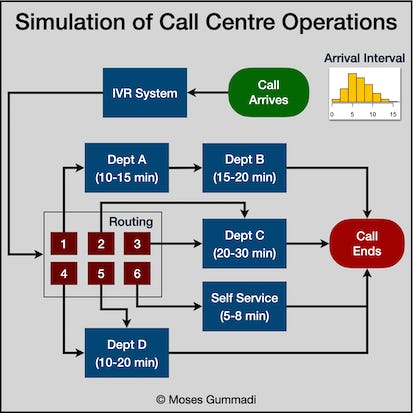
Simulation of Call Centre Operations Using R Simmer
Introduction To Call Centre Simulation Process Create Statistical Variables Required For Simulation Define Trajectories for Call Centre Departments Define Teams, Resources & Arrivals of Calls Run Call Centre Simulation & Store Results Plot Charts & Interpret Simulation Results
Buy Now Free
- Level Foundation
- المدة 2 ساعات hours
- الطبع بواسطة Coursera
-
Offered by
عن
Introduction To Call Centre Simulation Process Create Statistical Variables Required For Simulation Define Trajectories for Call Centre Departments Define Teams, Resources & Arrivals of Calls Run Call Centre Simulation & Store Results Plot Charts & Interpret Simulation Resultsالوحدات
Your Learning Journey
-
1
Readings
-
 1
Plugin
1
Plugin
-
1
Lab
-
1
Assignment
1
Assignment
- Assess Your Knowledge
1
Labs
- Simulation of Call Centre Operations Using R Simmer
1
Readings
- Project Overview
Auto Summary
Unlock the power of simulation with "Simulation of Call Centre Operations Using R Simmer," a comprehensive beginner-level course offered by Coursera. This course is designed for those interested in personal development and aims to provide a solid foundation in simulating call center operations using the R Simmer package. Guided by expert instruction, you will delve into the essential aspects of call center simulation, beginning with the introduction to the simulation process. You will learn how to create the necessary statistical variables, define trajectories for different departments, and manage teams, resources, and call arrivals. The course also covers running simulations, storing results, and interpreting data through plotting charts. With a total duration of 120 minutes, this engaging and informative course is available for free, making it an accessible opportunity for learners to enhance their skills and knowledge in this specialized domain. Whether you are new to simulation or looking to expand your expertise, this course is tailored to help you achieve your goals.
Monthly Subscription Starting at AED 99 + VAT

- Level Foundation
- المدة
- الطبع بواسطة University of Copenhagen
-
Offered by
عن
You might already know that data is not neutral. Our values and assumptions are influenced by the data surrounding us - the data we create, the data we collect, and the data we share with each other. Economic needs, social structures, or algorithmic biases can have profound consequences for the way we collect and use data. Most often, the result is an increase of inequity in the world. Data also changes the way we interact. It shapes our thoughts, our feelings, our preferences and actions. It determines what we have access to, and what not. It enables global dissemination of best practices and life improving technologies, as well as the spread of mistrust and radicalization. This is why data literacy matters. A key principle of data literacy is to have a heightened awareness of the risks and opportunities of data-driven technologies and to stay up-to-date with their consequences. In this course, we view data literacy from three perspectives: Data in personal life, data in society, and data in knowledge production. The aim is threefold: 1. To expand your skills and abilities to identify, understand, and interpret the many roles of digital technologies in daily life. 2. To enable you to discern when data-driven technologies add value to people’s lives, and when they exploit human vulnerabilities or deplete the commons. 3. To cultivate a deeper understanding of how data-driven technologies are shaping knowledge production and how they may be realigned with real human needs and values. The course is funded by Erasmus+ and developed by the 4EU+ University Alliance including Charles University (Univerzita Karlova), Sorbonne Unviersity (Sorbonne Université), University of Copenhagen (Københavns Universitet), University of Milan (Università degli studi di Milano), and University of Warsaw (Uniwersytet Warszawski).الوحدات
1.1 Introduction to the Course
-
1
Videos
-
3
Readings
-
1
Discussion
1
Discussions
- Your view on data literacy
1
Videos
- 1.1 Introduction to the Course
3
Readings
- Internet Service Providers Are Collecting -and Sharing- Vast Amounts of Information About Customers
- A Look at What ISPs Know About You
- 1.1 Further Reading and Resources
1.2 Revealing the Infrastructure of Digital Advertising
-
1
Videos
-
2
Readings
-
1
Discussion
-
1
Assignment
1
Assignment
- 1.2 Quiz
1
Discussions
- Who tracks you?
1
Videos
- 1.2 Revealing the Infrastructure of Digital Advertising
2
Readings
- Digital AdTech: The Complete Guide
- Web Tracking's Opaque Business Model of Selling Users
1.3 Personal Data & the Problems of Empowerment
-
1
Videos
-
1
Readings
-
1
Assignment
1
Assignment
- 1.3 Quiz
1
Videos
- 1.3 Personal Data & the Problems of Empowerment
1
Readings
- Empowering Resignation: There's an App for That
1.4 Legal Aspects, Security and Privacy
-
1
Videos
-
3
Readings
-
1
Assignment
1
Assignment
- 1.4 Quiz
1
Videos
- 1.4 Legal Aspects, Security and Privacy
3
Readings
- Education on Cyber Security Issues Under EU Law
- Measuring the GDPR's Impact on Web Privacy
- 1.4 Further Reading and Resources
2.1 Attention Economy
-
1
Videos
-
2
Readings
-
1
Discussion
1
Discussions
- Should information be regulated?
1
Videos
- 2.1 The Attention Economy
2
Readings
- The Attention Economy
- 2.1 Further Reading and Resources
2.2 Journalism, Data and Democracy
-
1
Videos
-
2
Readings
-
1
Discussion
-
1
Assignment
1
Assignment
- 2.2 Quiz
1
Discussions
- Can you think of more examples?
1
Videos
- 2.2 Journalism, Data and Democracy
2
Readings
- Clarifying Journalism's Quantitative Turn
- 2.2 Further Reading and Resources
2.3 How to Find the Truth in the Network
-
1
Videos
-
2
Readings
-
1
Discussion
-
1
Assignment
1
Assignment
- 2.3 Quiz
1
Discussions
- How would you rate these websites?
1
Videos
- 2.3 How to Find the Truth in the Network
2
Readings
- Educating for Misunderstanding
- 2.3 Further Reading and Resources
3.1 Can Algorithms Become Humane?
-
2
Videos
-
3
Readings
-
1
Discussion
1
Discussions
- Are you scared or hopeful?
2
Videos
- 3.1a Can Algorithms Become Humane? (Part 1)
- 3.1b Can Algorithms Become Humane? (Part 2)
3
Readings
- How AI can be used as a source for good
- Myths, mis- and preconceptions of artificial intelligence: A review of the literature
- 3.1 Further Reading and Resources
3.2 Algorithms Improving Infrastructures
-
1
Videos
-
2
Readings
-
1
Assignment
1
Assignment
- 3.2 Quiz
1
Videos
- 3.2 Algorithms Improving Infrastructures
2
Readings
- Algorithmic Game Theory: Introduction and Examples
- 3.2 Further Reading and Resources
3.3 Machine Learning for Achieving SDGs: An Ecosystem Monitoring Case
-
1
Videos
-
2
Readings
-
1
Plugin
-
1
Assignment
1
Assignment
- 3.3 Quiz
1
Videos
- 3.3 Machine Learning for Achieving SDGs: An Ecosystem Monitoring Case
2
Readings
- Understanding Machine Learning
- 3.3 Further Reading and Resources
3.4 Computational Social Science
-
1
Videos
-
2
Readings
-
1
Assignment
1
Assignment
- 3.4 Quiz
1
Videos
- 3.4 Computational Social Science
2
Readings
- Computational Social Science
- Manifesto of Computational Social Science
3.5 Computer Science for All, and as an Educational Endeavor
-
1
Videos
-
3
Readings
-
1
Assignment
1
Assignment
- 3.5 Quiz
1
Videos
- 3.5 Computer Science for All, and as an Educational Endeavor
3
Readings
- Seymour Papert- Father of Educational Computing
- Developing Computational Thinking in Compulsory Education- Implications for policy and practice
- Relations between mathematics and programming in school: juxtaposing three different cases
End-of-course reflection
-
1
Discussion
1
Discussions
- Data literacy: importance, necessary actions, and challenges
Auto Summary
Discover the significance of data literacy in this foundational personal development course by Coursera. Explore how data influences our values, social structures, and knowledge production, while learning to identify and interpret data's role in daily life. Developed by the 4EU+ University Alliance, this course is ideal for those looking to understand the impact of data-driven technologies on society and cultivate critical awareness. Available with Starter and Professional subscription options, it’s perfect for anyone keen to navigate the complexities of the digital age.
Buy Now Free

- Level Foundation
- المدة 2 ساعات hours
-
Offered by
عن
By the end of this project, you will be able to lead and document a 4 Ls project retrospective to explore lessons learned while focusing on actions and improvements. To do this, you will gain hands-on experience working in the Miro online visual collaboration platform for teamwork while you build trust, improve morale, and increase engagement during a project retrospective. Note: This course works best for learners who are based in the North America region. We’re currently working on providing the same experience in other regions.Auto Summary
Embark on a transformative journey to enhance your project management skills with the course "Gain Actionable Feedback with a 4Ls Retrospective in Miro." This foundational course, offered by Coursera, is designed to help you lead and document a 4 Ls project retrospective, focusing on extracting valuable lessons learned and driving actionable improvements. Throughout the course, you'll gain practical experience using the Miro online visual collaboration platform, ideal for fostering teamwork, building trust, boosting morale, and increasing engagement during project retrospectives. The course is particularly suited for learners in the North America region, with efforts underway to extend the experience to other areas. In just 120 minutes, you will be equipped with the skills to conduct effective retrospectives, making it a perfect fit for those looking to advance their personal development and project management capabilities. Available under the Starter subscription, this course is an excellent opportunity for individuals seeking foundational knowledge in a collaborative and interactive setting.
Buy Now Free

- Level Foundation
- المدة 3 ساعات hours
-
Offered by
عن
By the end of this project, you will be fluent in identifying and analyzing customer journeys for new products and services and in deriving opportunities from your analysis, thus generating positive results for your business venture. This project is designed to engage and harness your visionary and exploratory abilities. You will use proven models in strategy and product development with the Miro platform to explore and analyze these customer journeys. This is an important step for individuals or companies wanting to explore new products or services. We will practice critically examining customer segments and products structures that affect the business. You will engage in evaluating, through examples and hands-on practice, making decisions on product orientation. Furthermore, you will assess whether to modify or keep the product structure when entering the market. You will be ready to take an entrepreneurial idea through a scientific and logical process, helping you validate your ideas for a new business or service.Auto Summary
Discover the essentials of customer journey mapping in product development with Miro in this beginner-level course on Coursera. Guided by expert instructors, you'll learn to analyze customer journeys, identify opportunities, and make strategic decisions for new products or services. Engage in hands-on practice and use proven models to validate your entrepreneurial ideas. Perfect for individuals or companies exploring new ventures, this 180-minute, free course will enhance your visionary and analytical skills in personal development.
Program Procurement Planning with ClickUp
By the end of this guided project, you will be fluent in creating Program Procurement Planning artefacts for the Planning Phase for diverse programs. You will utilise a logical diagramming plan in an agile environment to develop the solution. This will enable you to identify and classify the required components for procurement planning.
Buy Now Free
- Level Professional
- المدة 3 ساعات hours
- الطبع بواسطة Coursera
-
Offered by
عن
By the end of this guided project, you will be fluent in creating Program Procurement Planning artefacts for the Planning Phase for diverse programs. You will utilise a logical diagramming plan in an agile environment to develop the solution. This will enable you to identify and classify the required components for procurement planning. Furthermore, it will help develop a structural model for learning about the field of Program Management. If you are interested in building up the knowledge leading to this guided project, the following is the link to: [ Developing Programme Management Blueprint with ClickUp] https://www.coursera.org/projects/program-blueprint [Advanced Programme Planning Phases Framework in ClickUp] https://www.coursera.org/projects/program-advanced-planning This Guided Project is essential for individuals wanting to learn about the field, or looking to transition into working in Program Management. This guided project is designed to engage and harness your visionary and exploratory abilities. You will use proven models in an agile environment with ClickUp to engage in a hands-on learning experience.الوحدات
Program Procurement Planning with ClickUp
-
2
Readings
-
1
Plugin
-
1
Lab
-
1
Assignment
1
Assignment
- Graded Quiz: Program Procurement Planning with ClickUp
1
Labs
- Program Procurement Planning with ClickUp
2
Readings
- Program Procurement Planning with ClickUp
- Guide to creating an account with ClickUp
Auto Summary
"Program Procurement Planning with ClickUp" is a hands-on, professional-level guided project designed to develop your skills in Program Management. Over 120 minutes, you'll learn to create procurement planning artifacts using logical diagramming in an agile environment. Ideal for those transitioning into Program Management, this course utilizes ClickUp for a practical learning experience. Available through Coursera's Starter subscription, it's perfect for personal development and enhancing your visionary skills.
Getting Started in Microsoft SharePoint
During this introductory session of Microsoft SharePoint, learners will understand that SharePoint is a platform best utilized in a business environment. As the administrator for your Microsoft SharePoint account, you will learn how to create a unique team site and add the appropriate members within your organization. The site has many features and capabilities, which will be discussed as the layout is reviewed. Project sharing and creation in real time is one of Sharepoint’s major advantages, as well as, displaying the most up-to-date news.
Buy Now Free

- Level Foundation
- المدة 3 ساعات hours
- الطبع بواسطة Coursera
-
Offered by
عن
During this introductory session of Microsoft SharePoint, learners will understand that SharePoint is a platform best utilized in a business environment. As the administrator for your Microsoft SharePoint account, you will learn how to create a unique team site and add the appropriate members within your organization. The site has many features and capabilities, which will be discussed as the layout is reviewed. Project sharing and creation in real time is one of Sharepoint’s major advantages, as well as, displaying the most up-to-date news. By the completion of this project, you will have the knowledge to create a site fine-tuned to you and your team needs, and understand how to store, add, and edit any documents related to your teams current projects.الوحدات
Your Learning Journey
-
1
Readings
-
1
Plugin
-
1
Lab
-
1
Assignment
1
Assignment
- Assess Your Knowledge
1
Labs
- Getting Started in Microsoft SharePoint
1
Readings
- Welcome!
Auto Summary
This beginner-level course, "Getting Started in Microsoft SharePoint," focuses on utilizing SharePoint in a business environment. Taught by Coursera, it guides learners in creating and managing a team site, adding members, and leveraging SharePoint's features like real-time project sharing and up-to-date news. The 180-minute course is free and designed for those new to SharePoint, helping them efficiently store, add, and edit documents for team projects.
Getting Started with Rstudio
In this 1-hour long project-based course, you will learn everything you need to know to get started with RStudio IDE, including how to install RStudio onto your Windows, MAC or Linux machine, how to use RStudio Cloud, a lightweight, cloud-based version of RStudio, how to start creating R projects, install and load R packages, as well as display interactive maps, graphs and tables with 1 line of code. This course is perfect if you want to start learning R programming with RStudio: the Premiere IDE for R Note: This course works best for learners who are based in the North America region.
Buy Now Free
- Level Foundation
- المدة 2 ساعات hours
- الطبع بواسطة Coursera
-
Offered by
عن
In this 1-hour long project-based course, you will learn everything you need to know to get started with RStudio IDE, including how to install RStudio onto your Windows, MAC or Linux machine, how to use RStudio Cloud, a lightweight, cloud-based version of RStudio, how to start creating R projects, install and load R packages, as well as display interactive maps, graphs and tables with 1 line of code. This course is perfect if you want to start learning R programming with RStudio: the Premiere IDE for R Note: This course works best for learners who are based in the North America region. We’re currently working on providing the same experience in other regions.الوحدات
Getting Started With RStudio
-
1
Readings
-
1
Plugin
-
1
Lab
-
1
Assignment
1
Assignment
- Graded Quiz: Test your Understanding
1
Labs
- Getting Started with Rstudio
1
Readings
- Project-based Course Overview
Auto Summary
Dive into R programming with "Getting Started with RStudio," a 1-hour, project-based course designed for beginners. Learn to install and navigate RStudio IDE on various operating systems, utilize RStudio Cloud, create R projects, and visualize data with ease. Perfect for those in North America, this free Coursera course by expert instructors offers an excellent introduction to the premiere IDE for R.