

Buy Now Free

- Level Foundation
- المدة 3 ساعات hours
-
Offered by

عن
In this one-hour, project-based course, you'll learn some basic elements of Unity's Cinemachine, an extremely powerful camera-control system. You'll learn how to set up different types of cameras and configure them for a variety of visual results. You'll also learn how to adjust the on-screen framing of the virtual camera to maintain a central view of the target subject. The guided project will introduce you to the following Unity concepts: - Cinemachine This series also makes use of the robot-themed Unity project created in Create Simple Enemy Behaviour with C# in Unity (Introduction to AI). If you would like to understand how the robots in this Cinemachine project have been made to patrol and chase the player, the AI project is recommended. Note: This course works best for learners who are based in the North America region. We’re currently working on providing the same experience in other regions.Auto Summary
Unlock the power of Unity's Cinemachine with this engaging one-hour, project-based course. Ideal for beginners in personal development, you'll master camera setups and configurations for stunning visual results. Guided by an expert instructor, learn to frame your target subject perfectly on-screen. This course is free and especially beneficial for learners in North America. Dive into the world of Unity and elevate your game development skills today!
Buy Now Free
- Level Professional
- المدة 2 ساعات hours
-
Offered by
عن
In this project, you will learn how to make selections in GIMP using various selection tools. You will understand how selections can be used. You will learn how to make selections based on geometrical shapes, how to make selections using freehand tools, and how to make selections based on color. You will learn how to use up to six different tools and when to use each one. As you learn how to use these tools, you will create a digital poster displaying your selections. Note: This course works best for learners who are based in the North America region. We’re currently working on providing the same experience in other regions.Auto Summary
Learn to master GIMP's selection tools in this intermediate-level, 120-minute course by Coursera. Perfect for those looking to enhance their image editing skills, this free personal development project offers hands-on experience with various selection techniques.
Buy Now Free
- Level Professional
- المدة 2 ساعات hours
-
Offered by
عن
In this 2-hour project-based course, you will be able to : - Understand the Facial Keypoint Dataset and you will write a custom dataset class for Image-Keypoint dataset. Additionally, you will apply keypoint augmentation to augment images as well as its keypoints. For keypoint augmentation you will use albumentation library. You will plot the image keypoint pair. - Load a pretrained state of the art convolutional neural network using timm library. - Create train function and evaluator function which will helpful to write training loop. Moreover, you will use training loop to train the model. - Lastly, you will use trained model to find keypoints given any image.Auto Summary
Discover "Facial Keypoint Detection with PyTorch" on Coursera, a 2-hour intermediate course focused on mastering facial keypoint datasets and creating custom dataset classes. Ideal for personal development, this free, project-based course is perfect for learners looking to enhance their PyTorch skills under expert guidance.

Create a Storyboard in Canva
By the end of this project, you will learn how to create a Storyboard from scratch using the free version of Canva. A storyboard is a graphic organizer that consists of illustrations or images displayed in sequence for the purpose of pre-visualising a motion picture, animation, motion graphic or interactive media sequence. You will be able to incorporate a color scheme, images, and other design elements for aesthetically pleasing and value added business marketing collateral.
Buy Now Free
- Level Professional
- المدة 3 ساعات hours
- الطبع بواسطة Coursera
-
Offered by
عن
By the end of this project, you will learn how to create a Storyboard from scratch using the free version of Canva. A storyboard is a graphic organizer that consists of illustrations or images displayed in sequence for the purpose of pre-visualising a motion picture, animation, motion graphic or interactive media sequence. You will be able to incorporate a color scheme, images, and other design elements for aesthetically pleasing and value added business marketing collateral. We can use Canva to complete this project because it provides all the tools you need to create an organized and visually appealing product while offering a variety of options for sharing and collaboration. You will learn how to plan and organize your ideas and utilize graphic design tools as you create a Storyboard template for your next visual experience. Note: This course works best for learners who are based in the North America region. We’re currently working on providing the same experience in other regions.الوحدات
Your Learning Journey
-
 1
Readings
1
Readings
-
 1
Plugin
1
Plugin
-
 1
Lab
1
Lab
-
 1
Assignment
1
Assignment
 1
Assignment
1
Assignment
- Assess Your Knowledge
 1
Labs
1
Labs
- Create a Storyboard in Canva
1
Readings
- Project Overview
Auto Summary
"Create a Storyboard in Canva" is an intermediate-level course in Personal Development offered by Coursera. Taught by an expert instructor, this 180-minute course guides you through creating a storyboard using Canva's free version. You'll learn to incorporate color schemes, images, and other design elements for compelling business marketing collateral. Ideal for North American learners, it provides essential graphic design tools and collaborative features. Available for free, it's perfect for anyone looking to enhance their visual storytelling skills.

Multimodal Literacies: Communication and Learning in the Era of Digital Media
Whereas the focus of traditional literacy pedagogy has been the written word in its standard and literary forms, this courser expands the scope of literacy learning to encompass contemporary multimodal texts and the wide range of ways of making meaning that occur in different social and cultural contexts. Another course, "Literacy Teaching and Learning: Aims, Approaches and Pedagogies" addresses pedagogical aspects of literacies.
Monthly Subscription Starting at AED 99 + VAT

- Level Foundation
- المدة 24 ساعات hours
- الطبع بواسطة University of Illinois Urbana-Champaign
-
Offered by
عن
Whereas the focus of traditional literacy pedagogy has been the written word in its standard and literary forms, this courser expands the scope of literacy learning to encompass contemporary multimodal texts and the wide range of ways of making meaning that occur in different social and cultural contexts. Another course, "Literacy Teaching and Learning: Aims, Approaches and Pedagogies" addresses pedagogical aspects of literacies. This "Multimodal Literacies" learning module does not require or expect that participants will have already completed the "Literacy Teaching and Learning" module. -------------------------------- Recommended Background -------------------------------- This course is designed for people interested in literacy teaching and learning, including people who may wish to join education as a profession, practicing teachers interested in exploring future directions for a vocation that is currently undergoing transformation, and community and workplace leaders who regard their mission to be in part "educative." -------------------------------- Related Resources -------------------------------- Online resources are available here: https://newlearningonline.com Book: https://www.amazon.com/Literacies-Mary-Kalantzis/dp/1107578698/ref=sr_1_1?qid=1661288799&refinements=p_27%3ABill+Cope&s=books&sr=1-1&text=Bill+Cope -------------------------------- Join our Online Communities! -------------------------------- CGScholar (Create an account and join the New Learning community) https://cgscholar.com/community/community_profiles/new-learning/community_updates Facebook https://www.facebook.com/newlearningonline Twitter https://twitter.com/neolearning -------------------------------- Take this Course for Credit at the University of Illinois -------------------------------- This course has the same content and anticipates the same level of contribution by students in the Assessment for Learning course offered to graduate certificate, masters, and doctoral level students in the Learning Design and Leadership Program in the College of Education at the University of Illinois. Of course, in the nature of MOOCs many people will just want to view the videos and casually join some of the discussions. Some people say that these limited kinds of participation offer evidence that MOOCs suffer from low retention rates. Far from it – we say that any level of engagement is good engagement. On the other hand, if you would like to take this course for credit at the University of Illinois, you will find more information about our program here: https://ldlprogram.web.illinois.edu/overview/ And you can apply here: https://education.illinois.edu/epol/programs-degrees/ldl -------------------------------- The Learning Design and Leadership Series of MOOCs -------------------------------- This course is one of a series of eight MOOCs created by Bill Cope and Mary Kalantzis for the Learning Design and Leadership program at the University of Illinois. If you find this MOOC helpful, please join us in others! e-Learning Ecologies: Innovative Approaches to Teaching and Learning for the Digital Age https://www.coursera.org/learn/elearning New Learning: Principles and Patterns of Pedagogy https://www.coursera.org/learn/newlearning Assessment for Learning https://www.coursera.org/learn/assessmentforlearning Learning, Knowledge, and Human Development https://www.coursera.org/learn/learning-knowledge-human-development Ubiquitous Learning and Instructional Technologies https://www.coursera.org/learn/ubiquitouslearning Negotiating Learner Differences: Towards Productive Diversity in Learning https://www.coursera.org/learn/learnerdifferences Literacy Teaching and Learning: Aims, Approaches and Pedagogies https://www.coursera.org/learn/literacy-teaching-learning Multimodal Literacies: Communication and Learning in the Era of Digital Media https://www.coursera.org/learn/multimodal-literaciesالوحدات
About the Course
-
5
Readings
-
1
Plugin
-
1
Assignment
1
Assignment
- Orientation Quiz
5
Readings
- Syllabus
- Task Overview - How to Pass This Course
- About the Discussion Forums
- Take this Course as a Stepping Stone for a University of Illinois Certificate, Masters, or Doctorate - Fully Online!
- Course Readings
About Your Classmates
-
2
Readings
-
1
Discussion
1
Discussions
- Getting to Know Your Classmates
2
Readings
- Updating Your Profile
- Social Media
Introduction
-
 1
Videos
1
Videos
-
1
Readings
1
Videos
- 8.1 Introduction - Representation, Communication and Design
1
Readings
- "Regimes of Literacy," Kalantzis and Cope
Multimodal Meaning and Synesthesia
-
3
Videos
-
1
Readings
-
1
Discussion
-
1
PeerReview
1
Peer Review
- Essential Peer Reviewed Update #1
1
Discussions
- Essential Update #1
3
Videos
- 8.2 Design and Multimodality
- 8.3 A Grammar of Multimodal Meaning
- 8.4 Synesthesia or Mode Switching
1
Readings
- Related Readings
Making Meaning by Reading
-
2
Videos
-
1
Readings
-
1
Discussion
-
1
PeerReview
1
Peer Review
- Optional Peer Reviewed Update #2
1
Discussions
- Optional Update #2
2
Videos
- 9.1 Learning to Read: Phonics
- 9.2 Learning to Read: Reading for Meaning
1
Readings
- Related Readings
Making Meaning by Writing
-
6
Videos
-
1
Readings
-
1
Discussion
-
1
PeerReview
1
Peer Review
- Essential Peer Reviewed Update #3
1
Discussions
- Essential Update #3
6
Videos
- 10.1 The Nature of Writing
- 10.2 Traditional Grammar and Its Impossibilities
- 10.3 Chomsky’s Grammar
- 10.4 Halliday’s Grammar
- 10.5 A Grammar of Multiliteracies
- 10.6 The Writing Process
1
Readings
- Related Readings
Making Visual Meaning
-
8
Videos
-
1
Readings
-
1
Discussion
-
1
PeerReview
1
Peer Review
- Optional Peer Reviewed Update #4
1
Discussions
- Optional Update #4
8
Videos
- 11.1 The Contemporary Significance of Visual Meanings
- 11.2 Designs of Visual Meanings
- 11.3 Perceptual Images and Mental Images
- 11.4 A Grammar of the Visual
- 11.5 Deconstructing Images
- 11.6 Image Making as Design
- 11.7 Parsing Images
- 11.8 Multimodal Pedagogy in Practice
1
Readings
- Related Readings
Making Spatial, Tactile, and Gestural Meanings
-
6
Videos
-
1
Readings
-
1
Discussion
-
1
PeerReview
1
Peer Review
- Optional Peer Reviewed Update # 5
1
Discussions
- Optional Update # 5
6
Videos
- 12.1 Spatial, Tactile, and Gestural Meanings
- 12.2 A Grammar of Spatial Meaning
- 12.3 Tactile Meanings
- 12.4 A Grammar of Tactile Meaning
- 12.5 Gestural Meanings
- 12.6 A Grammar of Gestural Meanings
1
Readings
- Related Readings
Making Audio and Oral Meanings
-
4
Videos
-
1
Readings
-
1
Discussion
-
1
PeerReview
1
Peer Review
- Essential Peer Reviewed Update #6
1
Discussions
- Essential Update #6
4
Videos
- 13.1 Making Audio Meanings
- 13.2 Making Meanings Using Oral Language
- 13.3 Synesthesia and Mode Shifting Between Oral and Written Meanings
- 13.4 Classroom Discussion in Speech and Writing
1
Readings
- Related Readings
Literacies to Think and to Learn
-
3
Videos
-
1
Readings
-
1
Discussion
-
1
PeerReview
1
Peer Review
- Optional Peer Reviewed Update #7
1
Discussions
- Optional Update #7
3
Videos
- 14.1 Literacies to Think and to Learn
- 14.2 On Human Meaning Systems
- 14.3 Academic Literacies as Ways of Thinking
1
Readings
- Related Readings
Literacies and Learner Differences
-
6
Videos
-
1
Readings
-
1
Discussion
-
1
PeerReview
1
Peer Review
- Essential Peer Reviewed Update #8
1
Discussions
- Essential Update #8
6
Videos
- 15.1 Literacies and Learner Differences
- 15.2 The Effects of Learner Differences
- 15.3 Literacies Learning and Development
- 15.4 Recognizing Learner Differences in Literacies Pedagogy
- 15.5 Complexities of Learner Differences
- 15.6 Differentiated Literacies Instruction
1
Readings
- Related Readings
Literacies Standards and Assessment
-
7
Videos
-
1
Readings
-
1
Discussion
-
4
PeerReview
-
1
Plugin
4
Peer Review
- Optional Peer Reviewed Update #9
- Optional Work 1: Educational Theory
- Optional Work 2A: Learning Practice Case Study
- Optional Work 2B: Design a Learning Module
1
Discussions
- Optional Update #9
7
Videos
- 16.1 Approaches to Literacy Standards and Assessment
- 16.2 Standardized and Norm-referenced Assessment
- 16.3 Criterion Referenced Assessment
- 16.4 Progress Assessment
- 16.5 Select and Supply Response Assessments
- 16.6 Rubric-Based Peer and Formative Assessment
- 16.7 Big Data and the Future of Assessment
1
Readings
- Related Readings
Auto Summary
"Multimodal Literacies: Communication and Learning in the Era of Digital Media" is an enriching course in the Personal Development domain, meticulously crafted to broaden the traditional understanding of literacy. Spearheaded by Bill Cope and Mary Kalantzis, this module delves into the diverse ways of making meaning through contemporary multimodal texts and various social and cultural contexts, beyond the conventional focus on the written word. Designed for those interested in literacy teaching and learning, this course is perfect for aspiring educators, practicing teachers seeking to explore evolving pedagogical landscapes, and community or workplace leaders with an educational mission. No prior completion of related modules is necessary to enroll. The course offers comprehensive online resources, including a recommended book and access to dynamic online communities on platforms like CGScholar, Facebook, and Twitter. It aligns with the Assessment for Learning course available at the University of Illinois, allowing learners to engage at their preferred level, from casual participation to earning academic credit. This foundational course spans approximately 1440 minutes and is available through flexible subscription options—Starter and Professional. It is part of the esteemed Learning Design and Leadership series of MOOCs, encouraging learners to explore other innovative courses such as e-Learning Ecologies and New Learning: Principles and Patterns of Pedagogy. Embark on this journey to enhance your literacy teaching skills and adapt to the digital media era by joining "Multimodal Literacies" on Coursera today!
Monthly Subscription Starting at AED 99 + VAT

- Level Professional
- المدة 8 ساعات hours
- الطبع بواسطة Erasmus University Rotterdam
-
Offered by
عن
Do you remember when you first created your Facebook account? Do you know what happens to the data and stories you share on Facebook? Are you aware of the Facebook – Cambridge Analytica crisis and its ramifications? In this course, you will take a deep dive into reputation management by tackling a case study on the crisis, the effects of which are still unravelling for Facebook, the tech industry, and society at large. You will explore the concept of corporate reputation, and touch upon topics such as data privacy implications for the big tech or the importance of leadership and culture, and how Mark Zuckerberg’s leadership might have affected Facebook in particular. In the final project, you will be asked to link theory and practice to provide an analysis of events and make recommendations for Facebook, going forward. This 6-module course has a study time of about 20 hours. It is recommended for anyone studying communication or management, practitioners interested in crisis and reputation management, or anyone with an interest in case learning that explores real-life business challenges. Each week, you will be introduced to engaging content, such as videos, quizzes, discussion forum, and academic readings, and be encouraged to apply learned knowledge to the case. The final module – the capstone project – is assessed by peer review. Broaden your knowledge of reputation and crisis management, and hone your critical decision-making skills. Are you ready to look beyond Facebook, and draw lessons from it that can be applied in many other situations? Register now! WHAT YOU WILL LEARN • Analyse the challenges of reputation management in the digital age • Examine the role of leadership and corporate culture in reputation management • Understand the role and relevance of counter-institutional mechanisms, such as whistleblowing, to check corporate power and influence • Examine the interaction and nexus of politics and business and their ethical and societal consequences • Understand the wider scope of corporate responsibilities in business organisations • Analyse how large tech companies manage or reconcile the paradox between commercial and societal interestsالوحدات
Welcome to the Course
-
1
Videos
-
1
Readings
-
1
Discussion
1
Discussions
- Please tell us about yourself!
1
Videos
- Welcome to the Course
1
Readings
- Meet the Instructors
The Case Study
-
1
Videos
-
2
Readings
-
1
Assignment
1
Assignment
- Test Your Understanding of Case Facts
1
Videos
- Why Use a Case: Introduction to the Case Method
2
Readings
- Reputation Crisis? Facebook meets Cambridge Analytica
- Events' Timeline
Additional Resources
-
1
Readings
1
Readings
- Get to Know More!
Reputation
-
2
Videos
-
2
Readings
-
1
Discussion
1
Discussions
- Reflect on Facebook’s reputation.
2
Videos
- Reputation Management: What, Why, and How
- Discussion with the Experts: Data Privacy and Reputation Implications for the Big Tech (Part 1)
2
Readings
- Meet the Experts
- Read and Watch
Additional Resources
-
1
Readings
1
Readings
- Additional resources
Leadership and Culture
-
2
Videos
-
2
Readings
-
1
Discussion
-
1
Assignment
1
Assignment
- Test your Understanding
1
Discussions
- Share your perspective on leadership!
2
Videos
- The Leadership Imperative
- Discussion with an expert: leadership, culture, and their implications for the businesses (Part 1)
2
Readings
- Meet the Expert
- Read and Watch
Additional Resources
-
1
Readings
1
Readings
- Get to Know More!
Whistleblowing
-
2
Videos
-
1
Readings
-
1
Discussion
1
Discussions
- IF I had to blow the whistle...!
2
Videos
- Speaking up: Calling out wrongdoing in organizations
- Animation Whistleblowing
1
Readings
- Read and Watch
Additional Resources
-
1
Readings
1
Readings
- Get to Know More!
Corporate Social Responsibility
-
1
Videos
-
1
Readings
-
1
Discussion
-
1
Assignment
1
Assignment
- Test Your Understanding
1
Discussions
- CSR--a contradiction in terms?
1
Videos
- Corporate Social Responsibility and Societal Purpose
1
Readings
- Watch and Read
Additional Resources
-
1
Readings
1
Readings
- Get to Know More!
Capstone project
-
3
Videos
-
2
Readings
-
1
PeerReview
1
Peer Review
- Capstone project assignment
3
Videos
- Wrap Up and Capstone
- Discussion with the Experts: Data Privacy and Reputation Implications for the Big Tech (Part 2)
- Discussion with an expert: leadership, culture, and their implications for the businesses (Part 2)
2
Readings
- Epilogue
- Watch and Read: Recent Facebook Developments
Auto Summary
Dive into the intricate world of reputation management with the course "Reputation Crisis? Facebook meets Cambridge Analytica." Focused on the infamous Facebook-Cambridge Analytica scandal, this course explores corporate reputation, data privacy, leadership, and culture. Led by expert instructors from Coursera, it spans 20 hours across 6 engaging modules, featuring videos, quizzes, and a capstone project. Ideal for communication or management students and practitioners, it offers Starter and Professional subscription options. Enhance your decision-making skills and understand the broader implications of corporate actions in the digital age. Register now to apply these lessons beyond Facebook!
Buy Now Free
- Level Professional
- المدة 3 ساعات hours
-
Offered by
عن
By the end of this guided project, you will be fluent in creating Program Change Management artefacts for the Planning Phase for diverse programs. You will utilise a logical diagramming plan in an agile environment to develop the solution. This will enable you to identify and classify the required components for change planning. Furthermore, it will help develop a structural model for learning about the field of Program Management. If you are interested in building up the knowledge leading to this guided project, the following is the link to: [ Developing Programme Management Blueprint with ClickUp] https://www.coursera.org/projects/program-blueprint [Advanced Programme Planning Phases Framework in ClickUp] https://www.coursera.org/projects/program-advanced-planning This Guided Project is essential for individuals wanting to learn about the field, or looking to transition into working in Program Management. This guided project is designed to engage and harness your visionary and exploratory abilities. You will use proven models in an agile environment with ClickUp to engage in a hands-on learning experience.Auto Summary
Master the art of Program Change Management with ClickUp in this intermediate-level course by Coursera. In just 180 minutes, you'll learn to create essential artefacts for the Planning Phase of various programs. Ideal for those seeking personal development, the course is free and guided by experts.
Monthly Subscription Starting at AED 99 + VAT

- Level Foundation
- المدة 8 ساعات hours
- الطبع بواسطة University of Alberta
-
Offered by
عن
This course covers techniques for monitoring your projects in order to align client needs, project plans, and software production. It focuses on metrics and reviews to track and improve project progress and software quality.الوحدات
Introduction
-
2
Videos
-
5
Readings
2
Videos
- Specialization Preview
- Introduction to Reviews & Metrics for Software Improvements
5
Readings
- Meet your presenters: Morgan Patzelt
- Meet your presenters: Bradley Poulette
- Meet Your Facilitators
- Course Resources: Reviews & Metrics for Software Improvements
- Course Map: Reviews and Metrics for Software Improvements
Lesson 1: Introduction to Monitoring
-
1
Videos
1
Videos
- 5.1.1: Introduction to Monitoring
Lesson 2: Sprint Review Meeting
-
1
Videos
1
Videos
- 5.1.2: Sprint Review Meeting
Lesson 3: User Studies
-
1
Videos
-
1
Readings
1
Videos
- 5.1.3: User Studies
1
Readings
- Discussion: Other Methods of Usability Testing
Lesson 4: Industry Examples
-
2
Videos
-
1
Readings
-
1
Assignment
1
Assignment
- Module 1: Assessment (Graded)
2
Videos
- 5.1.4: Industry Examples
- 5.1.4A: Industry Examples - Interview
1
Readings
- Module 1: Supplemental Resources
Lesson 1: Review Techniques
-
2
Videos
2
Videos
- 5.2.1: Review Techniques
- 5.2.1A: Review Techniques
Lesson 2: Monitoring Issues
-
1
Videos
1
Videos
- 5.2.2: Monitoring Issues
Lesson 3: Goal, Question, Metric (GQM)
-
1
Videos
1
Videos
- 5.2.3: Goal, Question, Metric (GQM)
Lesson 4: Desirable Properties of Metrics
-
1
Videos
1
Videos
- 5.2.4: Desirable Properties of Metrics
Lesson 5: Other Metrics
-
1
Videos
1
Videos
- 5.2.5: Other Metrics
Lesson 6: Defect Analysis
-
1
Videos
-
1
Readings
-
1
Assignment
1
Assignment
- Module 2: Assessment (Graded)
1
Videos
- 5.2.6: Defect Analysis
1
Readings
- Module 2: Supplemental Resources
Lesson 1: Daily Scrum
-
2
Videos
-
1
Readings
2
Videos
- 5.3.1: Daily Scrum
- 5.3.1A: Daily Scrum - Challenges
1
Readings
- Discussion: Daily Scrum
Lesson 2: Velocity
-
1
Videos
1
Videos
- 5.3.2: Velocity
Lesson 3: Release Burndown Chart
-
2
Videos
-
1
Readings
2
Videos
- 5.3.3: Release Burndown Chart
- 5.3.3A: Release Burndown Chart - Changing Requirements
1
Readings
- Reading: Release Burndown How-To Guide
Lesson 4: Iteration Burndown Chart
-
1
Videos
-
1
Readings
-
1
Assignment
1
Assignment
- Module 3: Assessment (Graded)
1
Videos
- 5.3.4: Iteration Burndown Chart
1
Readings
- Module 3: Supplemental Resources
Lesson 1: Retrospectives
-
1
Videos
1
Videos
- 5.4.1: Retrospectives
Lesson 2: Retrospectives Issues
-
1
Videos
1
Videos
- 5.4.2: Retrospectives Issues
Lesson 3: Sprint Retrospective
-
1
Videos
1
Videos
- 5.4.3: Sprint Retrospective
Lesson 4: Project Retrospective Exercises
-
4
Videos
-
1
Readings
-
1
Assignment
1
Assignment
- Module 4: Assessment (Graded)
4
Videos
- 5.4.4: Project Retrospective Exercises
- 5.4.4A: Project Retrospective Exercises - Readying
- 5.4.4B: Project Retrospective Exercises - Past
- 5.4.4C: Project Retrospective Exercises - Future
1
Readings
- Module 4: Supplemental Resources
Course Summary
-
1
Videos
-
1
Readings
-
1
Assignment
1
Assignment
- Course Assessment (Graded)
1
Videos
- 5.4.5: Course Summary
1
Readings
- Acknowledgements
Auto Summary
"Reviews & Metrics for Software Improvements" is a foundational course in Personal Development offered by Coursera. Taught by industry experts, it focuses on techniques to monitor projects, align client needs, and enhance software quality through effective metrics and reviews. The course spans 480 minutes and offers flexible subscription options: Starter and Professional. Ideal for those looking to improve project tracking and software development processes.
Buy Now Free
- Level Professional
- المدة 2 ساعات hours
-
Offered by
عن
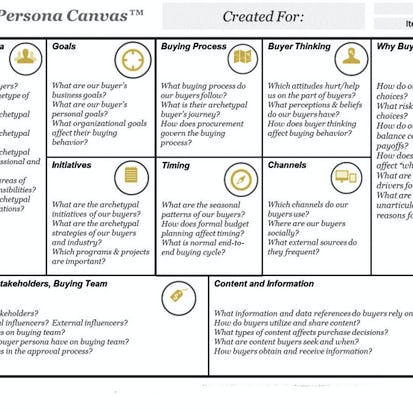
By the end of this guided project, you will be able to use the Buyer Persona Canvas to develop a deep insight on your buyers. The canvas is a 10-block model that help us understand the archetypal behaviors, activities, mental models, and contextual situations that buyers use to accomplish specific goals. Modeling buyer persona behavior offers insights into how buyers make purchase decisions, the goals driving their buying behaviors, and their attitudes of decision-making. The canvas offers a narrative of customer goals and desires, how buying behavior are affected, the context of the buyers, their visions for the future, and how you and your company can contribute to their story For us to practically demonstrate how to use the Buyer Persona Canvas to conduct analysis and make decisions, we will use an energy services company as a case study. Example of the case study would empower you to apply the model to your company or any other company of your choice. The project is for marketing and sale executives who want to have deeper understanding of their buyers, and then formulate strategies to help them achieve their goals. Also, for entrepreneurs who want to have insights on the potential customers before developing products/services to solve their problems. At the end of the project, you will be able to use the canvas to create a more refined and intimate view of your customers.Auto Summary
Unlock the secrets to understanding your customers' needs with the "How to Use Buyer Persona Canvas to Understand Customer Needs" course. This engaging intermediate-level course in the domain of Personal Development, offered by Coursera, is designed to equip you with the skills to develop profound insights into your buyers using the Buyer Persona Canvas. Under the expert guidance of experienced instructors, you will embark on a comprehensive 120-minute guided project that dives deep into the strategies and techniques for creating effective buyer personas. By the end of the course, you will be adept at utilizing the Buyer Persona Canvas to enhance your understanding of customer needs, which is crucial for any marketing or business development professional. What's more, this course is available for free, making it an excellent opportunity for those looking to advance their skills without financial commitment. Ideal for individuals with some prior experience in the field, this course is perfect for marketers, business owners, and anyone looking to refine their approach to customer insights. Join now and take the first step towards mastering the art of understanding your buyers like never before!
How to create and sell templates on Canva
In this guided project the learner will have the opportunity to learn how to create and sell templates created on Canva. Canva is an online graphic design program that allows you to create and design all types of documents, graphic design compositions and more. Canva is a great option for those looking for a user-friendly and easy-to-use platform to create attractive designs. Canva has many elements that are free and it gives you a lot of freedom when designing.
Buy Now Free
- Level Foundation
- المدة 1 ساعات hours
- الطبع بواسطة Coursera
-
Offered by
عن
In this guided project the learner will have the opportunity to learn how to create and sell templates created on Canva. Canva is an online graphic design program that allows you to create and design all types of documents, graphic design compositions and more. Canva is a great option for those looking for a user-friendly and easy-to-use platform to create attractive designs. Canva has many elements that are free and it gives you a lot of freedom when designing. In addition to this, Canva has paid content that offers another endless number of elements and possibilities for the design but they are not mandatory or totally necessary, so the user has the freedom to choose how much content or elements they want to have at their disposal. Canva is an extremely useful tool for those who are just starting out and even becomes a very good tool for those who have spent years designing in more advanced programs. It is a fast option that does not need to be installed on your computer and as long as you have an Internet connection, it will be an accessible tool.الوحدات
Your Learning Journey
-
1
Readings
-
1
Plugin
-
1
Lab
-
1
Assignment
1
Assignment
- Assess Your Knowledge
1
Labs
- How to create a sell templates on Canva
1
Readings
- Project Overview
Auto Summary
Learn to create and sell templates on Canva in this beginner-friendly course by Coursera. Discover Canva's user-friendly platform, design freedom, and various elements, both free and paid. Perfect for beginners and experienced designers, this one-hour course is accessible online with a free subscription. Ideal for anyone looking to enhance their graphic design skills and explore new business opportunities.