


Poverty & Population: How Demographics Shape Policy
This course has four modules, or foci. The first is to understand the categories of social welfare—populations, income, earnings, and assets— and some related concepts that play a very large role in shaping policy decisions: unemployment, inflation, and the minimum wage. The second deals with the central institution of social welfare—the labor market, which largely determines how many resources a person has. The labor market also establishes hierarchy, both through meritocracy and through categories of privilege.
Monthly Subscription Starting at AED 99 + VAT

- Level Foundation
- المدة 12 ساعات hours
- الطبع بواسطة Columbia University
-
Offered by

عن
This course has four modules, or foci. The first is to understand the categories of social welfare—populations, income, earnings, and assets— and some related concepts that play a very large role in shaping policy decisions: unemployment, inflation, and the minimum wage. The second deals with the central institution of social welfare—the labor market, which largely determines how many resources a person has. The labor market also establishes hierarchy, both through meritocracy and through categories of privilege. The third is poverty: the differing ways we define who is poor, and how effective U.S. anti-poverty efforts have been. The final module looks directly at federal decision making, the political organization of ideas, the structure of U.S. government, and the legislative process that shapes much of our social policy. This course addresses issues of power, oppression, and white supremacy. The course is part of a sequence in social policy that has an HONORS TRACK. This track will prepare the learner for masters-level work in policy, which involves reading the literature, writing concise summaries and probing critiques. Over the sequence the learner will develop a policy analysis that will create a foundation for professional policy analyst assignments.الوحدات
Introduction
-
 3
Videos
3
Videos
3
Videos
- Sequence Opening: Robertson & Social Policy
- Sequence video: Why Social Policy - Alumni
- Course Introduction
Populations, Income, Poverty, and Policy
-
10
Videos
10
Videos
- Demography
- Age, Region, and Race
- Households and Families
- Income
- Earnings
- GDP
- Wealth
- Inflation
- Unemployment
- Minimum Wage
Wrapping Up
-
1
Videos
-
 1
Assignment
1
Assignment
 1
Assignment
1
Assignment
- Quiz: Module 1 Overview
1
Videos
- Module 1 Wrap Up
Required Reading
-
 1
Readings
1
Readings
-
1
PeerReview
1
Peer Review
- Required Reading Assessment
1
Readings
- Income and poverty in the United States: 2017
Introduction
-
1
Videos
1
Videos
- Introduction
Causes of Poverty and Discrimination
-
7
Videos
7
Videos
- Sorting
- Hiring Practices
- Women in the Labor Market
- Race and the Labor Market
- Mass Incarceration by Professor Garfinkel
- Effects of Racism in the Labor Market
- The Changing Family by Professor Mincy
Wrapping Up
-
1
Videos
-
1
Assignment
1
Assignment
- Quiz: Module 2 Overview
1
Videos
- Module 2 Wrap Up
Required reading
-
1
Readings
-
1
PeerReview
1
Peer Review
- Required Reading Assessment
1
Readings
- The Case for Reparations
Introduction
-
1
Videos
1
Videos
- Introduction
Gender, Race, and Oppression
-
8
Videos
8
Videos
- The Causes and Cures of Poverty
- World Poverty
- FPL: The Federal Poverty Line
- Who is Poor?
- Supplemental Measures of Poverty
- Alternative Policy Measures by Dr. Wiemer
- The Impacts of Social Policy on Poverty
- Poverty Research by Professor Garfinkel
Wrapping Up
-
1
Videos
-
1
Assignment
1
Assignment
- Quiz: Module 3 Overview
1
Videos
- Module 3 Wrap Up
Required Reading Overview
-
1
Readings
-
1
PeerReview
1
Peer Review
- Required Reading Overview Assessment
1
Readings
- Waging war on poverty: Poverty trends using a historical supplemental poverty measure
Introduction
-
1
Videos
1
Videos
- Introduction
Formulating Social Policy in the U.S.
-
7
Videos
7
Videos
- The Debate
- How Social Policy is Made by Professor Lenns
- Levels and Branches
- The Legislative Branch
- The Executive Branch
- The Judicial Branch
- Regulations versus Laws by Professor Lenns
Writing a Bill
-
4
Videos
4
Videos
- The Bill Development
- The Bill: Legislature
- The Signing of a Bill
- The Bill Implementation
Wrapping Up
-
1
Videos
-
1
Assignment
1
Assignment
- Quiz: Module 4 Overview
1
Videos
- Module 4 Wrap Up
Required Reading
-
1
Readings
-
1
PeerReview
1
Peer Review
- Required Reading Assessment
1
Readings
- The Making of Government Policy
Policy Alternatives
-
1
Videos
-
1
PeerReview
1
Peer Review
- Policy Alternatives
1
Videos
- Policy Alternatives Overview Video
Auto Summary
Dive into the intricate relationship between demographics and policy with "Poverty & Population: How Demographics Shape Policy." This foundational course in Personal Development spans four comprehensive modules, offering a deep dive into key social welfare categories such as populations, income, earnings, and assets. You'll explore crucial concepts like unemployment, inflation, and the minimum wage, and understand how these elements influence policy decisions. The course delves into the labor market, examining how it allocates resources and establishes societal hierarchies through meritocracy and privilege. Another critical focus is on poverty – analyzing definitions, measurements, and the effectiveness of U.S. anti-poverty initiatives. Finally, you'll gain insight into federal decision-making processes, the political organization of ideas, and the legislative structure shaping social policies. Addressing themes of power, oppression, and white supremacy, this course is part of a broader social policy sequence that includes an HONORS TRACK. This advanced track is designed to prepare learners for master's level work in policy, emphasizing literature review, concise writing, and critical analysis. Throughout the sequence, you'll develop a solid policy analysis foundation, equipping you for professional roles in policy analysis. Offered by Coursera, this course runs for approximately 720 minutes and is available through Starter and Professional subscription plans. Ideal for those looking to build a strong foundation in social policy, it is perfect for aspiring policy analysts and anyone interested in understanding the demographic influences on policy-making.
Monthly Subscription Starting at AED 99 + VAT
- Level Foundation
- المدة 8 ساعات hours
- الطبع بواسطة Relay Graduate School of Education
-
Offered by
عن
This course is designed for classroom teachers who juggle time-sensitive tasks and often-exhausting teaching schedules. With an eye toward long-term sustainability, The Together Teacher examines the purpose for planning ahead, provides tools for tracking time commitments, deadlines and tasks, and helps teachers develop a personal organization system that interacts with their day-by-day practices. All teachers, from the pen & paper list maker to the tech-savvy digital maven, will benefit from the no-nonsense approach to "togetherness" that's presented in this course. We don't care what format you use; we care that you know when you have free time during the day, and that you have a plan for using it.الوحدات
Welcome and Orientation
-
3
Videos
-
2
Readings
-
1
PeerReview
1
Peer Review
- Introduction, Aspirations & Goals
3
Videos
- Welcome to Get Organized!
- Reflecting on Your Togetherness
- Togetherness Buckets
2
Readings
- Student Survey
- The Impact of Togetherness
Weekly Worksheet
-
5
Videos
-
1
PeerReview
1
Peer Review
- Building a Weekly Worksheet
5
Videos
- Introducing the Weekly Worksheet.
- Drew's Worksheet: Paper
- Anna's Worksheet: Paper
- Jennifer's Worksheet: Google Calendar
- The Worksheet and You
Comprehensive Calendar
-
5
Videos
-
1
Readings
-
1
PeerReview
1
Peer Review
- Building a Comprehensive Calendar
5
Videos
- Introducing the Comprehensive Calendar
- Vanessa's Calendar: Commercial Planner
- Anna's Calendar: Paper
- Drew's Calendar: Outlook and Paper
- Jennifer's Calendar: Google Calendar
1
Readings
- Pick a Tool
Upcoming To-Do List
-
5
Videos
-
1
Readings
-
1
PeerReview
1
Peer Review
- Building an Upcoming To-Do List
5
Videos
- Introducing the Upcoming To-Do List
- Anna's List: Paper
- Kate's List: Excel
- Jennifer's List: Google Tasks
- Esther's List: Trello
1
Readings
- Gathering Your To-Dos
Weekly Round-Up
-
3
Videos
-
2
Readings
-
1
PeerReview
-
1
Assignment
1
Assignment
- Check Your Understanding
1
Peer Review
- Engaging in a Weekly Round-Up
3
Videos
- The Togetherness Triangle
- Introducing the Weekly Round-Up
- Closing Thoughts and Next Steps
2
Readings
- Personalizing Your Round-Up
- Post-Course Survey
Templates & Teacher Interviews
-
6
Videos
-
1
Readings
6
Videos
- Elijah - A Dean's System
- Ify - Keeping Yourself Honest
- Sarah - Mixing Personal and Professional
- Keith - Making it Yours
- Melissa - Planning Every Moment
- Stephanie - The Double Flexi
1
Readings
- Templates
Auto Summary
Discover the essential strategies for managing time and tasks effectively with "Get Organized: How to be a Together Teacher," a comprehensive course offered by Coursera. Designed specifically for the demanding schedules of classroom teachers, this course focuses on long-term sustainability and personal organization. Led by experienced educators, it provides practical tools for tracking commitments, deadlines, and tasks, helping teachers develop a seamless system that integrates with their daily routines. Whether you prefer traditional pen and paper or are a tech-savvy digital user, this course offers a straightforward approach to achieving organizational "togetherness." The key is not in the format you use but in understanding how to allocate your free time efficiently and having a clear plan for it. With a duration of 480 minutes, this foundational level course is available under Coursera's Starter subscription and is perfect for teachers looking to enhance their organizational skills and maintain a balanced workload. Join now to transform your daily practices and achieve greater control over your schedule.

How to integrate apps on Canva
This project allows you to integrate various applications on Canva, which you can then use in your graphic creations. Canva is an online tool for editing and creating marketing visuals. At the end of this project, you will have everything you need to be able to integrate and use external applications such as Google Maps, Giphy, YouTube, QR Code etc. This project is intended for beginners and people who have no knowledge of graphic design and who would like to integrate various external applications into the Canva platform in order to use them later in their graphic creations.
Buy Now Free

- Level Foundation
- المدة 1 ساعات hours
- الطبع بواسطة Coursera
-
Offered by
عن
This project allows you to integrate various applications on Canva, which you can then use in your graphic creations. Canva is an online tool for editing and creating marketing visuals. At the end of this project, you will have everything you need to be able to integrate and use external applications such as Google Maps, Giphy, YouTube, QR Code etc. This project is intended for beginners and people who have no knowledge of graphic design and who would like to integrate various external applications into the Canva platform in order to use them later in their graphic creations.الوحدات
Your Learning Journey
-
1
Readings
-
 1
Plugin
1
Plugin
-
 1
Lab
1
Lab
-
1
Assignment
1
Assignment
- Assess Your Knowledge
 1
Labs
1
Labs
- How to integrate apps on Canva
1
Readings
- Project Overview
Auto Summary
Discover how to enhance your graphic design projects with "How to Integrate Apps on Canva," a beginner-friendly course offered by Coursera. Tailored for those with no prior graphic design experience, this course delves into the integration of various applications within Canva, an intuitive online tool for creating marketing visuals. By the end of this short, one-hour course, you'll be equipped to seamlessly incorporate external apps like Google Maps, Giphy, YouTube, and QR Code into your Canva creations, elevating your design capabilities. Best of all, this insightful course is available for free, making it an excellent opportunity for personal development and skill enhancement. Perfect for beginners eager to expand their digital toolkit and explore the creative possibilities Canva offers.
Monthly Subscription Starting at AED 99 + VAT

- Level Foundation
- المدة 5 ساعات hours
- الطبع بواسطة University of Alberta
-
Offered by
عن
This course highlights the importance and role of software product management. It also provides an overview of the specialization, as well as its goals, structure, and expectations. The course explains the value of process, requirements, planning, and monitoring in producing better software.الوحدات
Introduction
-
2
Videos
-
5
Readings
2
Videos
- Specialization Preview
- Course Difficulty
5
Readings
- Meet Your Presenters: Bradley Poulette
- Meet Your Presenters: Morgan Patzelt
- Meet Your Facilitators
- Course Resources: Introduction to Software Product Management
- Course Map: Introduction to Software Product Management
Lesson 1: Better Software
-
1
Videos
1
Videos
- 1.1.1: Better Software
Lesson 2: Why Software Product Management?
-
1
Videos
1
Videos
- 1.1.2: Why Software Product Management?
Lesson 3: The Role of a Software Product Manager
-
1
Videos
1
Videos
- 1.1.3: The Role of a Software Product Manager
Lesson 4: Specialization Overview
-
3
Videos
-
2
Readings
-
1
Assignment
1
Assignment
- Module 1 (Graded)
3
Videos
- 1.1.4: How to be a Better Learner
- 1.1.5: Plagiarism
- 1.1.6: Specialization Overview
2
Readings
- Discussion: Introduce Yourself
- Module 1: Supplemental Resources
Lesson 1: Project Success, Why Agile?
-
1
Videos
-
1
Readings
1
Videos
- 1.2.1: Project Success, Why Agile?
1
Readings
- Mandatory Readings
Lesson 2: Agile Manifesto
-
4
Videos
-
1
Readings
4
Videos
- 1.2.2: Agile Manifesto
- 1.2.2A: Delivering Working Software
- 1.2.2B: Flexible Design
- 1.2.2C: Collaborative Communication
1
Readings
- Discussion: Your Experience with Agile
Lesson 3: Why Process?
-
1
Videos
1
Videos
- 1.2.3: Why Process?
Lesson 4: Why Requirements?
-
1
Videos
1
Videos
- 1.2.4: Why Requirements?
Lesson 5: Why Planning?
-
1
Videos
1
Videos
- 1.2.5: Why Planning?
Lesson 6: Why Monitoring?
-
1
Videos
-
1
Readings
-
1
Assignment
1
Assignment
- Module 2 (Graded)
1
Videos
- 1.2.6: Why Monitoring?
1
Readings
- Module 2: Supplemental Resources
Course Conclusion
-
1
Readings
-
1
Assignment
1
Assignment
- Course Final Assessment (Graded)
1
Readings
- Acknowledgements
Auto Summary
Unlock the essentials of software product management with the "Introduction to Software Product Management" course offered by Coursera. Designed for those eager to delve into the world of personal development, this foundational course sheds light on the critical role and significance of software product management. You'll gain a comprehensive overview of the specialization, including its objectives, structure, and expectations. This engaging course underscores the importance of effective processes, clear requirements, strategic planning, and diligent monitoring to enhance software quality. With a duration of 300 minutes, it provides a concise yet thorough introduction to key concepts in software product management. Ideal for beginners, this course is part of Coursera's Starter subscription, making it accessible for those at the foundational level. Whether you're an aspiring software product manager or looking to broaden your understanding of software development, this course offers valuable insights to help you succeed. Join now and start your journey towards mastering software product management.

Career Self-Management Advanced Certification
In the business world, modern organizations conduct corporate retreats on a regular basis to consider their strategic direction, review progress, and set up goals and objectives for the year. In this course you will use the same approach to organize, strategize, re-energize, and re-invigorate your career building activities.
Monthly Subscription Starting at AED 99 + VAT

- Level Professional
- المدة 9 ساعات hours
- الطبع بواسطة The State University of New York
-
Offered by
عن
In the business world, modern organizations conduct corporate retreats on a regular basis to consider their strategic direction, review progress, and set up goals and objectives for the year. In this course you will use the same approach to organize, strategize, re-energize, and re-invigorate your career building activities. The final Capstone Project is designed as an annual retreat aimed at facilitating your ability to step back from day-to-day demands and strategically focus on gaining a competitive edge on the job market by investigating new opportunities for career growth, conducting a thorough audit of your skill-building and self-marketing strategies, and developing new ways to enhance and showcase your marketable skills. The Capstone Project will allow you to integrate concepts and tools from the entire Career Brand Management specialization to effectively manage your career brand and increase personal effectiveness. Some unique program highlights: • The Capstone Project is designed as a virtual training and development facility where you will engage in career investigation research, self-audit, and creating evidence-based portfolios, professional development plans, self-marketing and personal branding strategies, presentations, and public profiles; • You’ll be actively working with your cohort (study group members) to review their work and receive peer feedback; • You may also use the Capstone as a “career fitness gym” and work independently on a project where you will share your results with others and receive peer feedback. Examples of these projects include but are not limited to developing a self-marketing plan, creating a new digital artifact, developing communication strategy, working on a job application, creating a selection criteria statement, and looking for best practices and self-assessment tools; • It is completely self-paced; you may want to either do it as a 4-week course, or focus and complete in just 3-4 days. Overall, the Capstone Project will help you organize yourself, fine tune your self-management information system, provide a framework for strategic self-management, and serve as an effective self-coaching support system. In the end, you will be well positioned to succeed in the marketplace as the CEO of your own career!الوحدات
Annual Retreat, Day 1
-
4
Videos
-
2
Readings
-
1
Discussion
-
1
PeerReview
1
Peer Review
- Conducting a thorough career investigation
1
Discussions
- Discussion: Your career investigation
4
Videos
- Welcome: Why an annual retreat?
- Keynote speaker: Phylise Banner, Union Graduate College
- Career brand management as a skill: Connecting the dots (pdf attached)
- Conducting a thorough career investigation: How to
2
Readings
- Retreat agenda (Course schedule)
- Looking for lectures from previous courses?
About this course
-
3
Readings
3
Readings
- Optional reading
- Course developers and contributors
- Reuse of the course content
Annual Retreat, Day 2
-
3
Videos
-
1
Readings
-
1
Discussion
-
1
PeerReview
1
Peer Review
- Creating a mind-blowing digital artifact
1
Discussions
- Discussion: Digital artifact playground
3
Videos
- Self-management information system: A review
- Making peer review assessment work
- Creating a mind-blowing digital artifact: How to
1
Readings
- Read more about reviewing and assessment
Annual Retreat, Day 3
-
4
Videos
-
1
Readings
-
1
Discussion
-
1
PeerReview
1
Peer Review
- Developing a breath-taking promotional strategy
1
Discussions
- Discussion: Self-marketing promotional strategy
4
Videos
- Self-coaching toolbox: A review
- Making self-strategy work
- Developing a breath-taking promotional strategy: How to
- The secrets of using social media for self-marketing: A bonus interview with Dr. Alfreda James of SUNY Stony Brook
1
Readings
- Self-Coaching Tools and Techniques
Annual Retreat, Day 4
-
4
Videos
-
2
PeerReview
2
Peer Review
- Week 4 Peer Review
- Optional: Share YOUR experiences with us
4
Videos
- Reviewing the retreat
- So what? How to reflect
- What's next: Planning a field experience (pdf attached)
- How to contribute
Course Review
-
1
Readings
1
Readings
- End-of-course survey
Auto Summary
Elevate your career with the Career Self-Management Advanced Certification, a professional course on Coursera led by industry experts. Focused on personal development, this comprehensive program includes a Capstone Project designed as a virtual retreat to enhance your career strategies. Engage in self-audits, develop professional plans, and receive peer feedback. Flexible in duration, complete the course at your own pace. Ideal for professionals aiming to strategically manage their career growth and personal branding.

Ubiquitous Learning and Instructional Technologies
This course will analyze currently available technologies for learning. Areas addressed include: learning management systems, intelligent tutors, computer adaptive testing, gamification, simulations, learning in and through social media and peer interaction, universal design for learning, differentiated instruction systems, big data and learning analytics, attention monitoring, and affect-aware systems.
Monthly Subscription Starting at AED 99 + VAT
- Level Foundation
- المدة 14 ساعات hours
- الطبع بواسطة University of Illinois Urbana-Champaign
-
Offered by
عن
This course will analyze currently available technologies for learning. Areas addressed include: learning management systems, intelligent tutors, computer adaptive testing, gamification, simulations, learning in and through social media and peer interaction, universal design for learning, differentiated instruction systems, big data and learning analytics, attention monitoring, and affect-aware systems. Participants will explore the processes for selection and implementation of suitable technologies, the design of electronic learning resources, design and application of digital media in teaching and learning, familiarization with web usability and accessibility, and critical analysis of the benefits of technologies in education. -------------------------------- Recommended Background -------------------------------- This course is designed for people interested in the future of education and the "learning society," including people who may wish to join education as a profession, practicing teachers interested in exploring future directions for a vocation that is currently undergoing transformation, and community and workplace leaders who regard their mission to be in part "educative." -------------------------------- Related Resources -------------------------------- Online resources are available here: https://newlearningonline.com -------------------------------- Join our Online Communities! -------------------------------- CGScholar (Create an account and join the New Learning community) https://cgscholar.com/community/community_profiles/new-learning/community_updates Facebook https://www.facebook.com/newlearningonline Twitter https://twitter.com/neolearning -------------------------------- Take this Course for Credit at the University of Illinois -------------------------------- This course has the same content and anticipates the same level of contribution by students in the Assessment for Learning course offered to graduate certificate, masters, and doctoral level students in the Learning Design and Leadership Program in the College of Education at the University of Illinois. Of course, in the nature of MOOCs many people will just want to view the videos and casually join some of the discussions. Some people say that these limited kinds of participation offer evidence that MOOCs suffer from low retention rates. Far from it – we say that any level of engagement is good engagement. On the other hand, if you would like to take this course for credit at the University of Illinois, you will find more information about our program here: https://ldlprogram.web.illinois.edu/overview/ And you can apply here: https://education.illinois.edu/epol/programs-degrees/ldl -------------------------------- The Learning Design and Leadership Series of MOOCs -------------------------------- This course is one of a series of eight MOOCs created by Bill Cope and Mary Kalantzis for the Learning Design and Leadership program at the University of Illinois. If you find this MOOC helpful, please join us in others! e-Learning Ecologies: Innovative Approaches to Teaching and Learning for the Digital Age https://www.coursera.org/learn/elearning New Learning: Principles and Patterns of Pedagogy https://www.coursera.org/learn/newlearning Assessment for Learning https://www.coursera.org/learn/assessmentforlearning Learning, Knowledge, and Human Development https://www.coursera.org/learn/learning-knowledge-human-development Ubiquitous Learning and Instructional Technologies https://www.coursera.org/learn/ubiquitouslearning Negotiating Learner Differences: Towards Productive Diversity in Learning https://www.coursera.org/learn/learnerdifferences Literacy Teaching and Learning: Aims, Approaches and Pedagogies https://www.coursera.org/learn/literacy-teaching-learning Multimodal Literacies: Communication and Learning in the Era of Digital Media https://www.coursera.org/learn/multimodal-literaciesالوحدات
About the Course
-
1
Videos
-
5
Readings
-
1
Assignment
1
Assignment
- Orientation Quiz
1
Videos
- Welcome to Ubiquitous Learning and Instructional Technologies
5
Readings
- Syllabus
- Task Overview: How to Pass This Course
- About the Discussion Forums
- Take This Course As a Stepping Stone for a University of Illinois Certificate, Masters, or Doctorate - Fully Online!
- Course Readings
About Your Classmates
-
2
Readings
-
1
Discussion
1
Discussions
- Getting to Know Your Classmates
2
Readings
- Updating Your Profile
- Social Media
Learning Anywhere, Anytime - Bill Cope
-
7
Videos
-
1
Discussion
-
1
PeerReview
1
Peer Review
- Essential Peer Reviewed Update #1
1
Discussions
- Discussion Forum: Essential Update #1
7
Videos
- Pushing the Boundaries of Possibility
- The Old School
- The Not-So-New School
- The New School
- Introducing the Scholar Environment
- Classroom Discourse in Scholar
- Classroom Discourse Transformed
Technology As a Social Relation in Online Pedagogy - Cris Mayo
-
5
Videos
-
1
Discussion
-
1
PeerReview
1
Peer Review
- Optional Peer Reviewed Update #2
1
Discussions
- Discussion Forum: Optional Update #2
5
Videos
- Gender in Mary Shelly's Frankenstein
- Cultural and Social Contexts of Online Learning
- Taking Control with Technology Inventories
- Social and Cultural Challenges of Self-Representation in Online Spaces
- Developing Critical Representational Vocabularies
Repositioning Assessment and Instruction - Bill Cope
-
5
Videos
-
1
Readings
-
1
Discussion
-
1
PeerReview
1
Peer Review
- Essential Peer Reviewed Update #3
1
Discussions
- Discussion Forum: Essential Update #3
5
Videos
- Assessment in the Old School
- The Not-So-New School
- The New School: Embedded Assessment in Scholar
- Learning As Distributed Knowledge Creation
- Assessment As Recursive Feedback
1
Readings
- Further Reading
The Orchestration of Learning Activities - H Chad Lane
-
4
Videos
-
1
Discussion
-
1
PeerReview
1
Peer Review
- Optional Peer Reviewed Update #4
1
Discussions
- Discussion Forum: Optional Update #4
4
Videos
- The Role of Technology in Active Learning
- Self-Directed Learning
- What Is Engagement?
- Interactivity in Game Designs and Museums
The Nature of Classroom Learning - Bill Cope
-
6
Videos
-
1
Discussion
-
1
PeerReview
1
Peer Review
- Essential Peer Reviewed Update #5
1
Discussions
- Discussion Forum: Essential Update #5
6
Videos
- The Classroom in the Old School
- No Class Scale in Kettle Moraine, Wisconsin
- Individualized Learning in the Old Schools
- The Not-So-New School: Individualization in Computer Adaptive Learning
- Social Learning in Scholar: The Learning Module
- From Knowledge Transmission to Knowledge Community
Computer Science for All - Maya Israel
-
5
Videos
-
1
Discussion
-
1
PeerReview
1
Peer Review
- Optional Peer Reviewed Update #6
1
Discussions
- Discussion Forum: Optional Update #6
5
Videos
- What Is It and Why Do We Need It?
- Coding for Students with Disabilities
- Computer Science Teaching Practices
- Encouraging Student Collaboration
- A Case Study of Students with Disabilities
Setting Goals and Measuring Outcomes in Ubiquitous Learning Environments - Bill Cope
-
5
Videos
-
1
Discussion
-
1
PeerReview
1
Peer Review
- Essential Peer Reviewed Update #7
1
Discussions
- Discussion Forum: Essential Update #7
5
Videos
- The Old School: The Mastery Learning Perspective
- The Not-So-New School
- The New School: Learning Analytics in Scholar
- Visualizing Learning
- New Learning: Because Now We Can, We Should
Auto Summary
Explore "Ubiquitous Learning and Instructional Technologies," a foundational course in Personal Development by Bill Cope and Mary Kalantzis from the University of Illinois. Delve into modern educational technologies like LMS, gamification, and learning analytics. Ideal for future educators, current teachers, and community leaders. Access online resources, join discussions, and take the course for credit. Available on Coursera with flexible subscription options.
Excel for Beginners: Pivot Tables
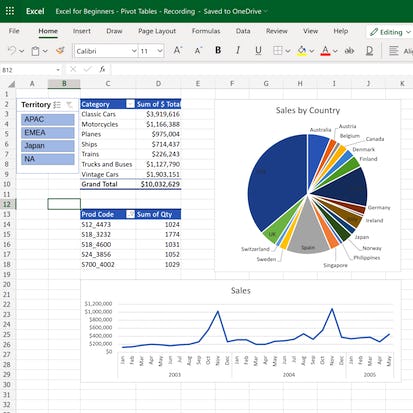
This 1-hour, project-based course introduces learners to the powerful pivot table feature of most spreadsheet applications. We’ll be using Excel on the Web in this project, which is the free spreadsheet application offered by Microsoft.
Buy Now Free
- Level Foundation
- المدة 2 ساعات hours
- الطبع بواسطة Coursera
-
Offered by
عن
This 1-hour, project-based course introduces learners to the powerful pivot table feature of most spreadsheet applications. We’ll be using Excel on the Web in this project, which is the free spreadsheet application offered by Microsoft. However, many of the concepts that you will learn in this project will be applicable to other spreadsheet programs, such as LibreOffice Calc and Google Sheets. We will cover the following concepts in a hands-on manner: - Introduction to the functionality of pivot tables. - Application of pivot tables to quickly summarize large amounts of raw data in detail. - Visualize generated data from pivot tables for accessible information at a glance using charts. Please Note: If you don't have a free Microsoft account, you will need to create one to be able to complete the content.الوحدات
Your Learning Journey
-
1
Readings
-
1
Plugin
-
1
Lab
-
1
Assignment
1
Assignment
- Assess Your Knowledge
1
Labs
- Excel for Beginners: Pivot Tables
1
Readings
- Project Overview
Auto Summary
"Excel for Beginners: Pivot Tables" is a 1-hour, hands-on project-based course ideal for those looking to master pivot tables in Excel and other spreadsheet applications like LibreOffice Calc and Google Sheets. Taught by Coursera, this beginner-level course will teach you how to summarize and visualize large datasets effectively. Access the course for free with a Microsoft account. Perfect for personal development enthusiasts aiming to enhance their data management skills.
Buy Now Free

- Level Foundation
- المدة 4 ساعات hours
-
Offered by
عن
In this project, you will learn about Tidyverse, a system of packages for data manipulation, exploration and visualization in the R programming language. R is a computer programming language, and it is also an open-source software often used among data scientists, statisticians, and data miners in their everyday work with data sets.Auto Summary
"Getting Started with Tidyverse" is a beginner-friendly course perfect for those looking to delve into data manipulation, exploration, and visualization using the R programming language. Offered by Coursera, this course introduces learners to Tidyverse, a powerful suite of R packages designed to streamline data analysis tasks. Over a comprehensive 240-minute duration, participants will gain hands-on experience and practical skills essential for personal development in data analytics. Best of all, this course is available for free, making it an accessible entry point for anyone eager to enhance their data science toolkit. Join now to start your journey with Tidyverse and elevate your data handling capabilities.

Climate Change and Human Rights
This course is primarily aimed at anyone interested in learning about the growing field of climate change and human rights. It will discuss the history of the field, key actors and cases, as well as emerging trends and takeaways. This course is taught by César Rodríguez-Garavito, Professor of Clinical Law and Faculty Director and Chair of the Center for Human Rights and Global Justice at NYU School of Law.
Monthly Subscription Starting at AED 99 + VAT
- Level Foundation
- المدة 8 ساعات hours
- الطبع بواسطة New York University
-
Offered by
عن
This course is primarily aimed at anyone interested in learning about the growing field of climate change and human rights. It will discuss the history of the field, key actors and cases, as well as emerging trends and takeaways. This course is taught by César Rodríguez-Garavito, Professor of Clinical Law and Faculty Director and Chair of the Center for Human Rights and Global Justice at NYU School of Law.الوحدات
Lesson 1: The History
-
3
Videos
-
2
Readings
-
1
Discussion
-
1
Assignment
1
Assignment
- Quiz 1
1
Discussions
- Share another example of a legal case on climate change. What can we learn from it?
3
Videos
- Introduction
- History of the Field
- Important Cases and Trends
2
Readings
- Litigating the Climate Emergency: The Global Rise of Human Rights-Based Litigation for Climate Action
- Case Studies
Lesson 2: The Present
-
2
Videos
-
2
Readings
-
1
Assignment
1
Assignment
- Quiz 2
2
Videos
- The Present
- Key Takeaways
2
Readings
- Thinking Strategically About Climate Litigation
- [Optional] General Background
Lesson 3: The Future
-
3
Videos
-
1
Discussion
-
1
Assignment
1
Assignment
- Quiz 3
1
Discussions
- What are other things to consider when looking ahead? Any suggestions on moving forward?
3
Videos
- What's Next?
- Challenges
- Looking Ahead
Auto Summary
Explore the intersection of climate change and human rights with this foundational course led by César Rodríguez-Garavito, a renowned professor at NYU School of Law. Perfect for those keen on personal development, the course delves into the history, key actors, cases, and emerging trends in this vital field. Available on Coursera, the course offers a comprehensive 480-minute learning experience with a starter subscription option, making it accessible and informative for all interested learners.
Buy Now Free

- Level Professional
- المدة 2 ساعات hours
-
Offered by
عن
A key to maintaining a project under version control is to store it as a remote repository on a server that is backed up over time. Keeping a project on a remote repository not only provides a back-up of the project; it also allows others to collaborate on the project. In the case of Git there are several remote repository options out there. Github and BitBucket are two of the more popular choices, each with a free option and a subscription option. In this course, you will create a remote Git repository using an existing Git project containing directories and files. You will use Git commands such as push, pull, fetch, branch, and merge to make changes to your local Git repository and add them to the remote repository. Note: This course works best for learners who are based in the North America region. We’re currently working on providing the same experience in other regions.Auto Summary
Enhance your project management skills with "Use Commands and Create a Remote Git Repository" on Coursera. This intermediate-level course focuses on using Git commands and setting up remote repositories for robust version control. Ideal for personal development, it offers a concise 120-minute learning experience and is available for free. Perfect for those looking to solidify their Git expertise.