


Housing Justice: A View from Indian Cities
This course will introduce learners to different approaches to thinking about housing justice, bringing together material, ecological, social and spatial approaches to thinking about housing. Rooting itself in Indian cities, but speaking more broadly to struggles for housing justice more globally, it will offer a diagnosis of what housing justice looks like as well as the modes and practices that can move us towards it ranging from activism and direct action to public policy and participatory governance.
Monthly Subscription Starting at AED 99 + VAT

- Level Foundation
- المدة 17 ساعات hours
- الطبع بواسطة Indian Institute for Human Settlements
-
Offered by

عن
This course will introduce learners to different approaches to thinking about housing justice, bringing together material, ecological, social and spatial approaches to thinking about housing. Rooting itself in Indian cities, but speaking more broadly to struggles for housing justice more globally, it will offer a diagnosis of what housing justice looks like as well as the modes and practices that can move us towards it ranging from activism and direct action to public policy and participatory governance.الوحدات
Welcome to the course!
-
 1
Videos
1
Videos
-
 2
Readings
2
Readings
-
 2
Discussion
2
Discussion
-
 1
Plugin
1
Plugin
2
Discussions
- Introductions
- Course Admin FAQs
1
Videos
- Welcome to Housing Justice: A View from Indian Cities
2
Readings
- About the course
- Know Your Instructors
Housing and Housing Justice
-
2
Videos
-
1
Readings
-
1
Discussion
-
1
Plugin
-
 2
Assignment
2
Assignment
 2
Assignment
2
Assignment
- Graded Quiz on Housing Dimensions
- Graded Quiz on Housing Justice
1
Discussions
- Making sense of "Housing Justice"
2
Videos
- Introduction to Housing
- Introduction to Housing Justice
1
Readings
- Resources from Interactive Dashboard 1: Housing Dimensions
What makes housing inadequate?
-
1
Videos
-
1
Readings
-
1
Plugin
-
1
Assignment
1
Assignment
- Graded Quiz on Adequate Housing
1
Videos
- What makes housing inadequate?
1
Readings
- Resources from Interactive Dashboard 2: Cases on Adequate Housing
Rental Housing as Access
-
4
Videos
-
1
Discussion
-
1
Assignment
1
Assignment
- Graded Quiz on Rental Housing
1
Discussions
- Rental Housing and other Tenure Systems
4
Videos
- Rental Housing
- Rental Housing and Tenants
- Rental Housing and Landlords
- Rental Housing and the City
Collective Actions against Evictions
-
5
Videos
-
1
Discussion
-
1
Assignment
1
Assignment
- Graded Quiz on Collective Action
1
Discussions
- Housing Activism
5
Videos
- Introducing This Week's Speakers
- Collective Action: Interview with Anand Lakhan
- Collective Action: Interview with Isaac Arul Selva
- Collective Action: Interview with Lakhi Das
- Collective Action: Interview with Abdul Shakeel Basha
Scales of Action: Law, Programs & Policies and Projects
-
4
Videos
-
1
Discussion
-
1
Assignment
1
Assignment
- Graded Quiz on Modes of Action
1
Discussions
- Scales of Action
4
Videos
- Modes and Scales of Action
- Scales of Action: Law
- Scale of Action: Policy
- Scale of Action: Programmes & Projects
Final Assessment
-
1
Discussion
-
1
PeerReview
-
1
Plugin
1
Peer Review
- Your Opinion-Editorial Piece on Housing Justice
1
Discussions
- Share your op-ed submission with fellow learners
Auto Summary
Discover the multifaceted world of housing justice with a focus on Indian cities in this foundational course, "Housing Justice: A View from Indian Cities." Designed for those passionate about personal development and social equity, this course delves into the material, ecological, social, and spatial dimensions of housing justice. Learners will explore various strategies ranging from activism and direct action to public policy and participatory governance, offering a comprehensive understanding of how to achieve housing justice both locally and globally. With a duration of approximately 1020 minutes, this course is available through Coursera with subscription options tailored to your needs, including Starter and Professional plans. Ideal for individuals interested in urban studies, social justice, and policy-making, this engaging course provides valuable insights and practical approaches to fostering equitable housing solutions.

Positive Psychology: Resilience Skills
Learn how to incorporate resilience interventions into your personal and professional life with Dr. Karen Reivich. In this course, you are exposed to the foundational research in resilience, including protective factors such as mental agility and optimism. Several types of resilience interventions are explored including cognitive strategies; strategies to manage anxiety and increase positive emotions such as gratitude; and a critical relationship enhancement skill. Throughout the course, you will hear examples of individuals using resilience skills in their personal and professional lives.
Monthly Subscription Starting at AED 99 + VAT

- Level Foundation
- المدة 16 ساعات hours
- الطبع بواسطة University of Pennsylvania
-
Offered by
عن
Learn how to incorporate resilience interventions into your personal and professional life with Dr. Karen Reivich. In this course, you are exposed to the foundational research in resilience, including protective factors such as mental agility and optimism. Several types of resilience interventions are explored including cognitive strategies; strategies to manage anxiety and increase positive emotions such as gratitude; and a critical relationship enhancement skill. Throughout the course, you will hear examples of individuals using resilience skills in their personal and professional lives. Suggested prerequisites: Positive Psychology: Martin E. P. Seligman’s Visionary Science, Positive Psychology: Applications and Interventions and Positive Psychology: Character, Grit & Research Methods.الوحدات
Lesson 1: Resilience
-
5
Videos
-
5
Readings
5
Videos
- 1.1 Welcome and Overview of the Course
- 1.2 Definition of Resilience and Foundational Research
- 1.3 Variables that Contribute to Resilience
- 1.4 Barbara Bradley Hagerty on Resilience in Midlife
- 1.5 Jennifer Loredo and Resilience Stories
5
Readings
- Biography of Karen Reivich, Ph.D.
- Assignments, Grading and your Resilience Journal
- Optional Reading: The Resilience Factor
- Module 1 Lesson 1 - Optional Readings
- Optimism Questionnaire
Lesson 2: Optimism
-
8
Videos
-
1
Readings
-
1
Discussion
-
1
PeerReview
-
1
Assignment
1
Assignment
- Module 1 Quiz
1
Peer Review
- Pursuit of Happyness: Optimism in Action
1
Discussions
- Optimism Activity
8
Videos
- 1.6 Introduction to Optimism and Optimism Definitions
- 1.7 Benefits of Optimism
- 1.8 What Optimists Do Differently
- 1.9 Optimism Activity: Pursuit of Happyness Video
- 1.10 Organizational Highlight: Sam Presti on Optimism
- 1.11 Organizational Highlight: Maureen Rush
- 1.12 Personal Highlight: Lucy Hone
- 1.13 Summary of Week 1 and Preview of Week 2
1
Readings
- Module 1 Lesson 2 - Optional Readings
Lesson 1: Thinking Traps
-
4
Videos
-
1
Readings
-
1
Discussion
1
Discussions
- Thinking Traps Scenarios
4
Videos
- 2.1 Thinking Traps Introduction
- 2.2 Definition and Demonstration of Thinking Traps
- 2.3 Detecting Patterns in Yourself, Activity: Trying Thinking Traps on for Size
- 2.4 Personal Examples of Thinking Traps: Why We Need a Skill to Address Them
1
Readings
- Module 2 Lesson 1 - Optional Reading
Lesson 2: Real-Time Resilience
-
4
Videos
-
1
Readings
-
1
Discussion
-
1
Assignment
1
Assignment
- Module 2 Quiz
1
Discussions
- Real Time Resilience Activity
4
Videos
- 2.5 Changing non-resilient thinking: Real-time Resilience
- 2.6 Real-time resilience Activity
- 2.7 Organizational Highlights: Emma Judge & Maureen Rush
- 2.8 Summary of Module 2 and Introduction to Module 3
1
Readings
- Module 2 Lesson 2 - Optional Reading
Lesson 1: Managing Anxiety
-
5
Videos
-
3
Readings
5
Videos
- 3.1 Introduction: Catastrophizing and the Relationship of Anxiety to Resilience
- 3.2 Dr. Baime: Effects of Anxiety on Our Bodies
- 3.3 Demonstrations of Several Styles of Catastrophizing
- 3.4 Triggers of Catastrophizing
- 3.5 Introduction to three Different Ways to Manage Anxiety
3
Readings
- Module 3 Lesson 1 - Optional Reading
- Activity: Challenging Catastrophic Thinking Part 1
- Activity: Challenging Catastrophic Thinking Part 2
Lesson 2: Increasing Positive Emotion
-
9
Videos
-
1
Readings
-
2
Discussion
-
1
PeerReview
-
1
Assignment
1
Assignment
- Module 3 Quiz
1
Peer Review
- Design a Gratitude Practice
2
Discussions
- Positive Emotion Photos
- Hunt the Good Stuff
9
Videos
- 3.6 Dr. Park: Deliberate Breathing to Manage Anxiety
- 3.7 Dr. Baime: A Mindfulness Approach to Anxiety
- 3.8 Positive Emotions Broaden
- 3.9 Positive Emotions Build Resources
- 3.10 Gratitude Research
- 3.11 Gratitude Skill: HTGS
- 3.12 Designing a Gratitude Practice: Team Collage
- 3.13 Organizational Highlights: Sam Presti, Maureen Rush & Carolyn McIntyre
- 3.14 Summary of Module 3 and Preview of Module 4
1
Readings
- Module 3 Lesson 2 - Optional Readings
Lesson 1: Leveraging Character Strengths
-
4
Videos
-
1
Readings
-
2
Discussion
2
Discussions
- VIA
- Using Character Strengths to Navigate an Upcoming Challenge
4
Videos
- 4.1 Background and Definition of Signature Strengths
- 4.2 Activities: Developing Character Strengths and VIA Conversation
- 4.3 Using Character Strengths to Navigate an Upcoming Challenge
- 4.4 Shadow Side of Character Strengths
1
Readings
- Values in Action (VIA) Survey
Lesson 2: Strengthening Relationships
-
5
Videos
-
2
Readings
-
1
Discussion
-
1
Assignment
1
Assignment
- Module 4 Quiz
1
Discussions
- Applying Resilience to Your Life
5
Videos
- 4.5 Introduction to ACR
- 4.6 ACR Role Plays
- 4.7 Activity: ACR Patterns
- 4.8 Inculcating Resilience in an Organization: Emma Judge and Sam Presti
- 4.9 Course Summary
2
Readings
- Activity: Response Style Patterns
- Module 4 Lesson 2 - Optional Readings
Auto Summary
Unlock the power of resilience with "Positive Psychology: Resilience Skills," a transformative course designed to enhance your personal and professional well-being. Guided by renowned expert Dr. Karen Reivich, this course delves into the science of resilience, offering insights into mental agility, optimism, and other protective factors. You'll explore a variety of resilience interventions, including cognitive strategies, anxiety management techniques, and methods to boost positive emotions like gratitude. Additionally, you'll learn critical skills for strengthening relationships. Throughout this engaging course, you'll hear real-life examples of individuals successfully applying resilience skills in various settings. While there are suggested prerequisites to deepen your understanding, anyone can benefit from this foundational course. Available through Coursera, this comprehensive program spans approximately 960 minutes and is accessible with a starter subscription. Ideal for anyone looking to build resilience, this course is perfect for professionals, students, and personal development enthusiasts seeking practical strategies to thrive in challenging situations. Join today and start your journey towards greater resilience and a more fulfilling life.

Hot Topics in Criminal Justice
The American criminal justice system is in need of reform. We incarcerate too many people. We pay insufficient attention to scientific advances that can help separate out the most and least culpable and dangerous. We grant the police far too much power to use force and technological surveillance. As a way of thinking about dealing with these problems, this course examines two over-arching issues: What should we do with people who have committed crime, and how should we identify who they are?
Monthly Subscription Starting at AED 99 + VAT

- Level Foundation
- المدة 19 ساعات hours
- الطبع بواسطة Vanderbilt University
-
Offered by
عن
The American criminal justice system is in need of reform. We incarcerate too many people. We pay insufficient attention to scientific advances that can help separate out the most and least culpable and dangerous. We grant the police far too much power to use force and technological surveillance. As a way of thinking about dealing with these problems, this course examines two over-arching issues: What should we do with people who have committed crime, and how should we identify who they are? On the first issue, we will look closely at the nature and causes of mass incarceration, the death penalty, the lawfulness and usefulness of preventive detention and risk assessment, and the role of the insanity defense and neuroscience in assessing responsibility for crime. On the second issue, we will explore the laws regulating the police use of force, the growing role of technology and big data in facilitating police surveillance and detection and deterrence of crime, and the remedies for police malfeasance, including the exclusionary rule and damages actions. The overall goal is to help thinking individuals assess today’s criminal justice system and consider ways of making it better. After completing this course, participants should be able to: 1. Describe the mass incarceration problem in the United States and why it might exist; 2. Suggest ways of reducing incarceration; 3. Criticize risk assessment instruments and their use in preventive detention schemes; 4. Discuss the pros and cons of the death penalty, the exclusionary rule, and the insanity defense; 5. Analyze the relevance of neurological evidence in a criminal case; 6. Identify some of the reasons innocent people are wrongly convicted; 7. Elaborate on the role race plays at sentencing and in police use of force, stop and frisk and consent searches and 8. List the types of surveillance technology available to police and the constitutional principles that govern their use.الوحدات
Course Welcome and Introduction
-
1
Videos
1
Videos
- Welcome and Course Introduction (4:34)
Part 1: Incarceration Rates in the United States and Europe
-
1
Videos
-
1
Plugin
-
1
Assignment
1
Assignment
- Incarceration and Crime Rates
1
Videos
- Incarceration Rates in the United States and Europe (7:29)
Part 2: Legal Reasons for Differences Between U.S. and European Incarceration Rates
-
1
Videos
-
1
Assignment
1
Assignment
- The Impact of Mass Incarceration
1
Videos
- Legal Reasons for Differences Between U.S. and European Incarceration Rates (11:00)
Part 3: Cultural Reasons for Differences Between U.S. and European Incarceration Rates
-
1
Videos
-
1
Assignment
1
Assignment
- Culture and Punishment
1
Videos
- Cultural Reasons for Differences Between U.S. and European Incarceration Rates (15:40)
Part 4: Additional Cultural Reasons for Differences Between U.S. and European Incarceration Rates
-
1
Videos
-
1
Discussion
1
Discussions
- Culture and Incarceration
1
Videos
- Additional Cultural Reasons for Differences Between U.S. and European Incarceration Rates (19:08)
Part 5: Can Incarceration Trends Be Reversed?
-
1
Videos
-
1
Assignment
1
Assignment
- Recent Developments in Imprisonment Policies
1
Videos
- Can Incarceration Trends Be Reversed? (8:29)
End of Module Reading & Assessment
-
1
PeerReview
-
1
Plugin
1
Peer Review
- Why are incarceration rates higher in the United States than in other countries?
Part 1: Introduction--Reducing Reliance on Harsh Prison Terms
-
1
Videos
-
1
Plugin
-
1
Assignment
1
Assignment
- Purposes of Punishment
1
Videos
- Introduction: Reducing Reliance on Harsh Prison Terms (8:28)
Part 2: Purposes of Punishment
-
1
Videos
-
1
Assignment
1
Assignment
- Understanding the Purposes of Punishment
1
Videos
- Purposes of Punishment (11:36)
Part 3: The Accuracy of Sentencing Determinations
-
1
Videos
-
1
Discussion
-
1
Assignment
1
Assignment
- Sentencing Factors
1
Discussions
- Relative Accuracy
1
Videos
- The Accuracy of Sentencing Determinations (11:09)
Part 4: Treatment Programs
-
1
Videos
-
1
Assignment
1
Assignment
- What works?
1
Videos
- Treatment Programs (10:48)
Part 5: The Autonomy Principle
-
1
Videos
-
1
Discussion
1
Discussions
- The Implications of the Autonomy Principle
1
Videos
- The Autonomy Principle (11:32)
Part 6: Pure Preventive Detention
-
1
Videos
-
1
Assignment
1
Assignment
- Preventive Detention Schemes
1
Videos
- Pure Preventive Detention (14:50)
End of Module Reading & Assessment
-
1
PeerReview
-
1
Plugin
1
Peer Review
- The Ideal Sentencing Regime
Part 1: Cases in Which the Insanity Defense is Raised
-
1
Videos
-
2
Plugin
-
1
Assignment
1
Assignment
- Insanity Defense Facts
1
Videos
- Cases in Which the Insanity Defense is Raised (10:14)
Part 2: Legal Definitions of Defenses Based on Mental Disability
-
1
Videos
-
1
Assignment
1
Assignment
- Mental State Defense Formulations
1
Videos
- Legal Definitions of Defenses Based on Mental Disability (17:19)
Part 3: The Outer Boundaries of Mental State Defenses
-
1
Videos
-
1
Discussion
1
Discussions
- The Role of Mental Dysfunction in Criminal Justice
1
Videos
- The Outer Boundaries of Mental State Defenses (15:47)
Part 4: Legal Claims Based on Neuroscience and Neurogenetics
-
1
Videos
-
1
Assignment
1
Assignment
- The Relevance of Neuroscience
1
Videos
- Legal Claims Based on Neuroscience and Neurogenetics (17:31)
Part 5: Mental Disability and Dispositions After Conviction
-
1
Videos
-
1
Assignment
1
Assignment
- Alternative Systems
1
Videos
- Mental Disability and Dispositions After Conviction (12:56)
End of Module Readings & Assessment
-
1
PeerReview
-
2
Plugin
1
Peer Review
- Desert v. Determinism
Part 1: History and Structure of the Death Penalty
-
1
Videos
-
3
Plugin
-
1
Assignment
1
Assignment
- The Death Penalty Worldwide
1
Videos
- History and Structure of the Death Penalty (11:05)
Part 2: Economics of the Death Penalty & Interrogations
-
1
Videos
-
1
Assignment
1
Assignment
- Causes of Wrongful Convictions--Part 1
1
Videos
- Economics of the Death Penalty & Interrogations (11:40)
Part 3: Eyewitness Identifications
-
1
Videos
-
1
Assignment
1
Assignment
- Causes of Wrongful Convictions--Part 2
1
Videos
- Eyewitness Identifications (15:11)
Part 4: Labs and Adversarialism
-
1
Videos
-
1
Assignment
1
Assignment
- Cause of Wrongful Convictions -- Part 3
1
Videos
- Labs and Adversarialism (16:09)
Part 5: The Influence of Elections, Jury Confusion, and Race on Death Sentences
-
1
Videos
-
1
Discussion
-
1
Assignment
1
Assignment
- Causes of Improper Sentences
1
Discussions
- American v. European Procedure
1
Videos
- The Influence of Elections, Jury Confusion, and Race on Death Sentences (13:23)
End of Module Reading & Assessment
-
1
PeerReview
-
1
Plugin
1
Peer Review
- Debating the Death Penalty
Part 1: How Often do Police Use Force and Against Whom?
-
1
Videos
-
3
Plugin
-
1
Assignment
1
Assignment
- Police Use of Force Data
1
Videos
- How Often do Police Use Force and Against Whom? (12:40)
Part 2: The Law of Deadly Force and Stop and Frisk
-
1
Videos
-
1
Discussion
1
Discussions
- When should police be able to use force?
1
Videos
- The Law of Deadly Force and Stop and Frisk (12:07)
Part 3: The Law of Car Stops and Searches
-
1
Videos
-
1
Assignment
1
Assignment
- The Law of Car Searches
1
Videos
- The Law of Car Stops and Searches (14:48)
Part 4: The Exclusionary Rule and Damages Remedies
-
1
Videos
-
1
Assignment
1
Assignment
- Remedies for Fourth Amendment Violations
1
Videos
- The Exclusionary Rule and Damages Remedies (16:11)
Part 5: Oversight Boards, Training, and Structural Reforms
-
1
Videos
-
1
Assignment
1
Assignment
- Alternatives to the Court System
1
Videos
- Oversight Boards, Training, and Structural Reforms (21:47)
End of Module Readings & Assessment
-
1
PeerReview
-
3
Plugin
1
Peer Review
- Thinking about How to Regulate Police Use of Power
Part 1: The Definition of Search Under the Fourth Amendment
-
1
Videos
-
1
Plugin
-
1
Assignment
1
Assignment
- The Scope of the Fourth Amendment
1
Videos
- The Definition of Search Under the Fourth Amendment (12:09)
Part 2: The Knowing Exposure, General Public Use and Contraband-Specific Doctrines
-
1
Videos
-
1
Assignment
1
Assignment
- The Definition of "Search"
1
Videos
- The Knowing Exposure, General Public Use and Contraband-Specific Doctrines (14:41)
Part 3: The Assumption of Risk Doctrine
-
1
Videos
-
1
Discussion
1
Discussions
- Thinking about Government Access to Personal Data
1
Videos
- The Assumption of Risk Doctrine (20:15)
Part 4: Reasons to Regulate Police Surveillance
-
1
Videos
-
1
Assignment
1
Assignment
- The Impact of Surveillance
1
Videos
- Reasons to Regulate Police Surveillance (12:09)
End of Module Reading & Assessment
-
1
PeerReview
-
2
Plugin
1
Peer Review
- Police Use of Surveillance Technology
Untitled Lesson
-
1
Assignment
1
Assignment
- End of Course Final Quiz
Auto Summary
Explore critical issues in the American criminal justice system with "Hot Topics in Criminal Justice," a foundational course in Personal Development offered by Coursera. Led by expert instructors, this 1140-minute course delves into mass incarceration, the death penalty, police use of force, and technological surveillance. Ideal for individuals seeking to understand and reform the justice system, it offers insights into reducing incarceration, evaluating risk assessments, and understanding the role of neuroscience in criminal cases. Available with Starter and Professional subscriptions, this course equips you with the knowledge to assess and improve today's criminal justice landscape.
Buy Now Free
- Level Foundation
- المدة 2 ساعات hours
-
Offered by
عن
By the end of this project, you will have created a student punchcard that will engage your students during virtual learning or as a more engaging way to encourage buy in during classroom learning. Teaching is constantly evolving. As we learn more about our students, we uncover new ways to ensure that they are not just learning - they are thriving. Using a punchcard will not only provide your students with more choice and independence, it will also provide your classroom with the procedures and processes that can free up your teaching time to focus on valuable 1-on-1 or small group instruction. Puchcards can also be a useful tool for differentiating student learning. Let’s get started! *You will need a free Google account for this project.Auto Summary
"Increase Student Buy-in with Google Slides" is a dynamic course designed for educators looking to enhance student engagement in both virtual and classroom settings. This beginner-level course, offered by Coursera, equips you with the skills to create an interactive student punchcard using Google Slides. In just 120 minutes, you'll learn how to foster a more engaging learning environment that encourages student participation and buy-in. The course is part of the personal development domain and is available for free, making it an accessible and practical resource for teachers seeking innovative techniques to motivate their students. Join us and transform your teaching approach with this practical, hands-on project!
Buy Now Free

- Level Professional
- المدة 2 ساعات hours
-
Offered by
عن
By the end of this project you will have used LibreOffice to create and use a variety of forms for entering, updating, and browsing data in relational tables. A form is typically designed to be a more user-friendly and secure interface for accessing data from one or more tables. Note: This course works best for learners who are based in the North America region. We’re currently working on providing the same experience in other regions.Auto Summary
Enhance your personal development skills by mastering the creation and utilization of forms in LibreOffice Base with this engaging intermediate-level course from Coursera. Over the span of 120 minutes, you will learn to design various forms that facilitate data entry, updates, and browsing within relational tables, offering a more user-friendly and secure interface for managing data. Although currently optimized for learners in North America, efforts are underway to extend this seamless learning experience globally. Best of all, this valuable knowledge comes at no cost, making it an ideal opportunity for those looking to improve their data handling proficiency using LibreOffice Base.
Buy Now Free

- Level Foundation
- المدة 3 ساعات hours
-
Offered by
عن
By the end of this project, you’ll get comfortable opening and using Inkscape. With Inkscape, a free vector graphics program, you can build graphics with clear lines, vivid colors, and the flexibility to resize again and again. You’ll get comfortable setting up Inkscape documents and using its most common tools: shape tools, selection and editing tools, the pen tool, and the text tool. You’ll also learn to pan and zoom around inside Inkscape. To build these skills, you’ll explore the differences between vector and raster graphics, practice panning and zooming in Inkscape, create a range of shapes, and edit those shapes. Note: This course works best for learners who are based in the North America region. We’re currently working on providing the same experience in other regions.Auto Summary
"Get Started with Inkscape" is a foundational course in personal development, taught by Coursera. Over 120 minutes, learners will master opening and using Inkscape, a free vector graphics program. The course covers setting up documents, using shape and text tools, and navigating within Inkscape. Ideal for North American beginners, this course offers a hands-on approach to understanding vector vs. raster graphics. Available with a Starter subscription.

Excel for Beginners: Advanced Functions
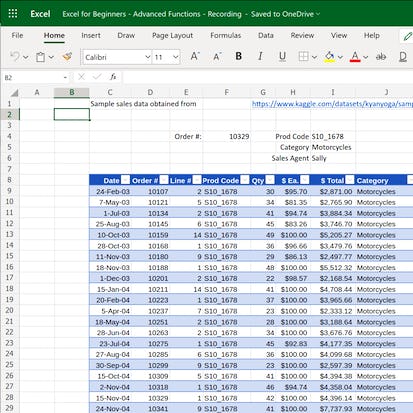
This 1-hour, project-based course introduces learners to more-advanced spreadsheet functions. We’ll be using Excel on the Web in this project, which is the free spreadsheet program offered by Microsoft.
Buy Now Free
- Level Foundation
- المدة 4 ساعات hours
- الطبع بواسطة Coursera
-
Offered by
عن
This 1-hour, project-based course introduces learners to more-advanced spreadsheet functions. We’ll be using Excel on the Web in this project, which is the free spreadsheet program offered by Microsoft. However, all of the concepts that you will learn in this project will be applicable to other spreadsheet programs, such as LibreOffice Calc and Google Sheets. We will cover the following concepts in a hands-on manner: - Advanced conditional functions: countif, sumif, averageif - Easy searching and matching of data with reference functions: vlookup, xlookup, index & match Please Note: If you don't have a free Microsoft account, you will need to create one to be able to complete the content.الوحدات
Your Learning Journey
-
1
Readings
-
1
Plugin
-
 1
Lab
1
Lab
-
1
Assignment
1
Assignment
- Assess Your Knowledge
1
Labs
- Excel for Beginners: Advanced Functions
1
Readings
- Project Overview
Auto Summary
Unlock advanced Excel functions in just 1 hour with this beginner-friendly course by Coursera. Focused on personal development, learners will explore conditional functions like countif, sumif, and averageif, as well as reference functions such as vlookup, xlookup, and index & match. Utilize Excel on the Web, with concepts also applicable to LibreOffice Calc and Google Sheets. Ideal for those new to spreadsheets, this project-based learning experience is free and requires a Microsoft account.
Buy Now Free

- Level Foundation
- المدة 1 ساعات hours
-
Offered by
عن
In this 40 minute long course, you will learn how to create an account and a resume by using the website, Canva. Users taking this project will obtain the ability to create a job application ready resume using the webpage. We will go step by step through the process in this project. You will then learn about the resume options offered by Canva to assist you in the creation of your professional resume. We will explore the basics of how to set up your profile and download your ready to use resume to your computer. Some key learning objectives that we will review include creating your Canva account, and step by step instructions on creating your resume. We will expand your knowledge by learning how to download your resume in various formats and save to your PC.Auto Summary
Learn to craft a standout resume using Canva in just 40 minutes. This beginner-friendly course, offered by Coursera, guides you through creating an account and designing a professional resume. Ideal for anyone looking to enhance their personal development, it's available for free.
Buy Now Free

- Level Foundation
- المدة 2 ساعات hours
-
Offered by
عن
By the end of this project, you will be able to create a user interface story map that your business can use as a roadmap for release planning and as a framework for version and improvement releases over time. The power of the user interface story map is that it places the spotlight of the release process upon the user. This enables the business to stay focused on user experience and needs throughout releases of products and makes it easier for cross-functional teams to home in on what is necessary to gain and maintain user acceptance so that an exceptional user experience is sustained. To design a user interface story map, you will gain hands-on experience applying design thinking, user interface knowledge, and context from each step of the customer journey in the Miro online visual collaboration platform for teamwork. Note: This course works best for learners who are based in the North America region. We’re currently working on providing the same experience in other regions.Auto Summary
Learn to design a user interface (UI) story map using Miro in this foundational Coursera course focused on personal development. Guided by expert instruction, you'll create a roadmap for release planning that centers on user experience. The course spans 120 minutes and is ideal for North American learners, with a subscription option available for starters. Perfect for those looking to enhance their design thinking and user interface skills.

Career Options: Exploring a New Career
This course is for you if you are interested in researching a new career and acquiring the skills necessary to succeed in it. You will be asked to reflect on your experiences and critically evaluate what you currently know, what you need to acquire, and how to go about getting it. You will then identify groups and individuals that can serve and support you in exploring a new career.
Monthly Subscription Starting at AED 99 + VAT

- Level Foundation
- المدة 25 ساعات hours
- الطبع بواسطة Kennesaw State University
-
Offered by
عن
This course is for you if you are interested in researching a new career and acquiring the skills necessary to succeed in it. You will be asked to reflect on your experiences and critically evaluate what you currently know, what you need to acquire, and how to go about getting it. You will then identify groups and individuals that can serve and support you in exploring a new career. During this course, you will identify the elements of a well-structured career plan and evaluate career options by individual fit to determine how to effectively engage your network in your career journey. You will design a tactical career plan and identify pitfalls in behavior, communication and appearance that can derail a new career. You will also develop a targeted cover letter and resume using a proven business format. Your experiential learning can also be a valuable asset, linking your personal experiences with your chosen career. We will help you define your career objective statement and align this with your strengths and goals. Finally, you will be challenged to research and identify your personal values inventory, and evaluate how to best navigate the current job market by using an innovative approach called career rockclimbing.الوحدات
Career Exploration
-
3
Videos
-
5
Readings
-
1
Discussion
-
1
PeerReview
-
2
Assignment
2
Assignment
- Examining a Social Impact Career - Test Your Existing Knowledge!
- Assess what you've learned so far!
1
Peer Review
- Career Exploration Infographic
1
Discussions
- Let's Get To Know You!
3
Videos
- Meet the Team
- Course Introduction Video
- Beginning Your Career Plan
5
Readings
- Learning Objectives
- The 80,000 Hour Career Guide
- Optional - StrengthFinders and More
- Optional Career Exploration Self-Assessments
- Get help and meet other learners. Join your Community!
What to know
-
1
Videos
-
7
Readings
-
2
Discussion
-
2
Assignment
2
Assignment
- Practice What You've Learned!
- Hot Careers and Job Trends Quiz
2
Discussions
- Industry Trends In Your Area
- Dream Job
1
Videos
- What Do I Need To Know?
7
Readings
- Learning Objectives
- What Teachers Make
- Stand the Test of Time
- Importance of Networking
- Fastest Growing Occupations
- What Makes For A Dream Job?
- WANTED: Top 17 Jobs of the Future
The Market
-
1
Videos
-
6
Readings
-
1
Discussion
-
2
Assignment
2
Assignment
- Self-Evaluation and Market Realities Practice Quiz
- Marketplace Realities
1
Discussions
- Job Seeking and Social Media
1
Videos
- What Are Marketplace Realities? (Self Evaluation)
6
Readings
- Learning Objectives
- Frayed Prospects, Despite a Degree
- Self Evaluation Tool
- Got Hope?
- Student Success Measures
- What Does The Marketplace Tell Us About Opportunity?
RightPathing Your Future
-
7
Videos
-
4
Readings
-
3
Discussion
-
1
PeerReview
-
2
Assignment
2
Assignment
- RightPathing Your Future, Practice Quiz
- RightPathing Your Future, Graded Quiz
1
Peer Review
- Write a Life Purpose Statement
3
Discussions
- Whole-Life Career Planning: New Insights?
- Hard-Wired Behaviors: New Insights?
- Life Purpose Statement: New Insights?
7
Videos
- Introduction to RightPathing Your Future
- What Is RightPathing Your Future?
- Understanding Our Behaviors: The X-Ray
- Understanding Our Behaviors: The MRI
- Understanding Our Skills, Work Values and Passions
- Understanding and Articulating Our Life Purpose
- An Expert's Advice on Achieving Career Success
4
Readings
- The Learning Objectives
- "How I Landed the Job that I Wanted? Career Planning!"
- "Examples of Life Purpose Statements"
- The Power of Vulnerability, TEDx Talk by Brene Brown
Step One
-
2
Videos
-
7
Readings
-
2
Discussion
-
1
PeerReview
-
2
Assignment
2
Assignment
- Defining Your Career Objective and Action Plan Quiz
- Defining Your Career Objective and Action Plan Quiz
1
Peer Review
- Career Objective
2
Discussions
- Pick Your Path
- Can You Relate?
2
Videos
- Writing Your Career Objective
- Matching What I Think I Know With What the Position Describes
7
Readings
- Learning Objectives
- Bridge That Gap: Evaluate Your Skill Index
- Employers Rate Candidates Soft Skills/Qualities
- Skills Inventory - The Emotional Intelligence Skills Employers Want Now
- Research the Best Jobs - U.S. News & World Report
- Occupational Outlook Handbook
- My Skills My Future - Career Research
Research is Key
-
2
Videos
-
7
Readings
-
1
Discussion
-
2
Assignment
2
Assignment
- Research is Key Practice Quiz
- Research and Values
1
Discussions
- A Discussion on Work Values
2
Videos
- Research Is Key!
- What Research Should I Do?
7
Readings
- Learning Objectives
- My Career Matches
- My Next Move
- The Key to Success? Grit
- O*Net Work Values
- Identifying Workplace Values…. What’s Most Important to You
- Reading: Aligning your Work with your Values
Career Creativity
-
1
Videos
-
7
Readings
-
2
Discussion
-
2
Assignment
2
Assignment
- Career Rock Climbing and Corporate Ladder - What You Have Learned!
- Career Rock Climbing
2
Discussions
- How Creative Are You?
- Your Rock Wall
1
Videos
- Career Creativity
7
Readings
- Learning Objectives
- The Career Ladder vs. The Rock Wall
- Revamped Corporate Ladder
- Help Them Grow or Watch Them Go
- Career Development and Mobility
- Office Politics on the Corporate Ladder
- Moving Up The Hierarchy
Auto Summary
Embark on a transformative journey with "Career Options: Exploring a New Career," an essential course in the domain of Personal Development. Perfect for individuals eager to transition into a new career, this course encourages deep reflection on your current skills and knowledge, identifying gaps, and outlining a strategy to acquire necessary competencies. Guided by Coursera, this foundational course spans 1500 minutes and is designed to help you craft a well-structured, tactical career plan. You'll learn to evaluate career options based on personal fit, effectively leverage your professional network, and develop a targeted cover letter and resume using proven business formats. Dive into experiential learning, aligning your personal experiences with your career aspirations, and define your career objective statement in line with your strengths and goals. Additionally, you'll explore your personal values inventory and learn innovative job market navigation techniques, such as career rockclimbing. With subscription options available at both the Starter and Professional levels, this course is ideal for anyone determined to successfully transition into a new career while avoiding common pitfalls in behavior, communication, and appearance.