

Make Continuous Improvements with Retrospective Maps in Miro
By the end of this project, you will be able to lead and document a project retrospective to explore lessons learned and identify areas for continuous improvements. To do this, you will gain hands-on experience working in the Miro online visual collaboration platform for teamwork while you identify key players and questions that are likely to produce insights leading to work process and outcome improvements. Note: This course works best for learners who are based in the North America region. We’re currently working on providing the same experience in other regions.
Buy Now Free
- Level Professional
- المدة 3 ساعات hours
- الطبع بواسطة Coursera Project Network
-
Offered by

عن
By the end of this project, you will be able to lead and document a project retrospective to explore lessons learned and identify areas for continuous improvements. To do this, you will gain hands-on experience working in the Miro online visual collaboration platform for teamwork while you identify key players and questions that are likely to produce insights leading to work process and outcome improvements. Note: This course works best for learners who are based in the North America region. We’re currently working on providing the same experience in other regions.الوحدات
Make Continuous Improvements with Retrospective Maps in Miro
-
 1
Readings
1
Readings
-
 1
Discussion
1
Discussion
-
 1
Plugin
1
Plugin
-
 1
Lab
1
Lab
-
 1
Assignment
1
Assignment
 1
Assignment
1
Assignment
- Graded Quiz: Test your Project understanding
1
Discussions
- What is your favorite feature in Miro?
1
Labs
- Make Continuous Improvements with Retrospective Maps in Miro Project
1
Readings
- Project Overview
Auto Summary
Unlock the potential for continuous improvement with the "Make Continuous Improvements with Retrospective Maps in Miro" course, focused on personal development. Guided by an experienced Coursera instructor, this intermediate course will empower you to lead and document effective project retrospectives, uncovering valuable lessons and pinpointing areas for enhancement. Engage in hands-on practice with Miro, an online visual collaboration platform, to identify key stakeholders and critical questions that drive process and outcome improvements. Ideal for learners in North America, this course promises an enriching experience within a compact 180-minute duration. Offered for free, it’s a perfect choice for professionals seeking to elevate their teamwork and project management skills. Dive in and start your journey towards continuous improvement today!

RESTful Microservices Using Node.js and Express
Backend refers to the server side of development. Here, the primary focus is on how a website works. Node.js is considered efficient for the development of backend applications as it brings event-driven programming and enables development of fast and efficient web servers in JavaScript. Developers can create scalable servers by using a simplified model of event-driven programming that uses call-backs to signal completion of a task.
Monthly Subscription Starting at AED 99 + VAT

- Level Professional
- المدة
- الطبع بواسطة NIIT
-
Offered by
عن
Backend refers to the server side of development. Here, the primary focus is on how a website works. Node.js is considered efficient for the development of backend applications as it brings event-driven programming and enables development of fast and efficient web servers in JavaScript. Developers can create scalable servers by using a simplified model of event-driven programming that uses call-backs to signal completion of a task.Auto Summary
Unlock the potential of backend development with the "RESTful Microservices Using Node.js and Express" course offered by Coursera. This professional-level course is designed to empower developers with the skills to create efficient and scalable web servers using Node.js, a powerful tool renowned for its event-driven programming capabilities. The course delves into the intricacies of backend operations, emphasizing the creation of responsive and high-performing web applications through RESTful microservices. Led by an expert instructor, this course ensures a comprehensive learning experience, covering essential concepts and practical techniques. While the duration is flexible, allowing learners to progress at their own pace, the course is packed with valuable content aimed at enhancing your backend development expertise. Subscription options include Starter and Professional plans, catering to various learning needs and professional goals. This course is ideal for developers looking to deepen their understanding of backend development and harness the power of Node.js and Express to build robust web servers. Whether you're advancing your career or expanding your technical skill set, this course provides the knowledge and tools needed to excel in the realm of backend development.
Monthly Subscription Starting at AED 99 + VAT
- Level Professional
- المدة
- الطبع بواسطة Korea Advanced Institute of Science and Technology(KAIST)
-
Offered by
عن
If you want to apply electrodynamics to your materials research project, this Specialization will help you do so. Electromagnetic force is one of the fundamental forces that hold atoms and molecules together, which are the building blocks of any materials.In four courses, you will learn the foundations of electrodynamics starting from the nature of electrical force up to the level of in-depth solutions of Maxwell equations. We will walk you through vector calculus, concepts of field, flux and circulation, electrostatics, and magnetostatics as well as electrodynamics. By the end of this Specialization you will understand four beautiful equations organized by Maxwell in a full picture. Special relativity will be covered as well to grasp the idea that magnetism is a relativistic effect of electricity. The approach taken in this Specialization complements traditional approaches, covering a fairly complete treatment of the physics of electricity and magnetism, and adds Feynman’s unique and vital approach of grasping a whole picture of the physical universe. In addition, this Specialization uniquely bridges the gap between the knowledge of electrodynamics and its practical applications to research in materials science, information technology, electrical engineering, chemistry, chemical engineering, energy storage, energy harvesting, and other materials related fields.Auto Summary
Delve into the world of Electrodynamics with this comprehensive Specialization designed for materials research applications. Guided by expert instructors on Coursera, you'll explore electromagnetic forces, Maxwell's equations, vector calculus, and more. This Professional-level course bridges theory and practical applications in fields like materials science, IT, and electrical engineering. Available through Starter and Professional subscription options.

Health and Safety of a Home-Based Childcare Center
This course is targeted toward individuals wishing to operate a safe and healthy family day care center, and it covers topics including staffing; creating a safe environment; nutrition; mental health & wellness; and emergency planning. Since a Family Policy Handbook is essential for anyone operating a family day care center, this course includes the development of one of three imperative sections of the handbook. The remaining two sections are created in other courses of the Home-Based Childcare series available on Coursera.
Monthly Subscription Starting at AED 99 + VAT

- Level Foundation
- المدة 10 ساعات hours
- الطبع بواسطة The State University of New York
-
Offered by
عن
This course is targeted toward individuals wishing to operate a safe and healthy family day care center, and it covers topics including staffing; creating a safe environment; nutrition; mental health & wellness; and emergency planning. Since a Family Policy Handbook is essential for anyone operating a family day care center, this course includes the development of one of three imperative sections of the handbook. The remaining two sections are created in other courses of the Home-Based Childcare series available on Coursera.الوحدات
Project Description & Rubric (You may choose to skip this if you already completed Courses 1 &/or 3 of the specialization, Home-Based Childcare)
-
2
Readings
2
Readings
- Family Policy Handbook Introduction to the Final Project for Home-Based Child Care
- Family Policy Handbook: Purpose
Safety and Prevention of Injuries
-
 1
Videos
1
Videos
-
2
Readings
1
Videos
- Safety and Prevention of Injuries
2
Readings
- Safety & Well-Being
- Family Policy Handbook Section #8: Training and Education Qualifications
Physical Health and Young Children
-
1
Videos
-
2
Readings
1
Videos
- Physical Health
2
Readings
- Physical Health
- Family Policy Handbook Section #9: Illness Prevention and Importance of Physical Activity
Nutrition in Early Childhood
-
1
Videos
-
2
Readings
1
Videos
- Nutrition
2
Readings
- Best Practices for Nutrition
- Family Policy Handbook Section #10: Nutrition and CACFP
Mental Health and Wellness
-
1
Videos
-
3
Readings
-
1
Discussion
1
Discussions
- Nurturing & Supporting Children
1
Videos
- Mental Health and Wellness
3
Readings
- Children's Wellbeing
- VIDEO_Nadine Burke Harris TED talk: How childhood trauma affects health across a lifetime
- Family Policy Handbook Section #11: Social-emotional Learning
Preparing for Emergencies
-
1
Videos
-
2
Readings
1
Videos
- Preparing for Emergencies and Mandated Reporter
2
Readings
- Preparing for Emergencies
- Family Policy Handbook Section #12: Emergency Plan/Mandated Reporting
Project Assessment
-
1
PeerReview
1
Peer Review
- Family Policy Handbook Sections #8-12
Auto Summary
This foundational course, offered by Coursera, focuses on the health and safety of home-based childcare centers. Ideal for those looking to run a family day care, it covers staffing, safe environments, nutrition, mental health, and emergency planning. Learners will also develop a crucial section of a Family Policy Handbook, with further sections available in other courses within the Home-Based Childcare series. The course spans 600 minutes and is available under Starter and Professional subscription options, catering to individuals keen on personal development in childcare.
Monthly Subscription Starting at AED 99 + VAT

- Level Foundation
- المدة 14 ساعات hours
- الطبع بواسطة University of Cape Town
-
Offered by
عن
In the education of children with visual impairment, there is a global movement away from segregated special schooling, and towards inclusive neighbourhood schools. Inclusion provides an opportunity for everyone, teachers as well as learners, to become more acquainted about life with visual impairment and to overcome some of the barriers of difference which have existed in the past. But if it is to be successful, teachers and others require key skills and insights in order to create classroom environments that fully accommodate the learning needs of children with visual impairment. In this course, you will discover the visually impaired child by recognizing that there are many different eye conditions and that each affects learning and behavior differently. During the course, we will explore the Expanded Core Curriculum, which is a collection of content areas that teachers integrate into the core curriculum to give visually impaired learners access to knowledge that sighted learners gain through observation. You will also learn how to make your classroom, the content, your teaching, and the assessments accessible through curriculum differentiation strategies. By the end of the course, you will have the necessary tools to create empowering classrooms where you can teach children with visual impairment in an inclusive, accessible, and attuned space. You will be able to purchase a Verified Certificate if you wish to show evidence of your achievements, but this is optional, and you may apply for Financial Aid if you are unable to pay the certificate fee.الوحدات
Welcome to the course
-
1
Videos
-
4
Readings
-
1
Discussion
1
Discussions
- Introduce yourself
1
Videos
- Course introduction
4
Readings
- Course information
- Meet your course instructor
- Meet the guest presenters
- Course collaborators
The visually impaired child in your classroom
-
7
Videos
-
2
Readings
-
1
Assignment
1
Assignment
- Understanding the visually impaired child
7
Videos
- Welcome to Week 1
- The Visually Impaired Child in Different Educational Settings
- Understanding Visual Impairment
- Including Children with Visual Impairment in the Classroom
- Understanding Low Vision in the Classroom
- How Visual Impairment Affects Learning
- Creating an Inclusive Classroom
2
Readings
- Week 1 guest presenters
- Podcast: Growing Up with Visual Impairment
Reflections
-
1
Videos
-
1
Readings
-
1
Discussion
-
1
Assignment
1
Assignment
- Week 1: Discovering the visually impaired child
1
Discussions
- Weekly reflections
1
Videos
- Conversations About Our Schooling as Visually Impaired Children
1
Readings
- Additional resources
The Expanded Core Curriculum: Part 1
-
3
Videos
-
2
Readings
3
Videos
- Welcome to Week 2
- Orientation and Mobility and Independent Living Skills
- Career Education and Self-determination
2
Readings
- Week 2 guest presenters
- Introduction to the Expanded Core Curriculum
The Expanded Core Curriculum: Part 2
-
4
Videos
-
1
Assignment
1
Assignment
- Applying the Expanded Core Curriculum
4
Videos
- Visual Efficiency and Compensatory Academic Skills
- Social Interaction Skills
- Recreation and Leisure
- Braille Reading and Writing Skills
Reflections
-
1
Videos
-
1
Readings
-
1
Discussion
-
1
PeerReview
1
Peer Review
- Week 2: Infusing the Expanded Core Curriculum
1
Discussions
- Weekly reflections
1
Videos
- Conversations on Empowering the Visually Impaired Child
1
Readings
- Additional resources
Curriculum differentiation for learners with visual impairment
-
4
Videos
-
1
Readings
-
1
Assignment
1
Assignment
- Understanding curriculum differentiation
4
Videos
- Welcome to Week 3
- Exclusion from the Curriculum
- Curriculum Differentiation for the Visually Impaired Child: Part 1
- Curriculum Differentiation for the Visually Impaired Child: Part 2
1
Readings
- Week 3 guest presenters
Adaptations for learners with visual impairment
-
2
Videos
2
Videos
- Identifying Individual Learning and Teaching Support Material Needs
- Providing Learning and Teaching Support Material Creatively
Assistive technology for learners with visual impairment
-
4
Videos
4
Videos
- Being Smart About Assistive Technology
- Low Technology and Purpose-built Assistive Devices
- Assistive Devices for Learners with Low Vision
- Common High Technology Devices
Reflections
-
1
Videos
-
1
Readings
-
1
Discussion
-
1
Assignment
1
Assignment
- Week 3: Curriculum differentiation and assistive technology
1
Discussions
- Weekly reflections
1
Videos
- Conversations on the Experience of Accessible and Inaccessible Learning Material
1
Readings
- Additional resources
Making learning and teaching material accessible
-
2
Videos
-
1
Assignment
1
Assignment
- Making teaching and learning material accessible
2
Videos
- Approaches to Making Learning and Teaching Material Accessible: Part 1
- Approaches to Making Learning and Teaching Material Accessible: Part 2
Relationships, support, and collaboration
-
4
Videos
-
1
Readings
4
Videos
- Welcome to Week 4
- Understanding Psychosocial Aspects of the Visually Impaired Child
- Broadening Networks of Support
- Collaborating as an Empowered Teacher
1
Readings
- Week 4 guest presenters
Reflections
-
2
Videos
-
1
Readings
-
1
Discussion
-
1
Assignment
1
Assignment
- Week 4: Creating empowering classrooms
1
Discussions
- Weekly reflections
2
Videos
- Conversations on Listening to Children with Visual Impairment
- Closing Conversations on Key Insights for Teachers
1
Readings
- Additional resources
Auto Summary
"Teaching Children with Visual Impairment: Creating Empowering Classrooms" is a foundational course in Personal Development, led by Coursera. It focuses on inclusive education for visually impaired children, emphasizing key skills and strategies for teachers. The course covers various eye conditions, the Expanded Core Curriculum, and curriculum differentiation to make learning accessible. Spanning 840 minutes, learners can opt for a Verified Certificate and financial aid is available. Ideal for educators seeking to create inclusive, empowering classrooms.

Self-Driving Cars
Be at the forefront of the autonomous driving industry. With market researchers predicting a $42-billion market and more than 20 million self-driving cars on the road by 2025, the next big job boom is right around the corner. This Specialization gives you a comprehensive understanding of state-of-the-art engineering practices used in the self-driving car industry.
Monthly Subscription Starting at AED 99 + VAT

- Level Expert
- المدة
- الطبع بواسطة University of Toronto
-
Offered by
عن
Be at the forefront of the autonomous driving industry. With market researchers predicting a $42-billion market and more than 20 million self-driving cars on the road by 2025, the next big job boom is right around the corner. This Specialization gives you a comprehensive understanding of state-of-the-art engineering practices used in the self-driving car industry. You'll get to interact with real data sets from an autonomous vehicle (AV)―all through hands-on projects using the open source simulator CARLA. Throughout your courses, you’ll hear from industry experts who work at companies like Oxbotica and Zoox as they share insights about autonomous technology and how that is powering job growth within the field. You’ll learn from a highly realistic driving environment that features 3D pedestrian modelling and environmental conditions. When you complete the Specialization successfully, you’ll be able to build your own self-driving software stack and be ready to apply for jobs in the autonomous vehicle industry. It is recommended that you have some background in linear algebra, probability, statistics, calculus, physics, control theory, and Python programming. You will need these specifications in order to effectively run the CARLA simulator: Windows 7 64-bit (or later) or Ubuntu 16.04 (or later), Quad-core Intel or AMD processor (2.5 GHz or faster), NVIDIA GeForce 470 GTX or AMD Radeon 6870 HD series card or higher, 8 GB RAM, and OpenGL 3 or greater (for Linux computers).Auto Summary
Join the forefront of the autonomous driving industry with Coursera's "Self-Driving Cars" course. This expert-level Specialization offers hands-on projects using the CARLA simulator, real data sets, and insights from industry experts at companies like Oxbotica and Zoox. Ideal for those with backgrounds in linear algebra, statistics, and Python, the course prepares you to build your own self-driving software stack. Available through Starter and Professional subscriptions.

Science of Diet and Exercise
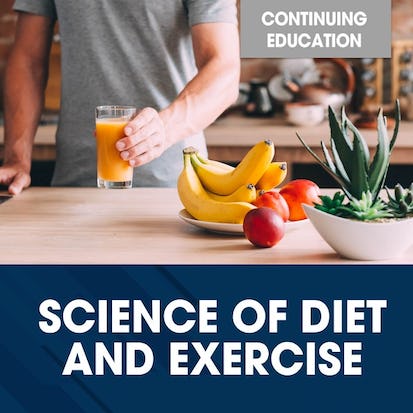
Changing your health and getting to where you want to be required not only an effective exercise program but a nutrition program that will complement your goals. It is through the combination of diet and exercise that you can maximize your efforts and become the best version of yourself. With the NASM Science of Diet and Exercise Specialization, you will learn how to lay the groundwork of an effective program that combines your nutrition and activity to achieve the results you want.
Monthly Subscription Starting at AED 99 + VAT
- Level Professional
- المدة
- الطبع بواسطة National Academy of Sports Medicine
-
Offered by
عن
Changing your health and getting to where you want to be required not only an effective exercise program but a nutrition program that will complement your goals. It is through the combination of diet and exercise that you can maximize your efforts and become the best version of yourself. With the NASM Science of Diet and Exercise Specialization, you will learn how to lay the groundwork of an effective program that combines your nutrition and activity to achieve the results you want. By understanding the interrelationships of fat and metabolism or proper nutritional intake to fuel exercise, you can better adjust your lifestyle to meet the desired goals. Through the application of nutrition and exercise research, you will be armed with the knowledge to guide, not only yourself, but those around you to meet the goals they desire!Auto Summary
Unlock your potential with the NASM Science of Diet and Exercise Specialization on Coursera. This professional-level course blends nutrition and exercise to help you achieve your health goals. Ideal for personal development, it offers comprehensive insights into fat metabolism, proper nutrition, and effective exercise programs. Available through Starter and Professional subscriptions, this course equips you with the knowledge to transform your lifestyle and guide others.

FPGA Design for Embedded Systems
The objective of this course is to acquire proficiency with Field Programmable Gate Arrays (FPGA)s for the purpose of creating prototypes or products for a variety of applications. Although FPGA design can be a complex topic, we will introduce it so that, with a little bit of effort, the basic concepts will be easily learned, while also providing a challenge for the more experienced designer. We will explore complexities, capabilities and trends of Field Programmable Gate Arrays (FPGA) and Complex Programmable Logic Devices (CPLD).
Monthly Subscription Starting at AED 99 + VAT
- Level Professional
- المدة
- الطبع بواسطة University of Colorado Boulder
-
Offered by
عن
The objective of this course is to acquire proficiency with Field Programmable Gate Arrays (FPGA)s for the purpose of creating prototypes or products for a variety of applications. Although FPGA design can be a complex topic, we will introduce it so that, with a little bit of effort, the basic concepts will be easily learned, while also providing a challenge for the more experienced designer. We will explore complexities, capabilities and trends of Field Programmable Gate Arrays (FPGA) and Complex Programmable Logic Devices (CPLD). Conception, design, implementation, and debugging skills will be practiced. We will learn specifics around embedded IP and processor cores, including tradeoffs between implementing versus acquiring IP. Projects will involve the latest software and FPGA development tools and hardware platforms to help develop a broad perspective of the capabilities of various Programmable SoC solutions. Topics include: Verilog, VHDL, and RTL design for FPGA and CPLD architectures FPGA development tools flow: specify, synthesize, simulate, compile, program and debug Configurable embedded processors and embedded software Use of soft-core and hard-core processors and OS options FPGA System engineering, software-hardware integration, and testing IP development and incorporating 3rd-party IP The capstone course will give the learner the opportunity to practice and implement the concepts covered by building FPGA systems based on low cost evaluation boards.Auto Summary
"FPGA Design for Embedded Systems" is a professional-level course aimed at mastering Field Programmable Gate Arrays (FPGAs) for various applications. Led by Coursera, it covers Verilog, VHDL, RTL design, embedded IP, processor cores, and FPGA development tools. Ideal for learners seeking to prototype or build products using FPGAs, the course includes practical projects and capstone exercises using the latest software and hardware platforms. Subscriptions available under the Starter plan.

Microsoft 365 Fundamentals
This Specialization is intended to help all novice computer users get up to speed with Microsoft 365 quickly. It covers different features of the interface, shows you how to perform basic tasks, and introduces you to the most important tools in Word, PowerPoint, and Excel. This program will help you to become familiar with the apps and services included in a Microsoft 365 subscription. You will improve your word processing, spreadsheet, and presentation skills to take your productivity to the next level.
Monthly Subscription Starting at AED 99 + VAT
- Level Foundation
- المدة
- الطبع بواسطة Microsoft
-
Offered by
عن
This Specialization is intended to help all novice computer users get up to speed with Microsoft 365 quickly. It covers different features of the interface, shows you how to perform basic tasks, and introduces you to the most important tools in Word, PowerPoint, and Excel. This program will help you to become familiar with the apps and services included in a Microsoft 365 subscription. You will improve your word processing, spreadsheet, and presentation skills to take your productivity to the next level. You will learn how to work smarter and more collaboratively with the latest intelligent features of Office 365. By the end of this program of courses, you will be ready to take and sign-up for the MO-100: Microsoft Word (Word and Word 2019), MO-200: Microsoft Excel (Excel and Excel 2019), and MO-300: Microsoft PowerPoint (PowerPoint and PowerPoint 2019).Auto Summary
Embark on the "Microsoft 365 Fundamentals" course to swiftly master the essential tools in Word, PowerPoint, and Excel. Designed for novice computer users, this program enhances your productivity and collaboration skills with Microsoft 365's latest features. Offered by Coursera, this foundational course prepares you for MO-100, MO-200, and MO-300 certifications, available under Starter and Professional subscription options. Perfect for anyone looking to boost their personal development and efficiency in Microsoft Office applications.
Semiconductor Devices
The courses in this specialization can also be taken for academic credit as ECEA 5630-5632, part of CU Boulder’s Master of Science in Electrical Engineering degree. Enroll here. This Semiconductor Devices specialization is designed to be a deep dive into the fundamentals of the electronic devices that form the backbone of our current integrated circuits technology.
Monthly Subscription Starting at AED 99 + VAT
- Level Expert
- المدة
- الطبع بواسطة University of Colorado Boulder
-
Offered by
عن
The courses in this specialization can also be taken for academic credit as ECEA 5630-5632, part of CU Boulder’s Master of Science in Electrical Engineering degree. Enroll here. This Semiconductor Devices specialization is designed to be a deep dive into the fundamentals of the electronic devices that form the backbone of our current integrated circuits technology. You will gain valuable experience in semiconductor physics, pn junctions, metal-semiconductor contacts, bipolar junction transistors, metal-oxide-semiconductor (MOS) devices, and MOS field effect transistors. Specialization Learning Outcomes: *Learn fundamental mechanisms of electrical conduction in semiconductors *Understand operating principles of basic electronic devices including pn junction, metal-semiconductor contact, bipolar junction transistors and field effect transistors *Analyze and evaluate the performance of basic electronic devices *Prepare for further analysis of electronic and photonic devices based on semiconductorsAuto Summary
Dive into the fundamentals of semiconductor devices with this expert-level course by Coursera. Perfect for those pursuing CU Boulder's Master of Science in Electrical Engineering, you'll explore semiconductor physics, pn junctions, transistors, and more. Gain hands-on experience and prepare for advanced analysis in electronic and photonic devices. Flexible subscription options include Starter and Professional plans. Ideal for learners aiming to deepen their expertise in integrated circuits technology.