


Geographic Information Systems (GIS)
Knowledge of Geographic Information Systems (GIS) is an increasingly sought after skill in industries from agriculture to public health. This Specialization, offered in partnership with ArcGIS developer Esri, will teach the skills you need to successfully use GIS software in a professional setting. You will learn how to analyze your spatial data, use cartography techniques to communicate your results in maps, and collaborate with peers in GIS and GIS-dependent fields.
Monthly Subscription Starting at AED 99 + VAT

- Level Foundation
- المدة
- الطبع بواسطة University of California, Davis
-
Offered by

عن
Knowledge of Geographic Information Systems (GIS) is an increasingly sought after skill in industries from agriculture to public health. This Specialization, offered in partnership with ArcGIS developer Esri, will teach the skills you need to successfully use GIS software in a professional setting. You will learn how to analyze your spatial data, use cartography techniques to communicate your results in maps, and collaborate with peers in GIS and GIS-dependent fields. In the final Capstone Project, you will create a professional-quality GIS portfolio piece using a combination of data identification and collection, analytical map development, and spatial analysis techniques. Interested in learning advanced GIS topics? Check out the Spatial Data Analysis and Visualization MasterTrack™ Program.Auto Summary
Discover the essentials of Geographic Information Systems (GIS) with this comprehensive course designed to enhance your skills in spatial data analysis and cartography. Perfect for beginners and professionals alike, this foundational course, developed in partnership with industry leader Esri, equips you with the expertise to utilize GIS software effectively in various professional domains such as agriculture and public health. Guided by experienced instructors from Coursera, you will delve into practical applications of GIS, learning to create informative maps and engage in collaborative projects with peers in GIS-dependent fields. This course offers flexible subscription options, including Starter and Professional plans, making it accessible for all levels of learners looking to advance their personal development in GIS. Embrace the opportunity to become proficient in a skill set that is highly valued across multiple industries.
Monthly Subscription Starting at AED 99 + VAT

- Level Foundation
- المدة 27 ساعات hours
- الطبع بواسطة The University of Sydney
-
Offered by
عن
This Specialization is aimed at preparing students for undergraduate study in an English-speaking university. The course equips you for full participation and engagement with your studies by building awareness and understanding of the core values and expectations of academic culture, and providing you with practical strategies to apply to your studies. In this course, you will learn how to develop your Communication Skills to help you achieve success in your university studies. After completing this course, you will be able to: 1. Recognise the importance of communication in communities of practice at university 2. Understand contexts of communication at university and associated expectations 3. Communicate clearly across a variety of different contexts and to a wide range of audiences by adapting communicative styles appropriately 4. Demonstrate, negotiate, and further understanding through spoken, written, visual, and conversational modes 5. Effectively formulate arguments and communicate research findings through the process of researching, composing, and editing 6. Confidently engage in constructive and critical dialogue with respect and professionalismالوحدات
Welcome to the Academic Skills for University Success Specialization!
-
 1
Videos
1
Videos
1
Videos
- Welcome to the Academic Skills for University Success Specialization!
Overview of Weekly Topics and Learning Outcomes
-
 1
Readings
1
Readings
1
Readings
- Communication Weekly Topics & Learning Outcomes
Assessment Overview
-
1
Readings
1
Readings
- Communication Assessment Overview
Summative Peer Assessment
-
1
Readings
1
Readings
- Summative Peer Assessment
1.1 Introduction to Course
-
1
Videos
-
1
Readings
-
 1
Discussion
1
Discussion
-
 1
Assignment
1
Assignment
 1
Assignment
1
Assignment
- 1.1 Practice Quiz
1
Discussions
- Introduce yourself
1
Videos
- 1.1a Introduction to the Course
1
Readings
- Learning Outcomes
1.2 Introduction to Academic Culture and Communication
-
2
Videos
-
1
Readings
-
1
Assignment
1
Assignment
- 1.2 Practice Quiz
2
Videos
- 1.2a Introduction to Academic Culture
- 1.2b Introduction to Communication
1
Readings
- Learning Outcomes
1.3 Survival Skills for University
-
2
Videos
-
1
Readings
-
1
Discussion
-
1
Assignment
1
Assignment
- 1.3 Practice Quiz
1
Discussions
- Values & Motivation
2
Videos
- 1.3a Survival Skills for University
- 1.3b Resilience & Motivation for University
1
Readings
- Learning Outcomes
1.4 Academic Integrity
-
1
Videos
-
1
Readings
-
1
Discussion
-
1
Assignment
1
Assignment
- 1.4 Practice Quiz
1
Discussions
- A "cheating culture"?
1
Videos
- 1.4a Academic Integrity
1
Readings
- Learning Outcomes
1.5 Assessment
-
2
Assignment
2
Assignment
- Summative Quiz - Module 1
- Discussion Board Self Assessment - Module 1
2.1 Contexts of Communication at University
-
3
Videos
-
1
Readings
-
2
Discussion
-
1
Assignment
1
Assignment
- 2.1 Practice Quiz
2
Discussions
- Contexts of communication
- Communication at university
3
Videos
- 2.1a Introduction to rhetorical situations
- 2.1b Rhetorical situations at university
- 2.1c University course outlines & contexts of communication
1
Readings
- Learning Outcomes
2.2 Participating in Different University Contexts
-
2
Videos
-
1
Readings
-
1
Assignment
1
Assignment
- 2.2 Practice Quiz
2
Videos
- 2.2a Making the Most of Participation in University Contexts
- 2.2b Participation & Communication at University
1
Readings
- Learning Outcomes
2.3 Participating in Lectures, Tutorials, and Online Forums
-
2
Videos
-
1
Readings
-
1
Assignment
1
Assignment
- 2.3 Practice Quiz
2
Videos
- 2.3a Participating in Lectures & Tutorials
- 2.3b Participating in Online Forums
1
Readings
- Learning Outcomes
2.4 Participating in Group Work
-
1
Videos
-
1
Readings
-
1
Discussion
-
1
Assignment
1
Assignment
- 2.4 Practice Quiz
1
Discussions
- Group work
1
Videos
- 2.4a Participating in Group Work
1
Readings
- Learning Outcomes
2.5 Assessment
-
2
Assignment
2
Assignment
- Summative Quiz - Module 2
- Discussion Board Self Assessment - Module 2
3.1 Introduction to Written Assignments
-
1
Videos
-
1
Readings
-
1
Assignment
1
Assignment
- 3.1 Practice Quiz
1
Videos
- 3.1a Introduction to Understanding, Researching, and Planning Written Assignments
1
Readings
- Learning Outcomes
3.2 Understanding & Interpreting Written Assignments
-
3
Videos
-
2
Readings
-
1
Discussion
-
1
Assignment
1
Assignment
- 3.2 Practice Quiz
1
Discussions
- Understanding the question
3
Videos
- 3.2a Part 1: Understanding Essay Assignments
- 3.2a Part 2: Interpreting Essay Questions
- 3.2b Understanding and Interpreting Reports & Proposals
2
Readings
- Learning Outcomes
- 3.2c Understanding the question
3.3 Conducting Research for Written Assignments
-
2
Videos
-
1
Readings
-
1
Discussion
-
1
Assignment
1
Assignment
- 3.3 Practice Quiz
1
Discussions
- Researching
2
Videos
- 3.3a Conducting Research for Essays
- 3.3b Conducting Research for Reports & Proposals
1
Readings
- Learning Outcomes
3.4 Planning Written Assignments
-
2
Videos
-
3
Readings
-
1
Assignment
1
Assignment
- 3.4 Practice Quiz
2
Videos
- 3.4a Planning Essays
- 3.4b Planning Reports & Proposals
3
Readings
- Learning Outcomes
- 3.4c Basic Essay Structures
- 3.4d Professional Report Structures
3.5 Assessment
-
2
Assignment
2
Assignment
- Summative Quiz - Module 3
- Discussion Board Self Assessment - Module 3
4.1 Introduction to Drafting, Refinining, and Incorporating Visual Aids in Written Assignments
-
1
Videos
-
1
Readings
-
1
Assignment
1
Assignment
- 4.1 Practice Quiz
1
Videos
- 4.1a Introduction to Drafting, Refining, and Incorporating Visual Aids in Written Assignments
1
Readings
- Learning Outcomes
4.2 Drafting Written Assignments
-
3
Videos
-
4
Readings
-
1
Discussion
-
1
Assignment
1
Assignment
- 4.2 Practice Quiz
1
Discussions
- Coherence & Cohesion
3
Videos
- 4.2a Drafting Essays
- 4.2b Drafting Reports & Proposals
- 4.2c Coherence & Cohesion for Essays & Reports
4
Readings
- Learning Outcomes
- 4.2d Paragraph structure
- 4.2e Reporting Verbs
- 4.2f Overcoming Writer's Block
4.3 Polishing and Refining Written Assignments and Incorporating Visual aids
-
4
Videos
-
1
Readings
-
1
Assignment
1
Assignment
- 4.3 Practice Quiz
4
Videos
- 4.3a Polishing & Refining Essays
- 4.3b Polishing & Refining Reports & Proposals
- 4.3c Incorporating Visual Aids in Written Assignments
- 4.3d Editing for Language
1
Readings
- Learning Outcomes
4.4 Formatting & Proofreading Written Assignments for Submission
-
1
Videos
-
2
Readings
-
1
Discussion
-
1
Assignment
1
Assignment
- 4.4 Practice Quiz
1
Discussions
- Formatting?
1
Videos
- 4.4a Formatting and Proofreading Written Assignments for Submission
2
Readings
- Learning Outcomes
- 4.4b Written Assignment Checklist
4.5 Assessment
-
2
Assignment
2
Assignment
- Summative Quiz - Module 4
- Discussion Board Self Assessment - Module 4
5.1 Understanding & Researching Presentations
-
1
Videos
-
1
Readings
-
1
Assignment
1
Assignment
- 5.1 Practice Quiz
1
Videos
- 5.1a Introduction to Academic Presentations
1
Readings
- Learning Outcomes
5.2 Planning the Structure of Presentations
-
2
Videos
-
1
Readings
-
1
Assignment
1
Assignment
- 5.2 Practice Quiz
2
Videos
- 5.2a Understanding and Researching Presentations
- 5.2b Planning Presentations
1
Readings
- Learning Outcomes
5.3 Preparing Visual Aids & Script Writing
-
3
Videos
-
1
Readings
-
1
Discussion
-
1
Assignment
1
Assignment
- 5.3 Practice Quiz
1
Discussions
- Academic spoken language?
3
Videos
- 5.3a Preparing Visual Aids
- 5.3b Writing your Script
- 5.3c Practising your Script
1
Readings
- Learning Outcomes
5.4 Presentations as Performance – Delivering your Message
-
2
Videos
-
2
Readings
-
1
Discussion
-
1
Assignment
1
Assignment
- 5.4 Practice Quiz
1
Discussions
- Presentation styles
2
Videos
- 5.4a Finding your Presentation Style
- 5.4b Facilitating Audience Interaction and Fielding Questions
2
Readings
- Learning Outcomes
- 5.4c Relaxation and Focusing Techniques
5.5 Assessment
-
2
Assignment
2
Assignment
- Summative Quiz - Module 5
- Discussion Board Self Assessment - Module 5
6.1 Assessment Items
-
3
Readings
-
1
Discussion
-
1
PeerReview
1
Peer Review
- Communication in a university course
1
Discussions
- End of Course Discussion
3
Readings
- Summative Assessment Overview
- How to mark your peers' assignments
- Practice peer making activity answers
Auto Summary
"Communication Skills for University Success" is designed to prepare students for undergraduate studies in English-speaking universities. This foundational course, offered by Coursera, focuses on building awareness of academic culture and developing effective communication strategies. Over approximately 27 hours, learners will master key skills such as clear communication across various contexts, effective argument formulation, and engaging in respectful dialogue. With subscription options like Starter and Professional, this course is ideal for those seeking to excel in academic environments.

Uncommon Sense Teaching: Teaching Online
In Uncommon Sense Teaching: TEACHING ONLINE we’d like to help you to move toward fresh approaches to online teaching that build on the latest insights from scientific research. We’ll use insights from movie-making—not to mention from odd visual tricks in Barb’s kitchen—to see how students learn, both independently and together. We all know, for example, that social learning is valuable in helping students grapple with tough concepts as well as in making learning more fun.
Monthly Subscription Starting at AED 99 + VAT

- Level Foundation
- المدة 15 ساعات hours
- الطبع بواسطة Deep Teaching Solutions
-
Offered by
عن
In Uncommon Sense Teaching: TEACHING ONLINE we’d like to help you to move toward fresh approaches to online teaching that build on the latest insights from scientific research. We’ll use insights from movie-making—not to mention from odd visual tricks in Barb’s kitchen—to see how students learn, both independently and together. We all know, for example, that social learning is valuable in helping students grapple with tough concepts as well as in making learning more fun. But if you understand what is happening in the brain during social learning, you can also understand why certain approaches commonly used in online learning, such as discussion forums, can sometimes pose a challenge. As you will see, we can use insights from neuroscience not only to motivate our students, but to help them change their very identity. Our course is designed for university professors, vocational instructors, K-12 teachers, coaches, business trainers, parents, and in fact, anyone who is trying to teach concepts or skills online. We're not just talking about traditional academic materials—if you’ve ever considered teaching a course on Udemy, putting up a video series on YouTube, or launching your own educational blog, this course is also for you. An essential and exciting point is that students can learn even BETTER online than they can in the traditional face-to-face classroom. That’s whether you’re teaching synchronously—that is, live, via a platform like Zoom; or you’re teaching asynchronously—that is, any time—by having videos and other teaching materials accessible to students whenever they want. You can take this course independently from the other two "Uncommon Sense Teaching" courses in this specialization—some of the neuroscience- and cognitive-psychology-based insights we’ll mention here in simple ways are explored more deeply in those other courses. So feel free to take the other two courses in the specialization in conjunction with or after this course. If you’ve already taken the other two courses, you’ll find that this course reviews and extends the practical insights from neuroscience you’ve already received in unexpected new directions. And you’ll find even deeper insights we haven’t covered before. In TEACHING ONLINE you'll be joining a trio of experienced online instructors who have taught millions in some of the world's most popular online courses. One of our deepest goals for this course is to help YOU to teach others to improve their ability to reach and teach students. We’ve loaded the animations and visuals we've developed for this course online in PowerPoints (licensed under Creative Commons) in the assets under the videos, as well as in the resources section. You can rework these PowerPoints as you wish to reteach this material to your colleagues and students. Your sharing and resharing of this material is one of the best things you can do to help us all move teaching and learning forward to a visionary future. YOU are the foundation—children, adults, and society as a whole can leap ahead because of your desire to learn and spread these new ideas!الوحدات
Week 1, Lesson 1: Dive into the Practicalities of Your Online Teaching—Along with Learning About Schemas
-
4
Videos
-
3
Readings
-
1
Discussion
-
2
Assignment
2
Assignment
- Sample Onboarding Quiz—Give It a Try Yourself!
- Week 1, Lesson 1: Dive into the Practicalities of Your Online Teaching
1
Discussions
- Your Uncommon Calling
4
Videos
- 1: Introduction to Teaching Online
- 2: Schemas and the Expertise Reversal Effect
- 3: Low-stakes Onboarding Quizzes and Avoiding the Horrors of Goodhart’s Law
- 4: Create a Quick Walkthrough of Your Course
3
Readings
- Course Syllabus
- Guidance in Applying for Continuing Education or Professional Development Credit
- Week 1, Lesson 1: Dive into the Practicalities of Your Online Teaching—Along with Learning About Schemas
Week 1, Lesson 2: Uncovering Why Students Can Be Tough to Motivate
-
3
Videos
-
1
Readings
-
1
Assignment
1
Assignment
- Week 1, Lesson 2: Uncovering Why Students Can Be Tough to Motivate
3
Videos
- 5: Schemas of Identity Can Provide Motivation—or Demotivation
- 6: The Imposter Syndrome in Online Teaching
- 7: Week 1 Wrap-up
1
Readings
- Week 1, Lesson 2: Uncovering Why Students Can Be Tough to Motivate
Week 2, Lesson 1: The Surprising Role of Habit in Online Teaching
-
4
Videos
-
1
Readings
-
1
Assignment
1
Assignment
- Week 2, Lesson 1: The Surprising Role of Habit in Online Teaching
4
Videos
- 1: On (and Off) Camera Habits and the Declarative-Procedural Learning Systems: Why Knowing and Doing are Not the Same Thing
- 2: Lights, Camera, Action—Oops!
- 3: You're Ready for Your Closeup—Wait, Too Close!
- 4: Breaking Bad Habits When It Comes to Teaching Online—and in Everyday Life
1
Readings
- Week 2, Lesson 1: The Surprising Role of Habit in Online Teaching
Week 2, Lesson 2: Mental Models & Online Learning
-
6
Videos
-
1
Readings
-
1
Assignment
1
Assignment
- Week 2, Lesson 2: Mental Models & Online Learning
6
Videos
- 5: Talk to the Hand—the Power of Gesture to Help Form Mental Models
- 6: Diving Deeper into Mental Models
- 7: Catching Continuity Errors at the Movies—How Mental Models Arise
- 8: Predicting Effective Online Strategies—Insight from Mental Models & More
- 9: How Long Should Online Videos Be? More Insight from Mental Models
- 10: Week 2 Wrap-up
1
Readings
- Week 2, Lesson 2: Mental Models & Online Learning
Honors Lesson
-
1
PeerReview
1
Peer Review
- Critique Someone Else's Online Video!
Week 3, Lesson 1: Retrieval Practice, Mental Models, and Schemas
-
5
Videos
-
1
Readings
-
1
Assignment
1
Assignment
- Week 3, Lesson 1: Retrieval Practice, Mental Models, and Schemas
5
Videos
- 1: Today's Online Learners Have No Time to Waste
- 2: What Do Retrieval Practice and Spaced Repetition Have to Do with Mental Models? Or Good Online Teaching?
- 3: Skirting Around the Complexity of Working Memory & Mental Models
- 4: Retrieval Practice Helps Solidify Both Simple and Complex Events in Schemas
- 5: Cognitive Load—If the Event is Too Complicated, Watch Out!
1
Readings
- Week 3, Lesson 1: Retrieval Practice, Mental Models, and Schemas
Week 3, Lesson 2: Using & Encouraging Retrieval Practice Apps in Your Courses
-
5
Videos
-
1
Readings
-
1
Assignment
1
Assignment
- Week 3, Lesson 2: Using & Encouraging Retrieval Practice Apps in Your Courses
5
Videos
- 6: How to Use Retrieval Practice Apps to Encourage Collaboration
- 7: How to Use a Specific Retrieval Practice App (iDoRecall) in Your Coursera Courses
- 8: How to Solicit Live, Monitored Retrieval Practice from Every Student in a Class Simultaneously (Pear Deck™)
- 9: Working Memory, Non-Native Speakers, and Barb’s Personal Experiences with Retrieval Practice
- 10: Week 3 Wrap-up
1
Readings
- Week 3, Lesson 2: Using & Encouraging Retrieval Practice Apps in Your Courses
Week 4, Lesson 1: Attention and Creating a Social Partnership
-
8
Videos
-
1
Readings
-
1
Assignment
1
Assignment
- Week 4, Lesson 1: Focus, Suspense, and Creativity
8
Videos
- 1: Focused versus Diffuse Thinking
- 2: Attention—How to Get It, and Why You Want to Sometimes Lose It
- 3: Why Editing Your Own Videos Can Be a Good Idea
- 4: It's Good to Leave Them Hanging! The Value of Suspense
- 5: Humor Does NOT Mean Being a Comedian
- 6: Creating a Social Partnership
- 7: Teleprompters and Giant Frogs
- 8: The Paradox of Self-Focus
1
Readings
- Week 4, Lesson 1: Focus, Suspense, and Creativity
Week 4, Lesson 2: The Value of Student-Student Interaction
-
4
Videos
-
1
Readings
-
1
Assignment
1
Assignment
- Final examination
4
Videos
- 9: Mental Model and Schema Sharing
- 10: Jolts of Joy
- 11: The Challenge of Discussion Forums
- 12: Wrap-up, Learning as Therapy—and As Preparation for the Future
1
Readings
- Week 4, Lesson 2: The Value of Student-Student Interaction
Course Wrap Up
-
1
Readings
1
Readings
- Ratings and Where to Go from Here!
Honors Lesson
-
1
PeerReview
1
Peer Review
- Create Your Own Instructional Video!
Auto Summary
"Uncommon Sense Teaching: Teaching Online" is a Coursera course focused on innovative online teaching methods based on scientific research. Perfect for educators at all levels, including university professors, K-12 teachers, coaches, and even parents. Led by experienced instructors, the course covers neuroscience insights to enhance social learning and motivate students. The content includes practical tips, animations, and visual aids, with a duration of approximately 15 hours. Available through a Starter subscription, this foundational course aims to revolutionize online education and empower educators to transform their teaching approach.

Patient Safety
Preventable patient harms, including medical errors and healthcare-associated complications, are a global public health threat. Moreover, patients frequently do not receive treatments and interventions known to improve their outcomes. These shortcomings typically result not from individual clinicians’ mistakes, but from systemic problems -- communication breakdowns, poor teamwork, and poorly designed care processes, to name a few. The Patient Safety & Quality Leadership Specialization covers the concepts and methodologies used in process improvement within healthcare.
Monthly Subscription Starting at AED 99 + VAT
- Level Foundation
- المدة
- الطبع بواسطة Johns Hopkins University
-
Offered by
عن
Preventable patient harms, including medical errors and healthcare-associated complications, are a global public health threat. Moreover, patients frequently do not receive treatments and interventions known to improve their outcomes. These shortcomings typically result not from individual clinicians’ mistakes, but from systemic problems -- communication breakdowns, poor teamwork, and poorly designed care processes, to name a few. The Patient Safety & Quality Leadership Specialization covers the concepts and methodologies used in process improvement within healthcare. Successful participants will develop a system’s view of safety and quality challenges and will learn strategies for improving culture, enhancing teamwork, managing change and measuring success. They will also lead all aspects of a patient safety and/or quality improvement project, applying the methods described over the seven courses in the specialization.Auto Summary
Enhance your understanding of patient safety with Coursera's foundational course on preventing medical errors and healthcare-associated complications. This comprehensive program delves into systemic issues like communication breakdowns and poor teamwork, offering strategies for improving culture, teamwork, and change management. Ideal for those in personal development, participants will lead patient safety projects using learned methodologies. Enroll now with a Starter subscription to begin your journey in quality leadership in healthcare.

Communication Skills for Engineers
Build a toolkit of communication skills that will give you the knowledge and confidence to be an effective engineering leader. Engineers who want to advance in their profession need to be effective communicators. They need to clearly communicate complex ideas and technical project plans. They also need to be strong persuaders.
Monthly Subscription Starting at AED 99 + VAT

- Level Foundation
- المدة
- الطبع بواسطة Rice University
-
Offered by
عن
Build a toolkit of communication skills that will give you the knowledge and confidence to be an effective engineering leader. Engineers who want to advance in their profession need to be effective communicators. They need to clearly communicate complex ideas and technical project plans. They also need to be strong persuaders. Engineers who are good communicators get recognized by their supervisors and by their clients. In this three-course Specialization, you will practice designing and giving strong, persuasive presentations; you will learn how to communicate across cultures, genders, and generations, how to create your personal brand and leadership presence, how to hold effective meetings with global teams; you will learn how to handle difficult conversations, and how to handle crisis communication; you will also learn writing skills immediately applicable in your daily activities. Courses are taught by faculty from the Rice Center for Engineering Leadership (RCEL). RCEL is focused on developing engineering leaders within Rice University at the undergraduate, master's and PhD levels. It is home to one of a very few academically approved Certificates in Engineering Leadership.Auto Summary
"Communication Skills for Engineers" is a Coursera Specialization designed for engineers aiming to enhance their leadership and communication abilities. Developed by the Rice Center for Engineering Leadership, this three-course series covers persuasive presentations, cross-cultural communication, personal branding, effective meetings, crisis communication, and essential writing skills. Ideal for those at the foundation level, it offers flexible subscription options, making it perfect for engineers seeking to advance their careers through improved communication.

Branding: The Creative Journey
This Specialization aims to make branding concepts accessible to every learner and to teach them to analyze and apply all the relevant concepts, using the broad and diverse toolkit of branding. It provides you with the necessary tools so that you are able to understand the brand behavior, understand the language of a brand and learn about the rational and emotional elements behind brands. It also attempts to make you understand the language of images. The amount of audiovisual content we receive today makes it hard for brands to break through that noise.
Monthly Subscription Starting at AED 99 + VAT
- Level Foundation
- المدة
- الطبع بواسطة IE Business School
-
Offered by
عن
This Specialization aims to make branding concepts accessible to every learner and to teach them to analyze and apply all the relevant concepts, using the broad and diverse toolkit of branding. It provides you with the necessary tools so that you are able to understand the brand behavior, understand the language of a brand and learn about the rational and emotional elements behind brands. It also attempts to make you understand the language of images. The amount of audiovisual content we receive today makes it hard for brands to break through that noise. It ends up teaching how to understand branding efforts in the context of customer experience. We must think in a strategic manner when creating brands. Branding is about co-creation and conversation between the audiences, customers and users. What is relevant is how people out there perceive and live the brand. Brands are the story, the personality and the culture of an organization; the intangible elements that form it.Auto Summary
"Branding: The Creative Journey" is a foundational course in Personal Development offered by Coursera. It focuses on making branding concepts accessible, teaching learners to analyze and apply crucial branding tools. The course covers understanding brand behavior, the language of brands, and the rational and emotional elements behind them. It emphasizes strategic thinking, co-creation, and the importance of customer experience in branding. With subscription options including Starter and Professional, this course is ideal for anyone looking to grasp the essentials of effective brand creation and management.
Buy Now Free
- Level Foundation
- المدة 3 ساعات hours
-
Offered by
عن
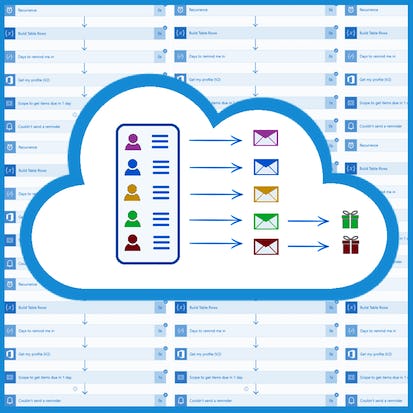
Imagine you're organizing a fundraising event. After the event, it is necessary to send thank-you notes to donors, but donations are hard to track since they arrive before, during and after the event, and manually sending emails to each donor would take too long. Thankfully, such manual and repetitive business processes are easy to automate, and this guided project, “Automize Business Communication using Power Automate” is for any business professional who is looking to automate any similar business task. With Power Automate, you will create a flow that can be triggered every time someone makes a donation. When you press Run, the flow will display a form with certain fields that have to be populated, such as name, e-mail, address, donation amount (or any other information we need about the donor). When the event ends, we will have a list of all the people who made donations in an Excel table. Then you will make another flow that will send thank-you notes to each donor on the list. After that, the flow will single out the people who donated the largest amounts and forward that list to the manager who can then send them a special thank-you note or a small gift. The requirement for taking this project is to have a free Microsoft account, but if you don’t have it, you can create one in just a few clicks (notes on how-to are included in this project). Since this project uses Power Automate (part of the Microsoft Power Platform), you will also need access to a free Microsoft 365 Developer Program subscription. In the first task you will be given instructions on how to sign up for it! Anyone can learn to use Power Automate regardless of their educational background! If you would like to make your life easier by automating manual, time-consuming business tasks which are hard to track, then this project is for you! Let's get started!Auto Summary
Unlock the potential of automating your business communication with the "Automize Business Communication using Power Automate" course, designed for business professionals seeking to streamline repetitive tasks. This course falls under the Personal Development domain and is expertly provided by Coursera. Guided by an experienced instructor, you will learn to use Power Automate to create efficient workflows, such as automating thank-you notes for donors post-fundraising events. The hands-on project will teach you to set up a flow that collects donor information and sends personalized emails, saving valuable time and effort. No prior technical knowledge is required, making it accessible to everyone. All you need is a free Microsoft account and access to the Microsoft 365 Developer Program, with setup instructions provided in the course. Over a concise duration of just one hour, this foundational course offers a practical introduction to automation, perfect for professionals aiming to enhance productivity. Enroll through Coursera's Starter subscription and start transforming your business processes today.
Monthly Subscription Starting at AED 99 + VAT

- Level Foundation
- المدة
- الطبع بواسطة University of Colorado System
-
Offered by
عن
This specialization is intended for intermediate level learners with basic programming skills and basic cybersecurity knowledge. Through this course learner will learn about advanced secure software techniques such as those for cloud computing, TOR, web-based cryptography, and geo-location/context based access control. With these techniques, learners will be better prepared to implement new security and privacy preserving data security features, to perform secure system design and implementation, vulnerability analysis, and Securely Provision (SP), Operate and Maintain (OM), Oversee and Govern (OV), Protect and Defend (PR), Analyze (AN), Collect and Operate (CO), and investigate (IN) tasks.Auto Summary
"Advanced System Security Design" is an intermediate-level course ideal for learners with basic programming and cybersecurity knowledge. Offered by Coursera, it covers advanced secure software techniques including cloud computing, TOR, web-based cryptography, and geo-location/context-based access control. This specialization equips learners to implement security features, perform secure system design, and conduct vulnerability analysis. Available through a Starter subscription, it targets those looking to enhance their skills in Securely Provision, Operate and Maintain, Protect and Defend, and more.

Creating a Differential Competitive Advantage -Jagdish Sheth
This is a master class in gaining a competitive marketing advantage. Professor Jagdish Sheth, 2020 Padma Bhushan Award winner for Literature and Education, guides you through proven strategies and practical steps for implementing technology, segmentation, differentiation, and positioning into your marketing plan. Professor Sheth shares wisdom and insight from decades of experience, years of research, and recommendations from multiple senior industry leaders to help grow your brand and set your business apart from the competition.
Monthly Subscription Starting at AED 99 + VAT

- Level Foundation
- المدة
- الطبع بواسطة Kennesaw State University
-
Offered by
عن
This is a master class in gaining a competitive marketing advantage. Professor Jagdish Sheth, 2020 Padma Bhushan Award winner for Literature and Education, guides you through proven strategies and practical steps for implementing technology, segmentation, differentiation, and positioning into your marketing plan. Professor Sheth shares wisdom and insight from decades of experience, years of research, and recommendations from multiple senior industry leaders to help grow your brand and set your business apart from the competition.Auto Summary
Elevate your marketing prowess with the "Creating a Differential Competitive Advantage" course, led by the esteemed Professor Jagdish Sheth, a 2020 Padma Bhushan Award recipient. This foundational course is designed to empower you with strategic insights and practical steps to gain a competitive edge in the market. In this master class, you'll delve into the intricacies of technology implementation, market segmentation, differentiation, and positioning. Professor Sheth brings decades of experience, extensive research, and valuable recommendations from senior industry leaders to the table, providing you with the tools to grow your brand and outperform competitors. Hosted on Coursera, this course offers flexible subscription options, including Starter and Professional plans, making it accessible to a wide range of learners. Whether you're a budding marketer or looking to refine your personal development skills, this course is tailored to help you achieve your goals and stand out in the business landscape.

Health, Society, and Wellness in COVID-19 Times
You may be encountering a world unlike any other generation. The public health crisis of the COVID-19 pandemic has created a context of pervasive uncertainty, heightened anxiety, and social isolation that overlaps with a critical time of your own learning and development. The COVID-19 pandemic also has exacerbated long-standing inequalities and disparities, and recent events in the United States have laid bare historical and current realities of racism and systemic oppression.
Monthly Subscription Starting at AED 99 + VAT

- Level Foundation
- المدة 53 ساعات hours
- الطبع بواسطة University of Colorado Boulder
-
Offered by
عن
You may be encountering a world unlike any other generation. The public health crisis of the COVID-19 pandemic has created a context of pervasive uncertainty, heightened anxiety, and social isolation that overlaps with a critical time of your own learning and development. The COVID-19 pandemic also has exacerbated long-standing inequalities and disparities, and recent events in the United States have laid bare historical and current realities of racism and systemic oppression. These challenges make starting college complicated in unprecedented ways, compounded by the fact that our university settings are themselves complex and rapidly changing. These challenges also present unique opportunities for interdisciplinary and practical learning. This course aims to help you navigate this world and the new conditions for learning with knowledge and skill. We designed the course with participatory methods, which means that we asked students to take a key role as partners with faculty in designing the course content, structure, and learning experiences. Together, we sought to integrate faculty expertise with the perspectives and experiences of students to make the course material relevant to your life. In this class, we will explore perspectives on disease and society and on systemic racism and inequality with scholars in the natural sciences, social sciences, arts and humanities, education, communications and media, and engineering. Engaging these disciplines to examine the complex problems of the global pandemic and systemic racism will help you build conceptual and practical skills that you will use throughout college and beyond. In conjunction with investigating health and social crises, new and ongoing, we also will explore the science and practice of individual and community wellness. You will learn skills relevant to emotions, relationships, common mental health concerns, and learning in the age of Zoom and remote classes. You will learn practices of cooperation, compassion, and anti-racism for community wellness. Welcome to Health, Society, and Wellness in COVID-19 Times!الوحدات
Orientation to the Course
-
5
Videos
-
2
Readings
-
1
Assignment
1
Assignment
- Reflect on the Welcome and Set Goals Wellness Workbook
5
Videos
- Sona Dimidjian and Dr. Daryl Maeda Welcome
- Donna Mejia Welcome Lecture
- Daryl Maeda Welcome
- Sona Dimidjian Welcome
- Kathy Shultz Welcome
2
Readings
- Introduction to Module 1 - An Orientation to Health Society and Wellness in COVID-19 Times
- Wellness Workbook Module 1/Lesson 1: Set Goals
Conversation with the Chancellor and Dr. Fauci
-
1
Videos
1
Videos
- Conversation with the Chancellor and Dr. Fauci
Exploring Health and Society Today
-
3
Videos
-
3
Readings
-
1
Assignment
1
Assignment
- Reflect on the Be Mindful Wellness Workbook
3
Videos
- Tom Cech: What is Coronavirus and How Do We Crush It?
- Celeste Montoya: Understanding Inequality: Power, Privilege, & Oppression
- Susan Kent: The Differential Impacts of the 1918-1919 Influenza Pandemic
3
Readings
- Additional Readings
- Wellness Workbook Module 1/Lesson 2: Be Mindful
- Exploring Health and Society Today Podcast
Learning in COVID-19 Times
-
2
Videos
-
3
Readings
-
1
Assignment
1
Assignment
- Reflect on the Get Connected Wellness Workbook
2
Videos
- William Penuel: Using What We Know to Make the Most of Your Time
- Jose Ramon Lizarraga: Digital Learning: Collaboration and Composition in Today's World
3
Readings
- Additional Reading
- Wellness Workbook Module 1/Lesson 3: Get Connected
- Learning in COVID-19 Times Podcast
Reflect on Your Learning
-
1
Assignment
1
Assignment
- Module 1 Quiz
Social Connection, Belonging, and Compassion in COVID-19 Times
-
3
Videos
-
4
Readings
-
1
Assignment
1
Assignment
- Reflecting on the Have Compassion Wellness Workbook
3
Videos
- Bernadette Park: Loneliness and Social Belonging
- Zoe Donaldson: Hungry for Love
- Holly Gayley: Compassion in the Time of COVID
4
Readings
- Introduction to Module 2 - Mental Health and Well Being in COVID-19 Times
- Optional Readings
- Wellness Workbook Module 2/Lesson 1: Have Compassion
- Social Connection, Belonging, and Compassion in COVID-19 Times Podcast
The Microbiome-Gut-Brain Axis and Sleep in COVID-19 Times
-
2
Videos
-
2
Readings
-
1
Assignment
1
Assignment
- Reflect on the Back To Basics Wellness Workbook
2
Videos
- Christopher Lowry: The Microbiome Gut Brain Axis in COVID-19 times
- Vyga Kaufmann: Sleep Benefits: Mind, Body, Mood
2
Readings
- Optional Readings
- Wellness Workbook Module 2/Lesson 2: Back to Basics
Mental Health and Stress Among College Students in COVID-19 Times
-
3
Videos
-
3
Readings
-
1
Assignment
1
Assignment
- Reflect on the Build Your Action Plan Wellness Workbook
3
Videos
- Jennifer Duffie: Generation Z and the Class of 2024
- Roselinda Kaiser: Brain Development and Mental Health
- Tina Pittman-Wagers: COVID-19 and Mental Health: Impact and Treatment Considerations
3
Readings
- Optional Readings
- Wellness Workbook Module 2/Lesson 3: Build Your Action Plan
- Mental Health and Stress Among College Students in COVID-19 Times Podcast
Reflect on Your Learning
-
1
Assignment
1
Assignment
- Content Quiz Module 2
Public Health Response to the COVID-19 Pandemic
-
2
Videos
-
3
Readings
2
Videos
- Matt McQueen: Public Health Measures and COVID-19
- Gay Lynn Olsen: Public Health and COVID-19 Prevention
3
Readings
- Introduction to Module 2 - The Public Health Response and Transmission of the COVID-19 Virus
- Optional Reading
- Public Health Response to the COVID-19 Pandemic Podcast
Modeling Transmission During COVID-19 Times
-
2
Videos
-
3
Readings
-
1
Assignment
1
Assignment
- Reflect on the Stay Grounded Wellness Workbook
2
Videos
- Eric Stade: How Do We Model the Spread of Disease Mathematically?
- Daniel Larremore: Effective Modeling for SARS-CoV-2: Populations, Mobility, and Virus
3
Readings
- Optional Readings
- Wellness Workbook Module 2/Lesson 2: Stay Grounded
- Modeling Transmission During COVID-19 Times Podcast
Reflect on your Learning
-
1
Assignment
1
Assignment
- Module 3 Quiz
Media, Communication and Information in Times of Uncertainty
-
3
Videos
-
4
Readings
-
1
Assignment
1
Assignment
- Reflect on the Practice Pausing Wellness Workbook
3
Videos
- Leah Sprain: Communication Literacy: Politicization, Polarization, and Listening
- Samira Rajabi: Coping with and through MediaVideo
- Jed Brubaker: The Human Side of COVID-19 Data: From Infodemics, to Reporting, to Lives on the Line
4
Readings
- Introduction to Module 4 Social Inequities and COVID-19
- Optional Readings
- Wellness Workbook Module 4/Lesson 1: Practice Pausing
- Media, Communication and Information in Times of Uncertainty Podcast
Youth Voice, Social Movements, and Social Protest in COVID-19 Times
-
3
Videos
-
2
Readings
-
1
Assignment
1
Assignment
- Reflect on the Be Curious and Engaged Wellness Workbook
3
Videos
- Ben Kirshner: Reclaiming Your Story
- Kalonji Nzinga: We Can’t Breathe: Prefigurative Artivism as a Means of Returning to Our Breath
- Cheryl Higashida: Student Protest and Social Movements
2
Readings
- Wellness Workbook Module 4/Lesson 1: Be Curious and Engaged
- Youth Voice, Social Movements, and Social Protest in COVID-19 Times Podcas
Racism, Colonialism, and Social Movements Relevant to COVID-19 Times
-
3
Videos
-
3
Readings
-
1
Assignment
1
Assignment
- Reflect on the Stay in the Conversation Wellness Workbook
3
Videos
- Jennifer Ho: Anti-Asian Racism and COVID-19
- Clint Carroll: Disease, Colonialism, and Indigenous Health Disparities
- Kristie Soares: Structural Racism Against the Latinx Community
3
Readings
- Optional Reading
- Wellness Workbook Module 4/Lesson 2: Stay in the Conversation
- Racism, Colonialism, and Social Movements Relevant to COVID-19 Times Podcast
Stereotyping, Racial Bias, and Historical Inequity in the Criminal Justice System; and Transformative Social Protest Dance
-
3
Videos
-
2
Readings
-
1
Assignment
1
Assignment
- Reflecting on the Move Beyond Bystander Toolkit
3
Videos
- Joanne Belknap: Criminology, COVID-19, and Racism
- Josh Correll: Race, Stereotypes, and the Architecture of the Mind
- Donna Mejia: Dance, COVID-19, Social Transformation, and Human Connection
2
Readings
- Wellness Workbook Module 4/Lesson 3: Move Beyond Bystander
- Stereotyping, Racial Bias, and Historical Inequity in the Criminal Justice System; and Transformative Social Protest Dance
Looking to the Future of Living Together as a Healthy Society
-
3
Videos
-
2
Readings
-
2
Assignment
2
Assignment
- Reflect on the Establish Networks of Care Wellness Workbook
- Reflect on the Inhabit with Respect Wellness Workbook
3
Videos
- Terri Wilson: What Do We Owe Each Other
- Daryl Maeda Course Wrap Up
- Sona Dimidjian & Donna Mejia Course Wrap Up
2
Readings
- Optional Readings
- Module 4/Lesson 4 Wellness Workbooks: Establish Networks of Care & Inhabit with Respect
Reflect on your Learning
-
1
Assignment
1
Assignment
- Module 4 Quiz
Auto Summary
"Health, Society, and Wellness in COVID-19 Times" is a foundation-level course in Personal Development, offered by Coursera. Led by expert faculty, it addresses the unique challenges of the COVID-19 pandemic, including heightened anxiety, social isolation, and systemic racism. Through interdisciplinary learning, students will explore disease, inequality, and wellness, gaining practical skills for emotional health and community well-being. The course uses participatory methods to integrate student experiences. Available with Starter and Professional subscriptions, it is ideal for learners aiming to navigate and thrive in these unprecedented times.