


Artificial Intelligence (AI) Education for Teachers
Today’s learners need to know what artificial intelligence (AI) is, how it works, how to use it in their everyday lives, and how it could potentially be used in their future. Using AI requires skills and values which extend far beyond simply having knowledge about coding and technology. This course is designed by teachers, for teachers, and will bridge the gap between commonly held beliefs about AI, and what it really is. AI can be embedded into all areas of the school curriculum and this course will show you how.
Monthly Subscription Starting at AED 99 + VAT

- Level Foundation
- المدة 16 ساعات hours
- الطبع بواسطة Macquarie University
-
Offered by

عن
Today’s learners need to know what artificial intelligence (AI) is, how it works, how to use it in their everyday lives, and how it could potentially be used in their future. Using AI requires skills and values which extend far beyond simply having knowledge about coding and technology. This course is designed by teachers, for teachers, and will bridge the gap between commonly held beliefs about AI, and what it really is. AI can be embedded into all areas of the school curriculum and this course will show you how. This course will appeal to teachers who want to increase their general understanding of AI, including why it is important for learners; and/or to those who want to embed AI into their teaching practice and their students’ learning. There is also a unique opportunity to implement a Capstone Project for students alongside this professional learning course. Macquarie School of Education at Macquarie University and IBM Australia have collaborated to create this course which is aligned to AITSL ‘Proficient Level’ Australian Professional Standards at AQF Level 8.الوحدات
Course Overview
-
 2
Videos
2
Videos
-
 4
Readings
4
Readings
2
Videos
- Welcome and introduction to Artificial Intelligence (AI) for Teachers
- Overview of course structure
4
Readings
- Why do teachers and students need to know about AI?
- Course background and accreditation
- Course structure and learning outcomes
- Learning activities and resources
External Projects and Research Options
-
2
Readings
2
Readings
- Student resources
- Research study
Podcasts
-
2
Readings
-
 2
Discussion
2
Discussion
2
Discussions
- Podcast with Professor Garry Falloon
- Podcast with Toby Flavell
2
Readings
- Podcast with Professor Garry Falloon
- Podcast with Toby Flavell
Meet Your Fellow Learners
-
1
Discussion
1
Discussions
- Introduce yourself
Module Overview
-
1
Videos
-
1
Readings
1
Videos
- Introduction to AI, its history and applications
1
Readings
- About this module
Topic 1: What is AI
-
8
Readings
-
2
Discussion
-
 2
Plugin
2
Plugin
2
Discussions
- What is intelligence?
- Defining AI
8
Readings
- What is intelligence? (continued)
- Strong AI
- The development of narrow AI
- Machine learning
- Machine Learning for Kids
- Definitions of AI
- Intelligence augmentation
- Relationships between AI and related areas
Knowledge Check
-
 1
Assignment
1
Assignment
 1
Assignment
1
Assignment
- Topic 1
Topic 2: History of AI
-
2
Readings
2
Readings
- The Turing Test
- Developments in computer hardware
Knowledge Check
-
1
Assignment
1
Assignment
- Topic 2
Topic 3: Applications of AI
-
5
Readings
-
4
Discussion
4
Discussions
- Podcast with Professor Deborah Richards
- Introducing Mitsuku
- AI and flood warnings
- Podcast with Dr Bhavna Antony
5
Readings
- Podcast with Professor Deborah Richards
- Jeopardy
- Autonomous cars
- Types of AI
- Podcast with Dr Bhavna Antony
Knowledge Check
-
1
Assignment
1
Assignment
- Topic 3
Module Summary
-
1
Readings
1
Readings
- Knowledge Module: Activities and resources
Module Assessment
-
1
Assignment
1
Assignment
- Knowledge Module
Module Overview
-
1
Videos
-
1
Readings
1
Videos
- Overview of design thinking, and critical and creative thinking
1
Readings
- About this module
Topic 4: Design Thinking
-
7
Readings
-
1
Discussion
-
2
Plugin
1
Discussions
- Podcast with Steve Nouri
7
Readings
- History of design thinking
- An important principle
- What is design thinking?
- Design thinking defined
- Models of design thinking
- Applying design thinking in an educational context
- Podcast with Steve Nouri
Knowledge Check
-
1
Assignment
1
Assignment
- Topic 4
Topic 5: Critical and Creative Thinking
-
12
Readings
-
3
Discussion
-
1
Plugin
3
Discussions
- Sample challenge - Reducing road congestion
- Critical thinking and AI
- Podcast with Professor Emily Cross
12
Readings
- Developing thinking skills
- Unhelpful stereotypes of critical and creative thinking
- Defining critical and creative thinking
- Creativity in STEM
- Creativity in STEM (continued)
- Art as a catalyst for critical thinking
- Introducing convergent and divergent thinking
- Strategies for fostering thinking skills
- Four elements of critical and creative thinking in the Australian Curriculum
- ACARA's critical and creative thinking model
- Creative AI
- Podcast with Professor Emily Cross
Knowledge Check
-
1
Assignment
1
Assignment
- Topic 5
Module Summary
-
1
Readings
1
Readings
- Skills Module — Part A: Activities and resources
Module Assessment
-
1
Assignment
1
Assignment
- Skills Module — Part A
Module Overview
-
1
Videos
-
1
Readings
1
Videos
- Overview of data fluency, and computational thinking
1
Readings
- About this module
Topic 6: Data Fluency
-
12
Readings
-
1
Discussion
-
1
Assignment
1
Assignment
- Data and decision-making in AI applications
1
Discussions
- Podcast with Dr Cormac Purcell
12
Readings
- What is data fluency?
- What is data?
- Data in education
- Definitions from the Mathematics Syllabus glossary
- Garbage in, garbage out (GIGO)
- Accuracy of decision-making
- Examining a data set
- Decision-making: Dog or cat?
- Photographic data sets of dogs and cats
- Training a machine learning model in MLFK
- Data within a machine learning project
- Podcast with Dr Cormac Purcell
Knowledge Check
-
1
Assignment
1
Assignment
- Topic 6
Topic 7: Computational Thinking
-
6
Readings
-
2
Discussion
-
2
Plugin
2
Discussions
- 21st century skills
- Podcast with Dr Rolf Schwitter
6
Readings
- Computational thinking influencers
- Computational thinking in the Science and Technology syllabus
- Computational thinking concepts
- Unplugged activities
- Device-based activities
- Podcast with Dr Rolf Schwitter
Knowledge Check
-
1
Assignment
1
Assignment
- Topic 7
Module Summary
-
1
Readings
1
Readings
- Skills Module - Part B: Activities and resources
Module Assessment
-
1
Assignment
1
Assignment
- Skills Module - Part B
Module Overview
-
1
Videos
-
1
Readings
1
Videos
- Introduction to ethical decision making, and bias awareness
1
Readings
- About this module
Topic 8: Ethical Decision Making
-
4
Readings
-
2
Discussion
2
Discussions
- Ethical issues raised by AI
- Podcast with Kaaren Koomen
4
Readings
- Closed-circuit television (CCTV) in schools
- Personality-quiz app data
- Pilots and AI
- Podcast with Kaaren Koomen
Knowledge Check
-
1
Assignment
1
Assignment
- Topic 8
Topic 9: Bias Awareness
-
6
Readings
-
1
Plugin
6
Readings
- Calling the shot
- Bias in more consequential decisions
- Cognitive biases
- Prejudice rather than cognition
- "The data is the code."
- AI and discrimination
Knowledge Check
-
1
Assignment
1
Assignment
- Topic 9
Module Summary
-
1
Readings
1
Readings
- Values Module: Activities and resources
Module Assessment
-
1
Assignment
1
Assignment
- Values Module
Course Summary
-
1
Videos
-
2
Readings
-
1
Discussion
1
Discussions
- Final reflection
1
Videos
- Conclusion
2
Readings
- Course completion feedback form
- Next steps
Auto Summary
This engaging course, created by Macquarie School of Education and IBM Australia, is tailored for teachers aiming to deepen their understanding of artificial intelligence (AI) and its integration into the curriculum. Designed to bridge the gap between common misconceptions and the true nature of AI, it offers practical insights for embedding AI in everyday teaching. The course spans 960 hours and aligns with AITSL standards, making it ideal for educators at the foundational level. Available through Coursera with Starter and Professional subscription options, it also includes a unique Capstone Project opportunity for students.

Being Assertive with Emotional Intelligence
This course is primarily aimed at people working in a business setting that want to feel more confident in their communication at all levels inside and outside of the organisation. The course will provide you with the knowledge, skills and confidence to become more assertive, taking control of your life in the process. Your assertiveness is your ability to express your feelings, beliefs, and thoughts and defend your rights in a non-destructive way.
Monthly Subscription Starting at AED 99 + VAT

- Level Foundation
- المدة 3 ساعات hours
- الطبع بواسطة Coursera
-
Offered by
عن
This course is primarily aimed at people working in a business setting that want to feel more confident in their communication at all levels inside and outside of the organisation. The course will provide you with the knowledge, skills and confidence to become more assertive, taking control of your life in the process. Your assertiveness is your ability to express your feelings, beliefs, and thoughts and defend your rights in a non-destructive way. It involves effectively and constructively expressing your emotions so that you can be forthright and frank when putting your views across. Your assertiveness considers how far you will go to stand up your rights for what you perceive is right. Assertiveness and aggression are two very different things although the two qualities are often somewhat confused. Aggression involves hostile acts or feelings whereas assertiveness is your confidence in being able to show determination with persistence and constructively argue your own views in a calm and positive way. If you are not naturally assertive, it can take some effort, but being more assertive is not impossible. For this to work you must approach them with an open mind and be ready to put into practice what you learn. Use this course to help you boost your assertiveness. You can work through the entire course, or, because we all have busy lives, you have the option to go straight to particular skills you’d like to work on. By completing this course, you will be able to - Identify methods and techniques to express assertive behaviour effectively - Develop ways to improve your level of assertiveness and ways to be assertive in appropriate ways - Recognise the implications of passive, aggressive and assertive behaviour, and passive-aggressive behaviour - Determine how you can say "No" without feeling guiltyالوحدات
Welcome to the "Being Assertive with Emotional Intelligence" Course
-
2
Videos
-
1
Readings
2
Videos
- Introduction to Being Assertive with Emotional Intelligence
- Being Assertive with Emotional Intelligence - Learning Outcomes
1
Readings
- Welcome to the Course
Exploring Assertiveness, Self-Esteem and Emotional Intelligence
-
1
Videos
-
1
Readings
1
Videos
- Assertiveness, Self-Esteem and Emotional Intelligence
1
Readings
- Practical Activity - Working with Assertiveness
Your Behaviours and Attitudes to Assertiveness
-
4
Videos
-
1
Readings
4
Videos
- The Rights and Responsibilities Around Assertiveness
- The Barriers to Assertiveness
- Assertiveness and Self-Esteem
- The Rules of Assertiveness
1
Readings
- Practical Activity - The Rules of Assertiveness
The Choices of Behaviour in Assertiveness
-
5
Videos
-
3
Readings
5
Videos
- The Choices of Behaviour in Assertiveness
- Aggressive Behaviour
- Passive Behaviour
- Assertive Behaviour
- Passive-Aggressive Behaviour
3
Readings
- Practical Activity - How Your Assertiveness Appears To Others
- Booklet: Recognising Aggressive, Passive and Assertive Behaviour
- Quiz - How Assertive Are You?
Exploring Ways to Become More Assertive
-
6
Videos
6
Videos
- The Disagreement Process
- Asking For What You Want
- The Bonsai Principle
- Assertiveness Methods and Techniques
- 12 Tips for Assertive Body Language
- Ways To Say "No!"
Building Assertiveness with Confidence
-
3
Videos
-
1
Readings
-
1
Assignment
1
Assignment
- Being Assertive with Emotional Intelligence Quiz
3
Videos
- Further Considerations Around Emotional Intelligence
- Being Assertive with Emotional Intelligence - Learning Review
- Conclusion to the Course
1
Readings
- Practical Activity - Being Assertive in Awkward Situations and with Awkward People
Auto Summary
"Being Assertive with Emotional Intelligence" is a foundation-level personal development course offered by Coursera, focused on enhancing your confidence and communication skills within a business setting. Taught by expert instructors, it delves into methods and techniques for effective assertiveness, distinguishing it from aggression, and helps you practice constructive expression of your emotions. The 180-minute course is flexible, allowing learners to focus on specific skills as needed. Ideal for professionals seeking to improve interpersonal dynamics, it is available through a Starter subscription.
Monthly Subscription Starting at AED 99 + VAT

- Level Foundation
- المدة 7 ساعات hours
- الطبع بواسطة University of Alberta
-
Offered by
عن
Welcome to Arctic: Development! In this third in a series of Arctic MOOCs, brought to you by a unique partnership between the University of Alberta and UiT The Arctic University of Norway, we will be exploring regional development in a changing arctic. In this 4-week course, you will investigate the role that natural resources play across the Indigenous, Nordic, Russian and North American Arctics, different strategies for resource management in different regions, and how these affect community planning and development efforts in an increasingly populated part of the world. We'll also see how climate change is dramatically impacting the Arctic, and examine a number of adaptations that different arctic communities are implementing to combat rapid, climate-influenced change. By the end of this course, you will have an idea of the opportunities presented to and difficulties faced by members of northern communities, and gain an understanding of just what regional development looks like in a changing Arctic.الوحدات
1.1 Your Journey Starts Here...
-
2
Videos
2
Videos
- Welcome to Arctic Development
- Introduction to the Arctic
1.2 Key Concepts of Arctic Devleopment
-
1
Videos
1
Videos
- Key Concepts of Arctic Development
1.3 Geopolitics of the Circumpolar North
-
1
Videos
-
1
Readings
-
1
Discussion
1
Discussions
- The Geopolitics of the Changing Arctic
1
Videos
- Geopolitics of the Circumpolar North
1
Readings
- Weekly Reading
1.4 Taking a Regional Approach
-
1
Videos
1
Videos
- Taking a Regional Approach
Module 1 Review
-
1
Readings
-
1
Assignment
1
Assignment
- Practice Quiz
1
Readings
- Practice Quiz Intro
2.1 Natural Resources
-
1
Videos
-
1
Assignment
1
Assignment
- M2L1 Quiz
1
Videos
- Natural Resources
2.2 Resource Management
-
1
Videos
-
1
Assignment
1
Assignment
- M2L2 Quiz
1
Videos
- Resource Management
2.3 Resource Management in the Indigenous Arctic
-
1
Videos
-
1
Assignment
1
Assignment
- M2L3 Quiz
1
Videos
- Resource Management in the Indigenous Arctic
2.4 Resource Management in North American, Russian and Nordic Arctics
-
3
Videos
-
1
Readings
-
1
Discussion
-
1
Assignment
1
Assignment
- M2 L4 Quiz
1
Discussions
- Cooperation in the Arctic
3
Videos
- Resource Management: North American Arctic
- Resource Management: Nordic Arctic
- Resource Management: Russian Arctic ML26
1
Readings
- Weekly Reading
3.1 Community Planning and Resilience
-
1
Videos
-
1
Readings
-
1
Discussion
-
1
Assignment
1
Assignment
- M3L1 Quiz
1
Discussions
- Creating resilient communities
1
Videos
- Community Planning and Resilience
1
Readings
- Weekly Reading
3.2 Community Planning in the Circumpolar North
-
1
Videos
-
1
Assignment
1
Assignment
- M3L2 Quiz
1
Videos
- Community Planning in the Circumpolar North
3.3-3.5 Communities of the Arctic
-
3
Videos
-
1
Assignment
1
Assignment
- M3L3 Quiz
3
Videos
- Communities of the Indigenous and North American Arctics
- Communities of the Nordic Arctic
- Communities of the Russian Arctic
3.6 Food Security in the Arctic
-
1
Videos
-
1
Assignment
1
Assignment
- M3L6 Quiz
1
Videos
- Food Security in the Arctic
3.7 Health Care and Policing in the Arctic
-
1
Videos
-
1
Assignment
1
Assignment
- M3L7 Quiz
1
Videos
- Health Care and Policing in the Arctic
4.1 Climate Change
-
1
Videos
-
1
Assignment
1
Assignment
- M4L1 Quiz
1
Videos
- Climate Change is Real
4.2 Adaptation Strategies
-
1
Videos
-
1
Assignment
1
Assignment
- M4L2 Quiz
1
Videos
- Adaptation Strategies
4.3 Case Study: Shishmaref, Alaska
-
1
Videos
1
Videos
- Case Study: Shishmaref, Alaska
4.4 Climate Adaptation Policy
-
1
Readings
-
1
Discussion
-
1
Assignment
1
Assignment
- M4L4 Quiz
1
Discussions
- Climate change impacts
1
Readings
- Weekly Reading
Course Wrap-Up
-
1
Videos
1
Videos
- Course Wrap-Up
Auto Summary
Explore regional development in a changing Arctic with the University of Alberta and UiT The Arctic University of Norway. This 4-week course delves into natural resource roles, management strategies, and impacts of climate change on Arctic communities. Ideal for personal development, it provides insights into opportunities and challenges in northern regions. Available on Coursera with a foundation level, it offers a starter subscription option.
Introduction to D3.js
This Guided Project, Introduction to D3.js is for those who want to learn about D3.js which is a JavaScript library for producing SVG-based, dynamic, interactive data visualizations in web browsers. In this 2-hour-long project-based course, you will get to know different SVG elements, build SVG-based webpages using D3.js, Integrate data into the SVG elements, and build simple data visualizations using D3.js. This project is unique because you will learn to build simple SVG-based data representations from scratch using D3.js.
Buy Now Free

- Level Professional
- المدة 4 ساعات hours
- الطبع بواسطة Coursera
-
Offered by
عن
This Guided Project, Introduction to D3.js is for those who want to learn about D3.js which is a JavaScript library for producing SVG-based, dynamic, interactive data visualizations in web browsers. In this 2-hour-long project-based course, you will get to know different SVG elements, build SVG-based webpages using D3.js, Integrate data into the SVG elements, and build simple data visualizations using D3.js. This project is unique because you will learn to build simple SVG-based data representations from scratch using D3.js. You will also learn how to integrate JSON data into your D3 data visualization. To be successful in this project, you will need to have knowledge of HTML, CSS, and Javascript programming language and to be experienced working with Visual Studio Code IDE.الوحدات
Your Learning Journey
-
1
Readings
-
1
Plugin
-
 1
Lab
1
Lab
-
1
Assignment
1
Assignment
- Assess Your Knowledge
1
Labs
- Introduction to D3.js
1
Readings
- Project Overview
Auto Summary
Unlock the power of dynamic, interactive data visualizations with the "Introduction to D3.js" course. Perfect for those eager to dive into the realm of web-based visual storytelling, this immersive 2-hour guided project hones in on the essentials of D3.js, a robust JavaScript library renowned for producing SVG-based graphics. Led by Coursera, the course provides a hands-on experience in building simple yet compelling SVG-based webpages. You'll master integrating data into SVG elements, crafting data visualizations from scratch, and merging JSON data with your visual projects. Designed for intermediate learners with a background in HTML, CSS, and JavaScript, and familiarity with Visual Studio Code IDE, this free course ensures you come away with practical skills to elevate your web development prowess. Join now and transform your data into engaging visual narratives!

Power and Foreign Policy in International Relations
Welcome to the Power and Foreign Policy in International Relations course! This course acquaints you with how power matters in the conduct of international relations and how it affects the strategies and tactics of a nation-state in dealing with other nation-states. It demonstrates the link between a country’s ranking in the international system and the means and methods it adopts to deal with the rest of the world.
Monthly Subscription Starting at AED 99 + VAT

- Level Foundation
- المدة 16 ساعات hours
- الطبع بواسطة O.P. Jindal Global University
-
Offered by
عن
Welcome to the Power and Foreign Policy in International Relations course! This course acquaints you with how power matters in the conduct of international relations and how it affects the strategies and tactics of a nation-state in dealing with other nation-states. It demonstrates the link between a country’s ranking in the international system and the means and methods it adopts to deal with the rest of the world. The course begins with introducing a few concepts about what constitutes power in world affairs, how it is calculated, and how the international power configuration changes over time. You will also learn what foreign policy means and what its constituent elements, strategies, or activities are. Then, the course delves deeper into case studies of contemporary great powers, middle powers, and small powers. These empirical case studies will raise the general knowledge of students about current developments and trends in foreign relations from different regions of the world. The examples of foreign policy approaches and decisions of nation-states, based on world news events of recent times, will help students to figure out the essence of world politics as it is being practiced in present times and prepare students to anticipate the future international orders to come.الوحدات
Course Introduction
-
2
Videos
-
1
Readings
2
Videos
- Meet Your Instructor
- Course Introduction
1
Readings
- Course Overview
Power and its Manifestations
-
4
Videos
-
1
Readings
4
Videos
- What Is Power and Why Does Size Matter in World Politics?
- Hard Power, Soft Power, and Smart Power
- Measuring a Nation-State's Overall Power or Comprehensive National Power
- What Is the Present International Power Configuration?
1
Readings
- Recommended Reading: Hard Power, Soft Power, and Smart Power
Foreign Policy and its Bases
-
3
Videos
-
1
Readings
3
Videos
- What Exactly Is Foreign Policy?
- National Interests and the Determinants of Foreign Policy
- Do Only State Elites Conduct Foreign Policy?
1
Readings
- Essential Reading: India’s Foreign Policy
Differences in Foreign Policy Approaches of Great, Middle, and Small Powers
-
3
Videos
-
1
Readings
-
1
Discussion
-
1
Assignment
1
Assignment
- Graded Quiz: Power and Foreign Policy–The Inseparable Twins
1
Discussions
- Current and Future International Power Configurations
3
Videos
- Typical Attitudes and Outlooks of Great Powers
- Typical Attitudes and Outlooks of Middle Powers
- Typical Attitudes and Outlooks of Small Powers
1
Readings
- Recommended Reading: Foreign Policy Approaches
Introduction to Peer Review Assignment
-
1
Readings
1
Readings
- Introduction to Peer Review Assignment
The Purposes of American Foreign Policy
-
3
Videos
-
1
Readings
3
Videos
- Sustaining Primacy and the Global Balance of Power
- Preserving the Capitalist World Order
- Making the World Safe for Democracy
1
Readings
- Recommended Reading: Introduction in Safeguarding Democratic Capitalism
America’s Unipolar Moment
-
3
Videos
-
1
Readings
3
Videos
- The Seismic Shift After the Collapse of the Soviet Union
- The Liberal Takeover and the Trend of Humanitarian Interventions
- The Global War on Terrorism: A Fatal Diversion from Great Power Competition
1
Readings
- Recommended Reading: Does America Need a Foreign Policy?
Multipolarity and the Post-American World
-
4
Videos
-
1
Readings
-
1
Discussion
-
1
Assignment
1
Assignment
- Graded Quiz: Foreign Policy of Great Powers: Case Study I–The United States of America
1
Discussions
- US Foreign Policy and Its Underlying Purposes
4
Videos
- Are we Entering Bipolarity or Multipolarity?
- Exiting the Forever Wars
- Reorienting US Foreign Policy to Face China
- Shifts in Domestic American Politics and an Inward Turn
1
Readings
- Recommended Reading: Emerging Powers in a Post-American World
Transformation into a Rising Middle Power
-
3
Videos
-
1
Readings
3
Videos
- From the Hindu Rate of Growth to the Express Train
- From Estranged Democracies to Comprehensive Global Strategic Partnership
- Strategic Diffidence to Strategic Assertion
1
Readings
- Recommended Reading: Emerging Powers in a Post-American World
India in Asia–Periphery to Centre Stage
-
4
Videos
-
1
Readings
4
Videos
- A Net Provider of Security in the Indian Ocean Region
- To Intervene or Not in Smaller Neighboring Countries
- Rescue Diplomacy and Vaccine Diplomacy
- Regional Integration and Connectivity Strategies
1
Readings
- Essential Reading: Indian Foreign Policy: The Quest for Greatness
A Future Democratic Superpower
-
3
Videos
-
1
Readings
-
1
Discussion
-
1
Assignment
1
Assignment
- Graded Quiz: Foreign Policy of Middle Powers: Case Study I–India
1
Discussions
- India’s Transformation into a Potential Great Power
3
Videos
- Narendra Modi’s Three Ds
- Idealism vs. Realism in Indian Foreign Policy
- A Multilateral Alliance of Democracies to Counterbalance China
1
Readings
- Recommended Reading: The Foreign Policy of India’s Prime Minister
Bandwagoning to the USA
-
4
Videos
-
1
Readings
4
Videos
- The Watershed Moment of the Gulf War of 1990-91
- Military and Economic Interdependence with the West
- The Trump Disruption and the Qatar-Saudi Cold War
- The Role of Values in the US-Qatar Alliance
1
Readings
- Recommended Reading: Qatari-US Military Relations
Radical Soft Power Strategies
-
4
Videos
-
1
Readings
4
Videos
- Iran and Qatar’s Zero Enemy Policy
- Picking up the Radical Palestinian Cause
- Teaming up with Erdogan’s Turkey
- Al Jazeera and the Forging of a Critical Arab Voice
1
Readings
- Recommended Reading: Reflecting on Qatar's "Islamist" Soft Power
Small State, Global Footprint
-
2
Videos
-
1
Readings
-
1
Discussion
-
1
Assignment
1
Assignment
- Graded Quiz: Foreign Policy of Small Powers: Case Study II–Qatar
1
Discussions
- Qatar’s Energy Diplomacy and Long-Term Strategy
2
Videos
- Energy Diplomacy as a Vehicle for Influence
- Mediating the War in Afghanistan
1
Readings
- Essential Reading: From Afghanistan to the World Cup, Tiny, Wealthy Qatar Steps Up
Peer Review Assignment
-
1
PeerReview
1
Peer Review
- How Do Countries Adjust Their Foreign Policies in Response to the Changing International/Regional Power Configuration?
Course Wrap-Up
-
1
Videos
1
Videos
- Course Wrap-Up
Auto Summary
Explore the intricate dynamics of global influence with the "Power and Foreign Policy in International Relations" course, designed to enhance your understanding of how power shapes the conduct of international affairs. This course offers a comprehensive introduction to the key concepts of power in world politics, examining how it is measured and how global power structures shift over time. Guided by expert insights, you will delve into the strategies and tactics nations employ in their foreign policies, influenced by their standing in the international hierarchy. Through in-depth empirical case studies of contemporary great powers, middle powers, and small powers, you will gain valuable knowledge of current trends and developments in foreign relations across diverse regions. Ideal for those at the foundational level, this course spans 960 minutes of engaging content, offering practical examples based on recent world events to help you grasp the realities of world politics today and anticipate future international scenarios. Enroll through Coursera with a Starter subscription to embark on this enlightening journey into the realm of international power and foreign policy, perfect for learners eager to understand the complexities of global interactions.
Instructional Planning with Genially
Genially is “the tool that brings content to life.” Genially allows you to map out a learning journey for your students using high interest images and interactive tools. But did you know that Genially is also a wonderful tool for organizing your lessons and units. With Genially, you can plan and organize your units in one central place, simplifying your planning process with templates created with teachers in mind!
Buy Now Free
- Level Foundation
- المدة 3 ساعات hours
- الطبع بواسطة Coursera
-
Offered by
عن
Genially is “the tool that brings content to life.” Genially allows you to map out a learning journey for your students using high interest images and interactive tools. But did you know that Genially is also a wonderful tool for organizing your lessons and units. With Genially, you can plan and organize your units in one central place, simplifying your planning process with templates created with teachers in mind! Throughout this project, we will work together to build your confidence using Genially so that you can not only use it as an instructional planning tool, but also as a tool for students to share information they have learned with their classmates. *You will need a free genial.ly account for this project.الوحدات
Your Learning Journey
-
1
Readings
-
1
Plugin
-
1
Lab
-
1
Assignment
1
Assignment
- Assess Your Knowledge
1
Labs
- Instructional Planning with Genially
1
Readings
- Project Overview
Auto Summary
Unlock the power of Genially with "Instructional Planning with Genially," a foundation-level course on Coursera. Designed for personal development, this 120-minute course helps teachers use Genially to create engaging, interactive lesson plans and units. Learn to organize your teaching materials in one place and enhance your instructional planning process with easy-to-use templates. Ideal for educators looking to streamline their planning and boost student interaction, this course requires a free genial.ly account and offers a starter subscription option. Join now to transform your teaching approach!
Buy Now Free
- Level Foundation
- المدة 3 ساعات hours
-
Offered by
عن
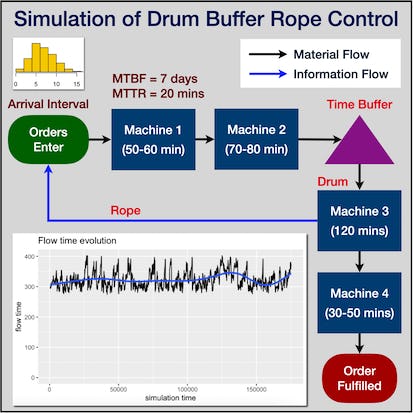
Welcome to "Simulation of Drum-Buffer-Rope Production Control Using R-Simmer". This is a project-based course which should take about 2 hours to finish. Before diving into the project, please take a look at the course objectives and structure. By the end of this project, you will gain introductiory knowledge of Drum-Buffer-Rope Production Control, Discrete Event Simulation, be able to use R Studio and Simmer library, create statistical variables required for simulation, define process trajectory, define and assign resources, define arrivals (eg. incoming customers / work units), run simulation in R, store results in data frames, plot charts and interpret the results.Auto Summary
Unlock the secrets of efficient production control with the "Simulation of Drum-Buffer-Rope Production Control Using R-Simmer" course, available on Coursera. Perfect for beginners, this engaging course delves into the Drum-Buffer-Rope (DBR) method, a key principle in the Theory of Constraints, and demonstrates how to simulate it using the R-Simmer package. Over 180 minutes, you'll gain hands-on experience and practical insights into optimizing workflows and enhancing productivity. Best of all, it's offered completely free, making it an accessible and valuable resource for anyone looking to improve their personal development and operational management skills. Join now to start your journey towards mastering production control simulations.

Activity Design with PhET Simulations for STEM Education
PhET Interactive Simulations ( https://phet.colorado.edu/ ), a project of the University of Colorado Boulder, provides fun, free, interactive, research-based science and mathematics simulations for use across, primary, secondary, and higher education levels. We extensively test and evaluate each simulation to ensure educational effectiveness.
Monthly Subscription Starting at AED 99 + VAT

- Level Professional
- المدة 23 ساعات hours
- الطبع بواسطة University of Colorado Boulder
-
Offered by
عن
PhET Interactive Simulations ( https://phet.colorado.edu/ ), a project of the University of Colorado Boulder, provides fun, free, interactive, research-based science and mathematics simulations for use across, primary, secondary, and higher education levels. We extensively test and evaluate each simulation to ensure educational effectiveness. All simulations are open source and free to all students and teachers. In this course, we will review strategies for how to use PhET to create sim-based inquiry activities for math or science classes, including activity sheets that students can use as they work independently or in small groups while they have direct access to simulations on their own devices. To finish this course, you need to complete one assignment with Peer Review: Create an inquiry based activity worksheet for science or math that integrate PhET simulations. This course is the second of three courses that integrate the specialization “Active Learning in STEM with PhET Interactive Simulations”. This course is also available in Spanish as “Diseño de Actividades con Simulaciones PhET para la Educación STEM”الوحدات
Small Group & Individual Strategies
-
3
Readings
-
1
Discussion
1
Discussions
- Reflecting on Your Context
3
Readings
- Welcome!
- Choosing to Use Small Group or Individual Strategies
- Getting Started
Student-Simulation Interaction
-
1
Videos
-
1
Readings
-
1
Discussion
1
Discussions
- Reflecting on Small Group Interactions
1
Videos
- Using PhET Activity Sheets in Small Group Work
1
Readings
- Student-Simulation Interaction
Revisiting PhET Activities
-
4
Readings
-
2
Discussion
2
Discussions
- Identifying "Good" Activity Sheets
- Comparing Activity Sheet Styles
4
Readings
- Reuse and Recycling in Education
- Activities vs. Activity Sheets
- Selecting a PhET Simulation-Based Activity Sheet
- Student Autonomy in Activity Sheets
Equity through Active Learning Pedagogies
-
2
Readings
-
1
Discussion
1
Discussions
- Assessing Active Learning in an Activity Sheet
2
Readings
- Equity through Active Learning
- Integrating Active Learning in an Activity Sheet
Equity in Technology
-
1
Readings
-
1
Discussion
1
Discussions
- Assessing Equity in the Greenhouse Effect Simulation
1
Readings
- Equity in Technology
Equity in PhET Simulation-Based Activity Sheets
-
4
Readings
-
3
Discussion
-
3
Assignment
3
Assignment
- Assessing Relevance in Activity Sheets
- Assessing Representation in Activity Sheets
- Assessing Accessibility in Activity Sheets
3
Discussions
- Reflecting on Relevance
- Reflecting on Representation
- Reflecting on Accessibility
4
Readings
- Equity in an Activity Sheet
- Establishing Relevance through Activity Sheets
- Incorporating Representation in Activity Sheets
- Building Accessibility into Activity Sheets
Revising Activity Sheets to Maximize Equity
-
1
Readings
-
1
PeerReview
1
Peer Review
- Revise an Activity Sheet
1
Readings
- Active Learning and Equity Aspirations
Introduction to Challenge Prompts
-
4
Readings
4
Readings
- Defining Challenge Prompts
- Try a Challenge Prompt
- Challenge Prompts in Action
- Science v. Math Challenge Prompts
Subject-Specific Challenge Prompt Examples
-
5
Readings
5
Readings
- From Traditional Questions to Challenge Prompts
- Math Example: Proportion Playground
- Physics Example: Bending Light
- Chemistry Example: Gas Properties
- Biology Example: Gene Expression
Practice Writing Challenge Prompts - Instructions
-
1
Readings
1
Readings
- Practice Writing Challenge Prompts - Instruction
Chemistry Exercise: States of Matter
-
1
Readings
-
1
Discussion
1
Discussions
- States of Matter – Basics
1
Readings
- Original Prompt: States of Matter - Basics
Math Exercise: Unit Rates
-
1
Videos
-
1
Readings
-
1
Discussion
1
Discussions
- New Challenge Prompt for Unit Rates
1
Videos
- Teacher Discussion on Challenge Prompts: Unit Rates
1
Readings
- Original Prompt for Unit Rates
Biology Exercise: Natural Selection
-
1
Readings
-
1
Discussion
1
Discussions
- New Challenge Prompt for Natural Selection
1
Readings
- Original Prompt for Natural Selection
Math Exercise: Build an Atom
-
1
Videos
-
1
Readings
-
1
Discussion
1
Discussions
- New Challenge Prompt for Build An Atom
1
Videos
- Teacher Discussion on Build an Atom Prompt
1
Readings
- Original Prompt for Build an Atom
Math Exercise: Area Model Multiplication
-
1
Videos
-
1
Readings
-
1
Discussion
1
Discussions
- New Challenge Prompt for Area Model Multiplication
1
Videos
- Teacher Discussion on Area Model Multiplication Prompt
1
Readings
- Original Prompt for Area Model Multiplication
Math Exercise: Graphing Lines
-
1
Videos
-
1
Readings
-
1
Discussion
1
Discussions
- New Challenge Prompt for Graphing Lines
1
Videos
- Teacher Discussion on Graphing Lines Prompt
1
Readings
- Original Prompt for Graphing Lines
Physics Exercise: Energy Forms and Changes
-
1
Readings
-
1
Discussion
1
Discussions
- New Challenge Prompt for Energy Forms and Changes
1
Readings
- Original Prompt for Energy Forms and Changes
Math Exercise: Function Builder
-
1
Videos
-
1
Readings
-
1
Discussion
1
Discussions
- New Challenge Prompt for Function Builder
1
Videos
- Challenge Prompts: Function Builder
1
Readings
- Original Prompt for Function Builder
Integration of Challenge Prompts in an Activity Sheet
-
1
Videos
-
2
Readings
-
3
Discussion
3
Discussions
- Open Play Discussion
- Open Play Video Reflection
- Integration of Challenge Prompts in Activity Sheets
1
Videos
- Open Play Discussion
2
Readings
- Example of an Activity Sheet and the integration of Challenge Prompts
- Student Activity Sheet
Best Practices for Activity Sheets
-
1
Videos
-
2
Readings
1
Videos
- Designing Activity Sheets
2
Readings
- Designing Activity Sheets
- Designing Activity Sheets Guidelines
PhET Lesson Structure: Activities in Context
-
2
Videos
-
4
Readings
-
1
Discussion
1
Discussions
- Reflecting on Lesson Structure
2
Videos
- Preparing to Design a Lesson
- Activity Sheet Strategies
4
Readings
- What is a "Lesson"?
- PhET and 5Es
- Preparing to Design a Lesson
- Teacher Preference
Examples of Lessons Driven By Activity Sheets
-
4
Readings
-
1
Discussion
1
Discussions
- Reflection about the Example Lessons
4
Readings
- Examples of Lessons Driven by Activity Sheets
- Warm-Ups / Pre-Labs
- Open Play
- Activity/Lab with Synthesis/Post-Lab
Going Deeper with Lessons
-
1
Videos
-
9
Readings
-
1
Discussion
1
Discussions
- Ideas for a Warm-Up/Pre-Lab
1
Videos
- Facilitating Discussion in a Synthesis/Post-Lab
9
Readings
- Warm-Up / Pre-Lab: Transitioning to the Activity Sheet
- Exercise to plan a Warm/Pre-Lab and Activity/Lab
- Building on Prior Knowledge
- Warm-Up/Pre-Lab and Activity/Lab
- Planning Your Warm-Up/Pre-Lab
- Planning Your Activity Sheet
- Close Your Lesson with a Synthesis/Post-Lab
- Synthesis / Post-Lab Examples
- Planning Your Synthesis/Post-Lab
More Considerations for Activity Sheet Use
-
1
Videos
-
2
Readings
1
Videos
- Unexpected Discovery During a PhET Lesson
2
Readings
- Allow Time for “Teachable Moments”
- Homework and Distance Learning
Assignment Submission
-
1
PeerReview
1
Peer Review
- Lesson with Activity Sheet
Conclusion and Next Steps
-
1
Readings
-
1
Assignment
1
Assignment
- Final Conclusions
1
Readings
- Next Steps
Auto Summary
Explore how to design effective, simulation-based learning activities for STEM education with PhET Interactive Simulations. Ideal for educators in primary, secondary, and higher education, this professional-level course covers strategies for integrating interactive, research-based simulations into math and science classes. Offered by Coursera, it includes peer-reviewed assignments and is part of the "Active Learning in STEM with PhET Interactive Simulations" specialization. Available in English, Spanish, and Portuguese, with flexible subscription options.
Create an Affinity Diagram Using Creately
By the end of this project you will create an affinity diagram using Creately.com. Learning to collect and organize ideas and information increases productivity and fosters positive teamwork. Learners will engage in the Affinity process to develop an understanding of how to spark, gather, consolidate, sort and present ideas and information.
Buy Now Free
- Level Foundation
- المدة 3 ساعات hours
- الطبع بواسطة Coursera
-
Offered by
عن
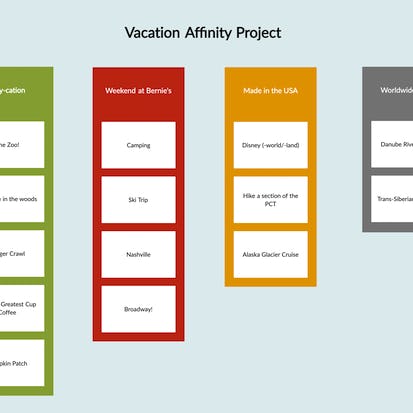
By the end of this project you will create an affinity diagram using Creately.com. Learning to collect and organize ideas and information increases productivity and fosters positive teamwork. Learners will engage in the Affinity process to develop an understanding of how to spark, gather, consolidate, sort and present ideas and information.الوحدات
Your Learning Journey
-
1
Readings
-
1
Plugin
-
1
Lab
-
1
Assignment
1
Assignment
- Assess Your Knowledge
1
Labs
- Create an Affinity Diagram Using Creately
1
Readings
- Project Overview
Auto Summary
Unlock the power of organization and teamwork with our hands-on course, "Create an Affinity Diagram Using Creately." Designed for those keen on boosting productivity and enhancing collaborative efforts, this beginner-level course guides you through the process of creating an affinity diagram, a crucial tool for collecting and structuring ideas effectively. Throughout the 180-minute learning experience, you will delve into the Affinity process, mastering techniques to spark creativity, gather insights, and consolidate and present information systematically using Creately.com. Offered by Coursera, this course is perfect for individuals or teams looking to streamline their brainstorming sessions and improve their ability to manage and communicate complex information. Best of all, you can access this invaluable resource for free, making it an excellent opportunity for personal development without any financial commitment. Whether you're a professional seeking to enhance your teamwork skills or a student eager to learn new organizational techniques, this course will equip you with the tools and knowledge to succeed. Join us today and transform how you and your team handle ideas!
Create a Professional Automated Landing Page using Mailchimp
In this 1-hour long project-based course, you will learn how to design a professional landing page with a lead magnet to collect email addresses from scratch. We will then use the Email Automation feature from Mailchimp to send an automated email with an option to download the Free lead magnet and a Call to Action to join a webinar where a marketer can then sell premium products. This lead generation strategy is highly effective with really high conversion rates if done right. This guided project is beginner-friendly.
Buy Now Free

- Level Foundation
- المدة 2 ساعات hours
- الطبع بواسطة Coursera
-
Offered by
عن
In this 1-hour long project-based course, you will learn how to design a professional landing page with a lead magnet to collect email addresses from scratch. We will then use the Email Automation feature from Mailchimp to send an automated email with an option to download the Free lead magnet and a Call to Action to join a webinar where a marketer can then sell premium products. This lead generation strategy is highly effective with really high conversion rates if done right. This guided project is beginner-friendly. You don’t need any experience in email marketing or graphic design in order to complete this project. I will teach you everything you need to know to complete this project. We will begin by creating a Mailchimp account and then explore the Mailchimp’s dashboard in detail. Most people have no idea about the level of resources that Mailchimp’s have. So we will explore all of these resources. Then, we will try to understand the fundamentals of landing pages, lead magnets and how to effectively design them for high conversion. We will then design our “Grow a list” landing page from scratch using beautiful stock images. Then in the final task, we will use the Email Automation feature from Mailchimp to send an automated email to the subscribers with the Free lead magnet and a Call to Action to join a Free Webinar. By the end of this project, you will have a high converting Automated landing page which you can post on your Youtube channel, Facebook groups, LinkedIn page or boost it through Facebook ads. Note: This course works best for learners who are based in the North America region. We’re currently working on providing the same experience in other regions.الوحدات
Practical Application via Rhyme
-
2
Readings
-
1
Plugin
-
1
Lab
-
1
Assignment
1
Assignment
- Graded Quiz: Test your Project understanding
1
Labs
- Create a Professional Automated Landing page using Mailchimp
2
Readings
- Project-based Course Overview
- Closing Reading
Auto Summary
Unlock the potential of email marketing with the "Create a Professional Automated Landing Page using Mailchimp" course, designed to elevate your personal development skills. Over the span of just 1 hour, you will master the art of designing a professional landing page from scratch, complete with a lead magnet to efficiently collect email addresses. The course delves into Mailchimp's powerful Email Automation feature, enabling you to send automated emails that include a downloadable lead magnet and a compelling Call to Action for webinar sign-ups, setting the stage for high conversion rates. This beginner-friendly project is perfect for those new to email marketing and graphic design. With step-by-step guidance from an expert instructor, you'll start by setting up a Mailchimp account and navigating its comprehensive dashboard. You'll discover a wealth of resources within Mailchimp and learn the essential principles of creating effective landing pages and lead magnets. Throughout the course, you'll design an engaging "Grow a list" landing page using attractive stock images, and culminate with the automated email setup to boost your subscriber base and promote webinars. By the end of this hands-on project, you'll have a high-converting landing page ready to share across various platforms like YouTube, Facebook groups, LinkedIn, or through targeted Facebook ads. Targeted primarily at learners in North America, this course is available for free on Coursera and is tailored for beginners looking to harness the power of Mailchimp for their marketing strategies. Join now and transform your approach to lead generation and email marketing!