


UX Research at Scale: Surveys, Analytics, Online Testing
This UX course will provide an overview of survey methodology from the perspective of UX research. UX surveys typically focus on uncovering user needs, connecting needs to user characteristics, and gaining insight into user attitudes towards systems they use. In this course, learners will learn the basics of UX survey research and conduct a survey of their own design! Learners will be introduced to techniques for gaining UX insights from large numbers of users, including web analytics, A/B testing, and remote unmoderated studies.
Monthly Subscription Starting at AED 99 + VAT

- Level Foundation
- المدة 19 ساعات hours
- الطبع بواسطة University of Michigan
-
Offered by

عن
This UX course will provide an overview of survey methodology from the perspective of UX research. UX surveys typically focus on uncovering user needs, connecting needs to user characteristics, and gaining insight into user attitudes towards systems they use. In this course, learners will learn the basics of UX survey research and conduct a survey of their own design! Learners will be introduced to techniques for gaining UX insights from large numbers of users, including web analytics, A/B testing, and remote unmoderated studies. We will discuss how these techniques work, when they can be applied, and what can be learned by using them. What You’ll Learn: -Learn how web analytics works and how to analyze analytics data -Understand how to develop A-B tests, before/after, and multivariate experiments -Learn how to set up and analyze remote unmoderated testing studies -Analyze and report on large scale user experience studies Learn about the different types and uses of surveys in UX research -Understand the survey population: when to sample, when to recruit -Develop a survey instrument that meets your requirements -Analyze and report on surveys -Learn to critique user surveysالوحدات
Welcome to the Course!
-
 3
Readings
3
Readings
3
Readings
- Welcome Announcement
- Course Syllabus
- Help Us Learn More about You!
Course Introduction
-
 3
Videos
3
Videos
3
Videos
- Course Introduction
- The Basics of UX Research
- Ethics and UX Research
When and How to Use Surveys
-
3
Videos
-
 1
Discussion
1
Discussion
-
 1
Assignment
1
Assignment
 1
Assignment
1
Assignment
- Quiz: Survey Time
1
Discussions
- Optional Discussion: Participate in a Survey
3
Videos
- Survey Terms
- Understanding Error
- Four Sources of Error
Asking the Right People (Coverage Error)
-
5
Videos
-
1
Assignment
1
Assignment
- Quiz: Assessing Your Survey Knowledge
5
Videos
- Defining Your Population
- Probability vs Non-Probability
- Non-Probability Samples
- Non-Probability Samples: Panels
- Survey Modes
Getting Answers (Nonresponse error)
-
4
Videos
-
1
Assignment
1
Assignment
- Quiz: Getting Responses
4
Videos
- Nonresponse: The Respondent Mindset
- Nonresponse: Increasing Benefits
- Nonresponse: Reducing Cost
- Nonresponse: Establishing Trust
Writing Questions (Measurement Error)
-
10
Videos
-
1
Readings
-
1
Discussion
-
1
PeerReview
-
2
Assignment
2
Assignment
- Writing Questions Quiz 1
- Writing Questions Quiz 2
1
Peer Review
- Peer Assessment: Writing Survey Questions
1
Discussions
- Discussion: Uncommon Survey Questions
10
Videos
- Questions: The Respondent State of Mind
- Defining Your Concept
- Anatomy of a Survey Question
- Basic Guidelines for Writing Questions
- Open-Ended Questions
- Closed-Ended Questions
- Designing Nominal Questions
- Designing Ordinal Questions
- Common UX Survey Questions
- Visual Design of Survey Questions
1
Readings
- Writing Survey Questions - Best Practices
Advanced Survey Topics
-
1
Videos
-
1
Discussion
1
Discussions
- Discussion: Surveys and Your Work!
1
Videos
- Ethics of Survey Research
About Research at Scale
-
4
Videos
-
3
Readings
-
1
Assignment
1
Assignment
- Quiz: About Research at Scale
4
Videos
- What is UX Research at Scale?
- A Maturity Model
- Findings versus Reports
- Interview: How Do People Practice UX Research at Scale Now?
3
Readings
- Introduction to About Research at Scale
- How Giant Websites Design for You (and a billion others, too)
- UX Maturity Models, A Collection
Behavioral Analytics
-
5
Videos
-
4
Readings
-
1
PeerReview
1
Peer Review
- Analytics Dataset
5
Videos
- Website Analytics for UX
- All About Metrics
- Research Questions and Website Analytics
- Search Analytics
- Let's Talk: The Practice of User Research
4
Readings
- Introduction to Behavioral Analytics
- Analytics Dataset: Peer Assignment Setup
- Metrics Glossary
- Suggestions for Further Exploration
Remote Testing
-
4
Videos
-
6
Readings
-
1
Discussion
-
1
Assignment
1
Assignment
- Remote Testing
1
Discussions
- Discussion: Remote Testing
4
Videos
- Remote Testing
- Remote Moderated Testing
- Remote Unmoderated Testing
- Example Remote Unmoderated Test
6
Readings
- Introduction to Remote Testing
- Download Data
- Example Remote Test Script
- Informed Consent Form
- Analyzing Moderated Tests
- Suggestions for Further Exploration
A/B Testing and Preference Testing
-
6
Videos
-
7
Readings
-
1
Discussion
-
1
PeerReview
1
Peer Review
- Preference Test: Assignment
1
Discussions
- Preference Test Discussion
6
Videos
- About A/B Testing
- A/B Testing vs Preference Testing
- Conducting Preference Testing
- Conducting an A/B Study
- Between vs. Within Subjects
- Ethics of A/B Testing
7
Readings
- Preference Test: Peer Review Assignment Setup Part 1
- Preference Test: Peer Assignment Setup Part 2
- Preference Test: Example Survey Questions
- Final Thoughts
- Suggestions for Further Exploration
- Course Feedback
- Keep Learning with Michigan Online
Auto Summary
Enhance your UX research skills with "UX Research at Scale: Surveys, Analytics, Online Testing." This foundational course by Coursera focuses on survey methodology, web analytics, A/B testing, and remote unmoderated studies. Led by experts, you'll learn to design, conduct, and analyze large-scale UX surveys and experiments. The course spans 1140 minutes and is available through Starter or Professional subscription plans. Ideal for personal development, this course is perfect for aspiring UX researchers and professionals seeking to deepen their understanding of user needs and behaviors.

Modes of Science Communication
In this course, you will explore different modalities of science communication, including oral presentations, written forms of communication, technology, and artistic media, including best practices for each.
Monthly Subscription Starting at AED 99 + VAT

- Level Foundation
- المدة 10 ساعات hours
- الطبع بواسطة University of Colorado Boulder
-
Offered by
عن
In this course, you will explore different modalities of science communication, including oral presentations, written forms of communication, technology, and artistic media, including best practices for each.الوحدات
Welcome!
-
1
Videos
-
1
Discussion
-
 1
Plugin
1
Plugin
1
Discussions
- Warm-up
1
Videos
- Course Introduction
Best Practices For Public Speaking & Storytelling
-
2
Videos
-
3
Readings
2
Videos
- Best Practices For Public Speaking: Style
- Best Practices For Public Speaking: Content
3
Readings
- Julian Treasure TED Talk: How to Speak so that People Want to Listen
- 6 Rules of Great Storytelling (As Told by Pixar)
- 7 Storytelling Techniques Used by the Most Inspiring TED Presenters
Interview Best Practices
-
1
Videos
-
2
Readings
-
1
Discussion
1
Discussions
- Oral Presentation Critique
1
Videos
- Interview Best Practices with Julie Poppen
2
Readings
- Optional Podcast Episode: Learning to See Science in the World
- Optional Dr. Melanie Peffer TED Talk: How Rethinking Biology Can Positively Change Your Life
Common Pitfalls in Science
-
1
Videos
-
1
Discussion
1
Discussions
- Warm-up
1
Videos
- Common Pitfalls in Science vs. General Public Writing
Science Communication Through Writing
-
1
Videos
-
2
Readings
1
Videos
- Types of Public Facing Articles
2
Readings
- Optional: Talking About Science in a Pandemic: A Golden Opportunity for Science Communication
- Optional: My Journey to Writing Biology Everywhere and Tips for Self-Publishing
Interview with Hillary Rosner
-
1
Videos
-
1
Readings
-
2
PeerReview
2
Peer Review
- Message Map Activity
- Message Map Activity
1
Videos
- Interview with Hillary Rosner, Science Journalist and Editor
1
Readings
- ONLY SUBMIT 1 PEER REVIEW BELOW
Educational Technologies
-
2
Videos
-
1
Discussion
1
Discussions
- Warm-up
2
Videos
- Introduction to Educational Technologies
- Social Media for Science Communication
Learning Analytics
-
1
Videos
-
1
Readings
1
Videos
- Learning Analytics
1
Readings
- Learning Analytics in a Nutshell
Interview with Jim Slotta
-
1
Videos
-
1
Discussion
1
Discussions
- Final Project Planning
1
Videos
- Interview with Jim Slotta, Professor of Education
The Arts and Science Education
-
1
Videos
-
4
Readings
-
1
Plugin
1
Videos
- The Arts as a Bridge to Science Communication
4
Readings
- Music Video: Science is Real by They Might Be Giants
- Turning Trash into Art for Conservation
- Photo Ark Interview with Joel Sartore
- Comics and Science Education
STEAMing Ahead
-
2
Videos
-
1
Readings
2
Videos
- STEAMing Ahead
- Adkins Interview
1
Readings
- TED-Ed video: Art and Neuroscience
Wrap Up & Additional Resources
-
1
Videos
-
1
Readings
1
Videos
- Wrap Up
1
Readings
- Course 3 Resources
Final Project
-
2
Readings
-
2
PeerReview
2
Peer Review
- Capstone Project Presentations
- Course 3 Final Project
2
Readings
- DESC Universal Final Project Instructions
- ONLY SUBMIT 1 PEER REVIEW BELOW
Auto Summary
Discover the diverse world of science communication with the "Modes of Science Communication" course, offered by Coursera. This foundational course is part of the Personal Development domain and provides an in-depth exploration of various communication modalities. You will delve into best practices for conveying scientific information through oral presentations, written formats, technology, and artistic media. With a comprehensive duration of 600 minutes, the course is designed to equip learners with essential skills for effectively sharing scientific knowledge. Choose from flexible subscription options, including Starter and Professional, to begin your journey in mastering the art of science communication. Ideal for individuals seeking to enhance their communication proficiency in scientific contexts, this course is perfect for aspiring science communicators and professionals alike.

Digital Communication and Emotion
Communication online can be hard, especially when emotions get involved. Whether you’re facing someone’s sarcastic joke or a heated discussion, digital communication requires finesse. Even in normal situations, this communication can benefit from specific skills that let you get your message across clearly on any medium. However, you may still wonder about the best ways to go about online communication. With the expertise of Dr.
Monthly Subscription Starting at AED 99 + VAT

- Level Foundation
- المدة 7 ساعات hours
- الطبع بواسطة Arizona State University
-
Offered by
عن
Communication online can be hard, especially when emotions get involved. Whether you’re facing someone’s sarcastic joke or a heated discussion, digital communication requires finesse. Even in normal situations, this communication can benefit from specific skills that let you get your message across clearly on any medium. However, you may still wonder about the best ways to go about online communication. With the expertise of Dr. Nicholas Proferes of the ASU School of Social and Behavioral Sciences, the Digital Communication and Emotion course will put the tools, knowledge and strategies of digital communication directly into your hands. You’ll learn the fundamentals and get acquainted with your digital media toolkit. Then, you’ll directly apply them in hands-on scenarios. Communicating effectively in the digital world requires using emotion appropriately, choosing the right medium and responding to miscommunications — skills that anyone can learn and apply anywhere. Take the next step of your digital communications journey today!الوحدات
Welcome to Digital Communication and Emotion!
-
1
Readings
-
2
Plugin
1
Readings
- Welcome to Digital Communication and Emotion!
Using the communication process
-
3
Readings
-
1
Discussion
-
1
PeerReview
-
3
Plugin
1
Peer Review
- Apply the solution: Asking clarifying questions
1
Discussions
- Reflect on the solution: Using the communication process
3
Readings
- Practice the Solution: Using the communication process
- Infographic: Communication process
- Communicate deliberately and ask clarifying questions: Key takeaways
Showing emotion in digital ways
-
3
Readings
-
1
Discussion
-
1
PeerReview
-
3
Plugin
1
Peer Review
- Apply the Solution: Effectively communicate emotion in a task request message
1
Discussions
- Reflect on the solution: Showing emotion in digital ways
3
Readings
- Practice the solution: Showing emotion in digital ways
- Infographic: Video conferencing tips
- Digital communication requires specialized approaches: Key Takeaways
Choosing an appropriate medium
-
3
Readings
-
1
Discussion
-
1
PeerReview
-
3
Plugin
1
Peer Review
- Apply the solution: Pros and cons of digital communication media
1
Discussions
- Reflect on the solution: Choosing an appropriate medium
3
Readings
- Practice the solution: Choosing an appropriate medium
- Infographic: Know your audience
- Effective communication requires knowing your purpose: Key Takeaways
Responding to digital confusions
-
3
Readings
-
1
Discussion
-
1
PeerReview
-
3
Plugin
1
Peer Review
- Apply the solution: Responding to an emotionally charged email
1
Discussions
- Reflect on the solution: Responding to digital confusions
3
Readings
- Practice the solution: Responding to digital confusions
- Infographic: How to respond to an emotional email in a professional way
- Prepare for inevitable miscommunications: Key Takeaways
Course Conclusion
-
1
Readings
-
1
Plugin
1
Readings
- Final Thoughts
Auto Summary
Enhance your digital communication skills with the "Digital Communication and Emotion" course, led by Dr. Nicholas Proferes from ASU. This foundational course in Personal Development focuses on effectively managing emotions and communication online. Through hands-on scenarios, you'll master using digital media tools, choosing the right medium, and handling miscommunications. Available via Coursera, the course offers Starter and Professional subscription options and is perfect for anyone looking to improve their online communication. Take the next step in your digital journey today!

Support Interactive Learning with Genially
By the end of this project, you will be ready to engage your students using the interactive learning opportunites that Genially provides. Genially is “the tool that brings content to life.” Instead of simply showing an image, Genially allows you to map out a learning journey for your students. With a single image or video, students will have access to endless information that you, the teacher, have added using Genially.
Buy Now Free
- Level Foundation
- المدة 1 ساعات hours
- الطبع بواسطة Coursera
-
Offered by
عن
By the end of this project, you will be ready to engage your students using the interactive learning opportunites that Genially provides. Genially is “the tool that brings content to life.” Instead of simply showing an image, Genially allows you to map out a learning journey for your students. With a single image or video, students will have access to endless information that you, the teacher, have added using Genially. Throughout this project, we will work together to build your confidence using Genially so that you can not only use it as a teaching tool, but also as a tool for students to share information they have learned with their classmates. *You will need a free Genially account for this project.الوحدات
Support Interactive Learning with Genially
-
1
Readings
-
1
Plugin
-
 1
Lab
1
Lab
-
1
Assignment
1
Assignment
- Graded Quiz: Support Interactive Learning with Genially
1
Labs
- Support Interactive Learning with Genially
1
Readings
- Support Interactive Learning with Genially
Auto Summary
Unlock the potential of interactive learning with Genially in this beginner-level course on personal development. Led by Coursera, this one-hour project will help educators create engaging, information-rich content to enhance student learning experiences. A free Genially account is required. Join for free and transform how you teach and students learn!
Buy Now Free
- Level Professional
- المدة 2 ساعات hours
-
Offered by
عن
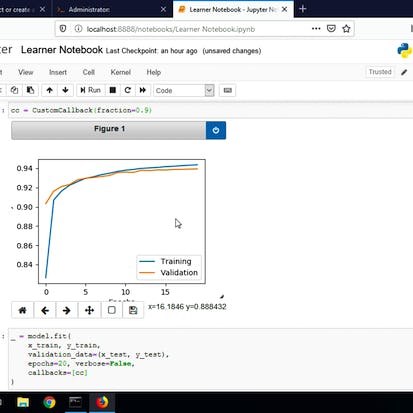
In this 1.5-hour long project-based course, you will learn to create a custom callback function in Keras and use the callback during a model training process. We will implement the callback function to perform three tasks: Write a log file during the training process, plot the training metrics in a graph during the training process, and reduce the learning rate during the training with each epoch. This course runs on Coursera's hands-on project platform called Rhyme. On Rhyme, you do projects in a hands-on manner in your browser. You will get instant access to pre-configured cloud desktops containing all of the software and data you need for the project. Everything is already set up directly in your Internet browser so you can just focus on learning. For this project, you’ll get instant access to a cloud desktop with (e.g. Python, Jupyter, and Tensorflow) pre-installed. Prerequisites: In order to be successful in this project, you should be familiar with Python, Neural Networks, and the Keras framework. Note: This course works best for learners who are based in the North America region. We’re currently working on providing the same experience in other regions.Auto Summary
Unlock the power of custom callbacks in Keras with this engaging project-based course designed for intermediate learners. In just 1.5 hours, you'll gain hands-on experience in developing your own callback functions and integrating them seamlessly into your model training workflow. Guided by expert instruction from Coursera, this focused training empowers you to enhance and optimize your machine learning models effectively. Best of all, you can access this valuable knowledge for free. Perfect for those looking to deepen their understanding of Keras and take their personal development to the next level.
Leading Oneself with Purpose and Meaning
Before we can lead others well, we must first learn to lead ourselves well. Knowing your why is an important part of this journey. In this course, you will identify your core purpose and recognize meaning in your life, explore the power of spirituality and embracing our mortality, create a lasting impact by serving a greater good, describe your character and practice personal excellence. This course can be taken for academic credit as part of CU Boulder’s Master of Engineering in Engineering Management (ME-EM) degree offered on the Coursera platform.
Monthly Subscription Starting at AED 99 + VAT
- Level Foundation
- المدة 33 ساعات hours
- الطبع بواسطة University of Colorado Boulder
-
Offered by
عن
Before we can lead others well, we must first learn to lead ourselves well. Knowing your why is an important part of this journey. In this course, you will identify your core purpose and recognize meaning in your life, explore the power of spirituality and embracing our mortality, create a lasting impact by serving a greater good, describe your character and practice personal excellence. This course can be taken for academic credit as part of CU Boulder’s Master of Engineering in Engineering Management (ME-EM) degree offered on the Coursera platform. The ME-EM is designed to help engineers, scientists, and technical professionals move into leadership and management roles in the engineering and technical sectors. With performance-based admissions and no application process, the ME-EM is ideal for individuals with a broad range of undergraduate education and/or professional experience. Learn more about the ME-EM program at https://www.coursera.org/degrees/me-engineering-management-boulder.الوحدات
Introduction
-
2
Videos
-
3
Readings
-
 1
Quiz
1
Quiz
2
Videos
- Meet your Professor (for new learners)
- Course Summary
3
Readings
- Welcome and Where to Find Help
- About the Leadership Excellence Areté Workbook
- Download the Leadership Excellence Areté Workbook
1
Quiz
- Unlock the Companion Workbook!
Purpose
-
1
Videos
-
6
Readings
1
Videos
- Purpose
6
Readings
- Workbook Exercise: Journal 1.1 — Establishing a Sense of Purpose
- The Three Meanings of Meaning in Life: Distinguishing Coherence, Purpose, and Significance
- The Last Lecture (optional)
- How to Ikigai
- Workbook Exercise: Defining your Ikigai
- The Philosophy of Ikigai: 3 Examples About Finding Purpose
Meaning
-
1
Videos
-
4
Readings
1
Videos
- Meaning
4
Readings
- Workbook Exercise: Journal 1.2 — Creating Meaning
- Steve Jobs Commencement Speech
- Can Helping Others Help You Find Meaning in Life?
- Awakening from the Meaning Crisis
Living with Intent
-
1
Videos
-
2
Readings
-
1
Discussion
-
1
Quiz
1
Discussions
- A Meaning Crisis
1
Videos
- Living With Intent
2
Readings
- Workbook Exercise: Journal 1.3 — Living with Intent
- How to Stop Screwing Yourself Over
1
Quiz
- Week 1 Knowledge Check
Spirituality for Everyone
-
1
Videos
-
3
Readings
1
Videos
- Spirituality
3
Readings
- The Science of Spirituality
- Contemporary Humanism and Spirituality
- Workbook Exercise: Developing Spiritual Wellness
Considering our Mortality
-
1
Videos
-
7
Readings
-
1
Discussion
-
1
Quiz
1
Discussions
- Reflecting on Death and Spirituality
1
Videos
- Mortality
7
Readings
- Workbook Exercise: Journal 2.2 — Remember You Must Die
- When Death is Good for Life: Considering the Positive Trajectories of Terror Management
- A 97-Year-Old Philosopher Ponders Life and Death: 'What Is the Point?
- Why Being Aware of Your Mortality Can be Good For You
- Life and Death: A Cosmic Perspective
- I Don't Fear Death
- Workbook Exercise: Eulogy Exercise
1
Quiz
- Week 2 Knowledge Check
Legacy
-
1
Videos
-
6
Readings
1
Videos
- Legacy
6
Readings
- Workbook Exercise: Journal 3.1 — Leaving a Legacy
- Miracle of the Andes: How Survivors of the Flight Disaster Struggled to Stay Alive
- Miracle in the Andes
- Redefining the Impossible
- Legacy is a Waste of Time
- The Best Speech about Humanity
Impact
-
1
Videos
-
5
Readings
-
1
Discussion
-
1
Quiz
1
Discussions
- Legacy vs. Impact
1
Videos
- Impact
5
Readings
- Workbook Exercise: Journal 3.2 — Making an Impact
- Admiral McCraven Commencement Speech
- There's More to Life than Being Happy
- On the Shortness of Life
- Macklemore Music Video
1
Quiz
- Week 3 Knowledge Check
Character
-
1
Videos
-
3
Readings
1
Videos
- Character and Ethos
3
Readings
- Workbook Exercise: Journal 4.1 — Developing Character
- What Is Character? Its 3 True Qualities and How to Develop It
- Forging Mettle Podcast — Jim Loehr — Good Character Fuels High Performance
Core Values
-
1
Videos
-
4
Readings
1
Videos
- Personal Values
4
Readings
- How Core Values Help You Find Your Purpose
- Unleashing Your Core Values
- Workbook Exercise: Self exploration: Identity, Values, Experiences and Goals
- Workbook Exercise: Define Core Values
Ethos
-
5
Readings
-
1
Discussion
-
1
Quiz
1
Discussions
- Developing Character
5
Readings
- Forging Mettle Podcast: Rorke Denver — 'Act of Valor' Isn't Just a Movie Title
- Developing Your Personal Ethos
- Workbook Exercise: Define your Mission
- Workbook Exercise: Define your Vision
- Workbook Exercise: Define your Personal Mantra
1
Quiz
- Week 4 Knowledge Check
Perfectionism
-
1
Videos
-
6
Readings
1
Videos
- Perfectionism
6
Readings
- Workbook Exercise: Journal 5.1 — Taming Perfectionism
- Perfectionism
- Perfectionism and Overcoming Perfectionism
- The Problem with Being Perfect
- The Toll that Perfectionism Has Taken on Students Like Katie Meyer, and My Son
- 10 Signs You May Be a Perfectionist
Personal Excellence
-
1
Videos
-
4
Readings
1
Videos
- Personal Excellence
4
Readings
- Workbook Exercise: Journal 5.2 — Targeting Personal Excellence
- Pursue Excellence for Its Own Sake
- Forging Mettle Podcast: Fireside Reflections — Is your Self-worth Defined By your Productivity
- If you Keep Putting Work Before Health and Happiness, You May be Suffering from Internalized Capitalism
Mastery Mindset
-
2
Videos
-
4
Readings
-
1
Discussion
-
1
Quiz
1
Discussions
- Is Perfectionism a Good Model?
2
Videos
- Mastery Mindset
- Outro Video
4
Readings
- Workbook Exercise: Journal 5.3 — Defining Success
- The Definition of Success: What's Your Personal Definition?
- The Mastery Mindset: 6 Keys To Stay On The Path
- Workbook Exercise: Define your Personal Ethos
1
Quiz
- Week 5 Knowledge Check
Auto Summary
Discover the transformative power of self-leadership with the "Leading Oneself with Purpose and Meaning" course, designed to help you uncover your core purpose and find deeper meaning in your life. This personal development journey will guide you through recognizing the significance of spirituality, embracing our mortality, and making a lasting impact by serving a greater good. You will also delve into character building and practicing personal excellence. Presented by Coursera, this foundational course is part of CU Boulder’s Master of Engineering in Engineering Management (ME-EM) degree. Ideal for engineers, scientists, and technical professionals aiming to transition into leadership roles, the ME-EM program offers performance-based admissions and requires no application process, making it accessible to individuals with diverse educational and professional backgrounds. Enroll in this 1980-hour course through Coursera’s flexible subscription plans, available in Starter and Professional tiers. Whether you seek academic credit as part of the ME-EM degree or personal growth, this course is tailored to help you lead yourself with purpose and meaning.

Computational Thinking for K-12 Educators: Abstraction, Methods, and Lists
How do gamers cause things to happen when they hit buttons on their controller? How does the computer keep track of gamer's scores? This class teaches the concepts of nested loops, events, and variables. For each concept, we'll start by helping you connect real-world experiences you are already familiar with to the programming concept you are about to learn. Next, through a cognitively scaffolded process we'll engage you in developing your fluency with problem solving with nested loops, events, and variables in a way that keeps frustration at a minimum.
Monthly Subscription Starting at AED 99 + VAT
- Level Foundation
- المدة 9 ساعات hours
- الطبع بواسطة University of California San Diego
-
Offered by
عن
How do gamers cause things to happen when they hit buttons on their controller? How does the computer keep track of gamer's scores? This class teaches the concepts of nested loops, events, and variables. For each concept, we'll start by helping you connect real-world experiences you are already familiar with to the programming concept you are about to learn. Next, through a cognitively scaffolded process we'll engage you in developing your fluency with problem solving with nested loops, events, and variables in a way that keeps frustration at a minimum. Along the way you will learn about the common challenges or "bugs" students have with these concepts as well as ways to help them find and fix those concepts. You'll also be guided in running classroom discussions to help students develop deeper understanding of these concepts. Finally, you'll learn how to develop low-frustration learning experiences for learning programming via Parsons' Problems., Additionally, you will create an email to either a counselor, administrator or parent organization to help them understand the value of all students taking computer science.الوحدات
Course Orientation
-
2
Videos
-
1
Discussion
1
Discussions
- Get to know your fellow learners!
2
Videos
- Welcome!
- Optional: The Computational Thinking & Block Programming in K-12 Education Specialization
Technology Prep
-
2
Readings
2
Readings
- Using Googledocs in this Course
- Why Snap? Create your account
In My Life: Abstraction
-
1
Readings
1
Readings
- Functions and Variables in Song (no, you don't have to sing)
Interactive Puzzles: Abstraction
-
2
Videos
-
2
Readings
-
1
Assignment
1
Assignment
- Puzzle It Out
2
Videos
- What are interactive puzzles?
- Debugging: Methods and Parameters
2
Readings
- Interactive Puzzles Instructions
- Interactive Puzzles Instructions: Abstractions
Code Walkthrough: Abstraction
-
2
Videos
-
1
Readings
2
Videos
- (Optional) Writing Programs: What's Special for Teachers?
- Debugging: Methods and Parameters
1
Readings
- Create a Program using Abstraction
Check Your Knowledge Puzzles: Abstraction
-
1
Videos
-
1
Readings
-
1
Assignment
1
Assignment
- Check your knowledge quiz
1
Videos
- (Optional) More programming puzzles -- but different!
1
Readings
- Non-Interactive Programming Puzzles
Computational Thinking Development: Abstraction
-
1
Videos
-
 1
ExternalTool
1
ExternalTool
1
External Tool
- Collaborative Knowledge Construction - Abstraction
1
Videos
- Classroom Discussion: Abstractions
Teacher Powerup: Recursion
-
7
Videos
-
1
Readings
7
Videos
- Introducing: Recursion
- Recursion: Guided Code Modification
- Recursion: Pencilcode.net
- Optional: How to Use Stepper to "Follow Along" DrawNestedSquare - Original Code
- Optional: How to Use Stepper to "Follow Along" DrawNestedSquare - Stop Earlier
- Optional: How to Use Stepper to "Follow Along" DrawNestedSquare - Decrease Size by 20
- Optional: How to Use Stepper to "Follow Along" DrawNestedSquare - Change Offset
1
Readings
- YouTube programming resources
Concept Mastery Quiz: Abstraction
-
1
Assignment
1
Assignment
- Concept Mastery Quiz: Abstraction
In My Life: Lists
-
1
Videos
1
Videos
- Lists and Sorting
Interactive Puzzles: Lists
-
1
Videos
-
2
Readings
-
1
Assignment
1
Assignment
- Puzzle It Out
1
Videos
- What do you think?
2
Readings
- Before you start... we need your opinion
- Interactive Puzzles Instructions: Lists
Code Walkthrough: Lists
-
2
Videos
-
1
Readings
2
Videos
- Debugging Lists: Concept
- Debugging Lists: Patterns
1
Readings
- Create a Lists Program
Check Your Knowledge Puzzles: Lists
-
1
Readings
-
1
Assignment
1
Assignment
- Check your knowledge quiz
1
Readings
- Non-Interactive Programming Puzzles
Computational Thinking Development: Lists
-
1
Videos
-
1
ExternalTool
1
External Tool
- Collaborative Knowledge Construction: Lists
1
Videos
- Classroom Discussion: Lists
Teacher Powerup: Lists
-
1
Videos
1
Videos
- From Searching to Sorting
Concept Mastery Quiz
-
1
Assignment
1
Assignment
- Concept Mastery Quiz: Lists
Culturally Responsive Teaching
-
1
Videos
1
Videos
- Culturally Responsive Teaching & Computer Science Classrooms
Auto Summary
Enhance your teaching toolkit with "Computational Thinking for K-12 Educators: Abstraction, Methods, and Lists," a foundational course that dives into the core concepts of programming essential for modern educators. This engaging course, offered by Coursera, is designed to make complex ideas accessible and applicable through real-world examples that resonate with experiences you already know. In this course, you will explore the mechanics behind nested loops, events, and variables, understanding how these elements function to control actions in games and track scores. The course emphasizes a scaffolded learning approach, ensuring you build problem-solving skills with minimal frustration. You'll also gain insights into common programming challenges students face and learn effective strategies to help them debug these issues. The course includes guidance on facilitating classroom discussions, fostering a deeper understanding among your students. Moreover, you will learn to create low-frustration learning experiences using Parsons' Problems and craft persuasive communications to advocate for the importance of computer science education to stakeholders such as counselors, administrators, or parent organizations. With a duration of approximately 540 minutes and available through Starter and Professional subscription options, this course is tailored for educators aiming to integrate computational thinking into their curriculum and inspire the next generation of problem solvers.
How To Make An Instagram Reel Cover Using Canva
With completion of this course, learners will know how to correctly size and design an aesthetic cover with text and images that can be seen and read from the accounts feed overview. Knowing how to create branded reel covers ties in the branding of your business to your Instagram feed and helps to create an overall feeling you are trying to create through your socials.
Buy Now Free
- Level Foundation
- المدة 3 ساعات hours
- الطبع بواسطة Coursera
-
Offered by
عن
With completion of this course, learners will know how to correctly size and design an aesthetic cover with text and images that can be seen and read from the accounts feed overview. Knowing how to create branded reel covers ties in the branding of your business to your Instagram feed and helps to create an overall feeling you are trying to create through your socials.الوحدات
Your Learning Journey
-
1
Readings
-
1
Plugin
-
1
Lab
-
1
Assignment
1
Assignment
- Assess Your Knowledge
1
Labs
- How To Make A Reel Cover
1
Readings
- Project Overview
Auto Summary
Learn to create eye-catching Instagram Reel covers using Canva in this beginner-friendly course by Coursera. Over 180 minutes, you'll master the art of designing aesthetic, branded covers that enhance your social media presence. Perfect for personal development, and free to access, this course is ideal for anyone looking to elevate their Instagram game.
Buy Now Free
- Level Foundation
- المدة 4 ساعات hours
-
Offered by
عن
In this 1-hour long project-based course, you will learn what bootstrap is, the benefits of using bootstrap as a web developer, and the different features bootstrap has to offer. Note: This course works best for learners who are based in the North America region. We’re currently working on providing the same experience in other regions.Auto Summary
Discover the benefits of Bootstrap in this engaging 1-hour project-based course designed for web developers. Learn about Bootstrap's features and advantages with guidance from Coursera. Ideal for those in North America, this foundational course offers a practical introduction to Bootstrap, perfect for beginners looking to enhance their web development skills. Available with a Starter subscription.
Buy Now Free

- Level Professional
- المدة 3 ساعات hours
-
Offered by
عن
In this 1-hour long project-based course, you will learn how to (complete a training and test set using an R function, practice looking at data distribution using R and ggplot2, Apply a Neural Net model to the data, and examine the results using a Confusion Matrix. Note: This course works best for learners who are based in the North America region. We’re currently working on providing the same experience in other regions.Auto Summary
Discover how to predict gas guzzlers using neural networks in this engaging, 1-hour project-based course. Designed for personal development, learners will delve into R functions, data distribution with ggplot2, and apply a Neural Net model to the MPG dataset, analyzing results with a Confusion Matrix. Ideal for professionals, this course is offered by Coursera and best suited for those in North America, with plans to expand globally. Available with a Starter subscription.