

Buy Now Free
- Level Foundation
- المدة 2 ساعات hours
-
Offered by

عن
By the end of this project, you will be able to apply user centered design principles to design an iPhone application flow with custom wireframes with the goal of creating a seamless User Experience (UX). To design an iPhone application flow, you will gain hands-on experience applying design thinking, user interface knowledge, and context from each step of the customer journey in the Miro online visual collaboration platform for teamwork. Note: This course works best for learners who are based in the North America region. We’re currently working on providing the same experience in other regions.Auto Summary
Learn to design seamless iPhone application flows using custom wireframes and user-centered design principles in Miro. This foundational course by Coursera offers hands-on experience in design thinking and user interface knowledge, perfect for beginners. Ideal for North American learners, the course spans 120 minutes and is available through a Starter subscription.
Buy Now Free

- Level Foundation
- المدة 3 ساعات hours
-
Offered by
عن
"Generative art refers to any art practice where the artist creates a process, such as a computer program, which is then set into motion with some degree of autonomy contributing to or resulting in a completed work of art." - Wikipedia In this guided project you will develop an agent-based computer program capable of generating visual art pieces. By doing so you will be introduced to the basics of ABM and NetLogo. Furthermore, at the end of this journey you will be able to share such pieces with the world.Auto Summary
Discover the captivating world of generative art with the "Agent-based Generative Art | NetLogo" course on Coursera. Perfect for beginners, this 180-minute course explores how to create art using autonomous computer programs. Taught by an expert instructor, it offers a free subscription and falls under the Personal Development domain. Ideal for those interested in merging creativity with technology.
Buy Now Free

- Level Foundation
- المدة 3 ساعات hours
-
Offered by
عن
In this one hour long project, you will mine, analyze and visualize various trending tweets using Word Cloud, Heat map, Document Map and perform sentiment analysis using Orange. Orange is an open-source data visualization, machine learning and data mining toolkit. Without any prior programming experience, Orange allows you to mine Twitter. If you are a corporate employee, marketer, or even a student who wants to explore how to mine tweets, Orange is the best platform for it. We will begin this guided project by creating a Twitter developer account and applying for elevated access. We will create an app within the Twitter developer portal and get its API keys and then use these API keys to connect to Orange data mining software. We will fetch tweets about trending topics and create a Word-cloud for text visualization and Documents map to get Geo-location data about trending tweets. In the final tasks, we will perform sentiment analysis and explore the emotions behind each tweet using the Tweet Profiler widget. We will also create a Heat-map to understand the overall sentiment of a trending topic. In order to complete this project successfully, you need a Twitter account.Auto Summary
Explore the fundamentals of data mining with the "Twitter API: Mining Data using Orange Data Mining Platform" course. Perfect for beginners in personal development, this 180-minute free course on Coursera, taught by expert instructors, guides you through mining, analyzing, and visualizing trending tweets using Word Cloud, Heat map, Document Map, and sentiment analysis techniques with Orange.

Exploring Emerging Technologies for Lifelong Learning and Success
This learning opportunity is an open-access resource for lifelong learning.
Monthly Subscription Starting at AED 99 + VAT

- Level Foundation
- المدة 4 ساعات hours
- الطبع بواسطة The State University of New York
-
Offered by
عن
This learning opportunity is an open-access resource for lifelong learning. The aim is to identify the value and implications of using established and emerging technology tools for personal and professional growth and acquire strategies to develop lifelong learning habits to keep pace with technology change. This course is targeted to the needs of ALL learners, including college students, faculty, current and career-seeking professionals, and anyone from across the globe with a desire to learn how to use emerging technologies to succeed in today’s rapidly changing world. This project consists of two associated parts; #EmTechMOOC and EmTechWIKI. #EmTechMOOC is a Massive Open Online Course, also called a MOOC. The MOOC is hosted on the Coursera platform and provides a supportive environment for dialogue and sharing among participants. The MOOC course environment is structured around 5 modules. The concepts that are covered include Lifelong Learning and the 4Cs of 21st-century skills: Communication and Collaboration, Creativity, and Critical Thinking. Participants create digital artifacts through Discovery Exercises within the modules to showcase their learning and accomplishments. The final module encourages learners to summarize and reflect on their learning journey. EmTechWIKI ( http://suny.edu/emtech ) has been built to complement the MOOC. It is a socially-curated discovery engine to discover tools, tutorials, and resources such as audio, video, blogs, social networking, simulations, and more. The WIKI can be used as a stand-alone resource, or it can be used together with #EmTechMOOC. Anyone is welcome to add or edit WIKI resources. #EmTechMOOC is not a traditional MOOC. Instead of providing content-heavy information, this course guides participants through discovery-based learning that is under the control of the learner. Learners are prompted to locate and explore new resources and tools from the growing EmTechWIKI collection and the Internet to help meet their personally identified objectives. Participants reflect on and share their learning and discoveries through the creation of a public ePortfolio or a personal learning journal that is constructed through the module exercises. Complete the course requirements to earn a Coursera Certificate of Completion and a digital badge. SUNY affiliates may earn badges and a Coursera Certificate with no fees to enroll.الوحدات
Welcome - Getting Started
-
 1
Videos
1
Videos
-
 2
Readings
2
Readings
1
Videos
- Introduction - Exploring Emerging Technologies for Lifelong Learning and Success
2
Readings
- Introduction to #EmTech
- Support Your Colleagues
#EmTech Syllabus
-
1
Readings
1
Readings
- SUNY #EmTech Syllabus
Optional Tutorials: Learn How to use the #EmTech course & EmTechWIKI
-
3
Videos
-
2
Readings
3
Videos
- Optional Tutorial: Navigating #EmTechMOOC
- Optional Tutorial: Navigating EmTechWIKI
- Optional Tutorial: Add Resources or Edit EmTechWIKI
2
Readings
- Learn How to Use this Course
- How to Seek Help & Support
Your ePortfolio
-
1
Videos
-
3
Readings
1
Videos
- ePortfolios
3
Readings
- ePortfolios are Powerful Tools to Share Your Accomplishments and Achievements
- Setup an ePortfolio and introduce yourself to your fellow learners
- #EmTechMOOC Optional ePortfolio Checklist & Rubric
Lifelong Learning Discovery Exercise
-
7
Videos
-
4
Readings
-
 1
Assignment
1
Assignment
 1
Assignment
1
Assignment
- Understand How #EmTechMOOC Works
7
Videos
- Lifelong Learning
- 7 ½ Habits of Highly Successful Lifelong Learners
- Summary: 7 ½ Habits of Highly Successful Lifelong Learners
- Growth vs. Fixed Mindset
- Digital Footprint/Identity
- Creative Commons
- Accessibility
4
Readings
- Embrace Learning Throughout Life
- Summary: 7 1/2 Habits of Highly Successful Lifelong Learners
- Optional Ungraded Activity: Growth Mindset Quiz
- Lifelong Learning Reflection and Discovery Exercise
Learn Ways to Communicate, Engage and Collaborate with Others
-
1
Videos
-
2
Readings
-
1
Assignment
1
Assignment
- Identify Tools and Resources to Help Communicate & Collaborate
1
Videos
- Communication and Collaboration
2
Readings
- Optional Ungraded Activity: Social Network Word Cloud
- Communication and Collaboration Reflection and Discovery Exercise
Optional EmTech Contributor Badge Activity
-
1
Readings
1
Readings
- Optional Activity: Contribute to Help Improve EmTechWIKI
Share Your Ideas and Knowledge in Creative and Compelling Ways
-
1
Videos
-
2
Readings
-
1
Assignment
1
Assignment
- Identify Tools and Resources to be Creative
1
Videos
- Creativity
2
Readings
- Optional Ungraded Activity: Principles of Design Quiz
- Creativity Reflection and Discovery Exercise
Evaluate, Analyze, and Curate Information Resources
-
1
Videos
-
3
Readings
-
2
Assignment
2
Assignment
- Optional Ungraded Activity: Digital Literacy Quiz
- Identify Tools and Resources to Think Critically
1
Videos
- Critical Thinking
3
Readings
- Optional Ungraded Activity: Detecting Fake News
- Optional Ungraded Activity: Factitious - A Game That Tests Your Ability to Spot Fake News
- Critical Thinking Reflection and Discovery Exercise
This is Just the Beginning...
-
1
Videos
-
2
Readings
-
1
PeerReview
-
2
Assignment
2
Assignment
- Identify Tools and Resources to Help You Continue Your Journey as a Lifelong Learner!
- Additional Practice Quiz
1
Peer Review
- ePortfolio Peer-review (Optional Activity)
1
Videos
- Summarize Your Learning
2
Readings
- Reflect on Your Learning and Identify Your Lifelong Learning Goals
- Celebrate Your Learning
Auto Summary
Unlock the potential of emerging technologies for lifelong learning and success with this personal development course. Designed for learners of all backgrounds, from students to professionals, this engaging program features the #EmTechMOOC on Coursera and the complementary EmTechWIKI. Explore the 4Cs of 21st-century skills—Communication, Collaboration, Creativity, and Critical Thinking—through interactive modules and discovery exercises. Reflect on your journey and showcase your achievements in a public ePortfolio. Complete the course to earn a Coursera Certificate and digital badge. Join now and stay ahead in today's fast-paced world.

Developing FPGA-accelerated cloud applications with SDAccel: Practice
This course is for anyone passionate about learning how to develop FPGA-accelerated applications with SDAccel! The more general purpose you are, the more flexible you are and the more kinds of programs and algorithms you can execute on your underlying computing infrastructure. All of this is terrific, but there is no free food and this is happening, quite often, by losing in efficiency. This course will present several scenarios where the workloads require more performance than can be obtained even by using the fastest CPUs.
Monthly Subscription Starting at AED 99 + VAT

- Level Professional
- المدة 13 ساعات hours
- الطبع بواسطة Politecnico di Milano
-
Offered by
عن
This course is for anyone passionate about learning how to develop FPGA-accelerated applications with SDAccel! The more general purpose you are, the more flexible you are and the more kinds of programs and algorithms you can execute on your underlying computing infrastructure. All of this is terrific, but there is no free food and this is happening, quite often, by losing in efficiency. This course will present several scenarios where the workloads require more performance than can be obtained even by using the fastest CPUs. This scenario is turning cloud and data center architectures toward accelerated computing. Within this course, we are going to show you how to gain benefits by using Xilinx SDAccel to program Amazon EC2 F1 instances. We are going to do this through a working example of an algorithm used in computational biology. The huge amount of data the algorithms need to process and their complexity raised the problem of increasing the amount of computational power needed to perform the computation. In this scenario, hardware accelerators revealed to be effective in achieving a speed-up in the computation while, at the same time, saving power consumption. Among the algorithms used in computational biology, the Smith-Waterman algorithm is a dynamic programming algorithm, guaranteed to find the optimal local alignment between two strings that could be nucleotides or proteins. In the following classes, we present an analysis and successive FPGA-based hardware acceleration of the Smith-Waterman algorithm used to perform pairwise alignment of DNA sequences. Within this context, this course is focusing on distributed, heterogeneous cloud infrastructures, providing you details on how to use Xilinx SDAccel, through working examples, to bring your solutions to life by using the Amazon EC2 F1 instances.الوحدات
Rationale behind FPGA in the Cloud
-
3
Videos
-
1
Assignment
1
Assignment
- QUIZ 1
3
Videos
- Course introduction
- An overview of cloud infrastructure
- Cloud Computing: few definitions
Reconfigurable acceleration in the Cloud
-
4
Videos
-
1
Assignment
1
Assignment
- QUIZ 2
4
Videos
- Reconfigurable acceleration in the Cloud
- Reconfigurable acceleration in the Cloud: Intel FPGA-based solutions
- Reconfigurable acceleration in the Cloud: Xilinx FPGA-based solutions
- Reconfigurable acceleration in the Cloud: from the past, to the future
An introduction to the AWS EC2 F1 instances
-
1
Videos
-
1
Assignment
1
Assignment
- QUIZ 3
1
Videos
- An introduction to the AWS EC2 F1 instances
Applicative domains and Victor's story
-
1
Videos
-
1
Assignment
1
Assignment
- QUIZ 4
1
Videos
- Applicative domains and Victor's story
Understanding the AWS F1 HW and SW stacks
-
3
Videos
-
1
Assignment
1
Assignment
- QUIZ 5
3
Videos
- F1: instances and FPGA description
- How FPGA Acceleration Works on AWS
- AWS F1 Platform Model
AFI Creation Flow Overview
-
5
Videos
-
1
Assignment
1
Assignment
- QUIZ 6
5
Videos
- Creating Kernels from RTL IP, C/C++, OpenCL
- Compiling the Platform
- Creating an Amazon FPGA Image
- Developing and Executing a Host Application on F1
- Start Accelerating
An overview to the Smith-Waterman problem
-
8
Videos
-
1
Readings
-
1
Assignment
1
Assignment
- QUIZ 7
8
Videos
- Problem description
- Algorithm and code analysis
- Roofline model 1/2
- Roofline model 2/2
- Code profiling
- Static Code Analysis 1/2
- Static Code Analysis 2/2
- Performance Prediction via Roofline Model
1
Readings
- SDAccel Environment Profiling and Optimisation Guide
On how to optimize the Smith-Waterman solution
-
9
Videos
-
1
Readings
-
1
Assignment
1
Assignment
- QUIZ 8
9
Videos
- A first implementation 1/3
- A first implementation 2/3
- A first implementation 3/3
- Parallelism in the Smith-Waterman Algorithm
- Systolic Array Architecture 1/2
- Systolic Array Architecture 2/2
- Input Compression
- Shift Register
- Dual Physical Ports
1
Readings
- Sources Codes
SDAccel on F1
-
3
Videos
-
1
Readings
-
1
Assignment
1
Assignment
- QUIZ 9
3
Videos
- Smith-Waterman accelerated on the Amazon EC2 F1 instances 1/3
- Smith-Waterman accelerated on the Amazon EC2 F1 instances 2/3
- Smith-Waterman accelerated on the Amazon EC2 F1 instances 3/3
1
Readings
- Source Codes
Concluding notes
-
1
Videos
-
1
Readings
1
Videos
- Closing remarks and future directions
1
Readings
- Architectural optimizations for high performance and energy efficient Smith-Waterman implementation on FPGAs using OpenCL
Auto Summary
Develop FPGA-accelerated cloud applications with SDAccel in this professional course designed for enthusiasts in computational efficiency. Guided by Coursera, learn to harness Xilinx SDAccel on Amazon EC2 F1 instances through practical examples, including the Smith-Waterman algorithm for DNA sequence alignment. Perfect for those looking to excel in distributed, heterogeneous cloud infrastructures, the course spans 780 minutes and offers a Starter subscription option. Ideal for professionals seeking to boost their cloud application performance.
Monthly Subscription Starting at AED 99 + VAT

- Level Foundation
- المدة 4 ساعات hours
-
Offered by
عن
The “New Approaches to Countering Terror: Countering Violent Extremism” course offered by the National Consortium for the Study of Terrorism and Responses to Terrorism (START), is a multi-week interactive course designed to help students explore both pragmatic and philosophical challenges that continue to shape the evolution of Countering Violent Extremism (CVE), a global security paradigm. START, a Department of Homeland Security Emeritus Center of Excellence and research, training, and education center housed at the University of Maryland within the College of Behavioral and Social Sciences (BSOS), serves as a leading voice in the national and international dialogue regarding CVE. START’s Director and the course instructor, Bill Braniff, will introduce the concept of CVE and explore the promise of CVE as a more comprehensive and proactive approach to the complex phenomenon of violent extremism. This 3.5 hour course will take an in-depth look at CVE as a relatively new area of policy and practice. As such, this MOOC can serve as an awareness-raising course, targeting anyone interested in terrorism, community resilience, security, policy and/or civil rights issues. The course is broadly interdisciplinary and has no prerequisites. Upon completion of this course, students will be able to: 1. Differentiate between two ways of addressing violent extremism: counterterrorism (CT) and Countering Violent Extremism (CVE); 2. Explain the CVE spectrum of non-violent approaches to countering terror, including prevention, intervention, and rehabilitation/reintegration programs; 3. Make sound analytical judgments about CVE programs and their potential. START also offers a range of other online educational programs, including: 1. Summer/Winter Courses: https://www.start.umd.edu/education/summerwinter-courses 2. Master of Professional Studies (MPS) degree in Security and Terrorism Studies: https://www.start.umd.edu/education/master-professional-studies-online 3. Graduate Certificate in Terrorism Analysis: https://www.start.umd.edu/education/graduate-certificate-onlineAuto Summary
Explore the evolving landscape of global security with the “New Approaches to Countering Terror: Countering Violent Extremism” course, brought to you by the National Consortium for the Study of Terrorism and Responses to Terrorism (START). This interactive course offers a deep dive into the philosophical and pragmatic challenges shaping the Countering Violent Extremism (CVE) paradigm, guided by START’s Director, Bill Braniff. Designed for anyone interested in terrorism, community resilience, security, policy, or civil rights issues, this 3.5-hour course requires no prerequisites and is broadly interdisciplinary. You'll learn to differentiate between counterterrorism and CVE, understand the spectrum of non-violent approaches to countering terror, and make informed analytical judgments about CVE programs. START, part of the University of Maryland's College of Behavioral and Social Sciences, is a renowned voice in national and international CVE dialogues. The course is hosted on Coursera and offers flexible subscription options, including Starter and Professional tiers, making it accessible to a wide range of learners from foundational to advanced levels. Enroll now to gain unique insights and contribute to a proactive approach to combating violent extremism.
Buy Now Free
- Level Foundation
- المدة 3 ساعات hours
-
Offered by
عن
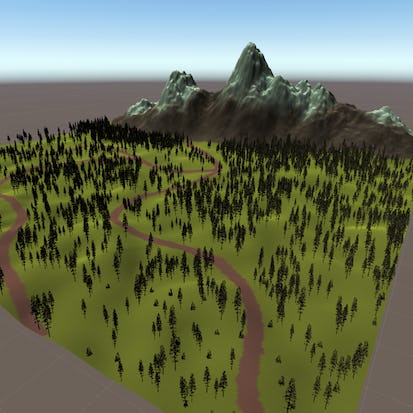
In this one-hour, project-based course, you'll learn how to create a simple mini-map. You'll learn how to set up a secondary camera and configure it to display an overhead view of the scene and follow the player. You'll also learn how to use layers to display different objects on each active camera and use masks to give the mini-map a circular shape. The guided project will introduce you to the following Unity concepts: - Camera - Layers - Masks This course makes use of the scene created in Baking Lights for Better Performance in Unity and the scripts created in Create Keyboard Movement Mechanics with C# in Unity and Create Simple Enemy Behaviour with C# in Unity (Intro to AI). These compliment this guided project and, although not prerequisites, are recommended for a more well-rounded understanding of the concepts presented herein. Note: This course works best for learners who are based in the North America region. We’re currently working on providing the same experience in other regions.Auto Summary
Discover how to create a basic mini-map in Unity with this engaging, one-hour project-based course. Ideal for beginners in personal development, you'll master setting up secondary cameras, configuring overhead views, and using layers and masks for a polished mini-map. Taught by Coursera, this foundation-level course enriches your Unity skills, building on concepts from related Unity courses. Perfect for North American learners, start your journey today with a Starter subscription.
Buy Now Free
- Level Professional
- المدة 3 ساعات hours
-
Offered by
عن
By the end of this guided project, you will be fluent in creating Program Risk Management artefacts for the Planning Phase for diverse programs. You will utilise a logical diagramming plan in an agile environment to develop the solution. This will enable you to identify and classify the required components for risk planning. Furthermore, it will help develop a structural model for learning about the field of Program Management. If you are interested in building up the knowledge leading to this guided project, the following is the link to: [ Developing Programme Management Blueprint with ClickUp] https://www.coursera.org/projects/program-blueprint [Advanced Programme Planning Phases Framework in ClickUp] https://www.coursera.org/projects/program-advanced-planning This Guided Project is essential for individuals wanting to learn about the field, or looking to transition into working in Program Management. This guided project is designed to engage and harness your visionary and exploratory abilities. You will use proven models in an agile environment with ClickUp to engage in a hands-on learning experience.Auto Summary
"Program Risk Planning with ClickUp" is an intermediate-level course offered by Coursera, focusing on personal development. Over 180 minutes, learners will master creating Program Risk Management artifacts for the planning phase of various programs. The course is free and ideal for those looking to enhance their risk management skills.

Finding, Sorting, & Filtering Data in Microsoft Excel
In this project you will learn to use the searching, sorting, and filtering features of Microsoft Excel. Using the free version of Office 365’s Excel for the web, you will manipulate spreadsheet data to make it more useful for effective business decision-making. Using a filter, you’ll isolate just the data needed. You can then sort it into a logical sequence that can turn data into the information needed for effective decision making.
Buy Now Free

- Level Professional
- المدة 3 ساعات hours
- الطبع بواسطة Coursera
-
Offered by
عن
In this project you will learn to use the searching, sorting, and filtering features of Microsoft Excel. Using the free version of Office 365’s Excel for the web, you will manipulate spreadsheet data to make it more useful for effective business decision-making. Using a filter, you’ll isolate just the data needed. You can then sort it into a logical sequence that can turn data into the information needed for effective decision making.الوحدات
Your Learning Journey
-
1
Readings
-
 1
Plugin
1
Plugin
-
 1
Lab
1
Lab
-
1
Assignment
1
Assignment
- Assess Your Knowledge
 1
Labs
1
Labs
- Finding, Sorting, & Filtering Data in Microsoft Excel
1
Readings
- Project Overview
Auto Summary
Enhance your business decision-making skills with "Finding, Sorting, & Filtering Data in Microsoft Excel." This professional-level course from Coursera focuses on using Excel's searching, sorting, and filtering features to manipulate and organize data efficiently. Taught by an expert instructor, the course uses Office 365’s Excel for the web. With a duration of just 1 hour, it offers a quick yet impactful learning experience, available under the Starter subscription. Ideal for professionals looking to optimize their data handling capabilities.
Deep-Dive into Tensorflow Activation Functions
You've learned how to use Tensorflow. You've learned the important functions, how to design and implement sequential and functional models, and have completed several test projects. What's next? It's time to take a deep dive into activation functions, the essential function of every node and layer of a neural network, deciding whether to fire or not to fire, and adding an element of non-linearity (in most cases). In this 2 hour course-based project, you will join me in a deep-dive into an exhaustive list of activation functions usable in Tensorflow and other frameworks.
Buy Now Free

- Level Professional
- المدة 2 ساعات hours
- الطبع بواسطة Coursera
-
Offered by
عن
You've learned how to use Tensorflow. You've learned the important functions, how to design and implement sequential and functional models, and have completed several test projects. What's next? It's time to take a deep dive into activation functions, the essential function of every node and layer of a neural network, deciding whether to fire or not to fire, and adding an element of non-linearity (in most cases). In this 2 hour course-based project, you will join me in a deep-dive into an exhaustive list of activation functions usable in Tensorflow and other frameworks. I will explain the working details of each activation function, describe the differences between each and their pros and cons, and I will demonstrate each function being used, both from scratch and within Tensorflow. Join me and boost your AI & machine learning knowledge, while also receiving a certificate to boost your resume in the process! Note: This course works best for learners who are based in the North America region. We’re currently working on providing the same experience in other regions.الوحدات
Deep Dive into Tensorflow Activation Functions
-
1
Readings
-
1
Plugin
-
1
Lab
-
1
Assignment
1
Assignment
- Graded Quiz: Test your Project understanding
1
Labs
- Deep Dive into Tensorflow Activation Functions
1
Readings
- Project-based Course Overview
Auto Summary
"Deep-Dive into Tensorflow Activation Functions" is a 2-hour professional course focusing on the essential activation functions in neural networks. Led by an expert instructor, this course explores the intricacies, pros, and cons of various activation functions, both theoretically and practically within Tensorflow. Ideal for those with foundational Tensorflow knowledge, it offers a detailed understanding to enhance your AI and machine learning skills. Available through Coursera, this course is best suited for learners in North America, offering a certificate upon completion to bolster your resume.