

Buy Now Free

- Level Foundation
- المدة 3 ساعات hours
-
Offered by

عن
In this 1-hour long project-based course, you will learn how to - use Typeform - create survey forms using Typeform - publish and share your survey forms Note: This course works best for learners who are based in the North America region. We’re currently working on providing the same experience in other regions.Auto Summary
Enhance your personal development skills with this engaging 1-hour project-based course focused on mastering Typeform. Learn to create, publish, and share professional survey forms for school or work research. Ideal for beginners, this foundational course by Coursera is designed for learners in North America and offers a Starter subscription option. Join now to elevate your form-building expertise!

Wireshark for Beginners: Capture Packets
In this Guided Project, Wireshark for Beginners: Capture Packets, learners will take on the role of a novice security analyst helping a company detect certain network traffic on their server by capturing and analyzing web traffic.
Buy Now Free
- Level Foundation
- المدة 2 ساعات hours
- الطبع بواسطة Coursera
-
Offered by
عن
In this Guided Project, Wireshark for Beginners: Capture Packets, learners will take on the role of a novice security analyst helping a company detect certain network traffic on their server by capturing and analyzing web traffic. Such skills are invaluable in both cybersecurity and software development domains for better understanding the communication going on between a client and a server. In this 1.5-hour long project-based course, you will learn how to set up and use Wireshark to capture, save, and filter HTTP and HTTPS packets. In order to be successful in this project you should understand computer networking terminology such as IP address, HTTP, HTTPS, TCP, and handshakes.الوحدات
Your Learning Journey
-
 2
Readings
2
Readings
-
 1
Plugin
1
Plugin
-
 1
Lab
1
Lab
-
 1
Assignment
1
Assignment
 1
Assignment
1
Assignment
- Assess Your Knowledge
 1
Labs
1
Labs
- Wireshark for Beginners: Capture Packets
2
Readings
- Project Overview
- Key Takeaways
Auto Summary
Discover the essentials of network traffic analysis with the "Wireshark for Beginners: Capture Packets" course. Ideal for aspiring security analysts, this 1.5-hour project-based course by Coursera teaches you to capture, save, and filter HTTP and HTTPS packets using Wireshark. Basic knowledge of computer networking is recommended. Available with a Starter subscription, this foundational course is perfect for those in cybersecurity and software development.

Foundations of Teaching for Learning: Being a Teacher
The Foundations of Teaching for Learning programme is for anyone who is teaching, or who would like to teach, in any subject and any context - be it at school, at home or in the workplace. With dynamic lessons taught by established and respected professionals from across the Commonwealth, this eight course programme will see you develop and strengthen your skills in teaching, professionalism, assessment, and more. As you carry on through the programme, you will find yourself strengthening not only your skills, but your connection with colleagues across the globe.
Monthly Subscription Starting at AED 99 + VAT

- Level Foundation
- المدة 12 ساعات hours
- الطبع بواسطة Commonwealth Education Trust
-
Offered by
عن
The Foundations of Teaching for Learning programme is for anyone who is teaching, or who would like to teach, in any subject and any context - be it at school, at home or in the workplace. With dynamic lessons taught by established and respected professionals from across the Commonwealth, this eight course programme will see you develop and strengthen your skills in teaching, professionalism, assessment, and more. As you carry on through the programme, you will find yourself strengthening not only your skills, but your connection with colleagues across the globe. A professional development opportunity not to be missed. How we teach has its foundation in how we were taught and how we learned. This course provides an opportunity for you to reflect on your personal and professional development as a teacher. Through reflection and portfolio development you will enhance your knowledge and understanding of how to promote learning. Enhance your course by joining the Commonwealth teaching community on our website, Facebook and Twitter.الوحدات
INTRODUCTION
-
 1
Videos
1
Videos
-
4
Readings
1
Videos
- Introduction to Being a Teacher
4
Readings
- Syllabus
- Grading and Logistics
- Portfolio and Other Activities
- FAQ Updated
Lectures
-
4
Videos
-
1
Readings
4
Videos
- Lecture 1.1
- Lecture 1.2
- Lecture 1.3
- Lecture 1.4
1
Readings
- Week One Outline
Quiz
-
1
Assignment
1
Assignment
- Quiz 1
Lectures
-
4
Videos
-
1
Readings
4
Videos
- Lecture 2.1
- Lecture 2.2
- Lecture 2.3
- Lecture 2.4
1
Readings
- Week Two Outline
Interview
-
1
Videos
1
Videos
- Interview 1
Quiz
-
1
Assignment
1
Assignment
- Quiz 2
Peer Assessment
-
1
PeerReview
1
Peer Review
- Peer Assessment 1
Lectures
-
4
Videos
-
1
Readings
4
Videos
- Lecture 3.1
- Lecture 3.2
- Lecture 3.3
- Lecture 3.4
1
Readings
- Week Three Outline
Quiz
-
1
Assignment
1
Assignment
- Quiz 3
Lectures
-
4
Videos
-
1
Readings
4
Videos
- Lecture 4.1
- Lecture 4.2
- Lecture 4.3
- Lecture 4.4
1
Readings
- Week Four Outline
Interview
-
1
Videos
1
Videos
- Interview 2
Quiz
-
1
Assignment
1
Assignment
- Quiz 4
Peer Assessment
-
1
PeerReview
1
Peer Review
- Peer Assessment Two
Lectures
-
4
Videos
-
1
Readings
4
Videos
- Lecture 5.1
- Lecture 5.2
- Lecture 5.3
- Lecture 5.4
1
Readings
- Week Five Outline
Quiz
-
1
Assignment
1
Assignment
- Quiz 5
Lectures
-
4
Videos
-
1
Readings
4
Videos
- Lecture 6.1
- Lecture 6.2
- Lecture 6.3
- Lecture 6.4
1
Readings
- Week Six Outline
Interview
-
1
Videos
1
Videos
- Interview 3
Quiz
-
1
Assignment
1
Assignment
- Quiz 6
Auto Summary
"Foundations of Teaching for Learning: Being a Teacher" is an engaging course perfect for current or aspiring teachers in any context. Offered by Coursera, this personal development course spans 720 minutes, with dynamic lessons from respected Commonwealth professionals. It focuses on enhancing teaching skills, professionalism, and assessment through reflection and portfolio development. Subscription options include Starter and Professional levels. Join the global teaching community and elevate your teaching journey.
Buy Now Free

- Level Foundation
- المدة 2 ساعات hours
-
Offered by
عن
By the end of this project, you will be able to map product outcomes from multiple evidence streams including key performance indicators and user feedback, so that insights streams can be leveraged together to uncover opportunities for iterative improvements. To do this, you will gain hands-on experience identifying key performance metrics and applying context to outcomes through user feedback in the Miro online visual collaboration platform for teamwork. Note: This course works best for learners who are based in the North America region. We’re currently working on providing the same experience in other regions.Auto Summary
Discover how to align continuous improvements with impact mapping in Miro through this beginner-friendly Coursera course. In just 120 minutes, learn to map product outcomes from KPIs and user feedback to uncover iterative improvement opportunities. Ideal for anyone seeking to enhance their personal development skills, this free course is led by expert instructors and leverages multiple evidence streams for impactful insights.
Buy Now Free

- Level Foundation
- المدة 2 ساعات hours
-
Offered by
عن
By the end of this project, you will learn the basic concepts and fundamentals of Node-red. Node-RED is an opensource flow-based development tool for visual programming in javascript it allows the programmers to interconnect physical I/O, could based-systems, databases and different APIs, in many ways. originally, it was designed to work with the Internet of Things, i.e. devices that interact and control the real world, as it has evolved, it has become useful for a range of applications. In this project, we are going to cover key-core nodes in node-red. at the final task of this project we will create a weather alert application using node-red.Auto Summary
Discover the basics of Node-red with this beginner-friendly course on Coursera. Perfect for personal development, it covers fundamental concepts in just 120 minutes. Free to enroll, it's ideal for anyone looking to get started with Node-red.
Monthly Subscription Starting at AED 99 + VAT

- Level Foundation
- المدة
-
Offered by
عن
Welcome to Understanding Memory. Someone once said that memory is fascinating because sometimes we forget what we want to remember, sometimes we remember what we want to forget, and sometimes we remember events that never happened or never happened the way we remember them. I want to show you how memory works, why it sometimes fails, and what we can do to enhance it. Based on my recent book – Memory and Movies: What Films Can Teach Us About Memory (MIT Press, 2015) – I will provide an introduction to the scientific study of human memory by focusing on a select group of topics that hold widespread appeal. To facilitate your understanding, I will use clips from numerous films to illustrate different aspects of memory – describing what has been learned about memory in a nontechnical way for people with no prior background in psychology. Many of us love watching movies because they offer an unparalleled opportunity for entertainment, even if entertaining films are not always scientifically accurate. Still, I believe that we can learn a lot about memory from popular films, if we watch them with an educated eye. Welcome once more. I am looking forward to showing you what movies can teach us about memory. John Seamon Professor of Psychology Emeritus Wesleyan UniversityAuto Summary
Explore the intriguing psychology of memory through film in "Understanding Memory." This foundational course, offered by Coursera, is perfect for anyone interested in personal development. With engaging content that delves into why we remember or forget, it's available via Starter and Professional subscriptions. Join now to uncover the mysteries of memory!
Buy Now Free

- Level Foundation
- المدة 3 ساعات hours
-
Offered by
عن
In this 1-hour long project-based course, you will learn how to test and debug your code in Visual Studio Code. You will find the bugs in a sample program and fix them. Topics covered include: building code for debugging, breakpoints, watch, call stack, conditional breakpoints, function breakpoints, and debug console. Note: This course uses a C++ program as a learning tool. Basic knowledge of C++ is useful but any coding experience of a modern and similar language (such as C, Swift, Java, JavaScript, Kotlin) will suffice.Auto Summary
Enhance your coding skills with "Test and Debug Your Build with Visual Studio Code," a 1-hour project-based beginner course on Coursera. Focused on personal development, this free course teaches you essential testing and debugging techniques using Visual Studio Code. Perfect for newcomers eager to improve code reliability and efficiency under expert guidance.

ICT in Primary Education: Transforming children's learning across the curriculum
Why and how are teachers integrating ICT (Information and Communication Technology) into primary education?
Monthly Subscription Starting at AED 99 + VAT

- Level Foundation
- المدة 22 ساعات hours
- الطبع بواسطة University of London
-
Offered by
عن
Why and how are teachers integrating ICT (Information and Communication Technology) into primary education? In this course we analyse examples from schools in different parts of the world, and bring professional teachers, headteachers and policymakers together to share their best ideas and inspiring stories. The materials in the course are based on studies carried out for the UNESCO Institute of IT in Education, Moscow. Learning Outcomes: to be aware of the range of reasons for using ICT to critique the strategies for developing ICT over time to analyse the strengths and weakness of different decision-making mechanisms to become familiar with a wider range of useful tools and resources for integrating ICTالوحدات
Week 1
-
7
Videos
-
7
Readings
-
7
Discussion
7
Discussions
- Learning through inquiry - how would you use ICT for this?
- Learning through acquisition - how would you use ICT for this?
- Learning through production - how would you use ICT for this?
- Learning through collaboration - how would you use ICT for this?
- Learning through practice - how would you use ICT for this?
- Learning through discussion - how would you use ICT for this?
- Compare your local experiences (all learners to contribute)
7
Videos
- Week 1 Overview
- Types of Learning and Learning Technologies
- The 21st Century School Environment
- Action Plans and Policies for Integrating ICT
- Creating a Lesson Plan
- Using and adapting an existing learning design
- Exporting your design to Word
7
Readings
- Recording & Sharing Yours Ideas
- Guidance on Discussion Forums - Week 1
- Learning and Creating with iPads in Kindergarten
- Definition of Learning Types
- ICT in Primary Education Analytical survey - Please read this chapter
- Please Read this Chapter - Vignettes in ICT in Primary Education
- Please Read - Survey of Schools: ICT in Education
Week 2
-
7
Videos
-
6
Readings
-
7
Discussion
7
Discussions
- Changes in student motivation
- Changes in teaching and learning
- Changes in educational resources
- Changes in school life
- Changes in relations between teachers and students
- Changes in physical space
- Recommendation to projects or initiatives - All Leaners
7
Videos
- Week 2 Overview
- Dimensions of change within the school
- School teachers/leaders talking about changes in their schools - Jonathan Bishop
- School teachers/leaders talking about changes in their schools - Elizabeth Wagner de Huero
- School teachers/leaders talking about changes in their schools - Susan Skidmore
- Beyond the school
- Students' Perspective
6
Readings
- Guidance on Discussion Forums - Week 2
- Major changes
- Sharing activity: your reaction to leaders' testimonies
- Guide to discussion prompts about change dimensions
- National and international initiatives and projects
- Week 2 - Children's voice activity
Week 3
-
10
Videos
-
2
Readings
-
3
Discussion
-
1
PeerReview
1
Peer Review
- Summarise the essence of your Learning Object using ICT
3
Discussions
- Share your thoughts in any of the 'Case-studies' Forum (Hungary, UNESCO Book, Australia, iTEC, USA, EUN). (Optional)
- Compare policies encountered with that of your own locality. All Learners
- Post an idea into the ‘Emerging Technologies in Education’. All Learners
10
Videos
- Week 3 Overview
- Learning Types
- Project Introduction
- Geography
- English
- Chemistry
- Health
- Maths
- Literature
- Teacher Perspectives
2
Readings
- Reading and Activities: Week 3
- Guidance on Discussion Forums - Week 3
Week 4
-
5
Videos
-
2
Readings
-
4
Discussion
-
2
PeerReview
2
Peer Review
- Making Key ICT Decisions in Schools
- Making ICT Investment Decisions in Schools
4
Discussions
- After reviewing the videos please comment on appropriate ICT tools for primary education
- What would you would like to ask an experienced teacher regarding technology use in their school.
- Write at least one argument FOR the One-to-One approach?
- Write at least one argument AGAINST the One-to-One approach?
5
Videos
- Week 4 Overview
- Choosing technology
- Digital content
- Computational thinking
- Programming
2
Readings
- Reading and Activities: Week 4
- Guidance on Discussion Forums - Week 4
Week 5
-
10
Videos
-
2
Readings
-
4
Discussion
-
1
PeerReview
1
Peer Review
- Challenges and suggested solutions - ICT in the classroom
4
Discussions
- How to ‘use ICT smartly’ (All Learners)
- Please share the useful tips for helping students use ICT well? ( All Learners)
- 'Practical aspects of using ICT well'. (All Learners)
- The main specifics of implementation of technologies aimed on inclusion in your own context? (All Learners)
10
Videos
- Overview
- An inspiring project that overcame some challenges
- Dealing with potential pitfalls - Canada
- Moscow School Science
- Challenges & obstacles - Broadclyst
- Challenges & obstacles - Bury
- Dimensions
- Avenues
- Children recommendations
- Learning Designer - Adapt a design from the directory
2
Readings
- Reading and tasks: Week 5
- Guidance on Discussion Forums - Week 5
Week 6
-
1
Videos
-
2
Readings
-
1
PeerReview
1
Peer Review
- Design a two-page brochure or newsletter
1
Videos
- Bertram Primary School
2
Readings
- Reading and tasks: Week 6
- Au Revoir...
Auto Summary
Discover how ICT is revolutionizing primary education with this engaging course. Explore global examples, and join professional educators and policymakers to share innovative ideas. Based on UNESCO studies, you'll gain insights into ICT integration strategies, decision-making mechanisms, and useful tools. Offered by Coursera, this foundational course spans 1320 minutes and is available through a Starter subscription. Ideal for educators and education enthusiasts aiming to enhance children's learning.

Learning, Knowledge, and Human Development
This course sets out to provide an understanding of theories of learning and development and how these theories relate to educational technology. It has two components. The first is theoretical, in which we attempt to develop an overall frame of reference, locating approaches to the psychology of learning in terms of large paradigm shifts, from ‘behaviorism’ to ‘brain developmentalism’ to ‘social cognitivism’.
Monthly Subscription Starting at AED 99 + VAT

- Level Foundation
- المدة 10 ساعات hours
- الطبع بواسطة University of Illinois Urbana-Champaign
-
Offered by
عن
This course sets out to provide an understanding of theories of learning and development and how these theories relate to educational technology. It has two components. The first is theoretical, in which we attempt to develop an overall frame of reference, locating approaches to the psychology of learning in terms of large paradigm shifts, from ‘behaviorism’ to ‘brain developmentalism’ to ‘social cognitivism’. The second component is practical, in which we will use these theoretical concepts to ‘parse’ a technology-mediated learning environment for its underlying presuppositions. -------------------------------- Recommended Background -------------------------------- This course is designed for people interested in the future of education and the "learning society," including people who may wish to join education as a profession, practicing teachers interested in exploring future directions for a vocation that is currently undergoing transformation, and community and workplace leaders who regard their mission to be in part "educative." -------------------------------- Related Resources -------------------------------- Online resources are available here: https://newlearningonline.com -------------------------------- Join our Online Communities! -------------------------------- CGScholar (Create an account and join the New Learning community) https://cgscholar.com/community/community_profiles/new-learning/community_updates Facebook https://www.facebook.com/newlearningonline Twitter https://twitter.com/neolearning -------------------------------- Take this Course for Credit at the University of Illinois -------------------------------- This course has the same content and anticipates the same level of contribution by students in the Assessment for Learning course offered to graduate certificate, masters, and doctoral level students in the Learning Design and Leadership Program in the College of Education at the University of Illinois. Of course, in the nature of MOOCs many people will just want to view the videos and casually join some of the discussions. Some people say that these limited kinds of participation offer evidence that MOOCs suffer from low retention rates. Far from it – we say that any level of engagement is good engagement. On the other hand, if you would like to take this course for credit at the University of Illinois, you will find more information about our program here: https://ldlprogram.web.illinois.edu/overview/ And you can apply here: https://education.illinois.edu/epol/programs-degrees/ldl -------------------------------- The Learning Design and Leadership Series of MOOCs -------------------------------- This course is one of a series of eight MOOCs created by Bill Cope and Mary Kalantzis for the Learning Design and Leadership program at the University of Illinois. If you find this MOOC helpful, please join us in others! e-Learning Ecologies: Innovative Approaches to Teaching and Learning for the Digital Age https://www.coursera.org/learn/elearning New Learning: Principles and Patterns of Pedagogy https://www.coursera.org/learn/newlearning Assessment for Learning https://www.coursera.org/learn/assessmentforlearning Learning, Knowledge, and Human Development https://www.coursera.org/learn/learning-knowledge-human-development Ubiquitous Learning and Instructional Technologies https://www.coursera.org/learn/ubiquitouslearning Negotiating Learner Differences: Towards Productive Diversity in Learning https://www.coursera.org/learn/learnerdifferences Literacy Teaching and Learning: Aims, Approaches and Pedagogies https://www.coursera.org/learn/literacy-teaching-learning Multimodal Literacies: Communication and Learning in the Era of Digital Media https://www.coursera.org/learn/multimodal-literaciesالوحدات
About the Course
-
1
Videos
-
5
Readings
-
1
Assignment
1
Assignment
- Orientation Quiz
1
Videos
- Welcome to the Learning, Knowledge, and Human Development Course
5
Readings
- Syllabus
- Task Overview: How to Pass This Course
- About the Discussion Forums
- Take This Course As a Stepping Stone for a University of Illinois Certificate, Masters, or Doctorate - Fully Online!
- Course Readings
About your Classmates
-
2
Readings
-
1
Discussion
1
Discussions
- Getting to Know Your Classmates
2
Readings
- Updating Your Profile
- Social Media
Foundations of Educational Psychology
-
1
Videos
-
1
Readings
-
1
Discussion
-
1
PeerReview
1
Peer Review
- Essential Peer Reviewed Update #1
1
Discussions
- Discussion Forum: Essential Update #1
1
Videos
- Foundations of Educational Psychology: Conditioned Reflex, Behaviorism and Human Intelligence
1
Readings
- Additional Resources
Brain Developmentalism
-
1
Videos
-
1
Readings
1
Videos
- Brain Developmentalism
1
Readings
- Additional Resources
Social Cognitivism
-
1
Videos
-
1
Readings
-
1
Discussion
-
1
PeerReview
1
Peer Review
- Essential Peer Reviewed Update #2
1
Discussions
- Discussion Forum: Essential Update #2
1
Videos
- Social Cognitivism
1
Readings
- Additional Resources
The Social and Emotional Conditions of Learning: The Case of Bullying in Schools
-
7
Videos
7
Videos
- Perceptions, Definition and Prevalence
- Face to Face and Cyberbullying: The Connections
- Sexual and Gender Based Bullying
- Socio-ecological Perspectives
- Can We Reduce Bullying?
- A Focus on Bystanders
- Social-Emotional Learning Approaches to Bully Prevention
Student Development
-
2
Videos
-
1
Discussion
-
1
PeerReview
1
Peer Review
- Essential Peer Reviewed Update #3
1
Discussions
- Discussion Forum: Essential Update #3
2
Videos
- Dimensions of Student Development
- 7 Vectors of Student Development
Productive Struggle in Learning
-
1
Videos
1
Videos
- Productive Struggle in Learning
Putting Quantitative Psychology Research to Work: Classifying English Language Learners
-
4
Videos
-
1
Discussion
-
1
PeerReview
1
Peer Review
- Essential Peer Reviewed Update #4
1
Discussions
- Discussion Forum: Essential Update #4
4
Videos
- Classifying Students as English Language Learners: What Is at stake?
- What Happens When the Test Gets Harder, and Students Stay Classified as English Language Learners for Longer?
- The Effects of Policy Change on the Test Results and Graduation Rates
- Differences between States and Variation within States: Raising Questions that Require Qualitative Analysis
Auto Summary
Embark on a journey to understand learning theories and their application to educational technology with "Learning, Knowledge, and Human Development." Designed for aspiring educators, teachers, and community leaders, this course offers a blend of theoretical insights and practical applications. Guided by experts Bill Cope and Mary Kalantzis, explore paradigm shifts in learning psychology over 600 hours. Available on Coursera with both Starter and Professional subscriptions, this foundational course is part of the University of Illinois' Learning Design and Leadership series. Join our online communities and enhance your educational journey today!
Buy Now Free
- Level Foundation
- المدة 3 ساعات hours
-
Offered by
عن
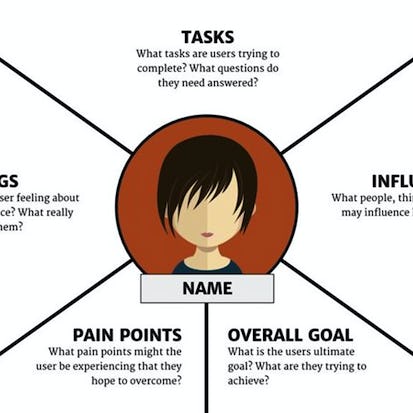
By the end of this project, you will be able to define product vision with user experience maps in Miro. To understand the User Experience design principles and create a visualization that defines the product vision, you will gain hands-on experience exercising empathy to accurately document the user experience (UX). You will also leverage design thinking, user interface (UI) knowledge, and context from the user’s experience as you create a map in the Miro online visual collaboration platform for teamwork. Note: This course works best for learners who are based in the North America region. We’re currently working on providing the same experience in other regions.Auto Summary
"Define Product Vision with User Experience Maps in Miro" is a beginner-level course focused on personal development, offered by Coursera. Led by expert instructors, this hands-on course guides learners through the process of defining a product vision using user experience (UX) maps within the Miro platform. Throughout the course, participants will delve into UX design principles and gain practical experience in documenting user experiences with empathy. They will apply design thinking and user interface (UI) knowledge to create visual maps that encapsulate the product vision, all within Miro's collaborative online environment. The course is designed to be completed in approximately 180 minutes and is currently free of charge. While it is especially suitable for learners based in North America, efforts are underway to extend the same experience to other regions. This course is ideal for beginners looking to enhance their understanding of UX design and product vision mapping.