

Monthly Subscription Starting at AED 99 + VAT

- Level Foundation
- المدة 19 ساعات hours
- الطبع بواسطة Rutgers the State University of New Jersey
-
Offered by

عن
Throughout history, the vast majority of people around the globe have believed they have, however defined, a “soul.” While the question of whether the soul exists cannot be answered by science, what we can study are the causes and consequences of various beliefs about the soul and its prospects of surviving the death of the body. Why are soul and afterlife beliefs so common in human history? Are there adaptive advantages to assuming souls exist? Are there brain structures that have been shaped by environmental pressures that provide the foundation of body/mind dualism that is such a prominent feature of many religions? How do these beliefs shape the worldviews of different cultures and our collective lives? What is the role of competing afterlife beliefs in religion, science, politics, and war? This course explores several facets of this relatively unexplored but profoundly important aspect of human thought and behavior. The course consists mainly of 70 to 80 minute lectures, typically broken up into 3 segments, recorded from a course offered by Rutgers University School of Arts and Sciences. These videos include slides and some embedded video clips. Most lectures are accompanied by slides used during the lecture, also including recommended reading assignment which may provide additional opportunities to reflect on your studies. Due to the lengthiness of this class and natural progression, the online course has been separated into 3 units, this is Unit 1.الوحدات
Introduction
-
 1
Videos
1
Videos
-
 2
Readings
2
Readings
1
Videos
- Introduction
2
Readings
- Welcome to the Course
- Learner Support
What I was Told to Believe Part I
-
1
Videos
1
Videos
- What I was Told to Believe Part I
What I was Told to Believe Part II
-
1
Videos
1
Videos
- What I was Told to Believe Part II
What I was Told to Believe Part III
-
1
Videos
1
Videos
- What I was Told to Believe Part III
Historical Foundations of Soul Beliefs #1
-
2
Videos
-
2
Readings
2
Videos
- Historical Foundations of Soul Beliefs #1 Part I
- Historical Foundations of Soul Beliefs #1 Part II
2
Readings
- Reading Resource
- Reading Resource
Historical Foundations of Soul Beliefs #2 Part I
-
1
Videos
1
Videos
- Historical Foundations of Soul Beliefs #2 Part I
Historical Foundations of Soul Beliefs #2 Part II
-
1
Videos
1
Videos
- Historical Foundations of Soul Beliefs #2 Part II
Historical Foundations of Soul Beliefs #2 Part III
-
1
Videos
-
1
Readings
1
Videos
- Historical Foundations of Soul Beliefs #2 Part III
1
Readings
- Reading Resource
Review
-
 1
Assignment
1
Assignment
 1
Assignment
1
Assignment
- Quiz 1
Historical Foundations of Soul Beliefs #3 Part I
-
1
Videos
1
Videos
- Historical Foundations of Soul Beliefs #3 Part I
Historical Foundations of Soul Beliefs #3 Part II
-
1
Videos
1
Videos
- Historical Foundations of Soul Beliefs #3 Part II
Historical Foundations of Soul Beliefs #3 Part III
-
1
Videos
-
1
Readings
1
Videos
- Historical Foundations of Soul Beliefs #3 Part III
1
Readings
- Reading Resource
Functions of Religion in Ancient & Modern Times Part I
-
1
Videos
1
Videos
- Functions of Religion in Ancient & Modern Times Part I
Functions of Religion in Ancient & Modern Times Part II
-
1
Videos
1
Videos
- Functions of Religion in Ancient & Modern Times Part II
Functions of Religion in Ancient & Modern Times Part III
-
1
Videos
1
Videos
- Functions of Religion in Ancient & Modern Times Part III
Review
-
1
Assignment
1
Assignment
- Quiz 2
Peer Review
-
1
PeerReview
1
Peer Review
- Peer Review: Religion in Societies
Reactions to Scientific Evidence
-
1
Videos
1
Videos
- Prelude to Second Half
Religion Under Attack Part I
-
1
Videos
1
Videos
- Religion Under Attack Part I
Religion Under Attack Part II
-
1
Videos
1
Videos
- Religion Under Attack Part II
Religion Under Attack Part III
-
1
Videos
1
Videos
- Religion Under Attack Part III
Additional Video
-
1
Videos
-
1
Readings
1
Videos
- Additional Video - The Four Horsemen of Atheism
1
Readings
- Additional Video Link
Big Ideas & Controversies Part I
-
1
Videos
1
Videos
- Big Ideas & Controversies Part I
Big Ideas & Controversies Part II
-
1
Videos
1
Videos
- Big Ideas & Controversies Part II
Big Ideas & Controversies Part III
-
1
Videos
-
1
Readings
1
Videos
- Big Ideas & Controversies Part III
1
Readings
- Reading Resource
Review
-
1
Assignment
1
Assignment
- Quiz 3
Peer Review
-
1
PeerReview
1
Peer Review
- Peer Review: Religious Conflict in the World
Darwin's Dangerous Idea Part I
-
1
Videos
1
Videos
- Darwin's Dangerous Idea Part I
Darwin's Dangerous Idea Part II
-
1
Videos
1
Videos
- Darwin's Dangerous Idea Part II
Darwin's Dangerous Idea Part III
-
1
Videos
-
1
Readings
1
Videos
- Darwin's Dangerous Idea Part III
1
Readings
- Reading Resource
The Mind-Body Problem Part I
-
1
Videos
1
Videos
- The Mind-Body Problem Part I
The Mind-Body Problem Part II
-
1
Videos
1
Videos
- The Mind-Body Problem Part II
The Mind-Body Problem Part III
-
1
Videos
-
1
Readings
1
Videos
- The Mind-Body Problem Part III
1
Readings
- Reading Resources
Review
-
1
Assignment
1
Assignment
- Quiz 4
Peer Review
-
1
PeerReview
1
Peer Review
- Peer Review: Darwin’s Theory and a New Worldview
Auto Summary
Explore the profound and intriguing realm of human beliefs with "Soul Beliefs: Causes and Consequences - Unit 1: Historical Foundations." This engaging course delves into the deep-seated notion of the soul, a concept that has fascinated humanity across cultures and eras. While the existence of the soul remains beyond scientific validation, this course investigates the historical prevalence, adaptive advantages, and psychological underpinnings of soul and afterlife beliefs. Led by experts from Rutgers University School of Arts and Sciences, the course offers a comprehensive examination of how these beliefs have shaped human thought, culture, and behavior. Through a series of engaging 70 to 80-minute lectures, enhanced with slides and video clips, you will explore the role of soul beliefs in religion, science, politics, and even conflict. This foundational course, available on Coursera, spans a total duration of 1140 minutes and is divided into three units for a structured learning experience. It is ideal for individuals interested in personal development and those seeking to understand the historical and psychological foundations of soul beliefs. Enroll with a Starter or Professional subscription and embark on a journey to uncover the causes and consequences of one of humanity's most enduring and influential ideas. Suitable for learners at the foundational level, this course promises to enrich your understanding of a central aspect of human consciousness and its impact on our collective lives.

Conflict Management Project
The capstone project is designed to give you the opportunity to apply what you've learned in Types of Conflict, Conflict Resolution, and Intercultural Communication and Conflict Resolution. In this course you will prepare a conflict management portfolio illustrating the nature of a specific conflict, the different roles of participants in the conflict and the significance of those roles, the perceived incompatible goals, power imbalances, and communication skills needed for the effective management of the conflict. Upon completing this course, you will be able to: 1.
Monthly Subscription Starting at AED 99 + VAT

- Level Foundation
- المدة 5 ساعات hours
- الطبع بواسطة University of California, Irvine
-
Offered by
عن
The capstone project is designed to give you the opportunity to apply what you've learned in Types of Conflict, Conflict Resolution, and Intercultural Communication and Conflict Resolution. In this course you will prepare a conflict management portfolio illustrating the nature of a specific conflict, the different roles of participants in the conflict and the significance of those roles, the perceived incompatible goals, power imbalances, and communication skills needed for the effective management of the conflict. Upon completing this course, you will be able to: 1. Create a well organized and complete case study 2. Analyze key organizational issues with an integrated action plan for conflict resolution 3. Identify appropriate communication skills needed for conflict resolution skills 4. Present a portfolio that incorporates concepts learned throughout the Specialization 5. Reflect on what you've learned throughout the Specializationالوحدات
Welcome to the Conflict Management Capstone!
-
5
Readings
5
Readings
- Course Overview
- Honor Code and Plagerism
- Peer Review Timeline
- Grading Logistics
- FAQs
Work on Your Portfolio
-
5
Readings
5
Readings
- Portfolio Section 1: Case Study
- Portfolio Section 2: Concepts
- Portoflio Section 3: Action Plan
- Portfolio Section 4: Reflection
- Sample Portfolio
Optional Peer Evaluation
-
1
PeerReview
1
Peer Review
- Optional Peer Review
Peer Evaluation
-
1
PeerReview
1
Peer Review
- Required Peer Review
Next Steps!
-
2
Readings
2
Readings
- Message from UC Irvine Extension
- Post Course Survey
Auto Summary
The Conflict Management Project course on Coursera focuses on personal development, providing learners with practical skills in conflict resolution and intercultural communication. Guided by expert instructors, you'll create a comprehensive conflict management portfolio. This foundational course spans 300 minutes and is available through Starter and Professional subscriptions. Ideal for individuals seeking to enhance their conflict resolution capabilities in professional and personal settings.

Utilize Survey Monkey as an Evaluation Tool
Surveys and evaluations can be used to reflect on your training or customer experiences. The data you collect can help to adjust your training and you can find out directly from your employees if they are satisfied. Customers can let you know what they are thinking and what they actually want.
Buy Now Free
- Level Foundation
- المدة 2 ساعات hours
- الطبع بواسطة Coursera
-
Offered by
عن
Surveys and evaluations can be used to reflect on your training or customer experiences. The data you collect can help to adjust your training and you can find out directly from your employees if they are satisfied. Customers can let you know what they are thinking and what they actually want. In this project you will learn about Survey Monkey as an evaluation tool throughout the cycle of developing an event. By the end of your time in this project you will have multiple evaluation surveys to take you through the phases of an event. Note: This course works best for learners who are based in the North America region. We’re currently working on providing the same experience in other regions.الوحدات
Utilize Survey Monkey as an Evaluation Tool
-
1
Readings
-
 1
Plugin
1
Plugin
-
 1
Lab
1
Lab
-
1
Assignment
1
Assignment
- Graded Quiz: Test your Project understanding
 1
Labs
1
Labs
- Utilize Survey Monkey as an Evaluation Tool
1
Readings
- Project-based Course Overview
Auto Summary
Unlock the potential of effective feedback with the "Utilize Survey Monkey as an Evaluation Tool" course, designed for those keen on personal development. This beginner-friendly course, offered by Coursera, empowers you to harness Survey Monkey for insightful evaluations throughout the lifecycle of an event. Under the expert guidance of Coursera instructors, you will explore how to use surveys to refine training programs and enhance customer experiences. The skills acquired will enable you to gather critical feedback directly from employees and customers, ensuring their satisfaction and understanding their needs better. This comprehensive 120-minute course is ideal for learners located in North America, with ongoing efforts to extend the same high-quality experience to other regions. The best part? It’s entirely free to join, making it an accessible opportunity for anyone eager to improve their evaluation techniques. Whether you're organizing events, leading training sessions, or managing customer relations, this course will equip you with the tools to create effective evaluation surveys at every stage. Join now and start transforming feedback into actionable insights!
Buy Now Free

- Level Foundation
- المدة 2 ساعات hours
-
Offered by
عن
This Guided Project Burp suite for beginners: Intro to Penetration Testing, is for people who wish to start their career in penetration or security testing. In this two-hour-long project-based course, you will learn techniques to attack web applications and services using the Burp suite. The learning objectives are as follows - 1. Learn how to intercept HTTP traffic using Burp Proxy 2. Learn how to modify requests in the Burp proxy 3. Learn how to reissue requests with Burp Repeater To achieve this, we will test an application with known vulnerabilities using the feature of Burp Suite like Proxy, interceptor and repeater. This project is unique because it covers the topic with multiple hands-on sessions, and all examples are close to real-world application To be successful in this project, you will need some basic understanding of how a web application or web service works, dedicated time to follow the instructions and implement the learningsAuto Summary
Dive into the world of cybersecurity with "Burp Suite for Beginners: Intro to Penetration Testing," an engaging course designed for aspiring penetration and security testers. Offered by Coursera, this beginner-level guided project provides a comprehensive introduction to using Burp Suite, a powerful tool in the field of security testing. Over the span of 120 minutes, you'll gain hands-on experience and foundational knowledge to kickstart your career in penetration testing. Best of all, this course is available for free, making it an accessible starting point for anyone eager to explore the realm of cybersecurity. Join now and take the first step towards becoming a skilled security professional.
Buy Now Free

- Level Foundation
- المدة 3 ساعات hours
-
Offered by
عن
We consume forecasted data regularly in our personal and business lives, covering everything from the weather to projected investment returns. At work we use forecasted data for a multitude of purposes including developing strategies, budgets, and to provide the right amount of resources to meet demand. In this course, you will get your feet wet with statistical forecasting by designing, creating, and interpreting a growth forecast. You will do this as we work side-by-side in the free-to-use software Google Sheets. By the end of this course, you will understand use cases for conducting forecasts in your workplace and be able to confidently conduct a growth forecast in any spreadsheet software. You will also understand when it is necessary to refine a model to improve the accuracy of forecasted projections. Note: This course works best for learners who are based in the North America region. We’re currently working on providing the same experience in other regions.Auto Summary
Discover the essentials of statistical forecasting using Google Sheets in this beginner-level course by Coursera. Perfect for personal and business applications, learn to predict data trends in just 180 minutes. Access the course for free and enhance your personal development skills today!
Buy Now Free
- Level Foundation
- المدة 2 ساعات hours
-
Offered by
عن
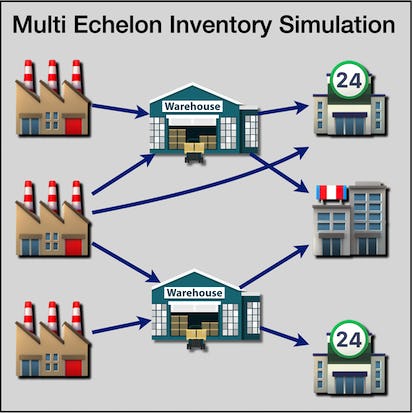
Welcome to "Multi Echelon Inventory Simulation Using R Simmer". This is a project-based course which should take about 2 hours to finish. Before diving into the project, please take a look at the course objectives and structure. By the end of this project, you will gain introductiory knowledge of Discrete Event Simulation, Multi Echelon Inventory Systems, be able to use R Studio and Simmer library, create statistical variables required for simulation, define process trajectory, define and assign resources, define arrivals (eg. incoming customers / work units), run simulation in R, store results in data frames, plot charts and interpret the results.Auto Summary
Explore "Multi-Echelon Inventory Simulation Using R Simmer," a 2-hour beginner-level course designed to introduce you to Discrete Event Simulation and Multi-Echelon Inventory Systems. Guided by Coursera, this hands-on project covers using R Studio and the Simmer library to create and analyze simulations. You'll learn to define trajectories, assign resources, run simulations, and interpret results with data frames and charts. Ideal for those in personal development, this free course equips you with practical simulation skills.
Buy Now Free

- Level Foundation
- المدة 3 ساعات hours
-
Offered by
عن
In this project, you will learn how to create a visually appealing course syllabus in Libre Writer. The key components of a course syllabus will be discussed. While adding these components to your document, you will use various features in Writer. You will apply styles, insert a bulleted list and a table to organize information, insert an image, and modify a table and image. Included Universal design formatting tips will describe options to help make your document accessible to all learners.Auto Summary
Learn to craft a visually appealing course syllabus using Libre Writer in this beginner-level project. Offered by Coursera, this 180-minute course in Personal Development is available for free, making it accessible for anyone looking to enhance their document design skills.

How to Write a Resume (Project-Centered Course)
What you’ll achieve: In this project-centered course*, you will craft an essential cornerstone of the modern-day job or internship search: the resume. You’ll review resume best practices and explore current trends with guidance from a professional career counselor and recruiter, and you’ll exchange structured feedback with your peers as you work to polish your own resume. When you complete the course, you’ll have an eye-catching resume that lets your professional strengths shine.
Monthly Subscription Starting at AED 99 + VAT

- Level Foundation
- المدة 5 ساعات hours
- الطبع بواسطة The State University of New York
-
Offered by
عن
What you’ll achieve: In this project-centered course*, you will craft an essential cornerstone of the modern-day job or internship search: the resume. You’ll review resume best practices and explore current trends with guidance from a professional career counselor and recruiter, and you’ll exchange structured feedback with your peers as you work to polish your own resume. When you complete the course, you’ll have an eye-catching resume that lets your professional strengths shine. What you’ll need to get started: This course is designed primarily for young professionals or college students who are writing their first resume or looking to give an old resume a fresh and polished professional look. All job seekers will benefit from the course material and project, however, regardless of their career stage or professional background. All you will need is word processing software that allows you to create a resume on a computer- there are free tools available. *About Project-Centered Courses: Project-centered courses are designed to help you complete a personally meaningful real-world project, with your instructor and a community of like-minded supportive learners with similar goals providing guidance and suggestions along the way. By actively applying new concepts as you learn, you’ll master the course content more efficiently; you’ll also get a head start on using the skills you gain to make positive changes in your life and career. When you complete the course, you’ll have a finished project that you’ll be proud to use and share.الوحدات
Intro
-
1
Videos
-
2
Readings
-
1
Discussion
-
1
Assignment
1
Assignment
- Resume Rubric True & False
1
Discussions
- Module 1: Knowing the Rubric
1
Videos
- Video Lecture: Introduction
2
Readings
- About the Instructor
- Resume Rubric
A Self-Inventory
-
1
Videos
-
1
Readings
-
1
Discussion
1
Discussions
- Module 2: Transferable Skills
1
Videos
- Video Lecture: Module 2
1
Readings
- Differences of Resumes Internationally
Creating Content
-
1
Videos
-
1
PeerReview
-
1
Assignment
1
Assignment
- Practicing Bullet Points
1
Peer Review
- Get Feedback on your Resume Content
1
Videos
- Video Lecture 3: Creating Content
Piecing it all Together
-
1
Videos
1
Videos
- Video Lecture 4: Piecing it all Together
Know your Industry
-
1
Videos
-
1
Readings
-
1
Discussion
1
Discussions
- Module 5: Know your Industry
1
Videos
- Video Lecture 5: Know your Industry
1
Readings
- Some Key Notes about LinkedIn
An Employer Perspective
-
1
Videos
-
1
Discussion
1
Discussions
- Module 6: Employer Interview
1
Videos
- Video Lecture 6: Interview with an Employer
FAQ's
-
1
Videos
-
1
Readings
-
1
PeerReview
1
Peer Review
- Peer Resume Review
1
Videos
- Video Lecture 7: Frequently Asked Questions
1
Readings
- Resume Review Rubric
Auto Summary
Enhance your job search with "How to Write a Resume," a project-centered course on Coursera led by a professional career counselor and recruiter. Geared towards young professionals and college students, this course covers resume best practices and current trends, culminating in a polished, eye-catching resume. With a duration of 300 minutes, learners can subscribe via Starter or Professional plans. Ideal for all job seekers aiming to improve their resumes and career prospects.

Rapid Prototyping of Embedded Interface Designs
This course can also be taken for academic credit as ECEA 5347, part of CU Boulder’s Master of Science in Electrical Engineering degree. Rapid Prototyping is the second of three classes in the Embedded Interface Design (EID) specialization, an online version of the on-campus EID class taught in graduate embedded systems design. This course is focused on rapid prototyping of devices and systems and the related methods, practices, and principles that will help ensure your embedded interface designs are what your users both need and want.
Monthly Subscription Starting at AED 99 + VAT

- Level Professional
- المدة 10 ساعات hours
- الطبع بواسطة University of Colorado Boulder
-
Offered by
عن
This course can also be taken for academic credit as ECEA 5347, part of CU Boulder’s Master of Science in Electrical Engineering degree. Rapid Prototyping is the second of three classes in the Embedded Interface Design (EID) specialization, an online version of the on-campus EID class taught in graduate embedded systems design. This course is focused on rapid prototyping of devices and systems and the related methods, practices, and principles that will help ensure your embedded interface designs are what your users both need and want. The class includes an introduction to rapid prototyping, prototyping device and system user interfaces, prototyping devices, and design considerations and perspectives for devices. The content ranges from general design best practices to specifics for embedded devices of different types and specific flavors of user interfaces, but all are presented to support developing embedded devices. The class includes practical projects that let you try some of standard methods in software development of prototype graphical user interfaces for devices using Qt and HTML. This course can be taken for academic credit as ECEA 5347, part of CU Boulder's Master of Science in Electrical Engineering degree.الوحدات
General Introductions
-
2
Videos
-
1
Discussion
1
Discussions
- Introduce Yourself
2
Videos
- Introduction to Instructor
- Introduction to Embedded Interface Design
Rapid Prototyping
-
6
Videos
-
 1
Quiz
1
Quiz
6
Videos
- Introduction to Rapid Prototyping
- Rapid Prototyping
- Product Development
- RF Design
- Introduction to Course Projects
- Module Wrap-Up
1
Quiz
- Rapid Prototyping, Product Development, RF Design
Pre-project Preparations
-
1
Readings
1
Readings
- Pre-project preparations for Class Projects
Prototyping Device UIs
-
7
Videos
-
1
Quiz
7
Videos
- Module Introduction
- QT-based User Interfaces
- HTML-based Interfaces
- Other UI Tools
- Designing GUIs
- Microinteractions
- Module Wrap-Up
1
Quiz
- Prototyping Device UIs
Project 1: Qt GUI
-
1
PeerReview
1
Peer Review
- Project 1: Qt GUI Development
Prototyping Embedded Devices
-
6
Videos
-
1
Quiz
6
Videos
- Module Introduction
- Pugh Matrices
- Alternative Prototyping Platforms
- Alternative Prototype Operating Systems
- FreeRTOS
- Module Wrap-Up
1
Quiz
- Prototyping Embedded Devices
Project 2: HTML GUI
-
1
PeerReview
1
Peer Review
- Project 2: HTML GUI Development
Design for IoT Devices
-
8
Videos
-
1
Quiz
8
Videos
- Module Introduction
- Designing with Data
- Design Perspectives
- Data Analysis and AI for IoT Networks
- Designing Wearables
- Designing Voice User Interfaces
- Module Wrap-Up
- Course Wrap-Up
1
Quiz
- Design for IoT Devices
Project Peer Review
-
1
PeerReview
1
Peer Review
- Review Projects 1 and 2
Auto Summary
Rapid Prototyping of Embedded Interface Designs, offered by Coursera, is part of CU Boulder's Master of Science in Electrical Engineering. This professional-level course focuses on rapid prototyping methods, practices, and principles for embedded interface designs. It covers user interface prototyping, device design considerations, and practical projects using Qt and HTML. The course spans 600 hours and is available through a Starter subscription, ideal for learners aiming to enhance their skills in embedded systems design.
Create audio transcripts with Amazon Transcribe
In this guided project, you will learn how to use Amazon Transcribe to generate your own audio transcripts quickly.
Buy Now Free
- Level Professional
- المدة 2 ساعات hours
- الطبع بواسطة Coursera
-
Offered by
عن
In this guided project, you will learn how to use Amazon Transcribe to generate your own audio transcripts quickly.الوحدات
Your Learning Journey
-
1
Readings
-
1
Plugin
-
1
Lab
-
1
Assignment
1
Assignment
- Assess Your Knowledge
1
Labs
- Create audio transcripts with Amazon Transcribe
1
Readings
- Create Audio Transcripts with Amazon Transcribe
Auto Summary
Discover the power of Amazon Transcribe in this engaging and hands-on project designed for those looking to enhance their personal development skills. Guided by Coursera, this intermediate-level course will empower you to create accurate and efficient audio transcripts. Over the span of just two hours, you'll gain practical experience in utilizing Amazon's advanced transcription technology. Best of all, it's completely free to enroll. Ideal for learners who have some prior experience and are eager to expand their technical toolkit, this course offers a valuable opportunity to streamline your transcription process and boost your productivity.