


Leading Oneself with Personal Excellence
Before we can lead others well, we must first learn to lead ourselves well. Knowing personal excellence is the culmination of this journey. In this course, you will describe how and why to set goals and create action plans, increase your focus and reduce distraction, harness motivation and flow state for performance, build self-efficacy and agency, and redefine your relationship with stress, anxiety, fear and adversity. This course can be taken for academic credit as part of CU Boulder’s Master of Engineering in Engineering Management (ME-EM) degree offered on the Coursera platform.
Monthly Subscription Starting at AED 99 + VAT

- Level Foundation
- المدة 37 ساعات hours
- الطبع بواسطة University of Colorado Boulder
-
Offered by

عن
Before we can lead others well, we must first learn to lead ourselves well. Knowing personal excellence is the culmination of this journey. In this course, you will describe how and why to set goals and create action plans, increase your focus and reduce distraction, harness motivation and flow state for performance, build self-efficacy and agency, and redefine your relationship with stress, anxiety, fear and adversity. This course can be taken for academic credit as part of CU Boulder’s Master of Engineering in Engineering Management (ME-EM) degree offered on the Coursera platform. The ME-EM is designed to help engineers, scientists, and technical professionals move into leadership and management roles in the engineering and technical sectors. With performance-based admissions and no application process, the ME-EM is ideal for individuals with a broad range of undergraduate education and/or professional experience. Learn more about the ME-EM program at https://www.coursera.org/degrees/me-engineering-management-boulder.Happinessالوحدات
Introduction
-
 2
Videos
2
Videos
-
 3
Readings
3
Readings
-
 1
Quiz
1
Quiz
2
Videos
- Meet your Professor (for new learners)
- Course Summary
3
Readings
- Welcome and Where to Find Help
- About the Leadership Excellence Areté Workbook
- Download the Leadership Excellence Areté Workbook
1
Quiz
- Unlock the Companion Workbook!
Happiness Models
-
1
Videos
-
4
Readings
1
Videos
- Happiness Models
4
Readings
- Workbook Exercise: Journal 1.1 — Pursuing Happiness
- How to Measure Happiness: Hedonia vs. Eudaimonia
- Working Your Way to Happiness
- Workbook Exercise: Wheel of Life
Hedonic Treadmill
-
1
Videos
-
2
Readings
1
Videos
- Hedonic Treadmill
2
Readings
- Workbook Exercise: Journal 1.2 — The Treadmill
- The Hedonic Treadmill — Are We Forever Chasing Rainbows?
Paradoxical Pursuit of Happiness
-
1
Videos
-
5
Readings
-
 1
Discussion
1
Discussion
-
1
Quiz
1
Discussions
- The Paradox of Pursuing Happiness
1
Videos
- The Happiness Paradox
5
Readings
- Workbook Exercise: Journal — An Alternative to Happiness
- Pursuing Happiness Can Make us Unhappy
- The Pursuit of Happiness Can End in Pain
- Why Pursuing Happiness Makes Us Miserable
- Embracing Adversity to Forge Happiness
1
Quiz
- Week 1 Knowledge Check
Focus
-
1
Videos
-
3
Readings
1
Videos
- Focus and Distraction
3
Readings
- Workbook Exercise: Journal 2.1 — Focus and Distraction
- 7 Useful Tips for Improving Your Mental Focus
- The Surprising Habits of Original Thinkers
Distraction
-
3
Readings
3
Readings
- Workbook Exercise: Journal 2.2 — Is Social Media a Problem
- 13 Science-backed Tips to Stay Focused and Avoid Distractions
- Quit Social Media
Instant Gratification
-
1
Videos
-
4
Readings
-
1
Discussion
-
1
Quiz
1
Discussions
- Staying Focused when it Matters
1
Videos
- Instant Gratification
4
Readings
- Workbook Exercise: Journal 2.3 — Instant Gratification Monkey
- How to Avoid the Temptations of Immediate Gratification
- The Marshmallow Test
- Instant Gratification and Its Dark Side
1
Quiz
- Week 2 Knowledge Check
Motivation
-
1
Videos
-
2
Readings
1
Videos
- Motivation
2
Readings
- Workbook Exercise: Journal 3.1 — Elusive Motivation
- “Adaptive Reward Pursuit: How Effort Requirements Affect Unconscious Reward Responses and Conscious Reward Decisions” to Higher-Level Functions
Flow State
-
1
Videos
-
3
Readings
1
Videos
- Flow State
3
Readings
- Workbook Exercise: Journal 3.2 — Finding Flow
- Flow Theory in Psychology: 13 Key Findings & Examples
- How To Get Into The Flow State
Procrastination
-
1
Videos
-
4
Readings
-
1
Discussion
-
1
Quiz
1
Discussions
- Finding a Way to Keep Moving Forward
1
Videos
- Procrastination
4
Readings
- Workbook Exercise: Journal 3.3 — Taming Procrastination
- Inside the Mind of a Master Procrastinator
- Why Do We Procrastinate? 12 Psychological Reasons Behind It
- Procrastination Encyclopedia of Social and Behavioral Sciences
1
Quiz
- Week 3 Knowledge Check
Self-Efficacy and Agency
-
2
Videos
-
9
Readings
2
Videos
- Agency
- Self Efficacy
9
Readings
- Workbook Exercise: Journal 4.1 — Steering the Ship
- The Skill of Self-Confidence
- Self-Efficacy Theory
- Self Efficacy and Why Believing in Yourself Matters
- Understanding Personal Agency
- Imposter Syndrome: Forging Your Personal Unique Value Prop (optional)
- Overcoming Anxiety Through Personal Agency
- Defining Sovereignty
- Workbook Exercise: Locus of Control Assessment
Personal Accountability
-
1
Videos
-
4
Readings
1
Videos
- Personal Accountability
4
Readings
- Workbook Exercise: Journal 4.2 — Taking Ownership
- Extreme Ownership
- Accountability vs. Responsibility
- Workbook Exercise: Assertiveness Assessment
Goals and Planning
-
2
Videos
-
4
Readings
-
1
Discussion
-
1
Quiz
1
Discussions
- Grabbing the Helm
2
Videos
- Planning
- Goals
4
Readings
- Workbook Exercise: Journal 4.3 — Plotting a Course
- Forget About Setting Goals. Focus on This Instead
- WOOP, There It Is! 4 Steps To Achieve Your Goals
- Workbook Exercise: WOOP Kit
1
Quiz
- Week 4 Knowledge Check
Psychological Resilience
-
1
Videos
-
3
Readings
1
Videos
- Psychological Resilience
3
Readings
- Workbook Exercise: Journal 5.1 — Bouncing Back
- Mindsets That Promote Resilience
- Forging Mettle Podcast: Shilo Brooks — Comfort is Not the Highest Good
Perseverance and Endurance
-
1
Videos
-
8
Readings
1
Videos
- Perseverance and Endurance
8
Readings
- Workbook Exercise: Journal 5.2 — Staying the Course
- Grit: the Power of Passion and Perseverance
- Perseverance in Psychology: 4 Activities to Improve Perseverance
- Grit at Work (optional)
- Adversity Quotient: A New Paradigm in Management to Explore
- Self-Control and Grit: Related but Separable Determinants of Success
- Grit: Perseverance and Passion for Long-Term Goals (optional)
- Grit Scale Assessment
Mental Toughness
-
2
Videos
-
4
Readings
-
1
Discussion
-
1
Quiz
1
Discussions
- Developing Mental Toughness
2
Videos
- Mental Toughness
- Outro Video
4
Readings
- Workbook Exercise: Journal 5.3 — Preparing for the Storm
- Forging Mettle Podcast: Doug Strycharczyk — What is mental toughness?
- How to Be Mentally Strong: 14 Ways to Build Mental Toughness
- Mental Toughness Wheel
1
Quiz
- Week 5 Knowledge Check
Auto Summary
Unlock your potential with "Leading Oneself with Personal Excellence," a transformative course in personal development designed to empower you to lead yourself before leading others. This expertly crafted program will guide you through the essentials of setting goals, creating actionable plans, enhancing focus, and minimizing distractions. You will also learn to harness motivation, achieve a flow state for optimal performance, build self-efficacy, and develop a healthy relationship with stress, anxiety, fear, and adversity. Offered by Coursera, this foundational course is an integral part of CU Boulder’s Master of Engineering in Engineering Management (ME-EM) degree. Ideal for engineers, scientists, and technical professionals aiming to transition into leadership and management roles, the ME-EM program offers performance-based admissions with no application process, accommodating a diverse range of educational and professional backgrounds. With a comprehensive duration of 2220 minutes, this course is available through a Starter subscription, making it accessible for individuals ready to elevate their personal and professional capabilities. Join us and embark on your journey towards personal excellence and effective self-leadership.

Social Pedagogy across Europe
Social Pedagogy across Europe is the first Massive Open Online Course focused on social pedagogy – a relationship-centred approach to supporting people’s learning, well-being and social inclusion in ways that promote social justice. The course is structured in eight sessions presented over four weeks – an introductory session, six sessions outlining social pedagogy in different European countries and sharing some innovative practice insights, and a review session to support you in applying your learning.
Monthly Subscription Starting at AED 99 + VAT

- Level Professional
- المدة 20 ساعات hours
- الطبع بواسطة Universitat Autònoma de Barcelona
-
Offered by
عن
Social Pedagogy across Europe is the first Massive Open Online Course focused on social pedagogy – a relationship-centred approach to supporting people’s learning, well-being and social inclusion in ways that promote social justice. The course is structured in eight sessions presented over four weeks – an introductory session, six sessions outlining social pedagogy in different European countries and sharing some innovative practice insights, and a review session to support you in applying your learning. You can undertake the six country sessions in any order you would like. Through this course, we aim to: 1. Give you an insight into how social pedagogy has been developing across Europe, highlighting both the diversity and connections, 2. Highlight the importance of valuing every person as intrinsically ‘rich’, recognising their unique potential and ability to be a valuable member of society, 3. Introduce you to ways in which you can bring this belief to life in everyday interactions and relationships that support people’s learning, nurture their well-being and enable them to feel included in society, 4. Ensure you are familiar with the most fundamental aspects of social pedagogical practice in ways that are applicable in your own personal and professional life. If you are currently working with children, young people, families, community groups, vulnerable adults or older people, then this course will be highly relevant. You will gain a panoramic overview of social pedagogy, which explores the principles and key thematic areas in ways that are practice-relevant and can be easily applied in any educational and care setting.الوحدات
Introduction
-
1
Videos
-
1
Readings
1
Videos
- Welcome to our Massive Open Online Course in Social Pedagogy
1
Readings
- Course overview
FAQs
-
5
Readings
5
Readings
- Solving doubts and technical issues
- FAQ - General topics
- FAQ- Time management
- FAQ - Quizzes and assignments
- FAQ - Certificate
Session Overview
-
1
Videos
-
1
Readings
1
Videos
- Introduction to Social Pedagogy across Europe and Participation
1
Readings
- Session overview
Social Pedagogy – A Cross-European Perspective
-
3
Videos
-
3
Readings
-
 1
Assignment
1
Assignment
 1
Assignment
1
Assignment
- Social Pedagogy - A Cross-European Perspective
3
Videos
- Commonalities in Social Pedagogy across Europe
- Cultural Differences in Social Pedagogy
- Social Pedagogy Perspective in the MOOC
3
Readings
- Social Pedagogy – A Cross-European Perspective
- Holthoff & Eichsteller - Social Pedagogy in Practice
- Further resources (optional)
Participatory Practice in Social Pedagogy
-
2
Videos
-
2
Readings
-
1
Assignment
1
Assignment
- Participatory Practice in Social Pedagogy
2
Videos
- Participatory Practice in the MOOC
- Participation in Social Pedagogical Practice
2
Readings
- Participatory Practice in Social Pedagogy
- Simpson – Introduction to Participation
Reflecting and Connecting
-
1
Readings
1
Readings
- Reflecting and Connecting
Meet the ThemPra team
-
1
Readings
1
Readings
- Meet the ThemPra team
Session Overview
-
1
Videos
-
1
Readings
1
Videos
- Introduction to Resource-Orientation and Social Pedagogy in Germany
1
Readings
- Session overview
Social Pedagogy – A German Perspective
-
3
Videos
-
3
Readings
-
1
Assignment
1
Assignment
- Social Pedagogy - A German Perspective
3
Videos
- Social Pedagogy in Germany
- Social Pedagogy in Practice
- Dynamics of Social Pedagogy
3
Readings
- Social Pedagogy – A German Perspective
- Eichsteller - The Notion of Haltung in Social Pedagogy
- Further resources
Resource-Orientated Practice
-
2
Videos
-
2
Readings
-
1
Assignment
1
Assignment
- Resource Orientated Practice
2
Videos
- Resource-Orientated Case Management at HüTN
- Working Sectors in Youth Welfare
2
Readings
- Resource-Orientated Practice
- Further resources
Reflecting and Connecting
-
1
Readings
1
Readings
- Reflecting and Connecting
Meet the KJSH Team
-
1
Readings
1
Readings
- Meet the KJSH Team
Session Overview
-
1
Videos
-
1
Readings
1
Videos
- Introduction to Creativity and Social Pedagogy in the UK
1
Readings
- Session overview
Social Pedagogy – A British Perspective
-
3
Videos
-
2
Readings
-
1
Assignment
1
Assignment
- Social Pedagogy - A British Perspective
3
Videos
- Social Pedagogy at UCLan
- Social Pedagogy in the UK
- Social Pedagogy and Creativity in Practice
2
Readings
- Social Pedagogy – A British Perspective
- Further resources (optional)
Creativity
-
6
Videos
-
2
Readings
-
1
Assignment
1
Assignment
- Creativity
6
Videos
- Creativity and Social Pedagogy
- One Page Profile
- One Page Profile in Practice
- Worry Box
- Assignment
- Links to Social Pedagogy Concepts
2
Readings
- Creativity
- Further resources
Assignment
-
1
Readings
-
1
PeerReview
1
Peer Review
- One Page Profile / Worry Box
1
Readings
- Assignment 1
Meet the UCLan Team
-
1
Readings
1
Readings
- Meet the UCLan Team
Session Overview
-
1
Videos
-
1
Readings
1
Videos
- Introduction to Purposeful Shared Activities and Social Pedagogy in Denmark
1
Readings
- Session overview
Social Pedagogy – A Danish Perspective
-
1
Videos
-
2
Readings
-
1
Assignment
1
Assignment
- Social Pedagogy - A Danish Perspective
1
Videos
- Social Pedagogy in Denmark
2
Readings
- Social Pedagogy – A Danish Perspective
- Further resources
Purposeful Shared Activities - the SMTTE Model as a Planning Tool
-
4
Videos
-
2
Readings
-
1
Assignment
1
Assignment
- Purposeful Shared Activities - the SMTTE Model as a Planning Tool
4
Videos
- Aim-Directed Planning with SMTTE
- Purposeful Shared Activities in Practice
- The SMTTE Model in Practice at Granhøjen
- Practice Example of the SMTTE Model
2
Readings
- Purposeful Shared Activities - the SMTTE Model as a Planning Tool
- Text: SMTTE Model for Aim-Directed Planning
Reflecting and Connecting
-
1
Readings
1
Readings
- Reflecting and Connecting
Meet the Teams from KP and Common View
-
1
Readings
1
Readings
- Meet the Teams from KP and Common View
Social Pedagogy in the Czech Republic – Prevention
-
1
Videos
-
1
Readings
1
Videos
- Introduction to Prevention and Social Pedagogy in the Czech Republic
1
Readings
- Session Overview
Social Pedagogy – a Czech Perspective
-
1
Videos
-
2
Readings
-
1
Assignment
1
Assignment
- Social Pedagogy - A Czech Perspective
1
Videos
- Social Pedagogy in the Czech Republic
2
Readings
- Social Pedagogy – a Czech Perspective
- Further resources
Prevention in Social Pedagogical Practice
-
2
Videos
-
2
Readings
-
1
Assignment
1
Assignment
- Prevention in Social Pedagogical Practice
2
Videos
- Prevention in Social Pedagogy
- Prevention in Social Pedagogical Practice
2
Readings
- Prevention in Social Pedagogical Practice
- Further resources
Reflecting and Connecting
-
1
Readings
1
Readings
- Reflecting and Connecting
Meet the Masaryk University Team
-
1
Readings
1
Readings
- Meet the Masaryk University Team
Session Overview
-
1
Videos
-
1
Readings
1
Videos
- Introduction to Community Education and Social Pedagogy in Spain
1
Readings
- Session Overview
Social Pedagogy – A Spanish Perspective
-
7
Videos
-
2
Readings
-
1
Assignment
1
Assignment
- Social Pedagogy - A Spanish Perspective
7
Videos
- History of Social Pedagogy in Spain
- Professionalisation of Social Pedagogy
- Intervention Fields for Social Pedagogy
- Social Pedagogy in Practice - Interview with Javier Iglesias
- Social Pedagogy in Practice - Interview with Ana Lirola
- Social Pedagogy in Practice - Interview with David Diaz
- Social Pedagogy and SIPS - Interview with Xavier Úcar
2
Readings
- Social Pedagogy – A Spanish Perspective
- Further resources
Social Pedagogy and Community Education
-
7
Videos
-
1
Readings
-
1
Assignment
1
Assignment
- Social Pedagogy and Community Education
7
Videos
- Community Education
- Socio Cultural Animation and Community Education
- Community Development and Community Education
- Community Empowerment and Community Education
- Social Capital and Community Education
- Social Networks and Community Education
- Community Education in Practice – Interview Lucas Martínez
1
Readings
- Social Pedagogy and Community Education
FURTHER RESOURCES
-
2
Videos
-
1
Readings
2
Videos
- Implementing Community Development Plans - Interview Marc Viñas
- Caixa Proinfancia Programme - Interview Jordi Riera
1
Readings
- "Asperones Avanza" – The Wall of Stars
Reflecting and Connecting
-
1
Readings
1
Readings
- Reflecting and Connecting
Meet the Team from Universitat Autònoma de Barcelona
-
1
Readings
1
Readings
- Meet the Team from Universitat Autònoma de Barcelona
Session Overview
-
1
Videos
-
1
Readings
1
Videos
- Introduction to Social Pedagogy and Social Justice in Belgium
1
Readings
- Session Overview
Social Pedagogy – A Belgian Perspective
-
1
Videos
-
2
Readings
-
1
Assignment
1
Assignment
- Social Pedagogy - A Belgian Perspective
1
Videos
- Social Pedagogy in Belgium
2
Readings
- Social Pedagogy – A Belgian Perspective
- Further resources
Keeping the Door Open - Social Pedagogy and Social Justice
-
3
Videos
-
2
Readings
-
1
Assignment
1
Assignment
- Keeping the Door Open - Social Pedagogy and Social Justice
3
Videos
- Keeping the Door Open
- Putting a Social Pedagogical Perspective into Practice – Evelyne Deceur
- Putting a Social Pedagogical Perspective into Practice – Karel De Vos
2
Readings
- Keeping the Door Open - Social Pedagogy and Social Justice
- Further resources
Reflecting and Connecting
-
1
Readings
1
Readings
- Reflecting and Connecting
Meet the Ghent University Team
-
1
Readings
1
Readings
- Meet the Ghent University Team
Session Overview
-
1
Videos
1
Videos
- Introduction to Social Pedagogy in a Wider Context
Learning Review
-
2
Videos
-
2
Readings
2
Videos
- Reviewing the Key Learning Points
- Practical Social Pedagogy - Jan Storø
2
Readings
- Learning Review
- Further resources
Social Pedagogy across the Globe
-
9
Videos
-
2
Readings
9
Videos
- Examples of Social Pedagogical Practice – Community Schools Project (Mexico)
- Examples of Social Pedagogical Practice - Rescue (Greece)
- Examples of Social Pedagogical Practice - Foster Children's Rights Coalition (United States of America)
- Examples of Social Pedagogical Practice - North Shore Restorative Justice Society (Canada)
- Examples of Social Pedagogical Practice – Monteiro Lobato (Brazil)
- Examples of Social Pedagogical Practice – CRAS Primavera (Brazil)
- Examples of Social Pedagogical Practice – CRAS Kephas (Brazil)
- Examples of Social Pedagogical Practice – Micro Prevention Projects (Slovakia)
- Examples of Social Pedagogical Practice – Poland
2
Readings
- Social Pedagogy across the Globe
- Further resources
More
-
7
Readings
-
1
PeerReview
1
Peer Review
- Assignment Guidance – SMTTE Model
7
Readings
- Social Pedagogy and Change Agency
- Social Pedagogy and Change Agency - Be the change you wish to see
- Social Pedagogy and Change Agency - Look for allies
- Social Pedagogy and Change Agency - Work with resistance, not against it
- Social Pedagogy and Change Agency - Stay connected to your passion and others!
- Reflecting and connecting
- Assignment SMTTE Model
Auto Summary
"Social Pedagogy across Europe" is a comprehensive online course on Coursera, focusing on a relationship-centered approach to supporting learning, well-being, and social inclusion across Europe. Over four weeks and eight sessions, including six country-specific insights, this course emphasizes social justice and the intrinsic value of every individual. Ideal for professionals working with diverse groups, learners will explore fundamental social pedagogical practices applicable in educational and care settings. Available subscription options include Starter and Professional levels, catering to a wide audience in personal development.
Monthly Subscription Starting at AED 99 + VAT

- Level Foundation
- المدة 6 ساعات hours
- الطبع بواسطة Erasmus University Rotterdam
-
Offered by
عن
In a world of information overload, how does one find reliable information? Science is supposed to be the answer to our society's complicated challenges. However, as the Covid-19 pandemic highlighted, not understanding what is fake news, misinformation or what is fact may lead to widespread public mistrust, or turn science into fuel for conspiracy theories or propaganda. Scientific findings are prone to change, making it difficult to effectively communicate them to the public. This fosters broad public skepticism towards major institutions, from the government to media to science. So, how can we communicate science effectively? And how can we rebuild trust in science? As a result, it is critical that we reconsider our science communication practices to recover public trust. This course offers a current overview of science communication. We cover a wide range of topics like fake news, mis- or disinformation, but also how to combat these practices. We explore how major stakeholders (scientists, policymakers, science communicators and citizens) can work together to improve science communication. And we tackle how people and organizations can earn and maintain public trust via effective science communication. We recommend this course to scientists, journalists, policymakers or any learners interested in science communication. More information can be found at www.trescaproject.eu (This project has received funding from the European Union’s Horizon 2020 Research and Innovation Programme under Grant Agreement No 872855.)الوحدات
Introduction
-
1
Videos
1
Videos
- Introduction to the Course
The Digital Context of Communication
-
4
Videos
-
1
Assignment
1
Assignment
- Test Your Knowledge
4
Videos
- The Digital Context of Communication
- The Importance of Trust
- Strengthening Collaborations to Improve Public Trust
- Information Overload & Misinformation
Methodologies of Truth
-
3
Videos
-
1
Assignment
1
Assignment
- Test Your Knowledge
3
Videos
- Knowledge Production Cycle: Part 1
- Knowledge Production Cycle: Part 2
- Communicating with the Outside World
The Journalist
-
4
Videos
-
1
Discussion
1
Discussions
- Share Your Thoughts
4
Videos
- What you can expect
- Journalism 101
- The Online Jungle
- Science Journalism and the Community
The Policy Maker
-
4
Videos
-
1
Readings
-
1
Assignment
1
Assignment
- Test Your Knowledge
4
Videos
- What you can expect
- Evidence-based Policymaking
- Engaging in Public Communication
- Citizen Engagement & Public Participation
1
Readings
- Workbook
Digital Media Platforms & Misinformation
-
4
Videos
-
1
Readings
-
1
Assignment
1
Assignment
- Test Your Knowledge
4
Videos
- What you can expect
- Digital Advertising & the Attention Economy
- Information Operations & Audience Vulnerability
- Tools for Verifying Online Information
1
Readings
- Workbook
The Citizens
-
4
Videos
-
1
Readings
-
1
Discussion
1
Discussions
- Share Your Thoughts
4
Videos
- What you can expect
- Perceiving Scientific Information
- Engaging with Scientific Information
- Potential Strategies and Tools to Create Engaging Communication
1
Readings
- Workbook
Conclusion
-
1
Videos
-
1
Discussion
1
Discussions
- Share Your Thoughts
1
Videos
- Course Conclusion
Auto Summary
In today's era of information overload, distinguishing reliable information from fake news and misinformation is crucial. The "Science Communication: Communicating Trustworthy Information in the Digital World" course on Coursera addresses this challenge by focusing on effective science communication. This personal development course aims to rebuild public trust in science by exploring strategies to combat misinformation and disinformation. Led by experts in the field, the course delves into how scientists, policymakers, science communicators, and citizens can collaborate to improve the dissemination of scientific knowledge. Learners will gain insights into maintaining public trust through transparent and effective communication practices. Designed for scientists, journalists, policymakers, and anyone interested in science communication, this foundational course runs for approximately 360 minutes. Flexible subscription options, including Starter and Professional plans, are available to cater to different learning needs. Join this course to enhance your science communication skills and contribute to fostering a more informed and trusting public. For more details, visit www.trescaproject.eu. This project is funded by the European Union’s Horizon 2020 Research and Innovation Programme.
Monthly Subscription Starting at AED 99 + VAT

- Level Professional
- المدة 25 ساعات hours
- الطبع بواسطة University of Amsterdam
-
Offered by
عن
Ready to imagine a radically different mobility future? This course is about the stories that we tell ourselves about why and how we move. By critically examining our current narratives, we help you think about mobility in a new way. Using systems dynamics modelling, we explore how a mobility innovation (of your choice) impacts our mobility system as a whole, for better or for worse. This course will invite you to reflect on our mainstream mobility narrative built on engineering and economics. But warning: you may end up never looking at mobility in the same way again! This online course is supported by the EIT Urban Mobility’s Competence Hub. EIT Urban Mobility is an initiative of the European Institute of Innovation and Technology (EIT) that has been working since January 2019 to encourage positive changes in the way people move around cities in order to make them more sustainable and liveable places.الوحدات
Course Introduction
-
1
Videos
-
4
Readings
1
Videos
- Course Introduction with Marco te Brömmelstroet and George Liu
4
Readings
- Meet the team
- Content and Aim of Alternative Narratives for Urban Mobility Futures
- Keep notes to prepare for your final assignment!
- Support and feedback
Block 1: Why Mobility Language Matters | Intro and Academic Lesson
-
1
Videos
-
3
Readings
-
1
Assignment
1
Assignment
- Practice Quiz: "Interpretative flexibility" and "Discourse institutionalization"
1
Videos
- The Art of Using Mobility Language
3
Readings
- Block 1 content
- How much time to spend on academic papers?
- "Interpretative flexibility" and "Discourse institutionalization"
Block 1: Why Mobility Language Matters | Popular Lessons
-
2
Readings
-
 1
Plugin
1
Plugin
-
1
Assignment
1
Assignment
- Block 1 Graded Quiz
2
Readings
- Don't Say 'Cyclists,' Say 'People on Bikes'
- What to Do if You’re Hit by a Car
Introducing LOOPY and the Weekly Assignments
-
1
Videos
-
2
Readings
1
Videos
- Systems Thinking and Loopy Tutorial
2
Readings
- About the Weekly Assignments
- Examples of Loopy System Diagrams
Block 2: Mobility as Disutility | Intro and Academic Lesson
-
1
Videos
-
2
Readings
-
1
Discussion
-
1
Assignment
1
Assignment
- Practice Quiz: "Current key imaginaries of mobility" and "From economic thinking to economic being"
1
Discussions
- Searching your news or social media
1
Videos
- Block 2 Intro with Miloš Mladenović
2
Readings
- Block 2 content
- "Current key imaginaries of mobility" and "From economic thinking to economic being"
Block 2: Mobility as Disutility | Popular Lessons and Mini-Assignment
-
5
Readings
-
1
Discussion
-
1
Assignment
1
Assignment
- Block 2 Graded Quiz
1
Discussions
- Mini-Assignment: Select a Mobility Innovation
5
Readings
- Texas A&M Urban Mobility Report
- The Boring Company
- Videos on the effects of the dominant narrative
- What is a mobility innovation?
- Examples of Mobility Innovations
Block 3: Mobility as Unnecessity | Intro and Academic Lesson
-
3
Videos
-
3
Readings
-
1
Assignment
1
Assignment
- Practice Quiz: Immotility as resilience? A key consideration for transport policy and research
3
Videos
- Reflection: The Roots of Dominant Mobility Imaginaries, narrated by António Ferreira
- Reflection: Localism and Immotility, narrated by António Ferreira
- Reflection: Mobility Beyond Instrumentalism, narrated by António Ferreira
3
Readings
- Block 3 content
- Immotility as resilience? A key consideration for transport policy and research
- (Optional) The social destruction of speed
Block 3: Mobility as Unnecessity | Popular Lessons and Mini-Assignment
-
2
Readings
-
2
Discussion
-
1
Assignment
1
Assignment
- Block 3 Graded Quiz
2
Discussions
- COVID-19 and less travel
- Mini-Assignment on Unnecessity
2
Readings
- If Seeing the World Helps Ruin It, Should We Stay Home?
- Viewpoint blog on mindful traveling
Block 4: Mobility as Commons | Intro and Academic Lesson
-
1
Videos
-
2
Readings
-
1
Assignment
1
Assignment
- Practice Quiz: Commoning mobility: Towards a new politics of mobility transitions
1
Videos
- Block 4 Intro with Anna Nikolaeva
2
Readings
- Block 4 content
- Commoning mobility: Towards a new politics of mobility transitions
Block 4: Mobility as Commons | Popular Lessons and Mini-Assignment
-
2
Videos
-
1
Readings
-
2
Discussion
-
1
Assignment
1
Assignment
- Block 4 Graded Quiz
2
Discussions
- COVID-19 and Commoning Mobility
- Mini-Assignment on Commoning
2
Videos
- Talking Living Streets with Ghent’s Vice Mayor Filip Watteeuw | Streetfilms.org
- Prompt video for forum post on COVID-19 and Commoning Mobility
1
Readings
- How this Amsterdam inventor gave bike-sharing to the world
Block 5: Mobility as Play | Intro and Academic Lesson
-
1
Videos
-
2
Readings
-
1
Assignment
1
Assignment
- Practice quiz: Have a good trip! Expanding our concepts of the quality of travel time with Flow theory
1
Videos
- Block 5 Intro with Marco te Brömmelstroet and George Liu
2
Readings
- Block 5 content
- Have a good trip! Expanding our concepts of the quality of travel time with flow theory
Block 5: Mobility as Play | Popular Lessons and Mini-Assignment
-
1
Readings
-
1
Discussion
-
1
Plugin
-
1
Assignment
1
Assignment
- Block 5 Graded Quiz
1
Discussions
- Mini-Assignment on Play
1
Readings
- Why Run? BBC Radio Four Thought episode with Adharanand Finn
Block 6: Mobility as Interaction | Intro and Academic Lesson
-
2
Readings
-
1
Plugin
-
1
Assignment
1
Assignment
- Practice Quiz: Travelling together alone and alone together: mobility and potential exposure to diversity
2
Readings
- Block 6 content
- Travelling together alone and alone together: mobility and potential exposure to diversity
Block 6: Mobility as Interaction | Popular Lessons and Mini-Assignment
-
2
Readings
-
1
Discussion
-
1
Plugin
-
1
Assignment
1
Assignment
- Block 6 Graded Quiz
1
Discussions
- Mini-Assignment on Interaction
2
Readings
- Jane Jacobs's Sidewalk Ballet
- People-centered methods for cycling
Final Assignment
-
1
Readings
-
2
Discussion
-
1
PeerReview
-
1
Assignment
1
Assignment
- “Mobility as meaningful part of societies“
1
Peer Review
- Final Assignment: Fundamental Rethink of a Mobility Innovation
2
Discussions
- Mobility narratives around the world
- Additional alternative narratives
1
Readings
- “Mobility as meaningful part of societies“
Auto Summary
"Alternative Mobility Narratives" is a professional-level course that invites you to rethink the future of mobility. Offered by Coursera and supported by EIT Urban Mobility, this course uses systems dynamics modeling to explore the impact of mobility innovations. Over 1500 minutes, you'll critically examine mainstream narratives and reflect on sustainable changes. Ideal for those in personal development, the course is available through a Starter subscription. Join to transform your perspective on urban mobility!
Buy Now Free
- Level Foundation
- المدة 4 ساعات hours
-
Offered by
عن
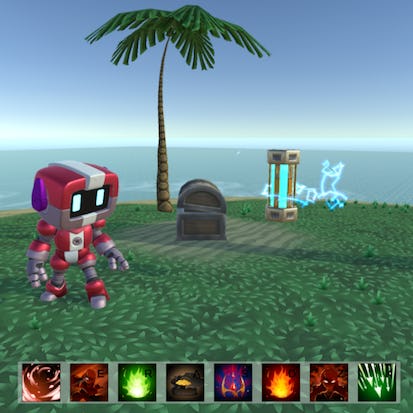
Action bars are ubiquitous in gaming, from Diablo to League of Legends to Valorant, it has become the staple user interface for games that offer players multiple abilities and consumable items. In this one-hour, project-based course, you'll learn how to create an action bar from scratch. You'll learn how to set up the UI elements to create the action bar and its buttons, code a modular and versatile Action system and wire up a cooldown effect on your buttons. The guided project will introduce you to the following Unity concepts: - UI Toolkit - C# coding techniques including Inheritance. This is Part 1 of a 2-part series on creating an action bar for a Unity game. Part 2 covers adding appealing visual effects to the action bar and buttons, to give your game some "bling." This series makes use of the tropical island-themed Unity project first used in Create Animation Transitions in Unity (Intro to Animation 2). This compliments this guided project and, although not a prerequisite, is recommended for a more well-rounded understanding of the concepts presented herein.Auto Summary
Unlock the secrets of gaming interfaces with "Make an Action Bar in Unity Part 1 - Modular Action System." This engaging course dives into the creation of a versatile action bar, a crucial element seen in popular games like Diablo, League of Legends, and Valorant. Ideal for those interested in game development and personal development, this one-hour, project-based learning experience is designed to teach you how to set up UI elements and buttons, code a flexible Action system, and implement cooldown effects. Guided by Coursera, the course covers essential Unity concepts such as the UI Toolkit and C# coding techniques, including Inheritance. As the first installment in a two-part series, it lays the groundwork for further exploration into adding visual effects to enhance your game's user interface. Perfect for beginners, this foundational course utilizes a tropical island-themed Unity project, enriching your learning experience. Although prior knowledge from "Create Animation Transitions in Unity (Intro to Animation 2)" is beneficial, it is not mandatory. With a duration of 120 minutes, this course is available through a Starter subscription, making it accessible for those eager to develop their skills in game development. Whether you're a budding game designer or an enthusiast looking to expand your knowledge, this course offers a comprehensive introduction to creating dynamic action bars in Unity.

Creating a Visual Tasks Guide with Microsoft PowerPoint
By the end of this project, you will have created a Visual Tasks Guide to use with your students. As teachers, we are always looking for ways to help our students grow. For students with special needs or students who need organizational support, completing tasks in the correct order can be a challenge. By providing a visual guide, students are able to gain independence as they practice tasks such as dressing for the weather or getting ready for school.
Buy Now Free
- Level Foundation
- المدة 3 ساعات hours
- الطبع بواسطة Coursera
-
Offered by
عن
By the end of this project, you will have created a Visual Tasks Guide to use with your students. As teachers, we are always looking for ways to help our students grow. For students with special needs or students who need organizational support, completing tasks in the correct order can be a challenge. By providing a visual guide, students are able to gain independence as they practice tasks such as dressing for the weather or getting ready for school.الوحدات
Your Learning Journey
-
1
Readings
-
1
Plugin
-
 1
Lab
1
Lab
-
1
Assignment
1
Assignment
- Assess Your Knowledge
1
Labs
- Creating a Visual Tasks Guide with Microsoft PowerPoint
1
Readings
- Project Overview
Auto Summary
Create a Visual Tasks Guide with Microsoft PowerPoint in this foundational, 120-minute course on Coursera. Ideal for teachers, especially those working with special needs students, you will learn to design guides that help students complete tasks independently. Perfect for those seeking organizational support strategies. Available with a Starter subscription.
Buy Now Free
- Level Foundation
- المدة 1 ساعات hours
-
Offered by
عن
By the end of this project, you will have taken your Seesaw skills to the next level. This project is meant for those who have already started to use Seesaw with their students and are looking for ways to enhance student learning through Seesaw Activities. If you are looking for ways to engage your tech-savvy students, regardless of their age, Seesaw is a wonderful tool to use. As we learn together, you will create a Scratch and Read activity template in Microsoft PowerPoint that can be customized to use with your students right away as a Seesaw Activity.Auto Summary
Elevate your Seesaw skills and enhance student engagement with the "Building Scratch and Read Activities with Seesaw" course. Ideal for educators who are already familiar with Seesaw and seek innovative ways to integrate technology into their teaching, this course will guide you in creating interactive Scratch and Read activity templates using Microsoft PowerPoint. Offered by Coursera, this foundational-level course focuses on personal development, providing practical tools to captivate tech-savvy students of any age. With a concise duration of just one hour, this course is perfect for busy educators looking to quickly implement new strategies. Available through the Starter subscription, it’s an excellent opportunity to expand your instructional toolkit and make learning more dynamic and engaging.
Buy Now Free

- Level Foundation
- المدة 3 ساعات hours
-
Offered by
عن
In this one-hour, project-based course, you'll learn different techniques for creating gore visual effects for your Unity game. You'll learn how to import and configure premade assets, create animations and write C# code to implement the visual effects in your game. The guided project will introduce you to the following Unity concepts: -UI Images -Particle Effects -Projectors -Prefabs This course makes use of the western-themed Unity project created in Create an FPS Weapon Part 1, Part 2, Part 3 and Part 4. These compliment this guided project and, although not prerequisites, are recommended for a more well-rounded understanding of the concepts presented herein. Note: This course works best for learners who are based in the North America region. We’re currently working on providing the same experience in other regions.Auto Summary
Enhance your Unity game with gore visual effects in this beginner-friendly, one-hour project-based course. Taught by Coursera, it covers essential techniques to add realistic gore to your game. Free subscription available. Perfect for aspiring game developers looking to improve their skills.
Buy Now Free
- Level Foundation
- المدة 2 ساعات hours
-
Offered by
عن
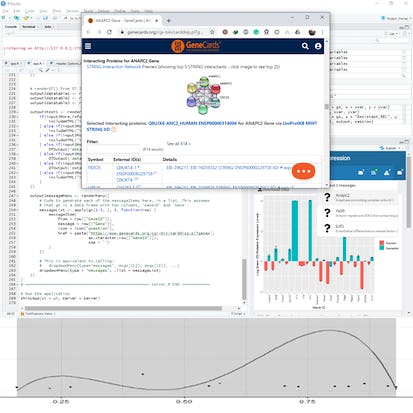
In this project-based course, you will create a Shiny app to plot gene expression data (Real-Time PCR) from a published manuscript. You will build the Shiny app from scratch and handle every component of Shiny. The project covers data processing and collecting feedback from the user to build and finetune the output. In this course, we will be concerned with the optimal use of inputs and outputs. Instead of building a lot of inputs and outputs, we will use a limited number of components and recycle some even seven times for different purposes.Auto Summary
Elevate your skills in data visualization and gene expression analysis with the engaging and practical course, "Using Shiny to Plot Differential Gene Expression." This beginner-friendly, project-based course is designed to guide you through the creation of a Shiny app that visualizes gene expression data, specifically Real-Time PCR data from a published manuscript. Offered by Coursera, this 120-minute course is perfect for those looking to enhance their personal development in the bioinformatics domain. Best of all, it's available for free, making it an accessible and valuable resource for anyone interested in learning how to effectively use Shiny for biological data analysis. Whether you're a student, researcher, or enthusiast, this course provides a solid foundation to kickstart your journey into the fascinating world of gene expression visualization.
Buy Now Free
- Level Foundation
- المدة 2 ساعات hours
-
Offered by
عن
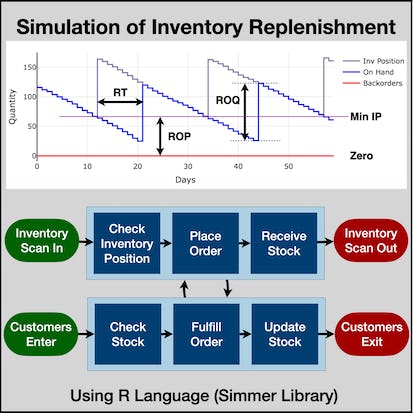
By the end of this project, you will gain introductiory knowledge of Discrete Event Simulation, Inventory Replenishment, be able to use R Studio and Simmer library, create statistical variables required for simulation, define process trajectory, define and assign resources, define arrivals (eg. incoming customers / work units), run simulation in R, store results in data frames, plot charts and interpret the results.Auto Summary
This beginner-level course, "Simulation of Inventory Replenishment Using R Simmer," offered by Coursera, provides an introduction to Discrete Event Simulation and Inventory Replenishment. Over 120 minutes, learners will use R Studio and the Simmer library to create statistical variables, define process trajectories, assign resources, and manage arrivals. Ideal for those in personal development, the course is free and designed for beginners.