


Get Up and Running with TypeScript
In this 1.5 hour class you will learn about TypeScript and start writing code that compile to JavaScript. You will also debug a small JavaScript webpage using TypeScript. At the end of this class you will have everything you need to start using TypeScript! Required: Basic to Intermediate JavaScript
Buy Now Free

- Level Foundation
- المدة 3 ساعات hours
- الطبع بواسطة Coursera
-
Offered by

عن
In this 1.5 hour class you will learn about TypeScript and start writing code that compile to JavaScript. You will also debug a small JavaScript webpage using TypeScript. At the end of this class you will have everything you need to start using TypeScript! Required: Basic to Intermediate JavaScriptالوحدات
Practical Application via Rhyme
-
 1
Readings
1
Readings
-
 1
Plugin
1
Plugin
-
 1
Lab
1
Lab
-
 1
Assignment
1
Assignment
 1
Assignment
1
Assignment
- Graded Quiz: Test Your Knowledge of TypeScript
 1
Labs
1
Labs
- Get Up and Running with TypeScript
1
Readings
- Project-based Course Overview
Auto Summary
Discover the essentials of TypeScript in this engaging and concise 1.5-hour course designed for those with a foundational understanding of JavaScript. Offered by Coursera, this course delves into the basics of TypeScript, guiding you through writing and compiling code into JavaScript. You will also gain practical experience by debugging a small JavaScript webpage using TypeScript. By the end of the course, you'll be equipped with the knowledge and skills to confidently start using TypeScript in your projects. Available under the Starter subscription, this course is perfect for learners looking to enhance their programming toolkit with TypeScript.

Comparative Research Designs and Methods
Emile Durkheim, one of the founders of modern empirical social science, once stated that the comparative method is the only one that suits the social sciences. But Descartes already had reminded us that “comparaison n’est pas raison”, which means that comparison is not reason (or theory) by itself. This course provides an introduction and overview of systematic comparative analyses in the social sciences and shows how to employ this method for constructive explanation and theory building.
Monthly Subscription Starting at AED 99 + VAT

- Level Foundation
- المدة 10 ساعات hours
- الطبع بواسطة Università di Napoli Federico II
-
Offered by
عن
Emile Durkheim, one of the founders of modern empirical social science, once stated that the comparative method is the only one that suits the social sciences. But Descartes already had reminded us that “comparaison n’est pas raison”, which means that comparison is not reason (or theory) by itself. This course provides an introduction and overview of systematic comparative analyses in the social sciences and shows how to employ this method for constructive explanation and theory building. It begins with comparisons of very few cases and specific “most similar” and “most different” research designs. A major part is then devoted to the often occurring situation of dealing with a small number of highly complex cases, for example when comparing EU member states. Latin American political systems, or particular policy areas. In response to this complexity, new approaches and software have been developed in recent years (“Qualitative Comparative Analysis”, QCA, and related methods). These procedures are able to reduce complexity and to arrive at “configurational” solutions based on set theory and Boolean algebra, which are more meaningful in this context than the usual broad-based statistical methods. In the last section, these methods are contrasted with more common statistical comparative methods at the macro-level of states or societies and the respective strengths and weaknesses are discussed. Some basic quantitative or qualitative methodological training is probably useful to get more out of the course, but participants with little methodological training should find no major obstacles to follow.
الوحدات
Epistemological foundations of the social sciences
-
 3
Videos
3
Videos
-
6
Readings
-
1
Assignment
1
Assignment
- Challenge yourself: Epistemological foundations of the social sciences
3
Videos
- Multi-dimensional substance matter
- The plastic matter of social sciences
- Linking levels of analysis
6
Readings
- Three Fundamental notions
- Multi-dimensional substance matter
- The plastic matter of social sciences
- Qualitative Comparative Analysis
- Linking levels of analysis
- Coleman's "bathtub"
Mill‘s canons
-
3
Videos
-
4
Readings
-
1
Assignment
1
Assignment
- Challenge yourself: Mill's canon
3
Videos
- Mill's canons
- Mill‘s methods: Pop's Seafood Platter
- Mill's methods: limitations
4
Readings
- Mill's canons
- Pop's Seafood Platter
- Mill's limitations
- Mill's methods and recent advances
Further Advances, Comparative Research Designs
-
3
Videos
-
3
Readings
-
1
Assignment
1
Assignment
- Challenge yourself: Further Advances, Comparative Research Designs
3
Videos
- Further advances
- Overview
- Major steps of research process
3
Readings
- Further advances
- Overview of comparative research designs
- Major steps of research process
Most similar and most different designs. Matching and contrasting of cases
-
3
Videos
-
3
Readings
-
1
Assignment
1
Assignment
- Challenge yourself: Most similar and most different designs
3
Videos
- MSDO/MDSO application
- Operationalizing similarities and dissimilarities
- Analysis and interpretation
3
Readings
- Selection of variables and cases
- Operationalizing similarities and dissimilarities
- Analysis and interpretation
Introduction to Boolean Algebra, main steps of QCA
-
3
Videos
-
4
Readings
-
1
Assignment
1
Assignment
- Challenge yourself: Introduction to Boolean Algebra, main steps of QCA
3
Videos
- QCA Basics
- QCA Analysis
- Simple paper and pencil example
4
Readings
- QCA Basics
- QCA Analysis pt.1
- QCA Analysis pt.2
- Simple paper and pencil example
QCA applications, troubleshooting, Multi-Value QCA (mv-QCA)
-
3
Videos
-
3
Readings
-
1
Assignment
1
Assignment
- Challenge yourself: QCA applications, troubleshooting, Multi-Value QCA (mv-QCA)
3
Videos
- Troubleshooting Contradictions
- Threshold setting, necessary and sufficient conditions
- Multi-Value QCA (mv-QCA)
3
Readings
- Troubleshooting Contradictions (C)
- Threshold setting, necessary and sufficient conditions
- Multi-Value QCA (mv-QCA)
Fuzzy set analyses, basic features
-
3
Videos
-
3
Readings
-
1
Assignment
1
Assignment
- Challenge yourself: Fuzzy set analyses, basic features
3
Videos
- Fuzzy sets
- Calculation of necessary and sufficient conditions
- Fuzzy sets. Relationship between condition and outcome as in a triangular scatterplot
3
Readings
- Fuzzy sets
- Calculation of necessary and sufficient conditions
- Fuzzy sets. Relationship between condition and outcome as in a triangular scatterplot
Fuzzy set applications (FS/QCA)
-
3
Videos
-
4
Readings
-
1
Assignment
1
Assignment
- Challenge yourself: Fuzzy set applications (fs/qca)
3
Videos
- Principles
- Lipset's conditions
- Conclusions
4
Readings
- Principles
- Cases
- Examples
- Conclusions
Macro-quantitative (statistical) methods and regression analysis
-
3
Videos
-
3
Readings
-
1
Assignment
1
Assignment
- Challenge yourself: Macro-quantitative (statistical) Methods
3
Videos
- Data
- Examples
- Regression analysis
3
Readings
- Data
- Examples
- Regression analysis
Conclusions and Perspectives
-
3
Videos
-
3
Readings
-
1
Assignment
1
Assignment
- Challenge yourself: Conclusions and Perspectives
3
Videos
- Summary
- Contrasting macro qualitative and quantitative methods
- Continuing debates: prospects
3
Readings
- Summary
- Contrasting macro qualitative and quantitative methods
- Continuing debates, prospects
Auto Summary
Explore the foundations of Comparative Research Designs and Methods with this engaging course focused on systematic comparative analyses in social sciences. Guided by expert instructors, delve into “most similar” and “most different” research designs, tackle complex cases, and learn innovative approaches like Qualitative Comparative Analysis (QCA). Perfect for learners with basic methodological training, the course offers a comprehensive 600-minute duration with subscription options like Starter and Professional. Ideal for those seeking to build constructive explanations and theories in personal development within social sciences.
Buy Now Free

- Level Professional
- المدة 2 ساعات hours
-
Offered by
عن
In this 1-hour long project-based course, you will learn how to use Average Daily Traded Volume and Share Turnover to measure liquidity, use Depth of Market (DOM) and Bid-Ask Spread to compare liquidity, and use Variance Ratio to quantify liquidity. Note: This course works best for learners who are based in the North America region. We're currently working on providing the same experience in other regions. This course's content is not intended to be investment advice and does not constitute an offer to perform any operations in the regulated or unregulated financial market.Auto Summary
Discover "Measuring Stock Liquidity," a 1-hour project-based course by Coursera focused on personal development. Learn key techniques like Average Daily Traded Volume, Share Turnover, Depth of Market, Bid-Ask Spread, and Variance Ratio to evaluate stock liquidity. Ideal for professionals, especially in North America, this course offers practical knowledge without providing investment advice. Available with a Starter subscription.
Buy Now Free
- Level Professional
- المدة 3 ساعات hours
-
Offered by
عن
In this 1.5 hours project-based course, you will complete and improve a mini airline reservation application and learn more advanced concepts of Kotlin such as higher order functions, lambda expressions, infix notation, Java interoperability, and many more. At the end of the class you will have a deepened understanding of Kotlin.Auto Summary
Enhance your Kotlin skills with this 1.5-hour project-based course focused on developing a mini airline reservation application. Dive into advanced Kotlin concepts like higher-order functions, lambda expressions, infix notation, and Java interoperability. Designed for intermediate learners, the course offers a hands-on approach to mastering these techniques. Available for free on Coursera, guided by experienced instructors, this course is ideal for those looking to elevate their programming expertise in personal development.
Simple Parallel Coordinates Plot using d3 js
Throughout this guided project we are going to create a simple Parallel Coordinates Plot (PCP) using d3 js. PCP is one of the most common data visualization techniques used to visualize high-dimensional datasets. In this guided project you will create a simple PCP step by step. We will also cover some important topics in data visualization such as Linear and Ordinal scaling to best visualize our data. Having the knowledge of javascript programming language and the basics of d3 js are the two most important prerequisites to get the most out of this guided project.
Buy Now Free

- Level Professional
- المدة 3 ساعات hours
- الطبع بواسطة Coursera
-
Offered by
عن
Throughout this guided project we are going to create a simple Parallel Coordinates Plot (PCP) using d3 js. PCP is one of the most common data visualization techniques used to visualize high-dimensional datasets. In this guided project you will create a simple PCP step by step. We will also cover some important topics in data visualization such as Linear and Ordinal scaling to best visualize our data. Having the knowledge of javascript programming language and the basics of d3 js are the two most important prerequisites to get the most out of this guided project.الوحدات
Your Learning Journey
-
1
Readings
-
1
Plugin
-
1
Lab
-
1
Assignment
1
Assignment
- Assess Your Knowledge
1
Labs
- Simple Parallel Coordinates Plot using d3 js
1
Readings
- Project Overview
Auto Summary
Discover how to create a simple Parallel Coordinates Plot using d3 js in this engaging guided project. Ideal for learners with intermediate knowledge in JavaScript and d3 js, the course dives into visualizing high-dimensional datasets and covers essential data visualization techniques such as Linear and Ordinal scaling. Offered by Coursera, this 180-minute project is available for free and caters to those looking to enhance their personal development skills.
Monthly Subscription Starting at AED 99 + VAT

- Level Professional
- المدة 21 ساعات hours
-
Offered by
عن
Creative Artifacts explores how different tools and structures can be used to increase creativity through a multidisciplinary lens. You will see how renowned artists use machine learning to expand their creative capacities, and you will gain experience collaborating with creative AI tools yourself. On a macro scale, you will examine the business strategies and economic policies that make organizations and regions more creative. As you progress, you will reflect on how these tools and structures can enhance your creativity and how they might impact the larger society. Throughout the course, you will manage your own design research project and gain new insights that can translate into actionable, innovative business initiatives.Auto Summary
"Creative Artifacts" is a professional-level course on Coursera focused on enhancing creativity through multidisciplinary tools and structures. Led by renowned artists utilizing machine learning, the course delves into business strategies and economic policies fostering creativity. Learners will engage with creative AI tools and manage a design research project, translating insights into innovative business initiatives. Available subscription options include Starter and Professional. Ideal for individuals aiming to boost their creative and strategic capacities.

Perspective-Taking
You can plan what you want to accomplish, but other people will always be a factor. Planning for the actions of others can’t be taken lightly. You need to understand what people want, but you also need to have your influence on the conversation. Ultimately, you can use this knowledge to plan for each scenario. With the expertise of Dr. Timiebi Aganaba from the ASU School for the Future of Innovation in Society, the Perspective-Taking course will put the tools, knowledge and strategies of strategic conversation directly into your hands.
Monthly Subscription Starting at AED 99 + VAT

- Level Foundation
- المدة 6 ساعات hours
- الطبع بواسطة Arizona State University
-
Offered by
عن
You can plan what you want to accomplish, but other people will always be a factor. Planning for the actions of others can’t be taken lightly. You need to understand what people want, but you also need to have your influence on the conversation. Ultimately, you can use this knowledge to plan for each scenario. With the expertise of Dr. Timiebi Aganaba from the ASU School for the Future of Innovation in Society, the Perspective-Taking course will put the tools, knowledge and strategies of strategic conversation directly into your hands. You’ll learn the fundamentals and get acquainted with your influencing toolkit. Then, you’ll directly apply them in hands-on scenarios. Perspective-taking has much to do with hearing people out to understand what motivates them. When you understand this, you can start to recognize the logic they use in their own actions. As you recognize and model your strategies according to your own goals, you can also establish influence in conversations. By doing all this, you learn to understand the other party, determine what their strategy is and approach them with what you want in a clear way — all skills that anyone can learn and apply anywhere. Jump-start your perspective-taking journey today!الوحدات
Welcome to Perspective-Taking!
-
1
Readings
-
2
Plugin
1
Readings
- Welcome to Perspective-Taking!
Listening for others' perspectives
-
3
Readings
-
1
Discussion
-
1
PeerReview
-
3
Plugin
1
Peer Review
- Apply the solution: Using disciplined listening to establish empathy
1
Discussions
- Reflect on the solution: Listening for others' perspectives
3
Readings
- Practice the solution: Disciplined listening
- Infographic: The ladder of inference
- Taking others into consideration: Key Takeaways
Using your influence to make appeals
-
3
Readings
-
1
Discussion
-
1
PeerReview
-
3
Plugin
1
Peer Review
- Apply the solution: Encouraging changes in behavior or decisions
1
Discussions
- Reflect on the solution: Using your influence to make appeals
3
Readings
- Practice the solution: Appealing to another’s perspective
- Infographic: Asserting control over your calendar
- Building a sense of understanding: Key Takeaways
Discovering options with logic models
-
3
Readings
-
1
Discussion
-
1
PeerReview
-
3
Plugin
1
Peer Review
- Apply the solution: Discovering options with logic models
1
Discussions
- Reflect on the solution: Discovering options with logic models
3
Readings
- Practice the solution: Evaluate a situation using game theory
- Infographic: Tactics for overcoming disadvantages
- Thinking in someone else’s shoes: Key Takeaways
Course Conclusion
-
1
Readings
-
1
Plugin
1
Readings
- Final Thoughts
Auto Summary
Enhance your strategic conversation skills with the Perspective-Taking course, led by Dr. Timiebi Aganaba from ASU’s School for the Future of Innovation in Society. This foundational personal development course offers 360 minutes of engaging content, focusing on understanding and influencing others. Through hands-on scenarios, you'll master tools and strategies to recognize others' motivations and effectively communicate your goals. Available on Coursera with Starter and Professional subscription options, this course is ideal for anyone looking to improve their interpersonal skills and influence in conversations. Start your journey today!

Sensory Science: Measuring the Senses
The brain is the most sophisticated sensory interpreter that we know of. Our brain is like a very powerful computer, but no engineered computer exists that can mimic our human sensory capabilities. This course will explore sensory science by examining how the senses are connected to the brain and how the brain makes meaning of the signals it receives. Various types of testing, scales, and measurements are described that allow scientists to quantify senses and the brain’s experience of senses.
Monthly Subscription Starting at AED 99 + VAT

- Level Foundation
- المدة 12 ساعات hours
- الطبع بواسطة University of California, Davis
-
Offered by
عن
The brain is the most sophisticated sensory interpreter that we know of. Our brain is like a very powerful computer, but no engineered computer exists that can mimic our human sensory capabilities. This course will explore sensory science by examining how the senses are connected to the brain and how the brain makes meaning of the signals it receives. Various types of testing, scales, and measurements are described that allow scientists to quantify senses and the brain’s experience of senses. Through this course, you will learn to employ scientific approaches such as discrimination testing and Thurstonian Modeling to measure the senses.الوحدات
Getting Started
-
1
Videos
-
1
Readings
-
1
Discussion
1
Discussions
- Learning Goals
1
Videos
- Course Introduction
1
Readings
- A Note from UC Davis
The Senses and the Brain
-
6
Videos
6
Videos
- Module Introduction
- Tricks: The Senses and the Brain, Part 1
- Tricks: The Senses and the Brain, Part 2
- The Mind
- Basic Unit of Sensory Systems: The Neuron
- Theory of Sensory Measurements/Psychophysics
Additional Resources
-
1
Readings
-
1
Discussion
1
Discussions
- (Optional Forum) Podcast: Dr. Martin Kern
1
Readings
- (Optional) Podcast: A Conversation with Dr. Martin Kern
Review
-
1
Discussion
-
1
Assignment
1
Assignment
- Module 1 Quiz
1
Discussions
- Senses and the Brain
Scaling
-
5
Videos
5
Videos
- Module Introduction
- Purpose of Scaling and Criteria for Scale Choice
- Different Types of Scales
- Ordinal Scales
- Quantitative Scales, Interval Scales and Analysis
Review
-
1
Assignment
1
Assignment
- Module 2 Quiz
Methods of Scaling
-
5
Videos
5
Videos
- Methods of Scaling and Ranking: Ratio Scales
- Hedonic Scales: The 9-Point Hedonic Scale
- Hedonic Scales: Testing with Children
- Labeled Affective Magnitude (LAM) and Just-About-Right (JAR) Scales
- Check-All-That-Apply and Other Scales of Interest
Additional Resources
-
4
Readings
4
Readings
- A Labeled Affective Magnitude (LAM) Scale for Assessing Food Like/Disliking
- A Food Action Rating Scale for Measuring Food Acceptance
- Appropriateness of the Cognitive-Contextual Aspects of Food Acceptance
- A Comparison of Sensory Difference Testing Procedures
Review
-
1
Discussion
-
1
Assignment
1
Assignment
- Module 3 Quiz
1
Discussions
- Acceptance Testing
Discrimination Theory and Testing Methods
-
6
Videos
6
Videos
- Module Introduction
- Overview of Discrimination Testing Methods
- A Closer Look at Discrimination Tests
- Response Bias and How to Avoid It
- Why People Perform Better on Some Tests Than Others
- Thurstonian Modeling
Additional Resources
-
3
Readings
-
1
Discussion
1
Discussions
- (Optional Forum) Podcast: Lori Rothman
3
Readings
- (Optional) Podcast: A Conversation with Lori Rothman
- Relative Power of Difference Testing Methods in Sensory Evaluation
- Quantification of Sensory and Food Quality: The R-Index Analysis
Review
-
1
Discussion
-
1
Assignment
1
Assignment
- Module 4 Quiz
1
Discussions
- Discrimination Testing
Course Summary
-
1
Videos
-
1
Discussion
1
Discussions
- Self-Reflection
1
Videos
- Course Summary
Auto Summary
Explore the fascinating field of sensory science with "Sensory Science: Measuring the Senses." This foundational course delves into how our brain interprets sensory signals, utilizing scientific methods like discrimination testing and Thurstonian Modeling. Ideal for personal development, it spans 720 minutes and offers subscription options for Starter and Professional levels. Taught by Coursera, it's perfect for those interested in understanding and quantifying sensory experiences.
Buy Now Free
- Level Foundation
- المدة 3 ساعات hours
-
Offered by
عن
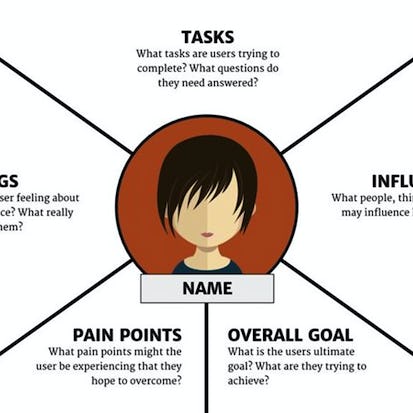
By the end of this project, you will be able to use applied empathy to visualize and understand the authentic user experience and customer needs that have yet to be met. To do this, you will gain hands-on experience applying design thinking, empathy, and context from the customer journey to create an empathy map in the Miro online visual collaboration platform for teamwork. Note: This course works best for learners who are based in the North America region. We’re currently working on providing the same experience in other regions.Auto Summary
Discover how to use empathy mapping to enhance user experiences with this beginner-friendly course in Personal Development. Led by Coursera, you'll learn to visualize and understand unmet customer needs in just 180 minutes. Access is free, making it an ideal choice for anyone looking to develop applied empathy skills.

Data Collection: Online, Telephone and Face-to-face
This course presents research conducted to increase our understanding of how data collection decisions affect survey errors.
Monthly Subscription Starting at AED 99 + VAT
- Level Foundation
- المدة 21 ساعات hours
- الطبع بواسطة University of Michigan
-
Offered by
عن
This course presents research conducted to increase our understanding of how data collection decisions affect survey errors. This is not a “how–to-do-it” course on data collection, but instead reviews the literature on survey design decisions and data quality in order to sensitize learners to how alternative survey designs might impact the data obtained from those surveys. The course reviews a range of survey data collection methods that are both interview-based (face-to-face and telephone) and self-administered (paper questionnaires that are mailed and those that are implemented online, i.e. as web surveys). Mixed mode designs are also covered as well as several hybrid modes for collecting sensitive information e.g., self-administering the sensitive questions in what is otherwise a face-to-face interview. The course also covers newer methods such as mobile web and SMS (text message) interviews, and examines alternative data sources such as social media. It concentrates on the impact these techniques have on the quality of survey data, including error from measurement, nonresponse, and coverage, and assesses the tradeoffs between these error sources when researchers choose a mode or survey design.الوحدات
1.1 What this course is … and is not
-
1
Videos
-
4
Readings
1
Videos
- 1.1 What this course is … and is not
4
Readings
- Module 1 Overview
- Help us learn more about you!
- Module 1 Required Readings
- Module 1 Lecture Slides
1.2 Survey Error
-
3
Videos
-
1
Discussion
1
Discussions
- Survey Error
3
Videos
- 1.2.1 Introduction to Survey Errors
- 1.2.2 Variable Error and Bias
- 1.2.3 Total Survey Error
1.3 Survey Mode
-
2
Videos
2
Videos
- 1.3.1 What do we mean by “mode?”
- 1.3.2 Mode Choice (by respondent)
1.4 Mixed Mode Surveys
-
4
Videos
4
Videos
- 1.4.1 Mixed Mode Design
- 1.4.2 Concurrent Mixed Mode
- 1.4.3 Sequential (Follow-up) Mixed Mode
- 1.4.4 Interview with David Weir (U. Michigan) on Mixed Mode Designs
1.5 Nonresponse
-
2
Videos
2
Videos
- 1.5.1 Response Rates
- 1.5.2 Nonresponse Error
Module 1 Quiz
-
1
Readings
-
 1
Quiz
1
Quiz
1
Readings
- Notice for Auditing Learners: Assignment Submission
1
Quiz
- Module 1: Classic Modes of Data Collection
Lesson 2.1 Automated Self-Administration
-
2
Videos
-
3
Readings
2
Videos
- 2.1.1 Modes (interviewer- and self-administered), CASI, ACASI
- 2.1.2 ACASI continued
3
Readings
- Module 2 Overview
- Module 2 Required Readings
- Module 2 Lecture Slides
2.2 Online data collection
-
3
Videos
3
Videos
- 2.2.1 Coverage
- 2.2.2 Nonresponse
- 2.2.3 Measurement
2.3 Interactivity and Web Surveys
-
3
Videos
3
Videos
- 2.3.1 Progress Indicators, Running Tallies
- 2.3.2 Online Definitions
- 2.3.3 Speeding Interventions
2.4: Interview with Reg Baker
-
1
Videos
1
Videos
- 2.4 Reg Baker (MRII) about web surveys in market research
Module 2 Quiz
-
1
Discussion
-
1
Quiz
1
Discussions
- Modes
1
Quiz
- Quiz Two
3.1 Interviewers impact on participation and sampling
-
3
Videos
-
3
Readings
3
Videos
- 3.1.1 Interviewer Roles, Obtaining Interviews
- 3.1.2 Respondent selection, Within Household Sampling
- 3.1.3 Proxy Responding
3
Readings
- Module 3 Overview
- Module 3 Required Readings
- Module 3 Lecture Slides
3.2 Interviewing Technique
-
3
Videos
-
1
Discussion
1
Discussions
- Standardization Debate
3
Videos
- 3.2.1 Standardization Debate: Wording vs. Meaning
- 3.2.2 Different approaches to standardized interviewing
- 3.2.3 Personal vs. Formal Style, I-R Rapport
3.3 Interviewer effects
-
2
Videos
2
Videos
- 3.3.1 Variance: Interviewer Behavior
- 3.3.2 Bias: Interviewers’ Fixed Attributes
3.4 Interview with Nora Cate Schaeffer
-
1
Videos
1
Videos
- 3.4 Interview with Nora Cate Schaeffer (UW) about recruitment and interviewing
Module 3 Quiz
-
1
Quiz
1
Quiz
- Quiz Three
4.1 Emerging Modes
-
4
Videos
-
3
Readings
4
Videos
- 4.1.1 New Modes, New Data
- 4.1.2 Mobile Web Surveys
- 4.1.3 Text Message Surveys
- 4.1.4 Text vs. Voice Interviews
3
Readings
- Module 4 Overview
- Module 4 Required Readings
- Module 4 Lecture Slides
4.2 Administrative Records
-
3
Videos
3
Videos
- 4.2.1 Record linkage: statistical issues
- 4.2.2 Record linkage: Techniques
- 4.2.3 Record linkage: informed consent and ethical issues
4.3 Big Data and Social Media
-
4
Videos
-
1
Discussion
1
Discussions
- Social Media and Survey Methods
4
Videos
- 4.3.1 Uses of Big Data, Sensing Technology, Social Media Content as Data
- 4.3.2 Social media applications: Measuring Mood and Depression
- 4.3.3 Social Media and Population Estimates: Successes
- 4.3.4 Why does social media content align with surveys data sometimes and not other times?
4.4 Interview with Aigul Mavletova
-
1
Videos
1
Videos
- 4.4 Interview with Aigul Mavletova (National Research University Higher School of Economics, Mosow) on mobile web surveys
Module 4 Quiz
-
1
Quiz
1
Quiz
- Module 4: Emerging modes, new data sources
Final Exam
-
2
Readings
-
1
Quiz
2
Readings
- Post-course Survey
- Keep Learning with Michigan Online
1
Quiz
- Final Exam
Auto Summary
Delve into the intricacies of survey data collection with this foundational course on Coursera, ideal for personal development. Presented by experts, the course explores how different survey methods—online, telephone, face-to-face, and more—impact data quality. Spanning 1260 minutes, it examines interview-based and self-administered techniques, mixed modes, and newer methods like SMS interviews. Perfect for those looking to understand the tradeoffs in survey design, this course emphasizes the effects on survey errors, measurement, and nonresponse. Available with a Starter subscription.