


International Water Law
In recent decades, international law has undergone a series of major developments in order to accommodate the many new facets of freshwater management and protection. The adoption of universal, regional and basin instruments highlights how important it is to study the evolution of international water regulations and to be able to identify the main principles in this field. This course aims to provide the necessary background to understand and examine the regulation applicable to transboundary freshwaters especially to rivers, lakes and aquifers.
Monthly Subscription Starting at AED 99 + VAT

- Level Professional
- المدة 10 ساعات hours
- الطبع بواسطة University of Geneva
-
Offered by

عن
In recent decades, international law has undergone a series of major developments in order to accommodate the many new facets of freshwater management and protection. The adoption of universal, regional and basin instruments highlights how important it is to study the evolution of international water regulations and to be able to identify the main principles in this field. This course aims to provide the necessary background to understand and examine the regulation applicable to transboundary freshwaters especially to rivers, lakes and aquifers. It presents the principles and legal standards that govern the use, sharing, management and protection of these resources. The MOOC is made up of 5 modules. As each module addresses a different theme, they can be viewed in any order. However, the modules do follow a certain pedagogical logic and following in order will be especially helpful to those who are new to the subject. Each module is accompanied by an evaluation questionnaire or quiz. A certificate will be awarded to students who obtain an average of at least 80% in the quizzes. By the end of this course, you will be able to: 1) Describe the issues related to the regulation of transboundary freshwaters; 2) Explain how transboundary freshwater regulations have evolved; 3) Recall and interpret the key principles governing water resource regulation; 4) Understand the role of transboundary freshwater dispute settlement mechanisms in the development of international freshwater law (or to understand the role of international courts and tribunals in the resolution of conflicts) This MOOC was developed by the Platform for International Freshwater Law that is part of the Geneva Water Hub, assisted by the MOOC Team of the University of Geneva. Alongside the researchers and teachers of the Platform, several international experts have also participated. This MOOC is one of three courses supported by the Water Hub Geneva and the University of Geneva. The other MOOCS are "Water Management and Policy" (www.coursera.org/learn/gestioneau) and "Ecosystem Services: a method for sustainable development "(www.coursera.org/learn/ecosystem-services). The Global Water Program of the Swiss Agency for Development and Cooperation (SDC) has funded this course. This MOOC was originally created in French. It has English subtitles.الوحدات
1.0 General Introduction
-
 2
Videos
2
Videos
2
Videos
- 1.0 General Introduction - Professor Laurence Boisson de Chazournes, Faculty of Law, University of Geneva
- Copy of 1.0 General Introduction - Professor Laurence Boisson de Chazournes, Faculty of Law, University of Geneva
1.1 Introduction of module 1
-
1
Videos
-
 2
Readings
2
Readings
1
Videos
- 1.1 Introduction - Dr Komlan Sangbana and Dr Mara Tignino, Platform for International Water Law/Geneva Water Hub, University of Geneva
2
Readings
- Glossary
- Fundamental Legal Instruments
1.2 Challenges and Benefits of the Cooperation on Transboundary Water Resources
-
3
Videos
-
 1
Assignment
1
Assignment
 1
Assignment
1
Assignment
- Formative Assessment of the Lecture 1.2
3
Videos
- 1.2.1 Challenges in the Management and Protection of Transboundary Water Resources - Professor Laurence Boisson de Chazournes, Faculty of Law, University of Geneva
- 1.2.2. Transboundary Water Resources as a Possible Cause of Conflict - Dr Mara Tignino, Platform for International Water Law/Geneva Water Hub, University of Geneva
- 1.2.3. The Benefits of Cooperation on Transboundary Water Resources - Dr Komlan Sangbana, Platform for International Water Law/Geneva Water Hub, University of Geneva
1.3. Transboundary Water Resources and their Utilizations
-
3
Videos
-
 1
Discussion
1
Discussion
1
Discussions
- The Contribution of International Water Law to the Peaceful Management of Transboundary Water Resources
3
Videos
- 1.3.1. The Multiple Utilizations of Transboundary Water Resources - Professor Laurence Boisson de Chazournes, Faculty of Law, University of Geneva
- 1.3.2. The Characteristics of the Conflicts between Utilizations - Professor Makane Moïse Mbengue, Faculty of Law, Institute for Environmental Sciences, University of Geneva
- 1.3.3. Case Study : Conflict between Uses in the Uruguay River (Argentina/Uruguay) - Dr Mara Tignino, Platform for International Water Law/Geneva Water Hub, University of Geneva
1.4 Conclusion and quiz of module 1
-
1
Videos
-
1
Assignment
1
Assignment
- Quiz of module 1
1
Videos
- 1.4. Conclusion - Dr Komlan Sangbana and Dr Mara Tignino, Platform for International Water Law/Geneva Water Hub, University of Geneva
2.1 Introduction of Module 2
-
1
Videos
1
Videos
- 2.1 Introduction - Dr Komlan Sangbana, Platform for International Water Law/Geneva Water Hub, University of Geneva
2.2. The Codification of the Law Applicable on International Watercourses
-
4
Videos
-
1
Discussion
1
Discussions
- The Entry into Force of the Convention of 1997 and the Global Opening of the Convention of 1992
4
Videos
- 2.2.1. The Origin of Codification of the Law Applicable to International Watercourses - Interview with Professor Lucius Caflisch, Honorary Professor at the Graduate Institute of International and Development Studies and Former Member of the UN Intern
- 2.2.2. The Significance of the Entry into Force of the Convention on the Law of the Non-Navigational Uses of International Watercourses of 1997 - Professor Makane Moïse Mbengue, Faculty of Law, Institute for Environmental Sciences, University of Gen
- 2.2.3. The Contribution of the Convention on the Protection and Use of Transboundary Watercourses and International Lakes of 1992 to the Regulation of Transboundary Water Resources - Interview with Ms Francesca Bernardini, Secretary of the Convention
- 2.2.4. The Role of Civil Society in the Ratification Process of the United Nations Convention of 1997 - Interview with Ms Marie-Laure Vercambre, Director, Water for Life and Peace Programme, Green Cross International
2.3. The Case of Groundwater Resources
-
4
Videos
-
1
Assignment
1
Assignment
- Quiz of the Lesson 2.3
4
Videos
- 2.3.1. The Challenges Linked to the Regulation of Groundwater Resources - Ms Raya Stephan, Expert in Water Law, International Consultant
- 2.3.2. The Work of the International Law Commission on the Law of Transboundary Aquifers - Ms Raya Stephan, Expert in Water Law, International Consultant
- 2.3.3. The Specificities of the Law on Transboundary Aquifers - Ms Raya Stephan, Expert in Water Law, International Consultant
- 2.3.4. Case Study : The Genevese Transboundary Aquifer (Switzerland-France) - Interview with Dr Gabriel de Los Cobos - Expert, Hydrogeologist, Department of Geology, Soil and Waste (GESDEC), Canton of Geneva
2.4 Conclusion and Quiz of Module 2
-
1
Videos
-
1
Assignment
1
Assignment
- Quiz of Module 2
1
Videos
- 2.4. Conclusion - Dr Komlan Sangbana, Platform for International Water Law/Geneva Water Hub, University of Geneva
3.1. Introduction to Module 3
-
1
Videos
1
Videos
- 3.1. Introduction - Dr Mara Tignino, Platform for International Water Law/Geneva Water Hub, University of Geneva
3.2. The Principles Regulating the Sharing of Transboundary Water Resources
-
5
Videos
-
1
Discussion
1
Discussions
- The Relationship Between the Three Fundamental Principles Regulating the Sharing of Transboundary Water Resources
5
Videos
- 3.2.1a. The Key Principles of Water Sharing: the Principle of Equitable and Reasonable Utilization and the Obligation Not to Cause Significant Harm - Dr Mara Tignino, Platform for International Water Law/Geneva Water Hub, University of Geneva
- 3.2.1. The Relationship Between the Principle of Equitable and Reasonable Utilization and the Obligation Not to Cause Significant Harm - Interview with Professor Lucius Caflisch, Honorary Professor at the Graduate Institute of International and Devel
- 3.2.2. Cooperation Between Riparian States and the Notion of the Community of Interests and Rights - Professor Laurence Boisson de Chazournes, Faculty of Law, University of Geneva
- 3.2.3. The Forms of Cooperation - Dr Mara Tignino, Platform for International Water Law/Geneva Water Hub, University of Geneva
- 3.2.4. Case Study: The Experience of the Senegal River Basin Development Organization (OMVS) on the Sharing of Transboundary Water Resources - Professor Makane Moïse Mbengue, Faculty of Law, Institute for Environmental Sciences, University of Geneva
3.3 The Principles Regulating Planned Measures on Transboundary Water Resources
-
2
Videos
2
Videos
- 3.3.1. Aims and Modalities of the Obligation on Notification on Planned Measures - Professor Laurence Boisson de Chazournes, Faculty of Law, University of Geneva
- 3.3.2. Triggering and Conduct of the Procedures on Consultations and Negotiations in the Case of Planned Measures - Dr Komlan Sangbana, Platform for International Water Law/Geneva Water Hub, University of Geneva
3.4. Conclusion and quiz of module 3
-
1
Videos
-
1
Assignment
1
Assignment
- Quiz of module 3
1
Videos
- 3.4. Conclusion - Dr Komlan Sangbana, Platform for International Water Law/Geneva Water Hub, University of Geneva
4.1. Introduction of module 4
-
1
Videos
1
Videos
- 4.1. Introduction of Module 4 - Dr Mara Tignino, Platform for International Water Law/Geneva Water Hub, University of Geneva
4.2. Water and the protection of the environment
-
4
Videos
4
Videos
- 4.2.1. The Contribution of the Multilateral Environmental Agreements (MEAs) to the Protection and Management of Water Resources - Professor Laurence Boisson de Chazournes, Faculty of Law, University of Geneva
- 4.2.2. The Fight against the Pollution of Water Resources - Dr Komlan Sangbana, Platform for International Water Law/Geneva Water Hub, University of Geneva
- 4.2.3. Water and Climate Change - Dr Mara Tignino, Platform for International Water Law/Geneva Water Hub, University of Geneva
- 4.2.4. The Water Charters in Africa: An Innovative Instrument for the Protection of the Aquatic Environment - Professor Makane Moïse Mbengue, Faculty of Law, Institute for Environmental Sciences, University of Geneva
4.3. Water and the Rights of Individuals and Communities
-
2
Videos
-
1
Discussion
1
Discussions
- The Contemporary Elements of International Water Law
2
Videos
- Lecture 4.3.1 The Right to Water and Public Participation - Dr Mara Tignino, Platform for International Water Law/Geneva Water Hub, University of Geneva
- 4.3.2. Case Study: Public Participation in the Context of the International Joint Commission (Canada/United States) - Dr Komlan Sangbana, Platform for International Water Law/Geneva Water Hub, University of Geneva
4.4 Conclusion and quiz of module 4
-
1
Videos
-
1
Assignment
1
Assignment
- Quiz of Module 4
1
Videos
- 4.4. Conclusion - Dr Mara Tignino, Platform for International Water Law/Geneva Water Hub, University of Geneva
5.1. Introduction of Module 5
-
1
Videos
1
Videos
- 5.1. Introduction of Module 5 - Dr Mara Tignino and Dr Komlan Sangbana, Platform for International Water Law/Geneva Water Hub, University of Geneva
5.2 Means to Settlement Water-Related Disputes
-
2
Videos
2
Videos
- 5.2.1. The Variety of Diplomatic Means to Settle Water Disputes - Professor Laurence Boisson de Chazournes, Faculty of Law, University of Geneva
- 5.2.2. The Judicial Means to Settle Water Disputes - Professor Laurence Boisson de Chazournes, Faculty of Law, University of Geneva
5.3 The Settlement of Disputes in Practice
-
3
Videos
-
1
Discussion
1
Discussions
- The Role of Joint Mechanisms in the Prevention and Settlement of Water Disputes
3
Videos
- 5.3.1. The Settlement of Disputes in the Context of the United Nations Convention on the Law of the Non-Navigational Uses of International Watercourses of 1997 - Interview with Professor Lucius Caflisch, Honorary Professor at the Graduate Institute o
- 5.3.2. The Contribution of Joint Mechanisms to the Settlement of Water Disputes - Professor Laurence Boisson de Chazournes, Faculty of Law, University of Geneva
- 5.3.3. The Settlement of Water Disputes: Practical Aspects - Professor Makane Moïse Mbengue, Faculty of Law, Institute for Environmental Sciences, University of Geneva
5.4 Conclusion and quiz of module 5
-
1
Videos
-
1
Assignment
1
Assignment
- Quiz of module 5
1
Videos
- 5.4. Conclusion - Dr Mara Tignino and Dr Komlan Sangbana, Platform for International Water Law/Geneva Water Hub, University of Geneva
Auto Summary
Explore the evolving field of international water regulations with the "International Water Law" course. Focused on the regulation, management, and protection of transboundary freshwater resources such as rivers, lakes, and aquifers, this professional-level MOOC offers 5 comprehensive modules, each accompanied by quizzes. Developed by the Geneva Water Hub and the University of Geneva, it features insights from international experts. Ideal for those in Personal Development, it promises a certificate upon achieving an 80% quiz average. Available on Coursera, with both Starter and Professional subscription options, and is accessible with English subtitles.

Spacecraft Dynamics and Control
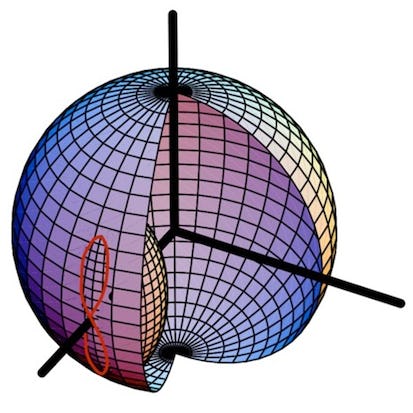
Spacecraft Dynamics and Control covers three core topic areas: the description of the motion and rates of motion of rigid bodies (Kinematics), developing the equations of motion that prediction the movement of rigid bodies taking into account mass, torque, and inertia (Kinetics), and finally non-linear controls to program specific orientations and achieve precise aiming goals in three-dimensional space (Control).
Monthly Subscription Starting at AED 99 + VAT
- Level Expert
- المدة
- الطبع بواسطة University of Colorado Boulder
-
Offered by
عن
Spacecraft Dynamics and Control covers three core topic areas: the description of the motion and rates of motion of rigid bodies (Kinematics), developing the equations of motion that prediction the movement of rigid bodies taking into account mass, torque, and inertia (Kinetics), and finally non-linear controls to program specific orientations and achieve precise aiming goals in three-dimensional space (Control). The specialization invites learners to develop competency in these three areas through targeted content delivery, continuous concept reinforcement, and project applications. The goal of the specialization is to introduce the theories related to spacecraft dynamics and control. This includes the three-dimensional description of orientation, creating the dynamical rotation models, as well as the feedback control development to achieve desired attitude trajectories.Auto Summary
**Course Overview: Spacecraft Dynamics and Control** Embark on an advanced journey into the realm of spacecraft engineering with the "Spacecraft Dynamics and Control" course. Designed for those passionate about personal development in the aerospace domain, this course delves into the intricate dynamics and control mechanisms essential for modern spacecraft. **Focus Areas:** - **Kinematics:** Understand the detailed motion and rotational rates of rigid bodies in space. - **Kinetics:** Develop and analyze equations of motion considering critical factors like mass, torque, and inertia. - **Control:** Master non-linear controls to program specific orientations and achieve precise aiming in three-dimensional space. **Educational Objectives:** - Grasp the theoretical foundations of spacecraft dynamics. - Learn to describe three-dimensional orientations and develop dynamic rotation models. - Implement feedback control techniques to guide spacecraft to desired attitudes and trajectories. **Instructor and Platform:** This course is offered by Coursera, a leading online learning platform known for its quality content and expert instructors. **Duration:** The course is designed for an immersive learning experience, with flexible scheduling to accommodate your pace. **Subscription Options:** Choose from two subscription plans: - **Starter:** Ideal for beginners looking to get a taste of spacecraft dynamics. - **Professional:** Perfect for those seeking a comprehensive and in-depth learning experience. **Target Audience:** This expert-level course is tailored for individuals with a strong foundation in engineering or physics, aiming to specialize in spacecraft dynamics and control. Join this course to elevate your understanding and expertise in the fascinating field of spacecraft dynamics and control, and become a crucial contributor to the future of space exploration.

Feedback Loops: How to Give & Receive High-Quality Feedback
Feedback plays a key role in the development of students and professionals of all kinds. Yet few people are taught how to give effective feedback or how to receive it. This Feedback Loops specialization is designed to change that.
Monthly Subscription Starting at AED 99 + VAT

- Level Foundation
- المدة
- الطبع بواسطة University of Michigan
-
Offered by
عن
Feedback plays a key role in the development of students and professionals of all kinds. Yet few people are taught how to give effective feedback or how to receive it. This Feedback Loops specialization is designed to change that. Based on a popular class at the University of Michigan Law School that people have called “extremely useful,” “super engaging,” and “the highlight of my week,” it is full of evidence-based tips and techniques you can use to improve your feedback skills in a wide-range of situations: in school, at work, on athletic teams, inside musical groups, and certainly when interacting with your friends and family. It also provides a number of “Feedback Labs” in which you can practice applying—in a safe, low-stakes way—the many concepts you’ll be learning.Auto Summary
Discover how to master the art of giving and receiving high-quality feedback with this engaging course from Coursera. Ideal for students and professionals alike, this specialization offers evidence-based tips and techniques applicable in various settings, from work and school to sports and personal interactions. Inspired by a popular University of Michigan Law School class, the course includes practical "Feedback Labs" for hands-on practice. With flexible subscription options and a foundation-level approach, it's perfect for anyone looking to enhance their personal development skills.

Learn to Teach Java: Boolean Expressions, If Statements, and Iteration
Learn to program with Boolean Expressions, If Statement, and For and While Loops in Java, and prepare to teach others using the free, online interactive CS Awesome textbook. In this course for teachers we'll guide you both in learning Java concepts and skills but also in how to effectively teach those to your students. This course will support you in teaching the Advanced Placement Computer Science A course or a similar introductory university-level programming course.
Monthly Subscription Starting at AED 99 + VAT
- Level Foundation
- المدة 18 ساعات hours
- الطبع بواسطة University of California San Diego
-
Offered by
عن
Learn to program with Boolean Expressions, If Statement, and For and While Loops in Java, and prepare to teach others using the free, online interactive CS Awesome textbook. In this course for teachers we'll guide you both in learning Java concepts and skills but also in how to effectively teach those to your students. This course will support you in teaching the Advanced Placement Computer Science A course or a similar introductory university-level programming course. We'll cover the critical Java concepts of selection (if statements) and iteration (loops), as covered in the APCS A Units 3 and 4. Each topic will begin by relating Java to block-based programming languages and then provide video overviews of CS Awesome content along with additional materials to supplement learning for your students. You'll engage with additional materials to support your teaching including "deep dive" classroom discussion questions, assessment overviews, code tracing and problem solving skills for your students, including preparation for free response coding questions.الوحدات
Welcome
-
2
Videos
2
Videos
- Welcome!
- Optional: Welcome to the Learn to Teach Java Specialization
Technology Preparation
-
2
Readings
2
Readings
- Make an Account on these Sites
- Using Googledocs in this Course
From Block to Text
-
1
Videos
1
Videos
- From Block to Text: Boolean Expressions and If Statements
Guided Textbook Learning Part 1
-
7
Videos
-
3
Assignment
3
Assignment
- CS Awesome 3.1
- CS Awesome 3.2
- CS Awesome 3.3
7
Videos
- Boolean Expressions
- Programming Challenge: Prime Numbers
- If Statements and Control Flow
- Optional: Advanced/Differentiated Problem for 3.2
- Programming Challenge: Magic 8 Ball
- Two-way Selection: If-else Statements
- Programming Challenge: 20 Questions
Guided Textbook Learning Part 2
-
9
Videos
-
4
Assignment
4
Assignment
- CS Awesome 3.4
- CS Awesome 3.5
- CS Awesome 3.6
- CS Awesome 3.7
9
Videos
- Multi-selection: else-if Statements
- Programming Challenge: Adventure
- Compound Boolean Expressions
- Programming Challenge: Truth Tables
- Equivalent Boolean Expressions
- Programming Challenge: Truth Tables (AGAIN!)
- Comparing Objects
- FAST: Programming Challenge: Tracing Code
- Magpie Chat Lab (Recommendation: Skip It)
Classroom Discussions
-
2
Videos
-
1
Readings
-
 1
ExternalTool
1
ExternalTool
1
External Tool
- Classroom Discussions: Boolean Expressions and If Statements
2
Videos
- Classroom Discussions: Teacher Guide Part 1
- Classroom Discussions: Teacher Guide Part 2
1
Readings
- Optional: Read me if you haven't used Perusall for Classroom Discussions before
Teacher Powerup
-
5
Videos
-
2
Readings
-
1
Discussion
1
Discussions
- Do you have a different online code tracing tool to recommend?
5
Videos
- Teaching Code Tracing
- Assessment Options Part 1
- Assessment Options Part 2
- Developing Problem Solving Skills Part 1
- Developing Problem Solving Skills Part 2
2
Readings
- What is rubber duck debugging?
- Examples: Code Tracing Videos for Students
Coding Bat and Debugging Skills
-
2
Readings
2
Readings
- How to adapt CodingBat questions for Unit 3
- Helping Students Debug
Mastery Quiz
-
2
Assignment
2
Assignment
- Unit 3 Java Mastery Quiz
- Unit 3 Teacher Mastery Quiz
From Block to Text
-
2
Videos
2
Videos
- Block to Text: Iteration Part 1
- Block to Text: Iteration Part 2
Guided Textbook Learning
-
7
Videos
-
2
Assignment
2
Assignment
- CS Awesome 4.1
- CS Awesome 4.2
7
Videos
- While Loops Part 1
- While Loops Part 2
- While Loops Part 3
- Optional Extra: Indenting and Grading
- Programming Challenge: Guessing Game (a really good one!)
- For Loops
- Programming Challenge: Turtles Drawing Shapes
Guided Textbook Learning Part 2
-
10
Videos
-
3
Assignment
3
Assignment
- CS Awesome 4.3
- CS Awesome 4.4
- CS Awesome 4.5
10
Videos
- Loops and Strings Intro (4.3)
- For Loops and Strings (4.3.2)
- While Loops and Strings: Parsons' Remove a (4.3.1)
- While Loops and Strings: Find and Replace (4.3.1)
- Programming Challenge: String Replacement Cats and Dogs
- Nested Loops
- Programming Challenge: Turtle Snowflakes
- Loop Analysis (& Tracing)
- Tracing Demos 4.5
- Tracing Demos 4.5 Programming Challenge
Classroom Discussions
-
2
Videos
-
1
ExternalTool
1
External Tool
- Classroom Discussions: Iteration
2
Videos
- Classroom Discussions: Teacher Guide Part 1
- Classroom Discussions: Teacher Guide Part 2
Teacher Powerup
-
4
Videos
-
2
Readings
4
Videos
- (More) Code Tracing
- Assessment Options Part 1
- Assessment Options Part 2
- English Descriptions: A Software Developer Skill
2
Readings
- Classroom Discussion Code Tracing Videos for Students
- Agile Development in 5 minutes
Teacher Powerup: Problem Solving
-
9
Videos
9
Videos
- Loops: Free-Response Question Overview
- Problem Solving: Gathering
- Problem Solving: Counting - Part 1
- Problem Solving: Counting - Part 2
- Problem Solving: Checking - Part 1
- Problem Solving: Checking - Part 2
- Problem Solving: Checking - Part 3
- Problem Solving: Most Wanted - Part 1
- Problem Solving: Most Wanted - Part 2
Mastery Quiz
-
2
Assignment
2
Assignment
- Unit 4 Java Mastery Quiz
- Unit 4 Teacher Mastery Quiz
Auto Summary
Discover how to program and teach Java with a focus on Boolean expressions, if statements, and iteration. Designed for educators, this course leverages the CS Awesome textbook to help you teach Advanced Placement Computer Science A or similar university-level courses. Learn key Java concepts through video overviews, supplemental materials, and classroom discussion questions. With a duration of 1080 minutes, this foundational course offers both Starter and Professional subscription options. Perfect for teachers aiming to enhance their programming instruction skills.

Excel for Beginners: Beginner Functions
This 1-hour, project-based course introduces learners to basic spreadsheet functions. We’ll be using Excel on the Web in this project, which is the free spreadsheet program offered by Microsoft.
Buy Now Free
- Level Foundation
- المدة 3 ساعات hours
- الطبع بواسطة Coursera Project Network
-
Offered by
عن
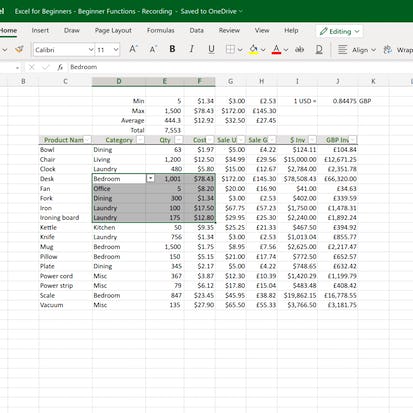
This 1-hour, project-based course introduces learners to basic spreadsheet functions. We’ll be using Excel on the Web in this project, which is the free spreadsheet program offered by Microsoft. However, all of the concepts that you will learn in this project will be applicable to other spreadsheet programs, such as LibreOffice Calc and Google Sheets. We will cover the following concepts in a hands-on manner: - Review basic functions: sum, min, max, average - Introduction to date-based functions: today, year, month, day, datedif - Trying out conditional functions: if, iferror, countif, sumif - Applying string-manipulation functions: find, replace, proper, concat, textjoin Please Note: If you don't have a free Microsoft account, you will need to create one to be able to complete the content.الوحدات
Your Learning Journey
-
1
Readings
-
 1
Plugin
1
Plugin
-
 1
Lab
1
Lab
-
1
Assignment
1
Assignment
- Assess Your Knowledge
1
Labs
- Excel for Beginners: Beginner Functions
1
Readings
- Project Overview
Auto Summary
Kickstart your spreadsheet skills with "Excel for Beginners: Beginner Functions," a comprehensive one-hour, project-based course designed for personal development. Guided by Coursera, this beginner-level course focuses on fundamental spreadsheet functions using Excel on the Web, a free program by Microsoft. The concepts taught are also applicable to other spreadsheet programs like LibreOffice Calc and Google Sheets. Engage in hands-on learning as you explore essential functions such as sum, min, max, average, and delve into date-based functions like today, year, month, day, and datedif. Enhance your analysis with conditional functions including if, iferror, countif, and sumif, and master string manipulation with find, replace, proper, concat, and textjoin. All you need is a free Microsoft account to get started. Access this course for free and unlock the power of spreadsheets to simplify your data management tasks. Perfect for beginners eager to develop foundational skills in Excel and other spreadsheet tools.
Anatomy
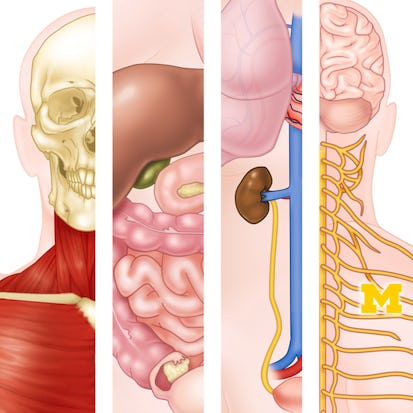
In this Specialization you will explore human anatomy using a systems approach, and a vast library of multimedia materials, so you may understand the features of different organ systems in relation to the human body’s form and function. This Specialization covers the following organ systems: Integumentary System Musculoskeletal System Cardiovascular System Respiratory System Urinary System Nervous System Gastrointestinal System Reproductive System Endocrine System This Specialization takes advantage of a highly visual multimedia library of accurate anatomical models and materials to
Monthly Subscription Starting at AED 99 + VAT
- Level Foundation
- المدة
- الطبع بواسطة University of Michigan
-
Offered by
عن
In this Specialization you will explore human anatomy using a systems approach, and a vast library of multimedia materials, so you may understand the features of different organ systems in relation to the human body’s form and function. This Specialization covers the following organ systems: Integumentary System Musculoskeletal System Cardiovascular System Respiratory System Urinary System Nervous System Gastrointestinal System Reproductive System Endocrine System This Specialization takes advantage of a highly visual multimedia library of accurate anatomical models and materials to help you better understand the topics.Auto Summary
Discover the intricacies of human anatomy through a comprehensive course on Coursera. This Personal Development Specialization offers an in-depth exploration of organ systems, including integumentary, musculoskeletal, cardiovascular, and more. Utilizing a rich multimedia library, learners gain a visual understanding of anatomical models and their functions. Ideal for foundational learners, the course is available through Starter and Professional subscriptions.
Bioinformatics
Join Us in a Top 50 MOOC of All Time! How do we sequence and compare genomes? How do we identify the genetic basis for disease? How do we construct an evolutionary Tree of Life for all species on Earth? When you complete this Specialization, you will learn how to answer many questions in modern biology that have become inseparable from the computational approaches used to solve them.
Monthly Subscription Starting at AED 99 + VAT

- Level Foundation
- المدة
- الطبع بواسطة University of California San Diego
-
Offered by
عن
Join Us in a Top 50 MOOC of All Time! How do we sequence and compare genomes? How do we identify the genetic basis for disease? How do we construct an evolutionary Tree of Life for all species on Earth? When you complete this Specialization, you will learn how to answer many questions in modern biology that have become inseparable from the computational approaches used to solve them. You will also obtain a toolkit of existing software resources built on these computational approaches and that are used by thousands of biologists every day in one of the fastest growing fields in science. Although this Specialization centers on computational topics, you do not need to know how to program in order to complete it. If you are interested in programming, we feature an "Honors Track" (called "hacker track" in previous runs of the course). The Honors Track allows you to implement the bioinformatics algorithms that you will encounter along the way in dozens of automatically graded coding challenges. By completing the Honors Track, you will be a bioinformatics software professional! Learn more about the Bioinformatics Specialization (including why we are wearing these crazy outfits) by watching our introductory video. You can purchase the Specialization's print companion, Bioinformatics Algorithms: An Active Learning Approach, from the textbook website. Our first course, "Finding Hidden Messages in DNA", was named a top-50 MOOC of all time by Class Central!Auto Summary
Dive into the fascinating world of Bioinformatics with this top-rated Coursera Specialization. Led by expert instructors, this foundational course explores genome sequencing, disease genetics, and evolutionary biology through computational approaches, without requiring programming knowledge. For those interested in coding, the Honors Track offers advanced algorithm challenges. Suitable for beginners in personal development, this engaging course is available through Starter and Professional subscriptions. Enhance your skills in one of the fastest-growing scientific fields today!
Monthly Subscription Starting at AED 99 + VAT

- Level Foundation
- المدة
- الطبع بواسطة Lund University
-
Offered by
عن
The European Union is one of the world's largest and most important economies. This specialization is a 3-course bundle that will teach learners the fundamentals of European Business Law. In the first course, Understanding the Fundamentals, the learner will examine core structures of the European Union and the main sources of law. This will include being able to understand relevant laws and regulations regarding the internal European Union market, understand how to apply the fundamental principles within the European Union legal framework and utilize the rules of freedom of movement and their impacts in the European Union. In the second course, Doing Business in Europe, the learner will focus on the main laws that regulate various aspects of establishing and running a business within the European Union. This will include how to set up agreements within the European Union, understanding of how to establish a company and successfully analyze European Union case law. In the final course, Competing in Europe, the learner will go into more depth about how to compete on the internal market and protect your product and brand. This will include how to protect and defend a company's inventions and products by obtaining and licensing patents and trademarks, create a competitive edge for a company and applying the basic principles of European Union competition law. Stay updated about the course series, visit our Facebook page at: https://www.facebook.com/eblmooc/Auto Summary
European Business Law is a comprehensive 3-course specialization offered by Coursera, focusing on the fundamentals of EU business law. Led by expert instructors, the courses cover the EU's core structures, internal market laws, business regulations, and competition laws. Perfect for beginners in personal development, this series will help you understand EU legal frameworks, set up and run businesses, and protect your brand in Europe. Subscription options include Starter and Professional levels. Stay updated via their Facebook page for more insights and updates.
Buy Now Free
- Level Professional
- المدة 3 ساعات hours
-
Offered by
عن
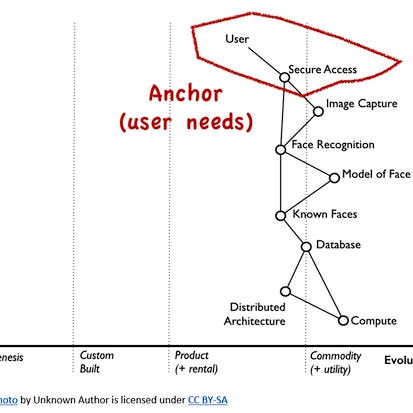
By the end of this project, you will be able to develop a user strategy by producing a Wardley map. To do this, you will leverage a Wardley map to identify dependencies in the value chain so a business can mitigate project risk in the Miro online visual collaboration platform for teamwork. Note: This course works best for learners who are based in the North America region. We’re currently working on providing the same experience in other regions.Auto Summary
Unlock the power of strategic planning with the course "User Strategy Development with Wardley Maps in Miro." Designed for professionals keen on enhancing their personal development, this course guides you through the creation of a user strategy using Wardley maps. You will gain skills in identifying dependencies within a value chain to help businesses mitigate project risks effectively. Led by expert instructors from Coursera, this concise 120-minute course is delivered via the Miro online visual collaboration platform, perfect for teamwork and real-time interaction. While it currently caters to learners in the North America region, efforts are underway to extend its reach globally. This professional-level course is available through a flexible Starter subscription, making it accessible and convenient for those looking to advance their strategic planning capabilities. Whether you're a business strategist, project manager, or an aspiring leader, this course offers invaluable tools to enhance your strategic prowess.
Global Perspectives of DEI in the Workplace
In this three-course specialization, you will engage in the process of examination, self-reflection, and action to advance equity, diversity, and inclusion (DEI) through a global lens. In the first course, you reflect on how your identity and background have shaped your thoughts, actions, and relationships with others while exploring the historical narratives and power structures that have shaped your environment. Next, you begin to build a toolkit that can be leveraged to create a transformational change through leadership in the workplace.
Monthly Subscription Starting at AED 99 + VAT

- Level Foundation
- المدة
- الطبع بواسطة University of Colorado Boulder
-
Offered by
عن
In this three-course specialization, you will engage in the process of examination, self-reflection, and action to advance equity, diversity, and inclusion (DEI) through a global lens. In the first course, you reflect on how your identity and background have shaped your thoughts, actions, and relationships with others while exploring the historical narratives and power structures that have shaped your environment. Next, you begin to build a toolkit that can be leveraged to create a transformational change through leadership in the workplace. Finally, you will work through what is next with what you have learned through this specialization and how to make lasting change for yourself and your interactions with others. This specialization can be taken for academic credit as part of CU Boulder’s Master of Engineering in Engineering Management (ME-EM) degree offered on the Coursera platform. The ME-EM is designed to help engineers, scientists, and technical professionals move into leadership and management roles in the engineering and technical sectors. With performance-based admissions and no application process, the ME-EM is ideal for individuals with a broad range of undergraduate education and/or professional experience. Learn more about the ME-EM program at https://www.coursera.org/degrees/me-engineering-management-boulder. Specialization logo image credit: Tim Marshall. Available on Unsplash at https://unsplash.com/photos/cAtzHUz7Z8gAuto Summary
This engaging specialization focuses on advancing equity, diversity, and inclusion (DEI) in the workplace through self-reflection and action. Ideal for personal development, it includes three comprehensive courses designed to help learners build a toolkit for transformational leadership. Offered by Coursera and suitable for engineers, scientists, and technical professionals, it aligns with CU Boulder’s ME-EM degree. Subscriptions are available in Starter and Professional tiers.