


Generative AI for Business Leaders
Advertising with Meta
How Google does Machine Learning


Our Courses

Using Databases with Python
This course will introduce students to the basics of the Structured Query Language (SQL) as well as basic database design for storing data as part of a multi-step data gathering, analysis, and processing effort. The course will use SQLite3 as its database. We will also build web crawlers and multi-step data gathering and visualization processes. We will use the D3.js library to do basic data visualization. This course will cover Chapters 14-15 of the book “Python for Everybody”.
-
Course by

-
 Self Paced
-
 15 hours
-
 English
Managing Big Data with MySQL
This course is an introduction to how to use relational databases in business analysis. You will learn how relational databases work, and how to use entity-relationship diagrams to display the structure of the data held within them. This knowledge will help you understand how data needs to be collected in business contexts, and help you identify features you want to consider if you are involved in implementing new data collection efforts.
-
Course by
-
Self Paced
-
32 hours
-
English
Applied AI with DeepLearning
>>> By enrolling in this course you agree to the End User License Agreement as set out in the FAQ. Once enrolled you can access the license in the Resources area
-
Course by
-
Self Paced
-
25 hours
-
English

Cloud Computing Applications, Part 2: Big Data and Applications in the Cloud
Welcome to the Cloud Computing Applications course, the second part of a two-course series designed to give you a comprehensive view on the world of Cloud Computing and Big Data! In this second course we continue Cloud Computing Applications by exploring how the Cloud opens up data analytics of huge volumes of data that are static or streamed at high velocity and represent an enormous variety of information. Cloud applications and data analytics represent a disruptive change in the ways that society is informed by, and uses information.
-
Course by
-
Self Paced
-
20 hours
-
English

Web Design: Wireframes to Prototypes
This course is focused on the application of the early UX research to actual user interfaces: the creation of wireframes, high-fidelity mockups, and clickable prototypes.
-
Course by
-
Self Paced
-
41 hours
-
English

Foundations of strategic business analytics
Who is this course for? This course is designed for students, business analysts, and data scientists who want to apply statistical knowledge and techniques to business contexts. For example, it may be suited to experienced statisticians, analysts, engineers who want to move more into a business role.
-
Course by
-
Self Paced
-
8 hours
-
English

Data Warehouse Concepts, Design, and Data Integration
This is the second course in the Data Warehousing for Business Intelligence specialization. Ideally, the courses should be taken in sequence. In this course, you will learn exciting concepts and skills for designing data warehouses and creating data integration workflows. These are fundamental skills for data warehouse developers and administrators. You will have hands-on experience for data warehouse design and use open source products for manipulating pivot tables and creating data integration workflows.
-
Course by
-
Self Paced
-
62 hours
-
English

Database Management Essentials
Database Management Essentials provides the foundation you need for a career in database development, data warehousing, or business intelligence, as well as for the entire Data Warehousing for Business Intelligence specialization. In this course, you will create relational databases, write SQL statements to extract information to satisfy business reporting requests, create entity relationship diagrams (ERDs) to design databases, and analyze table designs for excessive redundancy.
-
Course by
-
Self Paced
-
123 hours
-
English

Network Security & Database Vulnerabilities
This course gives you the background needed to understand basic network security. You will learn the about Local Area Networks, TCP/IP, the OSI Framework and routing basics. You will learn how networking affects security systems within an organization. You will learn the network components that guard an organization from cybersecurity attacks.\n\nIn addition to networking, you will learn about database vulnerabilities and the tools/knowledge needed to research a database vulnerability for a variety of databases including SQL Injection, Oracle, Mongo and Couch.
-
Course by
-
Self Paced
-
15 hours
-
English

Introduction to Data Engineering
Start your journey in one of the fastest growing professions today with this beginner-friendly Data Engineering course! You will be introduced to the core concepts, processes, and tools you need to know in order to get a foundational knowledge of data engineering. as well as the roles that Data Engineers, Data Scientists, and Data Analysts play in the ecosystem. You will begin this course by understanding what is data engineering as well as the roles that Data Engineers, Data Scientists, and Data Analysts play in this exciting field.
-
Course by
-
Self Paced
-
13 hours
-
English

Bioinformatic Methods II
Large-scale biology projects such as the sequencing of the human genome and gene expression surveys using RNA-seq, microarrays and other technologies have created a wealth of data for biologists. However, the challenge facing scientists is analyzing and even accessing these data to extract useful information pertaining to the system being studied. This course focuses on employing existing bioinformatic resources – mainly web-based programs and databases – to access the wealth of data to answer questions relevant to the average biologist, and is highly hands-on.
-
Course by
-
Self Paced
-
19 hours
-
English
Getting and Cleaning Data
Before you can work with data you have to get some. This course will cover the basic ways that data can be obtained. The course will cover obtaining data from the web, from APIs, from databases and from colleagues in various formats. It will also cover the basics of data cleaning and how to make data “tidy”. Tidy data dramatically speed downstream data analysis tasks. The course will also cover the components of a complete data set including raw data, processing instructions, codebooks, and processed data. The course will cover the basics needed for collecting, cleaning, and sharing data.
-
Course by
-
Self Paced
-
20 hours
-
English

Introduction to NoSQL Databases
Get started with NoSQL Databases with this beginner-friendly introductory course! This course will provide technical, hands-on knowledge of NoSQL databases and Database-as-a-Service (DaaS) offerings. With the advent of Big Data and agile development methodologies, NoSQL databases have gained a lot of relevance in the database landscape. Their main advantage is the ability to handle scalability and flexibility issues modern applications raise.
-
Course by
-
Self Paced
-
18 hours
-
English
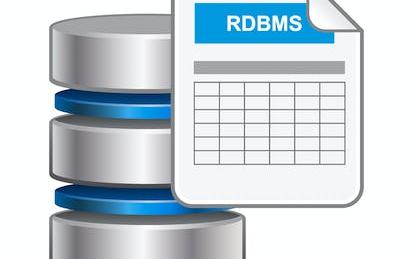
Introduction to Relational Databases (RDBMS)
Are you ready to dive into the world of data engineering? In this beginner level course, you will gain a solid understanding of how data is stored, processed, and accessed in relational databases (RDBMSes). You will work with different types of databases that are appropriate for various data processing requirements. You will begin this course by being introduced to relational database concepts, as well as several industry standard relational databases, including IBM DB2, MySQL, and PostgreSQL.
-
Course by
-
Self Paced
-
19 hours
-
English

Exploratory Data Analysis for Machine Learning
This first course in the IBM Machine Learning Professional Certificate introduces you to Machine Learning and the content of the professional certificate. In this course you will realize the importance of good, quality data.
-
Course by
-
Self Paced
-
14 hours
-
English

Data-driven Astronomy
Science is undergoing a data explosion, and astronomy is leading the way. Modern telescopes produce terabytes of data per observation, and the simulations required to model our observable Universe push supercomputers to their limits. To analyse this data scientists need to be able to think computationally to solve problems. In this course you will investigate the challenges of working with large datasets: how to implement algorithms that work; how to use databases to manage your data; and how to learn from your data with machine learning tools.
-
Course by
-
Self Paced
-
24 hours
-
English

Distributed Computing with Spark SQL
This course is all about big data. It’s for students with SQL experience that want to take the next step on their data journey by learning distributed computing using Apache Spark. Students will gain a thorough understanding of this open-source standard for working with large datasets. Students will gain an understanding of the fundamentals of data analysis using SQL on Spark, setting the foundation for how to combine data with advanced analytics at scale and in production environments.
-
Course by
-
14 hours
-
English

Prepare Data for Exploration
This is the third course in the Google Data Analytics Certificate. As you continue to build on your understanding of the topics from the first two courses, you’ll be introduced to new topics that will help you gain practical data analytics skills. You’ll learn how to use tools like spreadsheets and SQL to extract and make use of the right data for your objectives, and how to organize and protect your data.
-
Course by
-
26 hours
-
English

Bioinformatic Methods I
Large-scale biology projects such as the sequencing of the human genome and gene expression surveys using RNA-seq, microarrays and other technologies have created a wealth of data for biologists. However, the challenge facing scientists is analyzing and even accessing these data to extract useful information pertaining to the system being studied. This course focuses on employing existing bioinformatic resources – mainly web-based programs and databases – to access the wealth of data to answer questions relevant to the average biologist, and is highly hands-on.
-
Course by
-
Self Paced
-
20 hours
-
English

Introduction to Databases
In this course, you will be introduced to databases and explore the modern ways in which they are used. Learn to distinguish between different types of database management systems then practice basic creation and data selection with the use of Structured Query Language (SQL) commands.
-
Course by
-
Self Paced
-
27 hours
-
English

Django Web Framework
It's time to build something bigger. In this course, you will use the Django web framework to build, secure and administer a web server. You will have the opportunity to create, design and configure a web app using the Django framework in-line with best practices. Explore the usage of models in Django and their relationship to databases. Use views to render requested data to meaningful template structures for a composed user interface (UI).
-
Course by
-
Self Paced
-
45 hours
-
English
Relational database systems
Welcome to the specialization course Relational Database Systems. This course will be completed on six weeks, it will be supported with videos and various documents that will allow you to learn in a very simple way how several types of information systems and databases are available to solve different problems and needs of the companies.
-
Course by
-
Self Paced
-
15 hours
-
English
Process Data from Dirty to Clean
This is the fourth course in the Google Data Analytics Certificate. In this course, you’ll continue to build your understanding of data analytics and the concepts and tools that data analysts use in their work. You’ll learn how to check and clean your data using spreadsheets and SQL, as well as how to verify and report your data cleaning results.
-
Course by
-
Self Paced
-
24 hours
-
English

Database Design and Basic SQL in PostgreSQL
In this course you will learn more about the historical design of databases and the use of SQL in the PostgreSQL environment. Using SQL techniques and common commands (INSERT INTO, WHERE, ORDER BY, ON DELETE CASCADE, etc) will enable you to create tables, column types and define the schema of your data in PostgreSQL. You will learn about data modeling and how to represent one-to-many and many-to-many relationships in PostgreSQL.
-
Course by
-
14 hours
-
English

SQL for Data Science
Learn how to use and apply the powerful language of SQL to better communicate and extract data from databases - a must for anyone working in the data science field.
-
Course by

-
27
-
English