


Generative AI for Business Leaders
Advertising with Meta
How Google does Machine Learning


Our Courses

The Science of Well-Being
NEW TEEN VERSION AVAILABLE HERE: https://www.coursera.org/learn/the-science-of-well-being-for-teens In this course you will engage in a series of challenges designed to increase your own happiness and build more productive habits. As preparation for these tasks, Professor Laurie Santos reveals misconceptions about happiness, annoying features of the mind that lead us to think the way we do, and the research that can help us change.
-
Course by

-
 Self Paced
-
 20 hours
-
 English

Digital Strategy and Business Opportunity
Digital Marketing Institute is the global standard in Digital Marketing Certification. Our mission is to give our students the confidence and knowledge they need to advance in their careers through this specialization. Digital and mobile technology coupled with the explosive adoption of social media globally has fundamentally disrupted consumer expectations, and how businesses must operate to support their customers.
-
Course by
-
Self Paced
-
11 hours
-
English

Global Postharvest Loss Prevention: Fundamentals, Technologies, and Actors
This course provides an overview of the issue of postharvest loss of grains by exploring essential physical, technical, and social dimensions of postharvest supply chains and loss prevention methods globally. Each year, estimates suggest that 1/3 of all food produced is lost or wasted, making postharvest loss a critical global food security and sustainability issue of today.
-
Course by
-
Self Paced
-
13 hours
-
English

Health Care IT: Challenges and Opportunities
A strong argument can be made that the health care field is one of the most information-intensive sectors in the U.S. economy and avoidance of the rapid advances in information technology is no longer an option. Consequently, the study of health care information technology and systems has become central to health care delivery effectiveness. This course covers the modern application of information technology that is critical to supporting the vision and operational knowledge of the health care leaders in managing the health care organization.
-
Course by
-
Self Paced
-
11 hours
-
English

The Diversity of Exoplanets
In this MOOC, you will have the opportunity to practice several methods of detection and characterisation of exoplanets. You will discover their statistical properties and the current state of knowledge we have in this very recent field of research. You will also understand the limitations and biases of the different detection techniques. At the end of this MOOC, you will have a good general understanding of the methods of detection and characterisation of exoplanets and their atmosphere.
-
Course by
-
Self Paced
-
16 hours
-
English
Diabetes - a Global Challenge
Diabetes and obesity are growing health problems in rich and poor countries alike. With this course you will get updated on cutting-edge diabetes and obesity research including biological, genetic and clinical aspects as well as prevention and epidemiology of diabetes and obesity. All lectures are provided by high-profile scientists from one the world's leading universities in diabetes research.
-
Course by
-
Self Paced
-
17 hours
-
English
Philosophy and the Sciences: Introduction to the Philosophy of Physical Sciences
What is the origin of our universe? What are dark matter and dark energy? This is the first part of the course 'Philosophy and the Sciences', dedicated to Philosophy of the Physical Sciences. Scientific research across the physical sciences has raised pressing questions for philosophers.
-
Course by
-
Self Paced
-
11 hours
-
English
Research Data Management and Sharing
This course will provide learners with an introduction to research data management and sharing. After completing this course, learners will understand the diversity of data and their management needs across the research data lifecycle, be able to identify the components of good data management plans, and be familiar with best practices for working with data including the organization, documentation, and storage and security of data. Learners will also understand the impetus and importance of archiving and sharing data as well as how to assess the trustworthiness of repositories.
-
Course by
-
Self Paced
-
14 hours
-
English
Advanced Learning Algorithms
In the second course of the Machine Learning Specialization, you will: • Build and train a neural network with TensorFlow to perform multi-class classification • Apply best practices for machine learning development so that your models generalize to data and tasks in the real world • Build and use decision trees and tree ensemble methods, including random forests and boosted trees The Machine Learning Specialization is a foundational online program created in collaboration between DeepLearning.AI and Stanford Online.
-
Course by
-
Self Paced
-
English
Introduction to Translational Science
Translational science seeks to speed up the process of moving research discoveries from the laboratory into healthcare practices. Numerous scientific and organizational roadblocks can act as obstacles along the path of translation and ultimately hinder the speed of progress in medical research. The National Center for Advancing Translational Sciences (NCATS) was established by the National Institutes of Health (NIH) to transform and accelerate the translational research process, with the intended result of getting treatments to more patients faster.
-
Course by
-
Self Paced
-
13 hours
-
English
Foundations of Teaching for Learning: Learners and Learning
The Foundations of Teaching for Learning programme is for anyone who is teaching, or who would like to teach, in any subject and any context - be it at school, at home or in the workplace. With dynamic lessons taught by established and respected professionals from across the Commonwealth, this eight course programme will see you develop and strengthen your skills in teaching, professionalism, assessment, and more. As you carry on through the programme, you will find yourself strengthening not only your skills, but your connection with colleagues across the globe.
-
Course by
-
Self Paced
-
12 hours
-
English
Web3 and Blockchain Leadership for Transformation
For most of the last century, critical advances in technology were happening inside large, well-funded industrial R&D machines that dotted the Western world. Today’s landscape, however, is very different. Even the largest and most sophisticated corporate leaders can no longer dominate their fields or dictate the pace of development. With companies across sectors seeking to harness the transformative potential of blockchain technologies, the blockchain ecosystem is an exemplar of new models of industry collaboration.
-
Course by
-
Self Paced
-
23 hours
-
English
Public Involvement in Research
This course focuses on participatory approaches in research, known as 'public involvement' in the UK. You'll specifically, consider why citizens and patients would be involved in research and explore participatory approaches across and within the research cycle in more detail, diving into questions such as: - what kinds of participation can be undertaken at each of the 7 stages of the cycle? - how can you utilise participation in research?
-
Course by
-
Self Paced
-
34 hours
-
English

Positive Psychiatry and Mental Health
In today’s world, mental illness and distress are common and these account for a significant burden of disability within our community. At the same time, there is a growing interest in understanding and enhancing positive mental health and wellbeing; particularly from developments in the fields of positive psychology and mental health promotion.
-
Course by
-
Self Paced
-
20 hours
-
English
Simple Regression Analysis in Public Health
Biostatistics is the application of statistical reasoning to the life sciences, and it's the key to unlocking the data gathered by researchers and the evidence presented in the scientific public health literature. In this course, we'll focus on the use of simple regression methods to determine the relationship between an outcome of interest and a single predictor via a linear equation. Along the way, you'll be introduced to a variety of methods, and you'll practice interpreting data and performing calculations on real data from published studies.
-
Course by
-
Self Paced
-
14 hours
-
English

Artificial Creativity
Artificial Creativity explores the emerging field of creativity in artificial intelligence (AI) from a design perspective, bringing together insights from computer science and creative disciplines. In this course, you will survey the history and theories behind today's creative AI, analyze the unorthodox approaches that have advanced the field, and experience cutting-edge creative AI tools. At the same time, you will learn design thinking research methods, how to implement them for your creative insights, and how to translate them to professional and business contexts.
-
Course by
-
Self Paced
-
13 hours
-
English
Research Report: Delivering Insights
You have completed all the hard work of conducting your internal, secondary, and primary research. You have analyzed all the data and are able to formulate insights and recommendations based on your research proposal. But what is the best way to present your findings and be able to make a decision? In this course, you will discuss how to incorporate a story in your marketing presentation to help you capture the attention and gain support of stakeholders and business leaders.
-
Course by
-
Self Paced
-
15 hours
-
English

Introduction to UX Design MasterTrack Certificate Program
User experience is a highly in-demand field which requires a holistic understanding of the design process. This course is a "sample" of the UX Design MasterTrack certificate program. You will have the opportunities to explore core topics in UX including Ethics and Research, User Research, User Testing, and Visual Literacy as four modules. You can take the opportunity to gain some basic understanding of UX research, and take this course as a pathway to the UX Design MasterTrack certificate program.
-
Course by
-
Self Paced
-
5 hours
-
English
Nanotechnology and Nanosensors, Part 2
Learn about novel sensing tools that make use of nanotechnology to screen, detect and monitor various events in personal or professional life. Together, we will lay the groundwork for infinite innovative applications, starting from diagnosis and treatments of diseases, continuing with quality control of goods and environmental aspects, and ending with monitoring security issues. _ _ _ _ _ _ _ _ _ _ _ _ _ _ _ _ _ _ _ _ _ Nanotechnology and nanosensors are broad, interdisciplinary areas that encompass (bio)chemistry, physics, biology, materials science, electrical engineering and more.
-
Course by
-
Self Paced
-
17 hours
-
English
Motivating Gen Z Learners: What Parents and Teachers Need to Know
The purpose of this course is to equip parents and educators with the knowledge of motivational theories and their application in real-life contexts. Following the storyline of two children, Bob and Sarah, course participants are presented with a variety of problem scenarios. These depict common motivational issues that the participants can resolve using the motivational principles described in the course.
-
Course by
-
Self Paced
-
8 hours
-
English

Analyze Survey Data with Tableau
Surveys are used in a variety of scenarios, both in businesses and in research.
-
Course by
-
Self Paced
-
3 hours
-
English
Narrative Economics
Dear Potential Learner, Please take some time to read through this note before deciding to enroll. This course, Narrative Economics, is relatively short and proposes a simple concept: we need to incorporate the contagion of narratives into our economic theory. You can think of narratives as stories that shape public beliefs, which in turn influence our decision making.
-
Course by
-
Self Paced
-
6 hours
-
English
Communicate UX Research with Empathy Maps in Miro
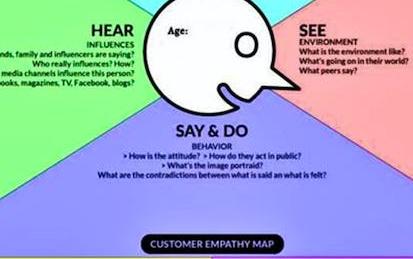
By the end of this project, you will be able to leverage applied empathy to interpret User Experience research so that it can be effectively communicated within an empathy map visualization. To do this, you will gain hands-on experience applying design thinking, empathy, and context from User Experience research to create an empathy map in the Miro online visual collaboration platform for teamwork. Note: This course works best for learners who are based in the North America region. We’re currently working on providing the same experience in other regions.
-
Course by
-
Self Paced
-
2 hours
-
English
Climate Change Mitigation in Developing Countries
This course challenges you to consider how one might lift societies out of poverty while also mitigating greenhouse gas emissions. We explore the inherent complexity of developing country governments wanting to grow their economies in a climate-friendly way. You will be introduced to an approach with which to address this challenge. The approach consists of a facilitated process whereby academic researchers and high-level influential actors within society co-produce knowledge. You will track this process in four Latin American countries - Brazil, Chile, Colombia, Peru, and South Africa.
-
Course by
-
Self Paced
-
18 hours
-
English
Population Health: Syndemics
Do you wish to contribute to breaking cycles of ill-health in disadvantaged populations? And explore co-occurrence of diseases, such as substance abuse, infectious and chronic disease, and the relation with social factors (disparities)? Are you disappointed in the poor effectiveness of interventions for combined social and medical problems? Then this syndemics course might provide you with some answers. In medicine, diseases are generally approached as distinct entities, in isolation from other diseases ánd the social contexts in which the disease occurs.
-
Course by
-
Self Paced
-
21 hours
-
English