


Create a Newsletter in Microsoft Word
After successfully completing this project, you will have created a visually appealing newsletter using Microsoft Word. While building a newsletter, you will use various features in Word. You will use the Insert feature to insert a header, a drawing and a picture in a document. You will create a drawing with shapes and text. Other features you will use include applying picture styles and applying a filter to a picture search. Note: This course works best for learners who are based in the North America region. We’re currently working on providing the same experience in other regions.
Buy Now Free

- Level Foundation
- المدة 2 ساعات hours
- الطبع بواسطة Coursera
-
Offered by

عن
After successfully completing this project, you will have created a visually appealing newsletter using Microsoft Word. While building a newsletter, you will use various features in Word. You will use the Insert feature to insert a header, a drawing and a picture in a document. You will create a drawing with shapes and text. Other features you will use include applying picture styles and applying a filter to a picture search. Note: This course works best for learners who are based in the North America region. We’re currently working on providing the same experience in other regions.الوحدات
Your Learning Journey
-
 1
Readings
1
Readings
-
 1
Plugin
1
Plugin
-
 1
Lab
1
Lab
-
 1
Assignment
1
Assignment
 1
Assignment
1
Assignment
- Assess Your Knowledge
 1
Labs
1
Labs
- Create a Newsletter in Microsoft Word
1
Readings
- Project Overview
Auto Summary
Unlock your creativity with Coursera's "Create a Newsletter in Microsoft Word" course. Ideal for personal development, this foundational course guides you through using Word's features to craft a visually appealing newsletter. You'll learn to insert headers, drawings, and pictures, apply picture styles, and use filters. Perfect for learners in North America, this 120-minute course is available with a Starter subscription. Join now to enhance your document design skills!
Buy Now Free

- Level Foundation
- المدة 2 ساعات hours
-
Offered by
عن
By the end of this project, you will be able to draw and style customized letters in Inkscape—a free, open-source vector program. You’ll build complex shapes that can be expanded and resized without losing image quality, making them a reliable foundation for website images, logos, and other digital uses. You will practice working with vector graphics, including node and path editing, and you will feel comfortable using tools like the Bezier pen, path commands, and commands like clip to form complex vector graphics. To build these skills, you’ll build an entire custom word, add serifs to a letter, and create a stylized 3D cut block letter. Note: This course works best for learners who are based in the North America region. We’re currently working on providing the same experience in other regions.Auto Summary
"Draw and Style Custom Letters with Inkscape" is a foundational course in personal development offered by Coursera. Led by expert instructors, learners will master the use of Inkscape, a free vector graphics program, to create and style custom letters. The course covers essential tools like the Bezier pen and path commands, guiding students through building complex, scalable graphics. Ideal for North American learners, this 120-minute course is perfect for designing logos, website images, and more. Available with a Starter subscription, it's tailored for beginners eager to enhance their digital design skills.
Buy Now Free
- Level Professional
- المدة 2 ساعات hours
-
Offered by
عن
In this 1-hour long project-based course, you will learn how to create path models using Smartpls. We will take a project on changing behavior and check if attitudes or subjective norms impact behavior the most. We will learn how to launch this new software, create the model and run it. We will then show you how to interpret the same. We will also learn how to create models for different groups such as males and females and if there is a difference between them. Note: This course works best for learners who are based in the North America region. We’re currently working on providing the same experience in other regions.Auto Summary
Explore the 1-hour project-based course, "Modelling with WARP PLS," focused on creating path models using Smartpls. Ideal for personal development, this professional-level course by Coursera covers launching the software, model creation, and interpretation. It also examines behavioral impact variations across different groups. Perfect for North American learners, with subscriptions starting at the Starter level.

Job Success: Get Hired or Promoted in 3 Steps
This course, Job Success: Get Hired or Promoted in Three Steps, will prepare you to stand out in a crowded applicant pool so that you can get hired or promoted. In three steps you will leave this course with 1. An upgraded social media presence (one that you can be proud of) 2. A visual, infographic resume that will get you noticed 3.
Monthly Subscription Starting at AED 99 + VAT

- Level Foundation
- المدة 5 ساعات hours
- الطبع بواسطة The State University of New York
-
Offered by
عن
This course, Job Success: Get Hired or Promoted in Three Steps, will prepare you to stand out in a crowded applicant pool so that you can get hired or promoted. In three steps you will leave this course with 1. An upgraded social media presence (one that you can be proud of) 2. A visual, infographic resume that will get you noticed 3. A professional pitch that highlights your strengths and skills When creating this course, we listened to potential employers, took the advice of recruiters, conducted informal research on best practices and we drew from our own experiences as professionals who have sought out and hired quality candidates.الوحدات
Step 1
-
 4
Videos
4
Videos
-
2
Readings
-
2
Assignment
2
Assignment
- Welcome-Brief Survey
- Assess and enhance current social media image
4
Videos
- Introduction to the Course
- What do recruiters look for online?
- General rules to strengthen your social media channels
- Social media channels reminders and tips
2
Readings
- Step 1 Overview
- Step 1: Course Readings
Step 2 Content
-
5
Videos
-
2
Readings
-
1
Assignment
1
Assignment
- Step 2: Infographic Resumes
5
Videos
- Resumes: What do employers and recruiters want to know about you?
- Overview of resume templates
- Traditional and highlight resumes
- Blended resumes
- Infographic resumes
2
Readings
- Step 2 Overview
- Step 2: Course Readings
What is a professional pitch and why do I need one?
-
1
Videos
-
2
Readings
-
2
Assignment
2
Assignment
- Your Professional Pitch
- When you think about “self-promotion” what comes to mind first?
1
Videos
- Step 3: Crafting your Professional Pitch
2
Readings
- Step 3 Overview
- Articles on Self-Promotion
Developing your Professional Pitch
-
2
Readings
-
1
PeerReview
1
Peer Review
- Share what you've learned!
2
Readings
- Tips and suggestions for describing your strengths and skills
- Time to develop your professional pitch!
Auto Summary
Unlock your career potential with the "Job Success: Get Hired or Promoted in 3 Steps" course, a comprehensive personal development program designed to make you stand out in today's competitive job market. Guided by expert insights from Coursera, this foundational course equips you with essential tools to elevate your professional profile. In just three transformative steps, you’ll learn to: 1. Enhance your social media presence, making it a powerful tool in your job search. 2. Craft a visually striking infographic resume that captures attention. 3. Develop a compelling professional pitch that showcases your unique strengths and skills. With a duration of 300 hours, this course distills advice from employers, recruiters, and professional experiences to give you a competitive edge. Available through Starter and Professional subscription options, it's ideal for individuals looking to secure their dream job or achieve a promotion. Join us and take the first step towards your career success!
Buy Now Free
- Level Professional
- المدة 2 ساعات hours
-
Offered by
عن
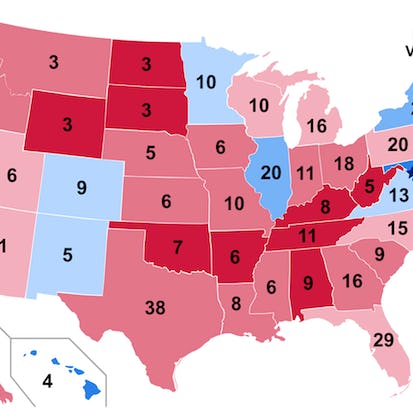
In this project-based course, you will learn how to forecast US Presidential Elections. We will use mixed effects models in the R programming language to build a forecasting model for the 2020 election. The project will review how the US selects Presidents in the Electoral College, stylized facts about voting trends, the basics of mixed effects models, and how to use them in forecasting.Auto Summary
Elevate your analytical skills with the "Forecasting US Presidential Elections with Mixed Models" course, designed for those passionate about personal development and data analysis. Led by experts at Coursera, this professional-level course delves into the intricacies of predicting US Presidential Elections using advanced mixed effects models in R programming. Over a comprehensive 120-hour duration, you will explore the US Electoral College system, examine historical voting trends, and grasp the fundamentals of mixed effects models. By the end of the course, you'll be adept at applying these models to forecast electoral outcomes, with a specific focus on the 2020 election. Ideal for data enthusiasts and professionals seeking to enhance their forecasting capabilities, this course offers a project-based approach ensuring practical, hands-on experience. Available under the Starter subscription, this engaging learning journey promises to enrich your understanding and application of predictive analytics in the context of US elections.

Beyond the Sustainable Development Goals (SDGs): Addressing Sustainability and Development
We’re excited you’re here! This course, “Beyond the Sustainable Development Goals (SDGs): Addressing Sustainability and Development,” is the first course in the Sustainability and Development MasterTrack® Certificate, but you can also take this course as a stand-alone learning opportunity. Sustainability and development pose unprecedented challenges as human societies grow and seek to ensure future wellbeing and prosperity.
Monthly Subscription Starting at AED 99 + VAT

- Level Foundation
- المدة 9 ساعات hours
- الطبع بواسطة University of Michigan
-
Offered by
عن
We’re excited you’re here! This course, “Beyond the Sustainable Development Goals (SDGs): Addressing Sustainability and Development,” is the first course in the Sustainability and Development MasterTrack® Certificate, but you can also take this course as a stand-alone learning opportunity. Sustainability and development pose unprecedented challenges as human societies grow and seek to ensure future wellbeing and prosperity. In this course, we’ll focus on addressing the twin challenges of sustainability and development with actionable knowledge for innovating solutions to the world’s most pressing problems like climate change, poverty and inequality, and biodiversity loss and ecosystem degradation. Rather than sustainability being a qualifier for development (e.g. sustainable development), we conceptualize Sustainability and Development as co-equal fields of inquiry and action that seek to build bridges between the natural, social and applied sciences and the humanities. When sustainability and development are placed on an equal footing, it requires us to think more explicitly about the trade-offs, co-benefits and synergies between them, which we will be exploring in depth in each week. Throughout the course, you will be introduced to the theoretical currents in Sustainability and Development, and will garner an in-depth understanding of the United Nations’ 17 Sustainable Development Goals (SDGs). We will also consider the methods and skills necessary for designing innovative solutions to sustainability and development problems through the emerging field of Sustainability Science. In this course, we will explore three of the most pressing challenges undergirding the Sustainable Development Goals (SDGs) including climate change, poverty and inequality, and ecosystem degradation and biodiversity loss, with case studies to guide and challenge our thinking. In the final week of the course, we will discuss the trade-offs, co-benefits and synergies between these challenges, especially as they relate to designing innovative solutions for achieving our sustainability and development goals. By the end of this course, you will be able to: 1. Understand and explain the world’s most pressing problems with a specific focus on poverty & inequality, ecosystem degradation and biodiversity loss, and climate change. 2. Critically analyze the Sustainable Development Goals (SDGs) and their relationship to the world’s most pressing problems. 3. Use frameworks and evidence necessary to develop solutions. 4. Assess relevant solutions that would help realize the SDGs and at the same time solve the pressing problems. 5. Apply skills learned to implement solutions.الوحدات
Introductions
-
5
Videos
-
3
Readings
5
Videos
- Introduction to the Course
- Created in the time of COVID-19
- Why Sustainability AND Development?
- The Sustainable Development Goals (SDGs) in this Course
- Background and Scope for Achieving the SDGs
3
Readings
- Recommended resources from Achieving the SDGs lecture
- Course Syllabus
- Help us learn more about you!
Week 1 Assessments
-
1
Assignment
1
Assignment
- Week 1: Introductions
Welcome to Week 2 - Climate Change
-
2
Videos
2
Videos
- An Introduction to SDG 13: Climate Action
- Climate Vulnerability & Adaptive Capacity in NE Brazil
Week 2 Assessments
-
2
Readings
-
1
Discussion
-
1
Assignment
1
Assignment
- Week 2: Climate Change
1
Discussions
- Climate and Development Case Questions
2
Readings
- Introduction to Michigan Sustainability Cases and Gala Platform
- Case: Climate and Development
Welcome to Week 3 - Poverty and Inequality
-
21
Videos
-
3
Readings
21
Videos
- Poverty, Inequality and Strategies to Address Them: Introduction
- Definitions of Poverty
- Introduction to 'What is Poverty?' and 'How is Poverty Measured?'
- Measures of Poverty
- Introduction to 'Hans Rosling's 200 Countries, 200 Years, 4 Minutes'
- Capacity to Reduce Poverty
- Causes and Effects of Poverty and Inequality
- Mechanisms to Address Poverty and Inequality
- Attempts to Address Poverty and Inequality
- Social Assistance Programs
- Effectiveness of Social Assistance Programs in Poverty Reduction
- Income Generation Programs
- Logic of Income Generation Programs: Graduation Programs
- Different Forms of Capitals
- Unemployment Benefit Programs
- Drivers of Unemployment Benefits
- Ecotourism and Payment for Ecosystem Services
- Payments for Ecosystem Services: Continued
- Examples of Payment for Ecosystem Services
- Comparing Environment Vs. Economic Programs for Effects on Poverty
- Future Trends that will Influence Poverty and Inequality
3
Readings
- Additional Resources
- 'The Poverty Trap'
- 'Payments for Ecosystem Services (PES)'
Week 3 Assessments
-
1
Readings
-
1
Discussion
-
1
Assignment
1
Assignment
- Week 3: Poverty and Inequality
1
Discussions
- Poverty, Environment, and Inequality Case Questions
1
Readings
- Case: Poverty, Environment, and Inequality
Welcome to Week 4 - Biodiversity Loss and Ecosystem Degradation
-
4
Videos
4
Videos
- An Introduction to Ecosystem Degradation & Biodiversity Loss
- What is driving change and what are the impacts?
- What can we do to ameliorate these changes?
- Opportunities to dive deeper and learn more
Week 4 Assessments
-
1
Readings
-
1
Discussion
-
1
Assignment
1
Assignment
- Week 4: Biodiversity Loss and Ecosystem Degradation
1
Discussions
- Biodiversity Loss and Ecosystem Degradation Questions
1
Readings
- Case: Biodiversity Loss and Ecosystem Degradation
Welcome to Week 5 - Trade Offs and Synergy
-
9
Videos
9
Videos
- An Introduction to Sustainability Science
- Implications for Sustainability and Development
- Trade-Offs, Co-Benefits, and Transitions
- Five Transitions of Human Societies: Demographic and Energy
- Five Transitions of Human Societies: Forest, Agricultural, and Nutrition
- How can past transitions guide sustainability transitions?
- What can trade-offs and co-benefits look like?
- Five programmatic examples demonstrating trade-offs and co-benefits
- Improving Sustainability Solutions
Week 5 Assessments
-
1
Assignment
1
Assignment
- Week 5: Trade Offs and Synergy
Conclusion
-
1
Readings
1
Readings
- Share Course Feedback!
Auto Summary
This engaging course, “Beyond the Sustainable Development Goals (SDGs): Addressing Sustainability and Development,” offered by Coursera, delves into the intertwined fields of sustainability and development. Led by expert instructors, learners will explore critical global challenges like climate change, poverty, and biodiversity loss. The course provides actionable knowledge and skills for designing innovative solutions. With a foundation-level approach, it spans 540 minutes and is available through Starter and Professional subscriptions, making it ideal for individuals passionate about personal development and global sustainability.

How to Create an Online Course
Learn how to design and develop online learning materials. Digital education is expanding faster than ever before, and learning online has become an essential part of how we teach and learn. On this two-week course, you’ll learn how to create online learning materials that are open, accessible, and engaging. You will complete practical activities to explore key topics such as target audience, writing style and narrative, active learning, and digital tools. You’ll be equipped to create targeted, interactive, and inclusive content to thrive in the eLearning sector.
Monthly Subscription Starting at AED 99 + VAT

- Level Professional
- المدة 8 ساعات hours
- الطبع بواسطة The University of Edinburgh
-
Offered by
عن
Learn how to design and develop online learning materials. Digital education is expanding faster than ever before, and learning online has become an essential part of how we teach and learn. On this two-week course, you’ll learn how to create online learning materials that are open, accessible, and engaging. You will complete practical activities to explore key topics such as target audience, writing style and narrative, active learning, and digital tools. You’ll be equipped to create targeted, interactive, and inclusive content to thrive in the eLearning sector. The knowledge and skills you develop will enable you to confidently begin your own course design process.الوحدات
Course Overview
-
2
Readings
2
Readings
- About this course
- Meet the team
Understanding Your Learners
-
2
Videos
-
5
Readings
-
2
Discussion
-
1
Assignment
1
Assignment
- Knowledge check 1
2
Discussions
- Introduce yourself
- Identify a target audience
2
Videos
- Introduction to understanding your learners
- Hear from the experts: Marketing
5
Readings
- Section 1 Introduction
- What is a persona?
- Create your own persona
- Decolonisation, diversity and inclusion
- How would you diversify the curriculum?
The Power of Active Learning and Narrative
-
2
Videos
-
3
Readings
-
2
Discussion
-
1
Assignment
1
Assignment
- Knowledge check 2
2
Discussions
- Let's discuss the results
- Readability reflection
2
Videos
- Introduction to active learning and narrative
- Hear from the experts: Active learning
3
Readings
- Section 2 Introduction
- Examples of active learning
- Readability test
How to Make Content Engaging
-
3
Videos
-
9
Readings
-
1
Assignment
1
Assignment
- Knowledge check 3
3
Videos
- Introduction to making content engaging
- How do you keep learners engaged?
- Hear from the experts: Learning Design
9
Readings
- Section 3 Introduction
- How do you keep learners engaged?
- Chunking and interactivity
- Top 5 course design tips
- Content writing guidance
- Finding and creating open content
- How to make materials accessible
- Creating your own learning sequence
- Assessing your learners
Your Digital Toolbox
-
2
Videos
-
6
Readings
-
2
Discussion
-
1
Assignment
1
Assignment
- Knowledge check 4
2
Discussions
- Justify your selection
- Reflect on your experience
2
Videos
- Introduction to your digital toolbox
- Hear from the Experts: Digital Tools
6
Readings
- Section 4 Introduction
- Digital tool wheel
- Choose three tools
- Write a video script
- Course summary
- Next steps and useful resources
Auto Summary
Unlock the potential of digital education with the "How to Create an Online Course" program, designed to empower you in the realm of eLearning. This professional-level course, offered by Coursera, spans two weeks and focuses on designing and developing engaging online learning materials. Participants will delve into essential topics such as audience targeting, crafting compelling narratives, promoting active learning, and utilizing digital tools effectively. Through hands-on activities, you'll gain the expertise to create inclusive and interactive content that stands out in the competitive eLearning market. This course is ideal for educators, instructional designers, and anyone interested in developing their own online courses. Choose between Starter and Professional subscription options to suit your learning needs and begin your journey towards becoming a proficient online course creator.
Monthly Subscription Starting at AED 99 + VAT

- Level Expert
- المدة
-
Offered by
عن
This is a self-paced lab that takes place in the Google Cloud console. Get introduced to using Cloud Bigtable with the Java HBase client. Learn how to: avoid common mistakes with schema design, import data in a sequence file, and query your data.Auto Summary
Discover the "HBase to Bigtable Offline Migration" course, perfect for expert-level learners in the Personal Development domain. This self-paced lab, offered by Coursera, introduces using Cloud Bigtable with the Java HBase client and teaches how to avoid common schema design mistakes and import data efficiently. Available through Starter and Professional subscriptions, this course is a valuable asset for those looking to enhance their skills in Google Cloud technologies.
Buy Now Free
- Level Foundation
- المدة 2 ساعات hours
-
Offered by
عن
In this 1-hour 30-mins long project-based course, you will learn how to build a network topology using GNS3, as well as configuring network devices and troubleshooting them. You’ll also learn how to create subnets and how to secure your network devices. Note: This course works best for learners who are based in the North America region. We’re currently working on providing the same experience in other regions.Auto Summary
Discover the essentials of building a network topology with GNS3 in this 1.5-hour project-based course. Ideal for beginners in Personal Development, you'll learn to configure and troubleshoot network devices, create subnets, and secure your network. Taught by Coursera, this foundational course is perfect for North American learners, with a Starter subscription available.
Monthly Subscription Starting at AED 99 + VAT
- Level Foundation
- المدة 27 ساعات hours
- الطبع بواسطة Erasmus University Rotterdam
-
Offered by
عن
Welcome to this massive open online course (MOOC) about Qualitative Comparative Analysis (QCA). Please read the points below before you start the course. This will help you prepare well for the course and attend it properly. It will also help you determine if the course offers the knowledge and skills you are looking for. What can you do with QCA? • QCA is a comparative method that is mainly used in the social sciences for the assessment of cause-effect relations (i.e. causation). • QCA is relevant for researchers who normally work with qualitative methods and are looking for a more systematic way of comparing and assessing cases. • QCA is also useful for quantitative researchers who like to assess alternative (more complex) aspects of causation, such as how factors work together in producing an effect. • QCA can be used for the analysis of cases on all levels: macro (e.g. countries), meso (e.g. organizations) and micro (e.g. individuals). • QCA is mostly used for research of small- and medium-sized samples and populations (10-100 cases), but it can also be used for larger groups. Ideally, the number of cases is at least 10. QCA cannot be used if you are doing an in-depth study of one case. What will you learn in this course? • The course is designed for people who have no or little experience with QCA. • After the course you will understand the methodological foundations of QCA. • After the course you will know how to conduct a basic QCA study by yourself. How is this course organized? • The MOOC takes five weeks. The specific learning objectives and activities per week are mentioned in appendix A of the course guide. Please find the course guide under Resources in the main menu. • The learning objectives with regard to understanding the foundations of QCA and practically conducting a QCA study are pursued throughout the course. However, week 1 focuses more on the general analytic foundations, and weeks 2 to 5 are more about the practical aspects of a QCA study. • The activities of the course include watching the videos, consulting supplementary material where necessary, and doing assignments. The activities should be done in that order: first watch the videos; then consult supplementary material (if desired) for more details and examples; then do the assignments. • There are 10 assignments. Appendix A in the course guide states the estimated time needed to make the assignments and how the assignments are graded. Only assignments 1 to 6 and 8 are mandatory. These 7 mandatory assignments must be completed successfully to pass the course. • Making the assignments successfully is one condition for receiving a course certificate. Further information about receiving a course certificate can be found here: https://learner.coursera.help/hc/en-us/articles/209819053-Get-a-Course-Certificate About the supplementary material • The course can be followed by watching the videos. It is not absolutely necessary yet recommended to study the supplementary reading material (as mentioned in the course guide) for further details and examples. Further, because some of the covered topics are quite technical (particularly topics in weeks 3 and 4 of the course), we provide several worked examples that supplement the videos by offering more specific illustrations and explanation. These worked examples can be found under Resources in the main menu. • Note that the supplementary readings are mostly not freely available. Books have to be bought or might be available in a university library; journal publications have to be ordered online or are accessible via a university license. • The textbook by Schneider and Wagemann (2012) functions as the primary reference for further information on the topics that are covered in the MOOC. Appendix A in the course guide mentions which chapters in that book can be consulted for which week of the course. • The publication by Schneider and Wagemann (2012) is comprehensive and detailed, and covers almost all topics discussed in the MOOC. However, for further study, appendix A in the course guide also mentions some additional supplementary literature. • Please find the full list of references for all citations (mentioned in this course guide, in the MOOC, and in the assignments) in appendix B of the course guide.الوحدات
First read the course guide
-
1
Readings
1
Readings
- Course guide
Lectures
-
4
Videos
4
Videos
- 1.1. Objectives and agenda of the course
- 1.2. QCA vs other approaches
- 1.3. Set theory and complex causality
- 1.4. The QCA research field
Not mandatory, but recommended: supplementary readings
-
1
Readings
1
Readings
- Readings in course guide
Lectures
-
4
Videos
4
Videos
- 2.1. Orientation and focal points
- 2.2. Cases, outcomes and conditions
- 2.3. Crisp vs fuzzy sets
- 2.4. Calibration with quantitative, qualitative and secondary data
Not mandatory, but recommended: supplementary readings
-
1
Readings
1
Readings
- Readings in course guide
Assignments about weeks 1 and 2
-
1
PeerReview
-
1
Assignment
1
Assignment
- Assignment 1. Main terms and background
1
Peer Review
- Assignment 2. Calibration
Lectures
-
3
Videos
3
Videos
- 3.1. The purpose and construction of a truth table
- 3.2. Raw consistency
- 3.3. Resolving contradictory configurations
Not mandatory, but recommended: supplementary readings
-
1
Readings
1
Readings
- Readings in course guide
Assignments for week 3
-
2
Assignment
2
Assignment
- Assignment 3. Make a truth table for crisp data
- Assignment 4. Make a truth table for fuzzy data
Lectures
-
3
Videos
3
Videos
- 4.1. What is logical minimization?
- 4.2. The minimal formula
- 4.3. Parameters of fit
Not mandatory, but recommended: supplementary readings
-
1
Readings
1
Readings
- Readings in course guide
Assignment about week 4
-
1
Assignment
1
Assignment
- Assignment 5. Minimize a truth table
Lectures
-
3
Videos
3
Videos
- 5.1. Using FsQCA 3, part 1
- 5.2. Using FsQCA 3, part 2
- 5.3. Do's and don'ts for the write-up
Not mandatory, but recommended: supplementary readings
-
1
Readings
1
Readings
- Readings in course guide
Assignments about weeks 4 and 5
-
1
Discussion
-
2
Assignment
2
Assignment
- Assignment 6. Using the program fsQCA for the analysis of crisp data (PLUS bonus assignment 7; is not mandatory)
- Assignment 8. Using the program fsQCA for the analysis of fuzzy data (PLUS bonus assignment 9; is not mandatory)
1
Discussions
- Assignment 10. Critical reflection (bonus assignment; is not mandatory)
Auto Summary
Discover the intricacies of Qualitative Comparative Analysis (QCA) with this comprehensive MOOC designed for both novice and experienced researchers in the social sciences. This course, brought to you by Coursera, delves into the methodology and practical application of QCA, a powerful tool for assessing cause-effect relationships across various levels, from individual cases to countries. **Course Highlights:** - **Focus:** Understand and apply QCA, a comparative method essential for both qualitative and quantitative researchers. - **Content:** Gain insights into the methodological foundations of QCA and learn to conduct your own QCA study through engaging videos, supplementary readings, and practical assignments. - **Duration:** The course spans five weeks, meticulously structured to transition from theoretical foundations to hands-on QCA applications. - **Assignments:** Complete 7 mandatory assignments out of 10 to earn a course certificate, ensuring a thorough grasp of the material. **Instructor and Resources:** - **Instructor:** Expert guidance provided by Coursera's seasoned educators. - **Supplementary Material:** While the course videos are the core learning resource, detailed readings from Schneider and Wagemann (2012) and additional literature enhance understanding, especially for more technical topics. **Subscription Options:** - **Starter:** Access essential course materials and assignments. - **Professional:** Unlock advanced features and additional resources. **Target Audience:** - **Researchers:** Ideal for social scientists seeking systematic comparative methods. - **Academics and Practitioners:** Suitable for those dealing with small to medium-sized samples, aiming to explore complex causative factors. Embark on this foundational journey to master QCA and elevate your research capabilities with Coursera's expertly curated course.