

Monthly Subscription Starting at AED 99 + VAT

- Level Foundation
- المدة 11 ساعات hours
- الطبع بواسطة Sciences Po
-
Offered by

عن
Since the beginning of the 2000s, cities have witnessed a massive influx of data, transforming how cities are governed. Data has an impact on how city life is structured, as it influences coalitions, actors, instruments, policies, and forms of regulation. In this MOOC, we will look at this shift more closely: what has the advent of big data done to urban governance? Have platforms disrupted local authorities? How has big data changed local politics? How do we govern using algorithms? What is the place of citizens in the digital city? Is it still possible to be anonymous in the city? At the end of this course, you will be able to navigate the landscape of urban governance in the digital era, including its myriad actors and instruments; to decipher what drives ongoing transformations in how local governments are structured and operate; to analyze the contemporary changes in municipal service markets; and to understand what is at stake in terms of the creation and implementation of public policies when data comes to town. This MOOC is offered by the Digital Cities Chair of the Urban School of SciencesPo, funded by La Poste, RTE and the Caisse des Dépôts. Videos are in creative commons license BY NCالوحدات
Introduction
-
 2
Videos
2
Videos
-
 1
Readings
1
Readings
2
Videos
- General course introduction
- Introduction to the session: When data comes to town
1
Readings
- Digital Cities Chair: partners and credits
Data and the City
-
1
Videos
-
3
Readings
-
 1
Discussion
1
Discussion
1
Discussions
- Share your experience: Spotting digital technologies in public spaces
1
Videos
- Data: Socio-technical infrastructures
3
Readings
- What is data?
- The environmental impact of digital technologies
- Practical exercise (optional) – Spotting digital technologies in public spaces
Urban reductionism: Data and cognitive tools
-
2
Videos
-
2
Readings
-
1
Discussion
1
Discussions
- Share your experience: Comparing two similar data sets
2
Videos
- Consensus, then measurement
- The political stakes of urban reductionism
2
Readings
- Practical exercise: Comparing two similar data sets
- Case study: GTFS
The doubly political nature of data
-
3
Videos
-
1
Readings
3
Videos
- Data and the reconfiguration of power
- The semantic power of public institutions is challenged
- Interview with Pierre Emmanuel Brunet - Rouen Respire
1
Readings
- Case study: Google Maps and conflicting representations of the urban environment
Evaluation
-
 1
Assignment
1
Assignment
 1
Assignment
1
Assignment
- Week1 Quiz
Introduction
-
1
Videos
1
Videos
- The city versus the digital economy
Is data the new black gold for city actors?
-
1
Videos
-
2
Readings
1
Videos
- From the sharing economy to digital labor
2
Readings
- Is data the new black gold for city actors?
- Reading guide - Shoshana Zuboff - The Age of Surveillance Capitalism
Smart cities: Optimizing urban functioning with data
-
2
Videos
-
1
Readings
2
Videos
- Creating the smart cities market
- Interview with Vincent Vendenberge - Engie Digital
1
Readings
- Case study – IBM and the smart city in Rio
Connecting offer and demand thanks to data platforms
-
1
Videos
-
5
Readings
-
1
Discussion
1
Discussions
- Share your experience: Processing Airbnb data
1
Videos
- The platform model: The algorithm as middleman
5
Readings
- What are the effects of platforms on local municipalities?
- Ungovernable platforms?
- Case study: Airbnb and the city of Paris
- Reading guide - Langley P., Leyshon A. - Platform capitalism: the intermediation and capitalization of digital economic circulation.
- Practical exercise: Processing Airbnb data
Evaluation
-
1
Assignment
1
Assignment
- Week2 Quiz
Introduction
-
1
Videos
1
Videos
- Introduction to the session: Data and local administration
From open data to the governance of territorial data
-
1
Videos
-
3
Readings
1
Videos
- Understanding and implementing open data
3
Readings
- The state of open data
- Reading guide - Antoine Courmont - Denis J., Goëta S.
- Case study – Accessing platform data: Los Angeles and the fight against free-floating data
Governments grapple with data
-
2
Videos
-
2
Readings
2
Videos
- Data and local governments
- Interview with Martha Norrick - MODA - NY Analytics
2
Readings
- Governments and the impacts of data
- Reading guide - Kitchin, R. - Jeannot Gilles, Maghin Victor - Vogl, T. M., et al.
Public action informed by data: A redefined relationship with citizens and the urban space?
-
1
Videos
-
4
Readings
-
1
Discussion
1
Discussions
- Share your experience: Reporting-system data and the geography of maintenance operations
1
Videos
- Data-driven local policies and the reconfiguration of relationships between governments and the people and territories they govern
4
Readings
- Data as the digital side of the relationship with users
- What are the impacts for the public and the urban space?
- Reading guide- Nam T., Pardo T.A - Malomo, F., & Sena, V. - Fourcade, M., & Gordon, J.
- Practical exercise – Reporting-system data and the geography of maintenance operations
Evaluation
-
1
Assignment
1
Assignment
- Week3 Quiz
Introduction
-
1
Videos
1
Videos
- Digital footprints, algorithmic governmentality, and the safe city
Digital footprints and personal data
-
1
Videos
-
3
Readings
-
1
Discussion
1
Discussions
- Share your experience: Downloading your personal data from social networks
1
Videos
- GDPR and the protection of personal data
3
Readings
- Digital footprints and personal data in the city
- Practical exercise (optional): Downloading your personal data from social networks
- Case study: The Sidewalk Labs controversy in Toronto, a data protection issue?
Algorithms and urban government: A new deal?
-
1
Videos
-
4
Readings
1
Videos
- Governing the city with algorithms: What’s the difference?
4
Readings
- Case study: Waze and the regulation of road traffic
- The limits of AI and algorithmic systems
- Citizens and algorithmic black boxes
- Reading guide: Virginia Eubanks - Automating inequality: How high-tech tools profile, police, and punish the poor
Can anyone still be anonymous in the city?
-
1
Videos
-
3
Readings
-
1
Discussion
1
Discussions
- Share your experience: Policing data, predictions, and algorithmic bias
1
Videos
- Institutional, commercial, and citizen surveillance
3
Readings
- The safe city: Centralizing data flows for surveillance purposes
- Reading guide: Sarah Brayne - Predict and surveil: Data, discretion, and the future of policing
- Practical exercise: Policing data, predictions, and algorithmic bias
Evaluation
-
1
Assignment
1
Assignment
- Week4 Quiz
Auto Summary
"Data and Urban Governance" is an insightful course offered by Coursera, aimed at individuals interested in understanding the transformative impact of data on city governance. Since the early 2000s, the influx of data has significantly reshaped urban life, affecting how cities are managed, the roles of various actors, and the implementation of policies and regulations. This course delves into the profound changes brought about by big data in urban settings. It explores whether digital platforms have disrupted local authorities, the influence of big data on local politics, governance through algorithms, the role of citizens in digital cities, and the challenges of maintaining anonymity in urban environments. Participants will gain a comprehensive understanding of the digital era's urban governance landscape, learning to navigate its actors and tools. They will also develop the skills to analyze the ongoing transformations in local government structures and municipal service markets, and to grasp the implications of data-driven public policies. The course is crafted by the Digital Cities Chair of the Urban School of SciencesPo, with support from La Poste, RTE, and the Caisse des Dépôts. It spans 660 minutes and is available under a Creative Commons license BY NC, making it accessible for personal development at a foundational level. This course is ideal for learners keen on exploring the intersection of data, technology, and urban management.

The Making of US Foreign Policy
Welcome to The Making of US Foreign Policy course! This course seeks to provide you with a comprehensive understanding of the United States’ Foreign Policy (USFP). Through this course, you will look at the evolution of USFP from its founding to the present. You will analyze the role of the institutions which play a role in defining USFP. You will also explore how the USFP relies on trade and economic interdependence to define global economic relations.
Monthly Subscription Starting at AED 99 + VAT

- Level Foundation
- المدة 41 ساعات hours
- الطبع بواسطة O.P. Jindal Global University
-
Offered by
عن
Welcome to The Making of US Foreign Policy course! This course seeks to provide you with a comprehensive understanding of the United States’ Foreign Policy (USFP). Through this course, you will look at the evolution of USFP from its founding to the present. You will analyze the role of the institutions which play a role in defining USFP. You will also explore how the USFP relies on trade and economic interdependence to define global economic relations.الوحدات
Course Introduction
-
2
Videos
-
1
Readings
2
Videos
- Course Introduction
- Meet Your Instructor
1
Readings
- Course Overview
The Origins of American Foreign Policy
-
4
Videos
-
1
Readings
-
1
Assignment
1
Assignment
- The Origins of American Foreign Policy
4
Videos
- War of Independence and War of 1812
- Manifest Destiny and American Exceptionalism
- The Monroe Doctrine
- Territorial Expansion: The Mexican War and the Civil War
1
Readings
- Essential Reading: The Origins of American Foreign Policy
America Becomes a World Power
-
3
Videos
-
1
Readings
-
1
Assignment
1
Assignment
- America Becomes a World Power
3
Videos
- The Spanish-American War and International Expansion
- The Roosevelt Corollary
- A Flood of Immigrants: 1880-1913
1
Readings
- Essential Reading: America Becomes a World Power
America Steps Back from the World Stage
-
3
Videos
-
1
Readings
-
1
Discussion
-
2
Assignment
2
Assignment
- America Steps Back from the World Stage
- Graded Quiz: The Development of American Foreign Policy
1
Discussions
- The Most Feasible Approach to Foreign Policy for the Rest of the World
3
Videos
- Wilsonian Idealism
- The League of Nations
- America’s Isolationism
1
Readings
- Essential Reading: America Steps Back from the World Stage
Domestic Political Structure
-
3
Videos
-
1
Assignment
1
Assignment
- Domestic Political Structure
3
Videos
- Legislature: Senate (Upper House) and House of Representatives (Lower House)
- Executive: The Office of the Presidency
- Judiciary: Supreme Court
Grassroots Activism, Civil Society Actors, and Corporate Power
-
3
Videos
-
1
Assignment
1
Assignment
- Grassroots Activism, Civil Society Actors, and Corporate Power
3
Videos
- Public Activism and Foreign Policy
- Impact of Civil Society Actors: Role of NGOs
- Corporate Lobbying, Power, and Influence
Transnational Security Architecture
-
3
Videos
-
2
Readings
-
1
Assignment
1
Assignment
- Transnational Security Architecture
3
Videos
- NATO: Cold War Era and Present Day
- Post 9/11: UNSC, PSI, and AUKUS
- The USA and the Sanctions Regime
2
Readings
- Essential Reading: Transnational Security Architecture
- Recommended Readings: Transnational Security Architecture
Bipartisan Politics and Foreign Policy
-
1
Videos
-
2
Readings
-
1
Discussion
-
2
Assignment
2
Assignment
- Bipartisan Politics and Foreign Policy
- Graded Quiz: Institutions and Processes of the US Foreign Policy
1
Discussions
- What is More Impactful While Directing Foreign Relations?
1
Videos
- USA: Bipartisanship and Foreign Policy
2
Readings
- Essential Reading: Bipartisan Politics and Foreign Policy
- Recommended Readings: Bipartisan Politics and Foreign Policy
Isolationism to Proactiveness
-
3
Videos
-
1
Readings
-
1
Assignment
1
Assignment
- Isolationism to Proactiveness
3
Videos
- From America First to Keeper of Global Strategic Balance
- Building a Post-War Liberal Order
- The Unravelling of Alliances After World War II
1
Readings
- Essential Reading: Isolationism to Proactiveness
Fighting the Evil Empire
-
4
Videos
-
1
Readings
-
1
Assignment
1
Assignment
- Fighting the Evil Empire
4
Videos
- Cold Peace to Cold War
- Division of the World
- Interventionism and Global Ideological Struggles
- The Soviet Collapse and a New World Order
1
Readings
- Essential Reading: Fighting the Evil Empire
Contemporary Echoes of the Cold War
-
2
Videos
-
1
Readings
-
1
Discussion
-
2
Assignment
2
Assignment
- Contemporary Echoes of the Cold War
- Graded Quiz: The US During World War II and the Cold War
1
Discussions
- The US Foreign Policy During the Cold War
2
Videos
- China, Russia, and the New Cold War
- Is the US Ready for Renewed Bipolarity or Multipolarity?
1
Readings
- Recommended Reading: Contemporary Echoes of the Cold War
Introduction and Examination of the Different Phases of Global Power Order
-
3
Videos
-
1
Readings
-
1
Assignment
1
Assignment
- Introduction and Examination of the Different Phases of Global Power Order
3
Videos
- Introduction to Global Power Configuration
- Emergence of the US After the Disintegration of the Soviet Union
- Concepts Related to Power
1
Readings
- Essential Reading: Introduction and Examination of the Different Phases of Global Power Order
Role of the US in the Unipolar World
-
4
Videos
-
1
Readings
-
1
Assignment
1
Assignment
- Role of the US in the Unipolar World
4
Videos
- The Geopolitical Influence of the US
- The Economic Clout of the US
- The Socio-Cultural Influence of the US
- The US Influence in International Institutions
1
Readings
- Essential Reading: Role of the US in the Unipolar World
Major Instruments of the US Power
-
3
Videos
-
1
Readings
-
1
Discussion
-
2
Assignment
2
Assignment
- Major Instruments of the US Power
- Graded Quiz: Configuring US Role in the Unipolar World
1
Discussions
- The US in Global Order
3
Videos
- The US Alliances and Major Alliance Partners
- The US Military Bases and Military Power
- Balancing and Bandwagoning: The Critical Challenges for Nations
1
Readings
- Essential Reading: Major Instruments of US Power
Introduction and US International Trade Developments
-
3
Videos
-
1
Readings
-
1
Assignment
1
Assignment
- Introduction and US International Trade Developments
3
Videos
- Introduction to the US Policy Toward Trade, Economics, and Globalization
- Expansion of the Trading System and Creation of the World Trade Organization (WTO)
- Doha Development Round and the China Challenge
1
Readings
- Essential Reading: Introduction and the US International Trade Developments
Emerging Economic Challenges and a Changing World Order
-
3
Videos
-
1
Readings
-
1
Assignment
1
Assignment
- Emerging Economic Challenges and a Changing World Order
3
Videos
- The End of the Unipolar Moment and the Birth of the G2 System
- The US-China Trade War: Foreign Direct Investments (FDIs), Intellectual Property, and Other Concerns
- The Current Status of the US-WTO Relationship
1
Readings
- Essential Reading: Emerging Economic Challenges and a Changing World Order
The US-India Trade Relationship: The Past, Present, and Future
-
3
Videos
-
1
Readings
-
1
Discussion
-
2
Assignment
2
Assignment
- The US-India Trade Relationship: The Past, Present, and Future
- Graded Quiz: The US Policy Toward Trade, Economics, and Globalization
1
Discussions
- Effect of Backlash Against Globalization
3
Videos
- US-India Bilateral Trade Relations
- Points of Friction in the US-India Trade Relationship
- US-India Trade: Future Relationship
1
Readings
- Essential Reading: The US-India Trade Relationship: The Past, Present, and Future
Course Wrap-Up
-
1
Videos
1
Videos
- Course Wrap-Up Video
Auto Summary
Welcome to "The Making of US Foreign Policy," a foundational course designed to offer an in-depth understanding of the evolution and current state of United States Foreign Policy (USFP). This compelling course, available on Coursera, delves into the historical development of USFP from its inception to modern times, providing a thorough analysis of the key institutions that shape these policies. Additionally, it examines the crucial role of trade and economic interdependence in defining global economic relations. Guided by expert instructors, this 2460-minute course is perfect for those looking to enhance their knowledge in personal development with a specific focus on international relations and policy-making. Learners can choose between Starter and Professional subscription options to best suit their learning needs and professional goals. Ideal for beginners and anyone interested in the mechanics of US foreign policy, this course promises to equip you with valuable insights and analytical skills that are essential for understanding and engaging with global economic and political dynamics.

Use Animations and Transitions in PowerPoint 365
PowerPoint 365 offers many advanced options that will really make your presentations shine and stand out above the rest. In this project, you will learn how to use animations and transitions in Microsoft PowerPoint. First, you will learn how to prepare your presentation for adding animations, and then we will dive into all of the effects PowerPoint provides. You will learn how to apply and edit with Entrance Animations onto the screen. Then, you will apply Emphasis Animations to objects already on the screen and Exit Animations to make objects leave the screen.
Buy Now Free
- Level Professional
- المدة 3 ساعات hours
- الطبع بواسطة Coursera
-
Offered by
عن
PowerPoint 365 offers many advanced options that will really make your presentations shine and stand out above the rest. In this project, you will learn how to use animations and transitions in Microsoft PowerPoint. First, you will learn how to prepare your presentation for adding animations, and then we will dive into all of the effects PowerPoint provides. You will learn how to apply and edit with Entrance Animations onto the screen. Then, you will apply Emphasis Animations to objects already on the screen and Exit Animations to make objects leave the screen. Finally, you will discover the secret behind transitions in between slides within your presentation.الوحدات
Your Learning Journey
-
1
Readings
-
 1
Plugin
1
Plugin
-
 1
Lab
1
Lab
-
1
Assignment
1
Assignment
- Assess Your Knowledge
1
Labs
- Use Animations and Transitions in PowerPoint 365
1
Readings
- Project Overview
Auto Summary
Elevate your PowerPoint 365 presentations with advanced animations and transitions in this engaging course by Coursera. Ideal for intermediate learners in personal development, you'll master Entrance, Emphasis, and Exit Animations, and uncover the secrets of slide transitions. Complete this comprehensive 180-minute course at no cost and make your presentations truly stand out.
Monthly Subscription Starting at AED 99 + VAT

- Level Foundation
- المدة 5 ساعات hours
- الطبع بواسطة Universidade de São Paulo
-
Offered by
عن
“Off the Clock: The Many Faces of Time” presents a transdisciplinary and transnational set of perspectives on time. This MOOC aims to expand the learners' understanding of the many facets of time, from our human experience of the present to plants, animals, bacteria, and even art’s relationship to the passing of time. This course equips learners with multidisciplinary tools for thinking about time in human and more-than-human constituents. To do so, the course asks and answers three key questions. First, course participants will acquire the skills needed to join philosophers and physicists in asking: what is time, and what are its features? Next, joining psychologists, chronobiologists, and philosophers of time, the participants will tackle the question: how do humans and non-humans perceive time? Finally, learners will acquire the skills to think with linguists, anthropologists, and psychologists about the way that humans conceive and value time. Throughout the course, each participant will learn to think across disciplines about time, one of the most fundamental aspects of being itself. About the creation of the MOOC The course was produced by 13 young researchers from different areas and nationalities participating in the 1st Intercontinental Academia (ICA 1) of UBIAS, a network of university-based institutes for advanced study on all continents. ICA 1 was organized by the Institute of Advanced Studies (IEA) at the University of São Paulo and the Institute for Advanced Research (IAR) at Nagoya University. During two intensive meetings in São Paulo (April 2015) and Nagoya (March 2016), the participants had the opportunity to learn from dozens of conferences given by senior researchers in anthropology, philosophy, physics, neurobiology, chronobiology, psychoanalysis, environmental sciences, and other areas, all related to the common theme: Time. The MOOC is the result of this interdisciplinary and intercontinental work. This production has only been possible thanks to the efforts of the first UBIAS coordinating team (Freiburg Institute for Advanced Studies - FRIAS), the host institutes (IEA and IAR), and their staff. However, what has really shaped the MOOC, apart from the discussions and efforts towards developing a script by all the 13 young researchers, was the commitment and dedication of a smaller group that met once again during one week in March 2017, at the “Clarimundo de Jesus” Research Base of USP's Oceanographic Institute (IO), in Ubatuba, coast of the Brazilian state of São Paulo. Lead by Nikki Moore (Wake Forest University and Rice University, USA) in partnership with Marius Müller (Federal University of Pernambuco, Brazil), Valtteri Arstila (University of Turku, Finland), Eduardo Almeida (University of São Paulo, Brazil), David Gange (University of Birmingham, UK), and Helder Nakaya (University of São Paulo, Brazil), this group took on the responsibility to edit the final script and act as lecturers. The filming has audiovisual direction of Priscila Lima. On the Coursera platform, the course is coordinated by Eduardo Almeida and Marius Müller. The activities of ICA 1 have promoted the creation of the Olavo Setubal Chair of Art, Culture, and Science, which was officially launched in 2016 as an IEA initiative in partnership with the Itaú Cultural Institute. The Chair is a space for the discussion and promotion of activities related to the world of the arts, with a special focus on cultural management, whose objective is to foster interdisciplinary reflections on academic, artistic, cultural, and social issues of regional and global scope. It has two programs: “Global Networks of Young Researchers” and “Leaders in Art, Culture, and Science”. The first one, which includes the Intercontinental Academia, aims to foster and promote interdisciplinary studies by young researchers, contributing to the formation of new leaders in the university, scientific, and cultural spheres. The second one, held every year, is headed by the Chair holder: an exponent from the artistic, cultural, political, social, economic or academic world. Professors, researchers, students, and national and international personalities participate in the promoted activities. Special attention is paid to public policies for art, culture, and science.الوحدات
Section 1 - What is time?
-
6
Videos
-
1
Assignment
1
Assignment
- Lecture 1, Section 1: What is time?
6
Videos
- Lecture 1: Aspects of time - Introduction
- Lecture 1, Section 1: What is time? - Part 1
- Lecture 1, Section 1: What is time? - Part 2
- Lecture 1, Section 1: What is time? - Part 3
- Lecture 1, Section 1: What is time? - Part 4
- Lecture 1, Section 1: What is time? - Summary
Section 2 - How do we perceive time?
-
5
Videos
-
1
Assignment
1
Assignment
- Lecture 1, Section 2: How do we perceive time?
5
Videos
- Lecture 1, Section 2: How do we perceive time? - Part 1
- Lecture 1, Section 2: How do we perceive time? - Part 2
- Lecture 1, Section 2: How do we perceive time? - Part 3
- Lecture 1, Section 2: How do we perceive time? - Part 4
- Lecture 1, Section 2: How do we perceive time? - Summary
Section 3 - How do we think about time?
-
4
Videos
4
Videos
- Lecture 1, Section 3: How do we think about time? - Part 1
- Lecture 1, Section 3: How do we think about time? - Part 2
- Lecture 1, Section 3: How do we think about time? - Part 3
- Lecture 1, Section 3: How do we think about time? - Summary
Section 1 - The common sense view
-
1
Videos
1
Videos
- Lecture 2, Section 1: The common sense view
Section 2 - Physics
-
1
Videos
1
Videos
- Lecture 2, Section 2: Physics
Section 3 - Psychological time
-
1
Videos
1
Videos
- Lecture 2, Section 3: Psychological time
Section 4 - Biological and geological perspectives
-
1
Videos
1
Videos
- Lecture 2, Section 4: Biological and geological perspectives
Section 5 - Heidegger
-
1
Videos
1
Videos
- Lecture 2, Section 5: Heidegger
Section 6 - History
-
1
Videos
1
Videos
- Lecture 2, Section 6: History
Quiz: Lecture 2: Is the present special?
-
1
Assignment
1
Assignment
- Lecture 2: Is the present special?
Section 1 - Introduction to time in humans and non-humans
-
1
Videos
1
Videos
- Lecture 3, Section 1: Introduction to time in humans and non-humans
Section 2 - Time and evolution
-
1
Videos
1
Videos
- Lecture 3, Section 2: Time and evolution
Section 3 - Time and animals
-
2
Videos
2
Videos
- Lecture 3, Section 3: Time and animals - Part 1
- Lecture 3, Section 3: Time and animals - Part 2
Section 4 - Time in plants and microbes
-
1
Videos
1
Videos
- Lecture 3, Section 4: Time in plants and microbes
Section 5 - Time and objects
-
1
Videos
1
Videos
- Lecture 3, Section 5: Time and objects
Quiz: Lecture 3: Is time different for humans and non-humans?
-
1
Assignment
1
Assignment
- Quiz: Lecture 3: Is time different for humans and non-humans?
Lecture 4, Section 1: What does it mean to ask how time is valued? Or, why do we assume time can be valued in the first place?
-
1
Videos
1
Videos
- Lecture 4, Section 1: What does it mean to ask how time is valued? Or, why do we assume time can be valued in the first place?
Lecture 4, Section 2: Does time have a universal value?
-
1
Videos
1
Videos
- Lecture 4, Section 2: Does time have a universal value?
Lecture 4, Section 3: Is time running out?
-
1
Videos
1
Videos
- Lecture 4, Section 3: Is time running out?
Lecture 4, Section 4: Can we predict the future?
-
1
Videos
1
Videos
- Lecture 4, Section 4: Can we predict the future?
Quiz: Lecture 4: How do we value time?
-
1
Assignment
1
Assignment
- Quiz: Lecture 4: How do we value time?
Extra - ICA on Time
-
1
Videos
1
Videos
- ICA on Time - Different Perspectives about One Topic
Auto Summary
"Off the Clock: The Many Faces of Time" is a Coursera course that delves into the multifaceted nature of time through a transdisciplinary and transnational lens. Spearheaded by Nikki Moore and Eduardo Almeida, it covers perspectives from philosophy, physics, psychology, and more. Over 300 minutes of engaging content, learners explore how time is perceived and valued by humans and non-humans alike. Ideal for those in personal development, the course offers starter and professional subscription options, making it accessible for all levels.
Monthly Subscription Starting at AED 99 + VAT
- Level Expert
- المدة
-
Offered by
عن
This is a self-paced lab that takes place in the Google Cloud console. In Terraform, a Provider is the logical abstraction of an upstream API. This lab will show you how to build a custom provider for Terraform.Auto Summary
Embark on an advanced learning journey with "Custom Providers with Terraform," an expert-level course offered by Coursera. This self-paced lab, conducted within the Google Cloud console, delves into the intricacies of Terraform Providers, which serve as logical abstractions of upstream APIs. Under the guidance of experienced instructors, you'll gain hands-on experience in building custom providers for Terraform, enhancing your infrastructure management skills. This course is designed for those with a solid foundation in Terraform, seeking to elevate their expertise. Subscription options start at the Starter level, making it accessible for dedicated learners ready to advance their capabilities in personal development and cloud technologies.
Buy Now Free

- Level Foundation
- المدة 3 ساعات hours
-
Offered by
عن
In this project you will develop a performance review process using Eduflow. Eduflow is a free, easy to use course builder that gives you the ability to create an interactive and customizable learning experience. Eduflow is not only a course builder for educational courses, it is also a great tool for all types of businesses and organizations! In this project, we will learn how to create a streamlined and easy-to-use performance review process. Eduflow’s ready-to-use templates and user friendly features make the performance review development process a breeze. Not only will you be able to develop an effective review process, you will also be able to assign particular review standards and expectations to individual job descriptions and departments. Eduflow gives you the ability to create a streamlined and fully customizable review process, saving you tons of time and unnecessary stress! Performance reviews are an essential piece of the growth and development process for both individuals and teams. With the help of Eduflow, you will be able to take your performance review process to the next level while simultaneously simplifying your workload. Note: This course works best for learners who are based in the North America region. We’re currently working on providing the same experience in other regions.Auto Summary
Develop a performance review process with Eduflow in this beginner-level course by Coursera. Focused on personal development, it spans 180 minutes and is available for free, making it perfect for those new to performance reviews.
Buy Now Free

- Level Professional
- المدة 3 ساعات hours
-
Offered by
عن
This guided project, Inventory Analytics with Excel: Create an inventory system, will help an intermediate analyst who is looking to create an inventory management table for a business. In this 1.5-hour long project-based course, you will learn how to create an inventory management table in Excel, add colors to the table, create inventory transactions, and add formulas to the table. To achieve this, you will be taking on the role of a supply analyst. You will create an inventory system to keep track of a set of supplies for an office supply company. In order to be successful in this project, some experience with Excel is recommended.Auto Summary
This intermediate-level course, "Inventory Analytics with Excel: Create an Inventory System," offered by Coursera, is designed for analysts aiming to develop an inventory management table for businesses. Spanning 180 minutes, this guided project focuses on personal development and is available for free, making it an excellent opportunity for enhancing your Excel skills in inventory analytics.
Draw a wireframe in Wireframe.cc
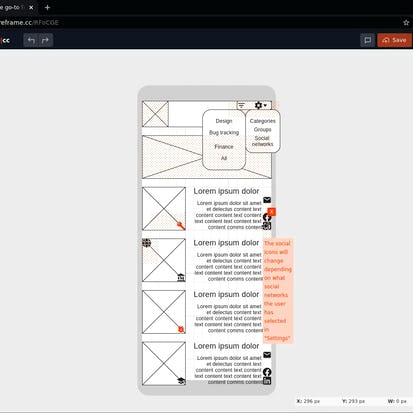
In this project you will draw a wireframe for an internal news and communications business app in Wireframe.cc, define user personas, drawing elements, menus, icons, using color coding prioritizazion and other elements of interface design.
Buy Now Free
- Level Foundation
- المدة 3 ساعات hours
- الطبع بواسطة Coursera
-
Offered by
عن
In this project you will draw a wireframe for an internal news and communications business app in Wireframe.cc, define user personas, drawing elements, menus, icons, using color coding prioritizazion and other elements of interface design.الوحدات
Your Learning Journey
-
1
Readings
-
1
Plugin
-
1
Lab
-
1
Assignment
1
Assignment
- Assess Your Knowledge
1
Labs
- Draw a wireframe in Wireframe.cc
1
Readings
- Project Overview
Auto Summary
Master the art of wireframing with this engaging course on Coursera, designed for beginners interested in personal development. Focused on creating a wireframe for an internal news and communications business app using Wireframe.cc, this course will guide you through defining user personas, drawing elements, menus, and icons, and applying color coding for prioritization. With a duration of 180 minutes, it's concise yet comprehensive, offering valuable insights into interface design. Best of all, it's free to enroll, making it an ideal choice for anyone looking to enhance their design skills and understanding of user-centric app development.
How to find audience interests with Meta Business Suite
Facebook has a new name, and with that new name also, a new platform for their businesses. Now, better known today as Meta has a new view of everything in the Business Suite, and we want to show you how the new tools work. These will show you how to find Facebook Audience Insight. This project will show the tools you need to know this game of Meta Business Suite. That will help you find the audience following you, the one you want to impact, and how this affects or provides better options for your business.
Buy Now Free

- Level Foundation
- المدة 2 ساعات hours
- الطبع بواسطة Coursera
-
Offered by
عن
Facebook has a new name, and with that new name also, a new platform for their businesses. Now, better known today as Meta has a new view of everything in the Business Suite, and we want to show you how the new tools work. These will show you how to find Facebook Audience Insight. This project will show the tools you need to know this game of Meta Business Suite. That will help you find the audience following you, the one you want to impact, and how this affects or provides better options for your business. You will know all the statistics, ages, countries, or cities where your followers or buyers are registered. So in this project, you will see all the options available to create content and ads aimed at your audience, which points to fantastic opportunities for your business. You will be able to see how to create an ad aimed at the audience you want and validate how the campaigns you have created offer feedback. This project is for you if you want to learn about everything Meta Business Suite offers in your audience area. We are going to practice and put hands-on work on what we learn. Be prepared to learn a lot and practice for your next project.الوحدات
Your Learning Journey
-
2
Readings
-
1
Plugin
-
1
Lab
-
1
Assignment
1
Assignment
- Assess Your Knowledge
1
Labs
- How to find audience interests with Meta Business Suite
2
Readings
- Project Overview
- Audience Interest Key Takeaways
Auto Summary
Discover how to leverage Meta Business Suite for audience insights in this beginner-friendly, 120-minute Coursera course. Led by expert instructors, you'll explore tools to identify and engage your target audience, create impactful ads, and utilize statistics to optimize your business strategy. Ideal for those looking to enhance their understanding of Meta's platform, this practical course offers hands-on experience and is available for free.
Public Speaking with Canva
By the end of this project, you will explore Public Speaking using Canva to create a structure for an efficient speech to present your projects or ideas. You’ll be able to explore models and structure to feel confident in your public speaking competence and implement those skills in your life during dissertations, while pitching to your clients or while performing a TED talk, why not.
Buy Now Free
- Level Professional
- المدة 3 ساعات hours
- الطبع بواسطة Coursera
-
Offered by
عن
By the end of this project, you will explore Public Speaking using Canva to create a structure for an efficient speech to present your projects or ideas. You’ll be able to explore models and structure to feel confident in your public speaking competence and implement those skills in your life during dissertations, while pitching to your clients or while performing a TED talk, why not. Public speaking has traditionally meant the act of speaking face to face to a live audience but today includes any form of speaking to an audience, including pre-recorded speech delivered over great distance by means of technology. Nowadays public speaking has been transformed by newly available technology such as videoconferencing, multimedia presentations, and other nontraditional forms, but the essentials remain the same. Being used for many different purposes, usually it crosses teaching, persuasion or entertaining, there are different approaches and techniques related on how to master public speaking. Canva is a graphic design platform, used to create visual contents such as social media graphics, presentations, posters, documents...The users can create their own graphic or choose from many templates ready to use. The platform is free to use with optional paid subscriptions for additional functionality. This guided project is for students, graphic designers, or the general public who are familiar with Canva and want to explore its tools to create a speech structure while improving their knowledge on public speaking.الوحدات
Practical Application via Rhyme
-
1
Readings
-
1
Plugin
-
1
Lab
-
1
Assignment
1
Assignment
- Graded Quiz: Test your Project understanding draft
1
Labs
- Public Speaking with Canva
1
Readings
- Project-based Course Overview
Auto Summary
Enhance your public speaking skills with the "Public Speaking with Canva" course on Coursera. This professional-level course, led by expert instructors, focuses on using Canva to structure and deliver effective speeches. Spanning 120 minutes, it covers models and techniques for confident public speaking, applicable in various scenarios such as dissertations, client pitches, or TED talks. Ideal for students, graphic designers, and anyone familiar with Canva, this guided project offers both free access and paid subscription options for advanced features. Transform your public speaking with modern tools and timeless techniques.