

Monthly Subscription Starting at AED 99 + VAT
- Level Foundation
- المدة 11 ساعات hours
- الطبع بواسطة The University of Sydney
-
Offered by

عن
Social media connects us across space and time, allowing us to find like-minded communities and participate creatively in public life as never before. We may often use social media without thinking much about the possible consequences. But there is a shadow side associated with social media use, which takes the form of hate speech, increased surveillance, lack of anonymity and questionable use of our data. What do we need to know to use social media spaces effectively, in a way that is safe and productive for all? This course will guide you into a deeper exploration of online identity, social media communities and their users. You will examine the ways that social media is being used by public institutions such as government to build participation and conversation with audiences. You will encounter the most common ethical debates in social media. You will also have the opportunity to build your practical skills by developing your professional social media profile, defining your audience, building your social media influence and understanding how to interpret data analytics to "listen" and communicate well.الوحدات
Introduction
-
 2
Videos
2
Videos
-
 1
Discussion
1
Discussion
1
Discussions
- What events are you engaging with right now?
2
Videos
- Introduction to ethical social media
- Navigating the MOOC
What's so social about social media (aren't all media social)?
-
3
Videos
-
 1
Readings
1
Readings
-
1
Discussion
1
Discussions
- Ethical issues and social media
3
Videos
- Introduction to module 1
- What is ethical social media use? Interview with Dr. Fiona Martin, academic, University of Sydney
- What are social media?
1
Readings
- Module 1 readings
Users and online identity
-
3
Videos
-
1
Readings
-
2
Discussion
2
Discussions
- Blurred boundaries
- Lurkers and participants, make your case!
3
Videos
- What is my online identity?
- The selfie phenomenon and new digital economies. Interview with Associate Professor Kath Albury, University of New South Wales
- Who uses social media?
1
Readings
- Tweet your core affiliation
Summary
-
2
Videos
2
Videos
- Connect me to the bigger picture
- Module 1 summary
Assessment - Module 1
-
 1
Assignment
1
Assignment
 1
Assignment
1
Assignment
- Social media concepts
Introduction
-
1
Videos
-
1
Readings
1
Videos
- Introduction to module 2
1
Readings
- Module 2 readings
How do groups of users operate within social media?
-
2
Videos
-
1
Readings
-
1
Discussion
1
Discussions
- Extending influence
2
Videos
- What is the difference between a network and a community?
- What is user-created content?
1
Readings
- Optional activity: managing your social media
Engaging users
-
2
Videos
-
1
Discussion
1
Discussions
- Participation in global events
2
Videos
- What motivates users to contribute to cultural production? Interview with Professor Axel Bruns, Queensland University of Technology
- How to engage users through participatory projects. Interview with Jennifer Lam, Director/Digital Media Strategist, Bamboo Garden
The hidden power agents
-
1
Videos
1
Videos
- Social media's hidden power agents
Community management
-
1
Videos
1
Videos
- Community management. Interview with Venessa Paech
Summary
-
1
Videos
1
Videos
- Module 2 summary
Assessment - Module 2
-
1
PeerReview
-
1
Assignment
1
Assignment
- Who are the users of social media?
1
Peer Review
- Develop your professional Twitter profile
Introduction
-
1
Videos
-
1
Readings
1
Videos
- Introduction to module 3
1
Readings
- Module 3 readings
How are institutions incorporating social media and its users?
-
1
Videos
1
Videos
- The impact of social media on cultural production
Social media and cultural institutions
-
3
Videos
-
1
Readings
-
1
Discussion
1
Discussions
- Participatory projects in your area
3
Videos
- How are cultural institutions incorporating social media? Interview with Claire Joachim, Social Media Specialist, Sydney Opera House
- How are global institutions using social media?
- Participatory culture and media organisations. Interview with Rod McGuinness, Social Media Coordinator, Radio Division, Australian Broadcasting Commission (ABC)
1
Readings
- Optional activity: Explore a cultural institution's social media
What are precarious labour models?
-
1
Videos
1
Videos
- What are precarious labour models?
How public figures and politicians use social media
-
2
Videos
2
Videos
- Politics and social media. Interview with Dr Mitchell Hobbs, University of Sydney
- Social media, politics and trolling. Interview with David Shoebridge, Australian politician, Member of the New South Wales Legislative Council
Summary - Module 3
-
1
Videos
1
Videos
- Module 3 summary
Assessment - Module 3
-
1
Assignment
1
Assignment
- Participatory Culture and Media Organisations
Introduction
-
1
Videos
-
1
Readings
1
Videos
- Introduction to module 4
1
Readings
- Module 4 readings
Why are data analytics important for social media?
-
2
Videos
-
1
Readings
2
Videos
- What are data analytics?
- How do we generate meaning from social media data analytics?
1
Readings
- Optional activity: Interpreting social media data
Incorporating data analytics into strategy
-
2
Videos
2
Videos
- How do we incorporate data analytics into user engagement strategies? Interview with Joe Cothrel, Chief Community Officer, Lithium Technologies Chicago, Illinois
- Iterative social media design
Summary - Module 4
-
1
Videos
1
Videos
- Module 4 summary
Assessment - Module 4
-
1
PeerReview
-
1
Assignment
1
Assignment
- Social Media Data Analytics
1
Peer Review
- Develop a strategy from social media analytics
Introduction
-
1
Videos
-
1
Readings
1
Videos
- Introduction to module 5
1
Readings
- Module 5 readings
Social media ethics
-
1
Videos
1
Videos
- University ethics. Interview with Dr. Margaret Faedo, Research Integrity and Ethics, University of Sydney.
Accessibility
-
2
Videos
-
1
Discussion
1
Discussions
- Ethical concerns: review
2
Videos
- Social media & disability. Interview with Professor Gerard Goggin, University of Sydney
- The ethics of social media births and deaths. Interview with Dr. Tama Leaver, Curtin University
Summary - Module 5
-
2
Videos
2
Videos
- Module 5 summary
- MOOC Summary
Assessment - Module 5
-
1
Assignment
1
Assignment
- Social media ethics
Auto Summary
Discover how to navigate the complex world of social media ethically with this foundational course on Personal Development. Guided by expert instructors from Coursera, you'll delve into online identity, community engagement, and the ethical debates surrounding social media. Enhance your practical skills by developing a professional social media profile, building influence, and interpreting data analytics. Perfect for beginners, this 660-minute course offers flexible subscription options, including Starter and Professional, making it ideal for anyone looking to use social media safely and productively.

Materials Science for Advanced Technological Applications
This specialization extends upon the initial introduction specialization, and like the other specialization, it introduces a limited number of new materials science and engineering concepts. Presentations are at the concept level without being marred in heavy mathematics. Topics in this specialization topic include strengthening of metal, polymers, ceramic materials, and composite. Some of the position titles that may benefit from this course include Materials Engineer, Chemical Engineer, Electrical Engineer, Aerospace Engineer, Materials Quality Control.
Monthly Subscription Starting at AED 99 + VAT

- Level Professional
- المدة
- الطبع بواسطة Arizona State University
-
Offered by
عن
This specialization extends upon the initial introduction specialization, and like the other specialization, it introduces a limited number of new materials science and engineering concepts. Presentations are at the concept level without being marred in heavy mathematics. Topics in this specialization topic include strengthening of metal, polymers, ceramic materials, and composite. Some of the position titles that may benefit from this course include Materials Engineer, Chemical Engineer, Electrical Engineer, Aerospace Engineer, Materials Quality Control. Others who are want to explore the world of materials will find it helpful.Auto Summary
"Materials Science for Advanced Technological Applications" is a professional-level course designed for individuals seeking to deepen their understanding of materials science and engineering. This course, offered by Coursera, builds on foundational knowledge and introduces new concepts in the field without delving into complex mathematics. Key topics include the strengthening of metals, polymers, ceramic materials, and composites. Ideal for professionals such as Materials Engineers, Chemical Engineers, Electrical Engineers, Aerospace Engineers, and those involved in Materials Quality Control, this course also caters to anyone interested in exploring the intricate world of materials science. The course content is presented in an accessible manner, making advanced technological applications comprehensible and engaging. Subscription options include a Starter plan, allowing flexible access to the course materials. Whether you're aiming to enhance your professional skills or simply intrigued by the subject, this course provides valuable insights into the advanced applications of materials science.

Question Reality! Science, philosophy, a search for meaning
How much can we know of the physical world? Can we know everything? Or are there fundamental limits to how much we can explain? If there are limits, to what extent can we explain the nature of physical reality? RealityX investigates the limits of knowledge and what we can and cannot know of the world and ourselves. We will trace the evolution of ideas about the nature of reality in philosophy and the natural sciences through the ages.
Monthly Subscription Starting at AED 99 + VAT

- Level Foundation
- المدة
- الطبع بواسطة Dartmouth College
-
Offered by
عن
How much can we know of the physical world? Can we know everything? Or are there fundamental limits to how much we can explain? If there are limits, to what extent can we explain the nature of physical reality? RealityX investigates the limits of knowledge and what we can and cannot know of the world and ourselves. We will trace the evolution of ideas about the nature of reality in philosophy and the natural sciences through the ages. Starting with the philosophers of Ancient Greece and ending with cutting edge theories about the universe, quantum physics, and the nature of consciousness. Join world-renowned physicist and author Marcelo Gleiser and leading experts as we explore how philosophers and physicists from Plato to Einstein and many others have attempted to explain the nature of the world and of reality.Auto Summary
Explore the boundaries of knowledge and the nature of reality with "Question Reality! Science, Philosophy, a Search for Meaning." Guided by renowned physicist Marcelo Gleiser and leading experts, this foundational course delves into philosophical and scientific perspectives from Ancient Greece to modern quantum physics. Ideal for personal development, it offers insights into what we can and cannot know about the world and ourselves. Available through Coursera with a Starter subscription.

Algebra: Elementary to Advanced
This specialization is intended for students looking to solidify their algebra and geometry necessary to be successful in future courses that will require precalculus and calculus. Quantitiative skill and reasoning are presented throughout the course to train students to think logically, reason with data, and make informed decisions.
Monthly Subscription Starting at AED 99 + VAT

- Level Foundation
- المدة
- الطبع بواسطة Johns Hopkins University
-
Offered by
عن
This specialization is intended for students looking to solidify their algebra and geometry necessary to be successful in future courses that will require precalculus and calculus. Quantitiative skill and reasoning are presented throughout the course to train students to think logically, reason with data, and make informed decisions.Auto Summary
"Algebra: Elementary to Advanced" is a foundation-level course by Coursera focused on solidifying algebra and geometry skills crucial for future precalculus and calculus studies. Ideal for personal development, this course enhances quantitative reasoning, logical thinking, and data-informed decision-making. Available with a Starter subscription, it's perfect for students aiming to build a strong mathematical foundation.

Globalization, Economic Growth and Stability
This Specialization aims to make economic concepts accessible to every learner, and to teach them to analyze current events using the toolkit of economics. It begins by explaining the basic parameters of the macroeconomy, and how governments can/should use both fiscal and monetary policy to influence growth, inflation and employment. It then moves on to the international arena, where countries interact, and explains the basic principles of free trade, exchange rates, the balance of payments and immigration and how these interactions affect our everyday lives.
Monthly Subscription Starting at AED 99 + VAT
- Level Professional
- المدة
- الطبع بواسطة IE Business School
-
Offered by
عن
This Specialization aims to make economic concepts accessible to every learner, and to teach them to analyze current events using the toolkit of economics. It begins by explaining the basic parameters of the macroeconomy, and how governments can/should use both fiscal and monetary policy to influence growth, inflation and employment. It then moves on to the international arena, where countries interact, and explains the basic principles of free trade, exchange rates, the balance of payments and immigration and how these interactions affect our everyday lives. Finally, learners will apply these tools and concepts to the world's leading economies and discover how they can "read" from a country's economic data important lessons about the risks and opportunities of doing business in these countries, equipping them with tools that they can use in the workplace and even in their personal investment decisions.Auto Summary
Explore the "Globalization, Economic Growth and Stability" course, designed for Personal Development enthusiasts. This professional-level course, offered by Coursera, demystifies economic concepts, focusing on macroeconomy, fiscal and monetary policies, and international trade. Learners will gain insights into global economies and practical tools for business and investment decisions. Flexible subscription options are available. Ideal for those keen to understand and analyze economic events.

Renewable Energy
This specialization is for learners wanting a thorough understanding of renewable energy concepts, tools, and applications. This knowledge can be employed to advance in your current work, to move into the renewable energy field, and to promote sustainability at home and in your community. New technologies, new market structures, and new business models make renewable energy a dynamic, entrepreneurial, and exciting field. This specialization focuses on pragmatic and fact-based information, including real-world costs and technical performance, market trends, and web-based analysis tools.
Monthly Subscription Starting at AED 99 + VAT
- Level Foundation
- المدة
- الطبع بواسطة University of Colorado Boulder
-
Offered by
عن
This specialization is for learners wanting a thorough understanding of renewable energy concepts, tools, and applications. This knowledge can be employed to advance in your current work, to move into the renewable energy field, and to promote sustainability at home and in your community. New technologies, new market structures, and new business models make renewable energy a dynamic, entrepreneurial, and exciting field. This specialization focuses on pragmatic and fact-based information, including real-world costs and technical performance, market trends, and web-based analysis tools. We use lectures, case studies, and interviews with industry leaders to provide a comprehensive and up-to-date education on renewable energy. Specialization logo image credits: background courtesy of Clyde RS. Available on Unsplash at https://unsplash.com/photos/4XbZCfU2Uoo; icon is "Wind Turbine" by Vectors Point from the Noun Project.Auto Summary
Discover the dynamic and rapidly evolving world of renewable energy with this comprehensive specialization designed for those eager to deepen their understanding of sustainable practices. Perfect for individuals aiming to enhance their current expertise, transition into the renewable energy sector, or advocate for sustainability within their communities, this course offers a robust foundation in renewable energy concepts, tools, and applications. Led by industry experts, this specialization offers a blend of lectures, case studies, and interviews with leaders in the field. You'll gain practical, fact-based knowledge on real-world costs, technical performance, market trends, and innovative web-based analysis tools. The curriculum is tailored to provide an up-to-date and thorough education, making it ideal for professionals seeking to stay ahead of the curve in this entrepreneurial and exciting domain. With flexible subscription options, including Starter and Professional levels, you can choose the plan that best fits your learning needs. Enroll now to embark on your journey towards a sustainable future and make a meaningful impact in the renewable energy field.

A Practitioner's Approach to Power Distribution & Automation
Our specialization is a blend of basic and emerging technology in the power distribution sector through two unique courses. First course is Electrical Power Distribution wherein we deal from concept to commissioning level, give exposure to the learners statutory regulations, the different distribution equipment like distribution transformers, pole mounted substation, auto reclosure, sectionlizers, Compact Substation, Ring Main unit.
Monthly Subscription Starting at AED 99 + VAT
- Level Professional
- المدة
- الطبع بواسطة L&T EduTech
-
Offered by
عن
Our specialization is a blend of basic and emerging technology in the power distribution sector through two unique courses. First course is Electrical Power Distribution wherein we deal from concept to commissioning level, give exposure to the learners statutory regulations, the different distribution equipment like distribution transformers, pole mounted substation, auto reclosure, sectionlizers, Compact Substation, Ring Main unit. Today we are moving more of digitalization and our specialization covers the automation in distribution sector which is being implemented by different electricity boards in Indian and across the globe. The Second course is on Medium Voltage (MV) Substation (up to 33kV). This course is an integral part of power distribution having a unique blend of fundamental concepts and engineering methodology for voltage levels of up to 33kV. The course is structured pragmatically to help the learner understand the industry practices in conducting the engineering for substations and selection of various substation equipment in accordance with Indian & International Standards. It starts with bus bar schemes, layout aspects, selection of land, electrical equipment selection, interface requirement with civil and mechanical, cable routing, earthing and lightening protection and illumination engineering. In addition, it covers electrical safety rules, safe operating procedures and an overview of maintenance practices to give a holistic understanding of the subject.Auto Summary
Explore the power distribution sector with "A Practitioner's Approach to Power Distribution & Automation." This professional-level course, offered by Coursera, delves into both basic and advanced technologies in power distribution and Medium Voltage (MV) substations up to 33kV. Led by expert instructors, you'll gain insights into statutory regulations, equipment selection, automation, and industry practices. Ideal for those seeking to enhance their understanding of electrical power distribution, the course is available through Starter and Professional subscriptions.

Economic Growth and Distributive Justice Part I - The Role of the State
If you really care about the big questions in the economies and societies of the 21st century, such as distributive justice - namely, inequality of income or wealth, and its correlation with economic growth - this course is meant for you. The knowledge you will gain can truly change your outlook on our world. "Economic Growth and Distributive Justice - the Role of the State" is the first part of a two part course and it includes the following four lectures: (1) What do we need a state for?
Monthly Subscription Starting at AED 99 + VAT

- Level Foundation
- المدة 8 ساعات hours
- الطبع بواسطة Tel Aviv University
-
Offered by
عن
If you really care about the big questions in the economies and societies of the 21st century, such as distributive justice - namely, inequality of income or wealth, and its correlation with economic growth - this course is meant for you. The knowledge you will gain can truly change your outlook on our world. "Economic Growth and Distributive Justice - the Role of the State" is the first part of a two part course and it includes the following four lectures: (1) What do we need a state for? (2) The Relationship between Efficiency and Distributive Justice (3) Demonstrating the implications of different ethical theories (4) Distributive Justice: measurement and implications Once you've completed the first part, we strongly recommend that you register for the second part entitled: "Economic Growth and Distributive Justice - Maximizing Social Well-being", as well. Taking both parts of the course would enable you to obtain a fuller and more comprehensive knowledge about Economic Growth and Distributed Justice. The course is founded upon the elemental idea that the role of the state is to maximize the well-being - or simply the happiness - of its residents. In 9 fascinating, edifying lessons, using only simple words and decoding professional terminologies that sometimes baffle the intelligent layman, the course expounds many truths – both intuitive and unintuitive. Often using examples from the US and Europe, it does not however focus on policies in any particular region of the world, and is directly applicable to all countries around the globe. The course touches upon the essence of important concepts like efficiency and equity, inequality and poverty, gross domestic product, tax evasion and tax planning; it presents the work of Nobel Laureate James Mirrlees and his followers - promoting a coherent system that integrates tax and government expenditures to maximize social welfare; and illuminates a range of high-profile issues from their economic angle: • Climate change: the atmosphere and oceans as public goods, and how smart (Pigovian) taxation can be used to combat the rapidly increasing threats to our planet; • Technology as the engine of economic growth; • Taxing the rich: How can we mitigate the growing inequality problem? Should we impose a global tax on capital? The curriculum includes interviews with major figures in the fields of law and of economics: Harvard's Elhanan Helpman, Dan Shaviro from NYU and Richard Epstein from the University of Chicago and NYU. After successfully completing this course, you can expect to be able to: • Better understand economic issues presented in the media • Form an informed opinion on the strengths and weaknesses of presented social economic policies • Define and measure inequality and poverty • Define the connection between inequality (income, wealth) and economic growth • Explain the foundations of economic growth • Design a tax and transfer system to maximize the happiness of individuals All these will allow you to better understand the policies being developed around you, and to play a larger, more informed role in their development, as a conscientious citizen. In order to receive academic credit for this course you must successfully pass the academic exam on campus. For information on how to register for the academic exam – https://tauonline.tau.ac.il/registration Additionally, you can apply to certain degrees using the grades you received on the courses. Read more on this here – https://go.tau.ac.il/b.a/mooc-acceptance Teachers interested in teaching this course in their class rooms are invited to explore our Academic High school program here – https://tauonline.tau.ac.il/online-highschool Please note that there is a second part to this course which is a direct extension of this part. We highly recommend to continue to the second part after you finish this one (https://www.coursera.org/learn/economic-growth-part-2/home/welcome). This course will temporarily close for enrollment from March 1st, 2022 to August 31st, 2022. During this time, the course will be closed for new enrolments. All of the course materials will continue to be able available to previously enrolled learners; however, the course staff will not provide support in the Discussion Forums during this period. Best, The Tel Aviv University Teamالوحدات
Introduction
-
2
Videos
-
1
Readings
-
 2
Plugin
2
Plugin
2
Videos
- Course promo
- Introduction
1
Readings
- Recommended Books
1.1 What is the Policymaker’s Goal?
-
1
Videos
1
Videos
- 1.1 What is the Policymaker’s Goal?
1.2 Maximizing Happinness: The case of Bhutan
-
1
Videos
1
Videos
- 1.2 Maximizing Happinness: The case of Bhutan
1.3 The Experiencing Self vs. the Remembering Self
-
1
Videos
1
Videos
- 1.3 The Experiencing Self vs. the Remembering Self
1.4 How Can the State Promote its Goal?
-
1
Videos
1
Videos
- 1.4 How Can the State Promote its Goal?
1.5 The Ultimatum Game
-
1
Videos
1
Videos
- 1.5 The Ultimatum Game
1.6 Financing Public Goods
-
1
Videos
1
Videos
- 1.6 Financing Public Goods
1.7 Providing Public Goods
-
1
Videos
1
Videos
- 1.7 Providing Public Goods
1.8 Internalizing Externalities
-
1
Videos
1
Videos
- 1.8 Internalizing Externalities
1.9 Climate Change
-
1
Videos
1
Videos
- 1.9 Climate Change
Summary
-
1
Videos
-
1
Assignment
1
Assignment
- week 1
1
Videos
- Summary
Recommended Reading - Week 1
-
1
Readings
1
Readings
- Recommended Reading - Week 1
2.1 Defining and Measuring Economic Growth
-
1
Videos
1
Videos
- 2.1 Defining and Measuring Economic Growth
2.2 The Intuition of the Economic Growth Model
-
1
Videos
1
Videos
- 2.2 The Intuition of the Economic Growth Model
2.3 Innovation (technology) as the Key to Economic Growth
-
1
Videos
1
Videos
- 2.3 Innovation (technology) as the Key to Economic Growth
2.4 When Efficiency Promotes Equality
-
1
Videos
1
Videos
- 2.4 When Efficiency Promotes Equality
2.5 When Inequality is Inefficient
-
1
Videos
1
Videos
- 2.5 When Inequality is Inefficient
2.6 When Policy is Counter-Intuitive: The Classic Example of Comparative Advantage
-
1
Videos
1
Videos
- 2.6 When Policy is Counter-Intuitive: The Classic Example of Comparative Advantage
2.7 When there is a Trade-off Between Efficiency and Equality
-
1
Videos
1
Videos
- 2.7 When there is a Trade-off Between Efficiency and Equality
2.8 Using the Leaky Bucket Parable to Explain what is a Social Welfare Function
-
1
Videos
-
1
Assignment
1
Assignment
- Week 2
1
Videos
- 2.8 Using the Leaky Bucket Parable to Explain what is a Social Welfare Function
Recommended Reading - Week 2
-
1
Readings
1
Readings
- Recommended Reading - Week 2
3.1 Distributive Justice Theories: Libertarianism and Utilitarianism
-
1
Videos
1
Videos
- 3.1 Distributive Justice Theories: Libertarianism and Utilitarianism
3.2 Distributive Justice Theories: Maximin
-
1
Videos
1
Videos
- 3.2 Distributive Justice Theories: Maximin
3.3 Distributive Justice Theories: Egalitarianism and Weighted Utilitarianism
-
1
Videos
1
Videos
- 3.3 Distributive Justice Theories: Egalitarianism and Weighted Utilitarianism
3.4 Understanding the Concept of Diminishing Marginal Utility from Consumption
-
1
Videos
1
Videos
- 3.4 Understanding the Concept of Diminishing Marginal Utility from Consumption
3.5 Policy Implications of Assuming Diminishing Marginal Utility from Consumption
-
1
Videos
1
Videos
- 3.5 Policy Implications of Assuming Diminishing Marginal Utility from Consumption
3.6 Illustrating Utilitarianism with a Real Life Example: Presenting the example
-
1
Videos
1
Videos
- 3.6 Illustrating Utilitarianism with a Real Life Example: Presenting the example
3.7 Conventional Analysis of Taxing Damages Paid for Loss of Earnings
-
1
Videos
1
Videos
- 3.7 Conventional Analysis of Taxing Damages Paid for Loss of Earnings
3.8 Conventional Analysis of Taxing Damages for Medical Expenses
-
1
Videos
1
Videos
- 3.8 Conventional Analysis of Taxing Damages for Medical Expenses
3.9 Conventional Analysis of Taxing Damages for Pain and Suffering
-
1
Assignment
1
Assignment
- week 3
Recommended Reading - Week 3
-
1
Readings
1
Readings
- Recommended Reading - Week 3
4.1 Public Finance Analysis: Choosing the tax rule that would maximize Social Welfare
-
1
Videos
1
Videos
- 4.1 Public Finance Analysis: Choosing the tax rule that would maximize Social Welfare
4.2 Public Finance Analysis of Taxing Damages for Lost Earnings
-
1
Videos
1
Videos
- 4.2 Public Finance Analysis of Taxing Damages for Lost Earnings
4.3 Public Finance Analysis of Taxing the Reimbursement of Medical Expenses
-
1
Videos
1
Videos
- 4.3 Public Finance Analysis of Taxing the Reimbursement of Medical Expenses
4.4 Public Finance Analysis of Taxing Damages for Pain and Suffering
-
1
Videos
1
Videos
- 4.4 Public Finance Analysis of Taxing Damages for Pain and Suffering
4.5 The Policy Process: Summarizing what we've learnt from the Real Life Example
-
1
Videos
1
Videos
- 4.5 The Policy Process: Summarizing what we've learnt from the Real Life Example
4.6 Accounting for the Fact that People Live in Families
-
1
Videos
1
Videos
- 4.6 Accounting for the Fact that People Live in Families
4.7 Measuring Income Inequality
-
1
Videos
1
Videos
- 4.7 Measuring Income Inequality
4.8 Defining and Measuring Poverty
-
1
Videos
-
1
Assignment
1
Assignment
- week 4
1
Videos
- 4.8 Defining and Measuring Poverty
Recommended Reading - Week 4
-
1
Readings
1
Readings
- Recommended Reading - Week 4
Conclusion of Part I
-
1
Videos
-
1
Plugin
1
Videos
- Conclusion of Part I
Final Exam
-
1
Readings
-
1
Assignment
1
Assignment
- Final Exam
1
Readings
- What's next?
Auto Summary
Dive into "Economic Growth and Distributive Justice Part I - The Role of the State," a compelling course by Tel Aviv University on Coursera. This foundation-level course explores crucial 21st-century economic and societal questions, focusing on inequality, economic growth, and the state's role. Led by esteemed experts, it features nine insightful lectures and interviews with prominent figures, offering practical knowledge applicable worldwide. Ideal for those passionate about understanding and influencing social economic policies, this course spans 480 minutes and is available through Starter and Professional subscription plans.

Cloud Computing Law
This Specialization is intended for anyone interested in understanding the legal rights and obligations of providers and customers of cloud services. Our three Courses cover the key legal and regulatory issues for cloud services, including cloud contracts, data protection law, law enforcement access, and much more! You will learn to describe cloud providers’ and customers’ legal rights, to identify and assess legal risks, and to suggest possible legal and technological solutions.
Monthly Subscription Starting at AED 99 + VAT
- Level Foundation
- المدة
- الطبع بواسطة Queen Mary University of London
-
Offered by
عن
This Specialization is intended for anyone interested in understanding the legal rights and obligations of providers and customers of cloud services. Our three Courses cover the key legal and regulatory issues for cloud services, including cloud contracts, data protection law, law enforcement access, and much more! You will learn to describe cloud providers’ and customers’ legal rights, to identify and assess legal risks, and to suggest possible legal and technological solutions.Auto Summary
Explore the "Cloud Computing Law" course on Coursera, ideal for those keen on understanding the legal landscape of cloud services. This foundational course delves into cloud contracts, data protection law, and law enforcement access, equipping learners with the skills to navigate legal rights, assess risks, and propose solutions. Perfect for beginners, the course offers flexible subscription options and is taught by experts in personal development.
Buy Now Free
- Level Professional
- المدة 3 ساعات hours
-
Offered by
عن
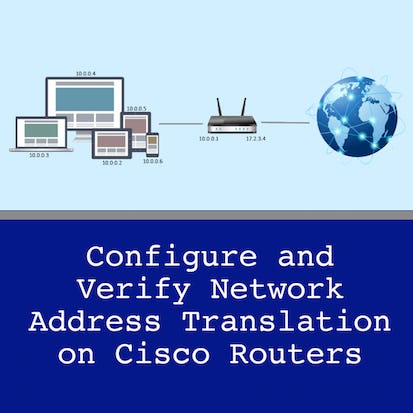
Welcome to the CCNA 1.9: Configure and Verify NAT on Cisco routers. This project is the ninth in a CCNA learning series that is designed to help you acquire the hands-on skills required to pass the CCNA certification exam. In this 2-hour guided project, you will configure static and dynamic Network Address Translation (NAT) on Cisco routers, you will also setup NAT overloading with Port Address Translation (PAT), and verify NAT configuration on Cisco routers.Auto Summary
Embark on the CCNA 1.9: Configure and Verify NAT on Cisco routers course, a 2-hour hands-on project aimed at professionals seeking CCNA certification. Learn to configure and verify static and dynamic NAT, set up NAT overloading with PAT, and ensure accurate NAT configuration on Cisco routers. Available via Coursera’s Starter subscription.