


Generative AI for Business Leaders
Advertising with Meta
How Google does Machine Learning


Our Courses

Advanced Recommender Systems
In this course, you will see how to use advanced machine-learning techniques to build more sophisticated recommender systems. Machine Learning is able to provide recommendations and make better predictions, by taking advantage of historical opinions from users and building up the model automatically, without the need for you to think about all the details of the model. At the end of the Advanced Recommender Systems, you will know how to manage hybrid information and how to combine different filtering techniques, taking the best from each approach.
-
Course by

-
 15 hours
-
 English

Basic Recommender Systems
The Basic Recommender Systems course introduces you to the leading approaches in recommender systems. The techniques described touch both collaborative and content-based approaches and include the most important algorithms used to provide recommendations. You'll learn how they work, how to use and how to evaluate them, pointing out benefits and limits of different recommender system alternatives. After completing this course, you'll be able to describe the requirements and objectives of recommender systems based on different application domains.
-
Course by
-
 Self Paced
-
12 hours
-
English
SVM Regression, prediction and losses
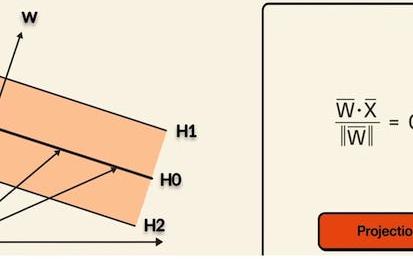
In this 1-hour long project-based course, you will learn how to Train SVM regression model- with large & small margin, second degree polynomial kernel, make prediction using Linear SVM classifier; how a small weight vector results in a large margin? and finally pictorial representation for Hinge loss.
-
Course by
-
Self Paced
-
2 hours
-
English

Introduction to Predictive Modeling
Welcome to Introduction to Predictive Modeling, the first course in the University of Minnesota’s Analytics for Decision Making specialization. This course will introduce to you the concepts, processes, and applications of predictive modeling, with a focus on linear regression and time series forecasting models and their practical use in Microsoft Excel.
-
Course by
-
Self Paced
-
12 hours
-
English
Explaining machine learning models
In this 2-hour long project-based course, you will learn how to understand the predictions of your model, feature relations, visualize and interpret feature & model relation with statistics and much more.
-
Course by
-
Self Paced
-
2 hours
-
English

Predictive Analytics: Basic Modeling Techniques
What is Predictive Analytics? These methods lie behind the most transformative technologies of the last decade, that go under the more general name Artificial Intelligence or AI. In this course, the focus is on the skills that will allow you to fit a model to data, and measure how well it performs. We will be doing enough data science so that you get hands-on familiarity with understanding a dataset, fitting a model to it, and generating predictions.
-
Course by

-
26
-
English

Introduction to Astrophysics
Learn about the physical phenomena at play in astronomical objects and link theoretical predictions to observations.
-
Course by
-
Self Paced
-
18
-
English

Deploy Models with TensorFlow Serving and Flask
In this 2-hour long project-based course, you will learn how to deploy TensorFlow models using TensorFlow Serving and Docker, and you will create a simple web application with Flask which will serve as an interface to get predictions from the served TensorFlow model.
-
Course by
-
Self Paced
-
3 hours
-
English

TensorFlow 2 for Deep Learning
This Specialization is intended for machine learning researchers and practitioners who are seeking to develop practical skills in the popular deep learning framework TensorFlow. The first course of this Specialization will guide you through the fundamental concepts required to successfully build, train, evaluate and make predictions from deep learning models, validating your models and including regularisation, implementing callbacks, and saving and loading models. The second course will deepen your knowledge and skills with TensorFlow, in order to develop fully customised deep learning mode
-
Course by
-
Self Paced
-
English

AI for Medicine
AI is transforming the practice of medicine. It’s helping doctors diagnose patients more accurately, make predictions about patients’ future health, and recommend better treatments. This three-course Specialization will give you practical experience in applying machine learning to concrete problems in medicine. These courses go beyond the foundations of deep learning to teach you the nuances in applying AI to medical use cases. If you are new to deep learning or want to get a deeper foundation of how neural networks work, we recommend taking the Deep Learning Specialization.
-
Course by
-
Self Paced
-
English

Interpretable Machine Learning Applications: Part 4
In this 1-hour long guided project, you will learn how to use the "What-If" Tool (WIT) in the context of training and testing machine learning prediction models. In particular, you will learn a) how to set up a machine learning application in Python by using interactive Python notebook(s) on Google's Colab(oratory) environment, a.k.a.
-
Course by
-
Self Paced
-
3 hours
-
English

Interpretable Machine Learning Applications: Part 1
In this 1-hour long project-based course, you will learn how to create interpretable machine learning applications on the example of two classification regression models, decision tree and random forestc classifiers. You will also learn how to explain such prediction models by extracting the most important features and their values, which mostly impact these prediction models. In this sense, the project will boost your career as Machine Learning (ML) developer and modeler in that you will be able to get a deeper insight into the behaviour of your ML model.
-
Course by
-
3 hours
-
English

Cloud Machine Learning Engineering and MLOps
Welcome to the fourth course in the Building Cloud Computing Solutions at Scale Specialization! In this course, you will build upon the Cloud computing and data engineering concepts introduced in the first three courses to apply Machine Learning Engineering to real-world projects. First, you will develop Machine Learning Engineering applications and use software development best practices to create Machine Learning Engineering applications. Then, you will learn to use AutoML to solve problems more efficiently than traditional machine learning approaches alone.
-
Course by
-
12 hours
-
English

Python Data Products for Predictive Analytics
Python data products are powering the AI revolution. Top companies like Google, Facebook, and Netflix use predictive analytics to improve the products and services we use every day. Take your Python skills to the next level and learn to make accurate predictions with data-driven systems and deploy machine learning models with this four-course Specialization from UC San Diego. This Specialization is for learners who are proficient with the basics of Python. You’ll start by creating your first data strategy.
-
Course by
-
Self Paced
-
English

Improving Your Statistical Questions
This course aims to help you to ask better statistical questions when performing empirical research. We will discuss how to design informative studies, both when your predictions are correct, as when your predictions are wrong. We will question norms, and reflect on how we can improve research practices to ask more interesting questions.
-
Course by
-
Self Paced
-
18 hours
-
English

Introduction to Business Analytics and Information Economics
This specialization targets learners who seek to understand the opportunities that data and analytics present for their organization and those interested in the value of and implications for data as an asset to their organization. Individuals who manage data and make decisions about how data can be leveraged in their organization will find this specialization of particular value. Businesses run on data, and data offers little value without analytics.
-
Course by
-
Self Paced
-
English

Multiple Regression Analysis in Public Health
Biostatistics is the application of statistical reasoning to the life sciences, and it's the key to unlocking the data gathered by researchers and the evidence presented in the scientific public health literature. In this course, you'll extend simple regression to the prediction of a single outcome of interest on the basis of multiple variables. Along the way, you'll be introduced to a variety of methods, and you'll practice interpreting data and performing calculations on real data from published studies.
-
Course by
-
Self Paced
-
14 hours
-
English

Physical and Advanced Side-Channel Attacks
Software-based and physical side-channel attacks have similar techniques. But physical attacks can observe properties and side effects that are usually not visible on the software layer. Thus, they are often considered the most dangerous side-channel attacks. In this course, we learn both about physical side-channel attacks but also about more advanced software-based side channels using prefetching and branch prediction. You will work with these attacks and understand how to mitigate them.
-
Course by
-
Self Paced
-
English

Deploy a BigQuery ML Customer Churn Classifier to Vertex AI for Online Predictions
This is a self-paced lab that takes place in the Google Cloud console. In this lab, you will train, tune, evaluate, explain, and generate batch and online predictions with a BigQuery ML XGBoost model. You will use a Google Analytics 4 dataset from a real mobile application, Flood it!, to determine the likelihood of users returning to the application. You will generate batch predictions with your BigQuery ML model as well as export and deploy it to Vertex AI for online predictions.
-
Course by
-
Self Paced
-
2 hours
-
English
Machine Learning for Telecom Customers Churn Prediction
In this hands-on project, we will train several classification algorithms such as Logistic Regression, Support Vector Machine, K-Nearest Neighbors, and Random Forest Classifier to predict the churn rate of Telecommunication Customers.
-
Course by
-
Self Paced
-
3 hours
-
English

Mining Quality Prediction Using Machine & Deep Learning
In this 1.5-hour long project-based course, you will be able to: - Understand the theory and intuition behind Simple and Multiple Linear Regression. - Import Key python libraries, datasets and perform data visualization - Perform exploratory data analysis and standardize the training and testing data. - Train and Evaluate different regression models using Sci-kit Learn library. - Build and train an Artificial Neural Network to perform regression. - Understand the difference between various regression models KPIs such as MSE, RMSE, MAE, R2, and adjusted R2. - Assess the performance of regressio
-
Course by
-
Self Paced
-
2 hours
-
English

Introduction to Machine Learning: Supervised Learning
In this course, you’ll be learning various supervised ML algorithms and prediction tasks applied to different data. You’ll learn when to use which model and why, and how to improve the model performances. We will cover models such as linear and logistic regression, KNN, Decision trees and ensembling methods such as Random Forest and Boosting, kernel methods such as SVM. Prior coding or scripting knowledge is required. We will be utilizing Python extensively throughout the course.
-
Course by
-
Self Paced
-
40 hours
-
English

Building Cloud Computing Solutions at Scale
With more companies leveraging software that runs on the Cloud, there is a growing need to find and hire individuals with the skills needed to build solutions on a variety of Cloud platforms. Employers agree: Cloud talent is hard to find.
-
Course by
-
Self Paced
-
English

Analytic Combinatorics
Analytic Combinatorics teaches a calculus that enables precise quantitative predictions of large combinatorial structures. This course introduces the symbolic method to derive functional relations among ordinary, exponential, and multivariate generating functions, and methods in complex analysis for deriving accurate asymptotics from the GF equations. All the features of this course are available for free.
-
Course by
-
Self Paced
-
17 hours
-
English
Using Machine Learning in Trading and Finance
This course provides the foundation for developing advanced trading strategies using machine learning techniques. In this course, you’ll review the key components that are common to every trading strategy, no matter how complex. You’ll be introduced to multiple trading strategies including quantitative trading, pairs trading, and momentum trading.
-
Course by
-
Self Paced
-
19 hours
-
English