


Generative AI for Business Leaders
Advertising with Meta
How Google does Machine Learning


Our Courses

Fundamentals of Fluid-Solid Interactions
What is fluid-solid interactions ? It is what happens when the motions of a fluid and of a solid are somehow coupled. This happens all the time, around you when leaves flutter in the wind, inside you when your heart beats, above you when wings of a plane vibrate, under the sea... The idea behind this MOOC is to give you the basic tools to be able to predict and eventually mitigate things called flutter, galloping, sloshing, vortex-induced vibrations, added mass, to cite a few.
-
Course by

-
 Self Paced
-
 9 hours
-
 English

Flight mechanics - Propulsive balance and energy
This course is dedicated to energy management, i.e. speed and altitude control. The various sources of drag are first described and modeled, as well as thrust origin, and evolution with speed and altitude. Using these models, we can evaluate the propulsive balance and derive important concepts like flight regimes, best climb speed, or propulsion ceiling. We take then a glance at cruise performances and the evolution of range with weight. This course is a part of the specialization "Fundamentals of Flight mechanics".
-
Course by
-
Self Paced
-
6 hours
-
English

Applied Scrum for Agile Project Management
Learn the project management processes, roles, mechanics, and philosophies behind Scrum, the simplest and most pure approach to managing work at the team level.
-
Course by

-
Self Paced
-
20
-
English
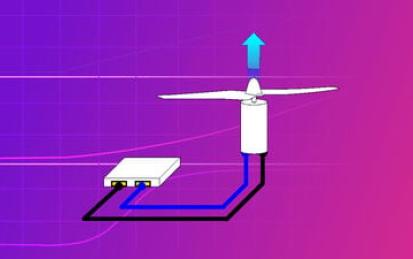
Simulating a Quadcopter's Electromechanics
Learn how to integrate multiple physical domains and optimize system performance of a quadcopter.
-
Course by
-
Self Paced
-
6
-
English

Cavity Quantum Optomechanics
Fundamentals of optomechanics. Basic principles, recent developments and applications.
-
Course by
-
Self Paced
-
49
-
English

Introduction to Aeronautical Engineering
Come discover the fascinating world of flying through the exploration of aeronautics, aerodynamics and flight mechanics!
-
Course by
-
Self Paced
-
30
-
English
Quantum Mechanics of Molecular Structures
Learn two methods used to determine molecular structures and their properties in this introduction to Quantum Mechanics.
-
Course by
-
Self Paced
-
English

Wind Energy
Welcome to the course of Wind Energy. This course gives an overview of key aspects in wind energy engineering. Whether you are looking for general insight in this green technology or your ambition is to pursue a career in wind energy engineering, 'Wind Energy' is an excellent starting point.
-
Course by
-
Self Paced
-
34 hours
-
English
U.S. Bond Investing Basics
In this fixed income course, you will learn to distinguish between different types of U.S.
-
Course by
-
Self Paced
-
16 hours
-
English

Quantum Optics 1 : Single Photons
This course gives you access to basic tools and concepts to understand research articles and books on modern quantum optics. You will learn about quantization of light, formalism to describe quantum states of light without any classical analogue, and observables allowing one to demonstrate typical quantum properties of these states. These tools will be applied to the emblematic case of a one-photon wave packet, which behaves both as a particle and a wave. Wave-particle duality is a great quantum mystery in the words of Richard Feynman.
-
Course by
-
Self Paced
-
33 hours
-
English

Manipulating basic laws of mechanics using wolfram notebook
Mechanics is one the most important subject in physics.
-
Course by
-
Self Paced
-
2 hours
-
English
Understanding Modern Physics III: Simplicity and Complexity
The 20th century was known as the century of physics. In the past 120 years, concepts such as space, time, energy, entropy and particles were understood to much deeper levels. New paradigms of thinking such as relativity and quantum mechanics emerged. This course is the third course in the Understanding Modern Physics series, which covers an introduction to action principle, fundamental particle physics, entropy & information and complexity.
-
Course by
-
Self Paced
-
7 hours
-
English
Applications in Engineering Mechanics
This course applies principles learned in my course “Introduction to Engineering Mechanics” to analyze real world engineering structures. You will need to have mastered the engineering fundamentals from that class in order to be successful in this course offering. This course addresses the modeling and analysis of static equilibrium problems with an emphasis on real world engineering systems and problem solving.
-
Course by
-
Self Paced
-
16 hours
-
English
Particle Dynamics
This course teaches dynamics, one of the basic mechanics subjects of Mechanical Engineering. Students would be able to organize their knowledge about force and motion, work-energy, impulse-momentum in view of Newton's 2nd law and its integration over time and displacement. The Engineering Dynamics consists of two parts: particle dynamics and rigid body dynamics. This is the first part of the dynamics: Particle dynamics class will consist of lecture videos, which are about 15 min length (or a bit longer). These contain a couple of practice problem solving.
-
Course by
-
Self Paced
-
15 hours
-
English

Memoir and Personal Essay: Managing Your Relationship with the Reader
The blank page can be the most daunting obstacle in writing. In this course, aspiring writers will assemble a “starter kit” for approaching the blank page by developing constructive ways to think about the writing process as a whole. While subsequent courses in this series will focus on the mechanics of good writing, this course offers ways to think about the writer’s relationship to her material, and ultimately develop a writing style that is uniquely her own.
-
Course by
-
Self Paced
-
5 hours
-
English

Statistical Mechanics: Algorithms and Computations
In this course you will learn a whole lot of modern physics (classical and quantum) from basic computer programs that you will download, generalize, or write from scratch, discuss, and then hand in. Join in if you are curious (but not necessarily knowledgeable) about algorithms, and about the deep insights into science that you can obtain by the algorithmic approach.
-
Course by
-
Self Paced
-
16 hours
-
English

Practical Guide to Trading
Imagine you’re an experienced oil trader and have been watching the volatility in the world markets and would like to hedge your risk using commodity futures, or you have been trading stocks and want a more diverse portfolio.
-
Course by
-
Self Paced
-
English

The Einstein Revolution
Traces Albert Einstein’s engagement with relativity, quantum mechanics, Nazism, nuclear weapons, philosophy, the arts, and technology.
-
Course by
-
Self Paced
-
54
-
English

Modern Robotics, Course 3: Robot Dynamics
Do you want to know how robots work? Are you interested in robotics as a career? Are you willing to invest the effort to learn fundamental mathematical modeling techniques that are used in all subfields of robotics? If so, then the "Modern Robotics: Mechanics, Planning, and Control" specialization may be for you. This specialization, consisting of six short courses, is serious preparation for serious students who hope to work in the field of robotics or to undertake advanced study.
-
Course by
-
Self Paced
-
22 hours
-
English

Fundamentals of Flight mechanics
How do planes take off? How do they fly? How do pilots maintain control of them? And how high can airplanes fly? Get answers to all these questions and more with this specialization exploring the fundamentals of flight mechanics. You will learn how the laws of physics apply to airplanes and discover important concepts in aviation including lift, drag, and propulsion.
-
Course by
-
Self Paced
-
English

Statistical Thermodynamics
This specialization was developed for the mechanical or aerospace engineering advanced undergraduate graduate or graduate student who already has a strong background in undergraduate engineering thermodynamics and is ready to tackle the underlying fundamentals of the subject. It is designed for those entering advanced fields such as combustion, high temperature gas dynamics, environmental sciences, or materials processing, or wishes to build a background for understanding advanced experimental diagnostic techniques in these or similar fields.
-
Course by
-
Self Paced
-
English

Create Jumping Mechanics with C# in Unity
In this one-hour, project-based course, you'll learn how to use Unity's Physics Engine to implement different jumping mechanics such as single- and double-jumps.
-
Course by
-
Self Paced
-
3 hours
-
English

Solar Energy Systems Overview
By the end of this course, learners will have acquired a broad understanding of the history and mechanics behind converting light into electricity, commonly known as photovoltaics (PV). They are empowered to recognize and describe elements of a PV system, enabling them to: compare the most common types of solar cells, sketch a solar PV system, and analyze differences between rooftop and ground mounting configurations.
-
Course by
-
Self Paced
-
9 hours
-
English

Quantum Mechanics for Engineers
This Specialization is intended for engineers seeking to acquire fundamental understanding of quantum mechanics which are the basis of modern electrical, mechanical and quantum engineering. Through 3 courses, you will learn (1) basic concepts such as superposition and entanglement of quantum states, measurement in quantum mechanics and uncertainty principle, (2) mathematical tools needed to describe and manipulate quantum states, (3) advanced theory of angular momentum and (4) approximation methods widely applicable in many fields.
-
Course by
-
Self Paced
-
English

Java Database Connectivity
The intent of Java Database Connectivity (JDBC) Introduction is to get some hands-on experience with foundational JDBC concepts. On our journey we’ll learn about why and how the API makes working with databases easy for Java Developers. After this course you should not only be able to demonstrate the mechanics of JDBC but furthermore, you should be able to explain the design and intent.
-
Course by
-
Self Paced
-
English