


Generative AI for Business Leaders
Advertising with Meta
How Google does Machine Learning


Our Courses

Robotics: Aerial Robotics
How can we create agile micro aerial vehicles that are able to operate autonomously in cluttered indoor and outdoor environments? You will gain an introduction to the mechanics of flight and the design of quadrotor flying robots and will be able to develop dynamic models, derive controllers, and synthesize planners for operating in three dimensional environments. You will be exposed to the challenges of using noisy sensors for localization and maneuvering in complex, three-dimensional environments.
-
Course by

-
 Self Paced
-
 18 hours
-
 English

Corporate Finance II: Financing Investments and Managing Risk
In this course you will learn how companies decide on how much debt to take, and whether to raise capital from markets or from banks. You will also learn how to measure and manage credit risk and how to deal with financial distress. You will discuss the mechanics of dividends and share repurchases, and how to choose the best way to return cash to investors. You will also learn how to use derivatives and liquidity management to offset specific sources of financial risk, including currency risks.
-
Course by
-
Self Paced
-
19 hours
-
English

Global Financial Markets and Instruments
Get a running start in the high-stakes world of financial investment! This first course is designed to help you become an informed investor by providing you with the essential concepts for long-term success in managing money. You’ll start by learning the role of financial markets and financial assets in a well-functioning economy. From there, you’ll learn about the wide range of financial instruments available in major asset classes, their features and valuations.
-
Course by
-
Self Paced
-
20 hours
-
English

Modern Robotics, Course 1: Foundations of Robot Motion
Do you want to know how robots work? Are you interested in robotics as a career? Are you willing to invest the effort to learn fundamental mathematical modeling techniques that are used in all subfields of robotics? If so, then the "Modern Robotics: Mechanics, Planning, and Control" specialization may be for you. This specialization, consisting of six short courses, is serious preparation for serious students who hope to work in the field of robotics or to undertake advanced study.
-
Course by
-
Self Paced
-
24 hours
-
English

Advanced Capstone Spacecraft Dynamics and Control Project
This capstone course is the 3rd and final course of the specialization Advanced Spacecraft Dynamics and Control. It assumes you have completed the prior courses on "Attitude Control with Momentum Exchange Devices" and "Analytical Mechanics for Spacecraft Dynamics". This project course investigates the dynamics of a complex spacecraft system where there is a rigid hub onto which a hinged panel is attached. This simulates a spacecraft with a time varying geometry. First, the three-dimensional kinematics of this system are explored.
-
Course by
-
Self Paced
-
16 hours
-
English

Astro 101: Black Holes
What is a black hole? Do they really exist? How do they form? How are they related to stars? What would happen if you fell into one? How do you see a black hole if they emit no light? What’s the difference between a black hole and a really dark star? Could a particle accelerator create a black hole? Can a black hole also be a worm hole or a time machine? In Astro 101: Black Holes, you will explore the concepts behind black holes.
-
Course by
-
Self Paced
-
18 hours
-
English

Vector Calculus for Engineers
This course covers both the theoretical foundations and practical applications of Vector Calculus. During the first week, students will learn about scalar and vector fields. In the second week, they will differentiate fields. The third week focuses on multidimensional integration and curvilinear coordinate systems. Line and surface integrals are covered in the fourth week, while the fifth week explores the fundamental theorems of vector calculus, including the gradient theorem, the divergence theorem, and Stokes' theorem.
-
Course by
-
Self Paced
-
30 hours
-
English

Design and Interpretation of Clinical Trials
Clinical trials are experiments designed to evaluate new interventions to prevent or treat disease in humans. The interventions evaluated can be drugs, devices (e.g., hearing aid), surgeries, behavioral interventions (e.g., smoking cessation program), community health programs (e.g. cancer screening programs) or health delivery systems (e.g., special care units for hospital admissions). We consider clinical trials experiments because the investigators rather than the patients or their doctors select the treatment the patients receive.
-
Course by
-
Self Paced
-
10 hours
-
English

Foundational Finance for Strategic Decision Making
In this specialization, you’ll focus on the mechanics and intuition of the main building block of finance — the time value of money. You’ll learn the structure and basics through assignments and tests that are introductory in nature but with real-world applications. We developed this specialization with the express purpose of enabling you to understand and apply these foundational principles of finance to your everyday life. Understanding how to use finance for personal decisions will also help you understand and excel at making professional decisions.
-
Course by
-
Self Paced
-
English

Chatbots
The course "Chatbots" offers a deep dive into the world of chatbots, equipping learners with the skills to design, build, and optimize conversational interfaces. You will explore the evolution of chatbot technology and understand the fundamental mechanics that drive their functionality.
-
Course by

-
Self Paced
-
10 hours

Mechanics: Motion, Forces, Energy and Gravity, from Particles to Planets
Most of the phenomena in the world around you are, at the fundamental level, based on physics, and much of physics is based on mechanics. Mechanics begins by quantifying motion, and then explaining it in terms of forces, energy and momentum. This allows us to analyse the operation of many familiar phenomena around us, but also the mechanics of planets, stars and galaxies. This on-demand course is recommended for senior high school and beginning university students and anyone with a curiosity about basic physics.
-
Course by
-
Self Paced
-
29 hours
-
English

Introduction to Mechanics
This specialization is for learners who are interested in first-year, university-level physics. Through three courses, you will gain a foundation in mechanics including motion, forces, energy, momentum, rotational motion, and gravitation. With 100 brief lectures and over 100 problems, this comprehensive specialization is similar in detail and rigor to what is taught in on-campus courses. It will thoroughly prepare learners for their upcoming introductory physics courses, or more advanced studies.
-
Course by
-
Self Paced
-
English

Java Database Connectivity
The intent of Java Database Connectivity (JDBC) Introduction is to get some hands-on experience with foundational JDBC concepts. On our journey we’ll learn about why and how the API makes working with databases easy for Java Developers. After this course you should not only be able to demonstrate the mechanics of JDBC but furthermore, you should be able to explain the design and intent.
-
Course by
-
Self Paced
-
English

Quantum Mechanics for Engineers
This Specialization is intended for engineers seeking to acquire fundamental understanding of quantum mechanics which are the basis of modern electrical, mechanical and quantum engineering. Through 3 courses, you will learn (1) basic concepts such as superposition and entanglement of quantum states, measurement in quantum mechanics and uncertainty principle, (2) mathematical tools needed to describe and manipulate quantum states, (3) advanced theory of angular momentum and (4) approximation methods widely applicable in many fields.
-
Course by
-
Self Paced
-
English

Solar Energy Systems Overview
By the end of this course, learners will have acquired a broad understanding of the history and mechanics behind converting light into electricity, commonly known as photovoltaics (PV). They are empowered to recognize and describe elements of a PV system, enabling them to: compare the most common types of solar cells, sketch a solar PV system, and analyze differences between rooftop and ground mounting configurations.
-
Course by
-
Self Paced
-
9 hours
-
English

Create Jumping Mechanics with C# in Unity
In this one-hour, project-based course, you'll learn how to use Unity's Physics Engine to implement different jumping mechanics such as single- and double-jumps.
-
Course by
-
Self Paced
-
3 hours
-
English

The Einstein Revolution
Traces Albert Einstein’s engagement with relativity, quantum mechanics, Nazism, nuclear weapons, philosophy, the arts, and technology.
-
Course by

-
Self Paced
-
54
-
English

CFD Simulation Through a Centrifugal Pump
In this hands-on project, you will learn about Computational Fluid Dynamics (CFD) and perform a pump simulation using the cloud-based simulation tool SimScale. We will set up simulation cases with provided geometries to learn the fundamentals of CFD and how a pump simulation is approached and set up in the first place.
-
Course by
-
Self Paced
-
4 hours
-
English

Foundations of Quantum Mechanics
This course can also be taken for academic credit as ECEA 5610, part of CU Boulder’s Master of Science in Electrical Engineering degree. This course covers the fundamental concepts and topics of quantum mechanics which include basic concepts, 1D potential problems, time evolution of quantum states, and essential linear algebra. It provides undergraduate level foundational knowledge and build on them more advanced topics. At the end of this course learners will be able to: 1.
-
Course by
-
Self Paced
-
27 hours
-
English
Modern Robotics: Mechanics, Planning, and Control
This Specialization provides a rigorous treatment of spatial motion and the dynamics of rigid bodies, employing representations from modern screw theory and the product of exponentials formula. Students with a freshman-level engineering background will quickly learn to apply these tools to analysis, planning, and control of robot motion. Students' understanding of the mathematics of robotics will be solidified by writing robotics software.
-
Course by
-
Self Paced
-
English

Bipedalism: The Science of Upright Walking
Have you ever wondered why humans walk on two legs rather than four? This Specialization explores how science investigates this unusual form of locomotion. We have developed a Specialization that explores how science investigates this unusual form of locomotion. We start our investigation by looking at the mechanics of upright walking in humans and comparing that to bipedal locomotion in large birds, bears, and apes. We journey back millions of years into the human fossil record in an effort to understand how and why upright walking evolved.
-
Course by
-
Self Paced
-
English

Applied Scrum for Agile Project Management
Learn the project management processes, roles, mechanics, and philosophies behind Scrum, the simplest and most pure approach to managing work at the team level.
-
Course by
-
Self Paced
-
20
-
English
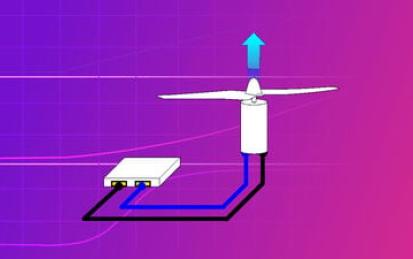
Simulating a Quadcopter's Electromechanics
Learn how to integrate multiple physical domains and optimize system performance of a quadcopter.
-
Course by
-
Self Paced
-
6
-
English

Cavity Quantum Optomechanics
Fundamentals of optomechanics. Basic principles, recent developments and applications.
-
Course by
-
Self Paced
-
49
-
English

Introduction to Aeronautical Engineering
Come discover the fascinating world of flying through the exploration of aeronautics, aerodynamics and flight mechanics!
-
Course by
-
Self Paced
-
30
-
English