


Generative AI for Business Leaders
Advertising with Meta
How Google does Machine Learning


Our Courses

Agile Leadership
Constant fast change has become a reality of our time. Agile has become a popular leadership philosophy and a project management methodology for addressing this reality.
-
Course by

-
 Self Paced
-
 English

Fundamentals of Neuroscience, Part 2: Neurons and Networks
Discover how neurons work together to create complex networks inside the brain.
-
Course by

-
Self Paced
-
 24
24
-
English

Fundamentals of Neuroscience, Part 3: The Brain
Discover what makes your brain tick in this third course in our introductory series in neuroscience.
-
Course by
-
Self Paced
-
12
-
English
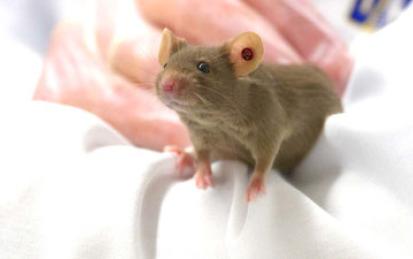
Behavioral Neuroscience: Foundations of Compulsive Behaviors
Enroll in the first MOOC to teach behavioral neuroscience research using laboratory mice. In this self-paced, free online course, you will learn responsible conduct of research and how to collect scientific data using two different tests that measure compulsions, and interpret and discuss the results in the context of obsessive-compulsive disorder in humans.
-
Course by
-
Self Paced
-
16
-
English
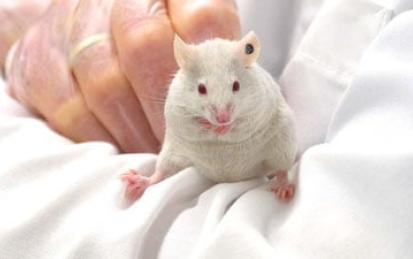
Behavioral Neuroscience: Analyzing Anxiety and Depression
In this online course, learn how to collect scientific data using behavioral tests that measure anxiety and depression in laboratory mice, and interpret and discuss the results in the context of anxiety and depression in humans and a mouse model of obsessive-compulsive disorder (OCD).
-
Course by
-
Self Paced
-
30
-
English
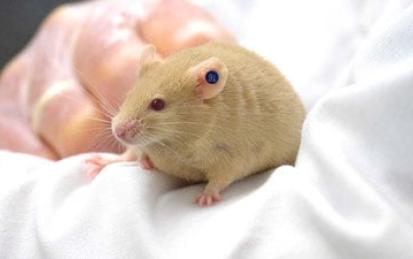
Behavioral Neuroscience: Contrasting Tests for Anxiety and Depression
In this online course, learn how to critically evaluate the use of different behavioral tests for anxiety and depression in laboratory mice, and gain a better understanding of how these tests can affect the interpretation of results in the context of mental illness and human psychiatric conditions and mouse models.
-
Course by
-
Self Paced
-
30
-
English
Computational Neuroscience: Neuronal Dynamics of Cognition
This course explains the mathematical and computational models that are used in the field of theoretical neuroscience to analyze the collective dynamics of thousands of interacting neurons.
-
Course by
-
Self Paced
-
25
-
English

Neuroscience Reconstructed: Genetics and Development
This course will cover the basic concepts in neurogenetics; introduce the fields of genomics, transcriptomics, translatomics; classical and cutting-edge experimental approaches; and how integrative simulation can be used to derive biological meaning from genetics data and build bridges from genetics all the way to behaviour.
-
Course by
-
Self Paced
-
35
-
English
Simulation Neuroscience
Learn how to digitally reconstruct a single neuron to better study the biological mechanisms of brain function, behaviour and disease.
-
Course by
-
Self Paced
-
6
-
English

Uncommon Sense Teaching: Teaching Online
In Uncommon Sense Teaching: TEACHING ONLINE we’d like to help you to move toward fresh approaches to online teaching that build on the latest insights from scientific research. We’ll use insights from movie-making—not to mention from odd visual tricks in Barb’s kitchen—to see how students learn, both independently and together. We all know, for example, that social learning is valuable in helping students grapple with tough concepts as well as in making learning more fun.
-
Course by
-
Self Paced
-
15 hours
-
English
Neuroscience and Neuroimaging
This specialization combines the strength of 4 different neuroscience courses into a cohesive learning experience. Taught by Johns Hopkins University, it begins with fundamental neuroscience concepts for neuroimaging. Neuroimaging methods are used with increasing frequency in clinical practice and basic research.
-
Course by
-
Self Paced
-
English

Libertarian Free Will
Yes, we have free will! This Specialization will explore Libertarian Free Will and discuss philosophical arguments and neuroscientific evidence for and against its existence. In this Specialization, we will dismantle arguments against free will, both from a philosophical and neuroscientific perspective. In supporting free will, we will tour philosophy, physics and neuroscience. We will rethink the neural code and discover that evolution has discovered a middle path between determinism and chance.
-
Course by
-
Self Paced
-
English
Mind and Machine
This specialization examines the ways in which our current understanding of human thinking is both illuminated and challenged by the evolving techniques and ideas of artificial intelligence and computer science. Our collective understanding of “minds” – both biological and computational – has been revolutionized over the past half-century by themes originating in fields like cognitive psychology, machine learning, neuroscience, evolutionary psychology, and game theory, among others.
-
Course by
-
English

Uncommon Sense Teaching
Do your students spend too much (or too little) time learning, with disappointing results? Do they procrastinate in their study because it’s boring and they’re easily distracted? Are you working to make your teaching even more inclusive? Uncommon Sense Teaching will give you practical new insights that will help you solve these goals and challenges, and many more. This is like no other course on teaching—it weaves late-breaking insights from neuroscience with personal insights from the classroom to provide unexpected, yet practical, new approaches.
-
Course by
-
Self Paced
-
English

Computer Vision Basics
By the end of this course, learners will understand what computer vision is, as well as its mission of making computers see and interpret the world as humans do, by learning core concepts of the field and receiving an introduction to human vision capabilities. They are equipped to identify some key application areas of computer vision and understand the digital imaging process. The course covers crucial elements that enable computer vision: digital signal processing, neuroscience and artificial intelligence.
-
Course by
-
13 hours
-
English

Advanced Neurobiology I
Hello everyone! Welcome to advanced neurobiology! Neuroscience is a wonderful branch of science on how our brain perceives the external world, how our brain thinks, how our brain responds to the outside of the world, and how during disease or aging the neuronal connections deteriorate. We’re trying to understand the molecular, cellular nature and the circuitry arrangement of how nervous system works. Through this course, you'll have a comprehensive understanding of basic neuroanatomy, electral signal transduction, movement and several diseases in the nervous system.
-
Course by
-
Self Paced
-
28 hours
-
English

Strategic Leadership: Impact, Change, and Decision-Making
If you're ready to hone your leadership skills and grow as a person, Strategic Leadership: Impact, Change, and Decision-Making for Work and Life is designed for you, whether you're a manager or an individual contributor. Through four courses with Sydney Finkelstein, the Steven Roth Professor of Management at the Tuck School of Business at Dartmouth, you will learn the common mistakes that even smart executives make, the neuroscience behind effective decision making, methods of managing and supporting the people around you, and how to bring together all these lessons to be the best possible le
-
Course by
-
Self Paced
-
English
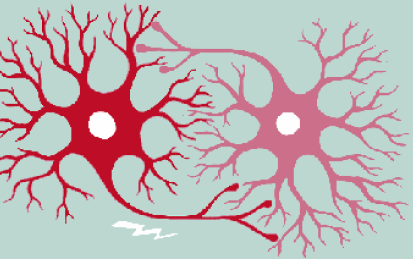
Fundamentals of Neuroscience, Part 1: The Electrical Properties of the Neuron
Learn how electricity makes the neurons in your brain tick.
-
Course by
-
Self Paced
-
32
-
English

Conversations That Inspire: Coaching Learning, Leadership and Change
Coaching can inspire and motivate people to learn, change, and be effective leaders, among other roles in life. Although most attempts are “coaching for compliance” (coaching someone to your wishes or expectations), decades of behavioral and neuroscience research show us that “coaching with compassion” (coaching someone to their dreams and desires) is more effective.
-
Course by
-
Self Paced
-
14 hours
-
English
Fundamental Neuroscience for Neuroimaging
Neuroimaging methods are used with increasing frequency in clinical practice and basic research. Designed for students and professionals, this course will introduce the basic principles of neuroimaging methods as applied to human subjects research and introduce the neuroscience concepts and terminology necessary for a basic understanding of neuroimaging applications.
-
Course by
-
Self Paced
-
9 hours
-
English

The Brain and Space
This course is about how the brain creates our sense of spatial location from a variety of sensory and motor sources, and how this spatial sense in turn shapes our cognitive abilities. Knowing where things are is effortless. But “under the hood,” your brain must figure out even the simplest of details about the world around you and your position in it. Recognizing your mother, finding your phone, going to the grocery store, playing the banjo – these require careful sleuthing and coordination across different sensory and motor domains.
-
Course by
-
Self Paced
-
10 hours
-
English

Computational Neuroscience
This course provides an introduction to basic computational methods for understanding what nervous systems do and for determining how they function. We will explore the computational principles governing various aspects of vision, sensory-motor control, learning, and memory. Specific topics that will be covered include representation of information by spiking neurons, processing of information in neural networks, and algorithms for adaptation and learning.
-
Course by
-
Self Paced
-
26 hours
-
English

Medical Neuroscience
Medical Neuroscience explores the functional organization and neurophysiology of the human central nervous system, while providing a neurobiological framework for understanding human behavior. In this course, you will discover the organization of the neural systems in the brain and spinal cord that mediate sensation, motivate bodily action, and integrate sensorimotor signals with memory, emotion and related faculties of cognition.
-
Course by
-
Self Paced
-
71 hours
-
English

Understanding the Brain: The Neurobiology of Everyday Life
Learn how the nervous system produces behavior, how we use our brain every day, and how neuroscience can explain the common problems afflicting people today. We will study functional human neuroanatomy and neuronal communication, and then use this information to understand how we perceive the outside world, move our bodies voluntarily, stay alive, and play well with others.
-
Course by
-
Self Paced
-
28 hours
-
English